


Medical Doctor
Learning to Lead: Bridging the Healthcare Leadership Gap Through Podcasting
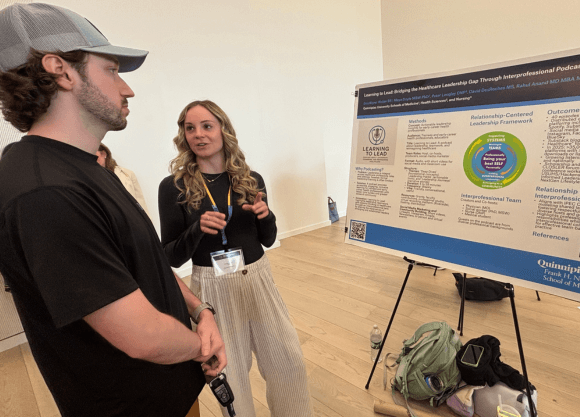
Medical Doctor
Learning to Lead: Bridging the Healthcare Leadership Gap Through Podcasting
Brooklynn Weber, Class of 2028, completed this project as part of the Scholarly Reflection and Concentration Capstone Course under the mentorship of Dr. Maya Doyle, professor of social work and medical sciences, Peter Longley, clinical assistant professor of nursing, David DesRoches, adjunct professor of journalism and Dr. Rahul Anand, professor of medical sciences.
Overview
Through a series of podcast episodes, this project aims to highlight leadership, teamwork, and systems thinking in healthcare through an interprofessional lens by sharing the experiences of emerging and established leaders. The podcast addresses this gap by providing accessible, narrative-based learning for trainees and early-career health professionals. Learning to Lead is hosted by an interprofessional team consisting of a physician, social worker, nurse, and medical student.
Researcher
Brooklynn Weber, Class of 2028
MD Program
Frank H. Netter MD School of Medicine
Learning to Lead: Bridging the Healthcare Leadership Gap Through Interprofessional Podcasting
Why Podcasting?
- Problem: Leadership is integral across healthcare professions roles and settings; however, formal leadership training is often limited
- Solution: A podcast provides accessible, engaging, inclusive learning for trainees and early-career health professionals with lesser time burden and greater sense of community
- Innovation: Learning to Lead highlights leadership, teamwork, and systems thinking in healthcare through an interprofessional lens by sharing the experiences of emerging and established leaders
Methods
- Concept: Actionable leadership insights for early-career health professional
- Audience: Trainees and early-career health professionals, educators
- Title: Learning to Lead: A podcast about leadership, teamwork, and reimagining healthcare
- Team Roles: Host, co-hosts, producers, social media marketer
- Format: Audio, with short videos
- Structure:
- Themes: ‘Deep Dives’ (foundational concepts), ‘Leadership Hacks’ (actionable tools), and ‘Leadership Journeys' (narrative stories)
- Duration: 5 to 59 minutes
- Frequency: Weekly
- Vibe: Friendly, conversational, useful
- Resources: Grants, faculty contributions, professional studio, virtual recording platform (Riverside), hosting, distribution
- Social Media Marketing and Community Building: Short videos, LinkedIn, Instagram, Emails, Newsletters, In-person and virtual events
Relationship-Centered Leadership Framework
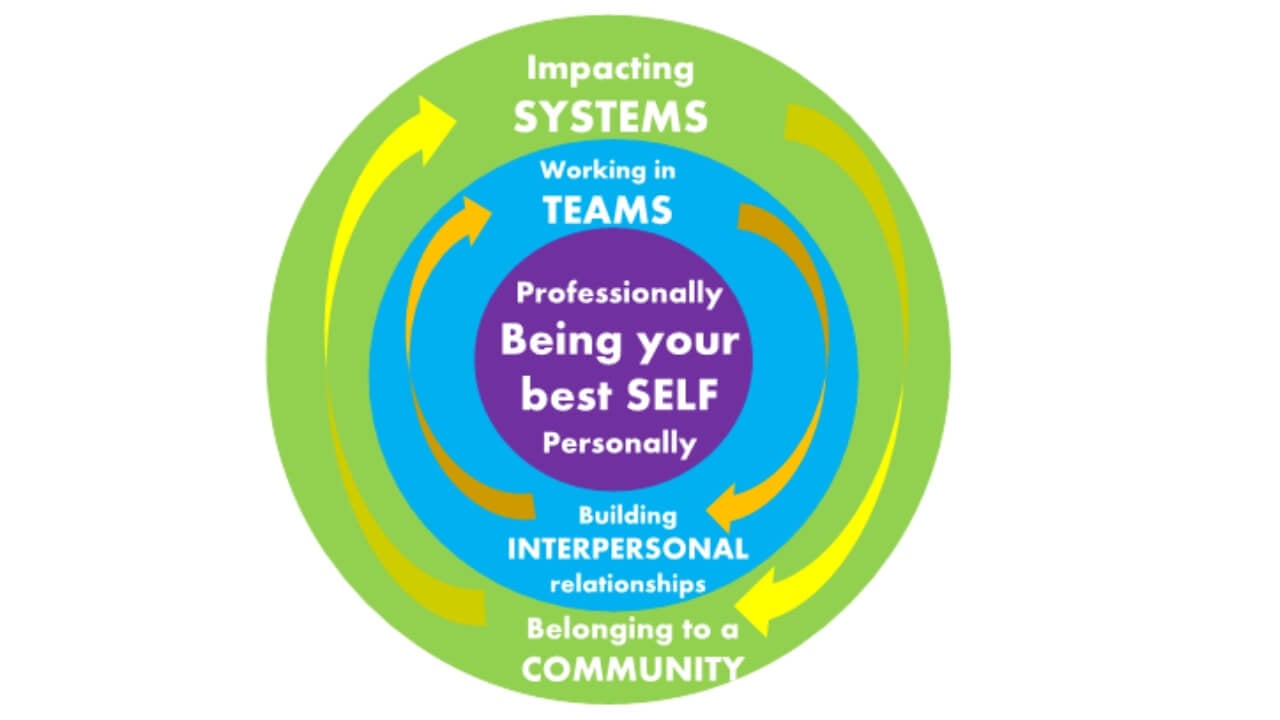
Interprofessional Team
- Creators and Co-hosts:
- Physician (MD)
- Social worker (PhD, MSW)
- Nurse (DNP)
- Medical student
Guests on the podcast are from diverse professional backgrounds.
Outcomes
- 40 episodes across 3 seasons
- Distributed on major streaming platforms including Apple Podcasts, Spotify, Substack
- Social media for shorts: LinkedIn, Instagram, Facebook, YouTube, X, BlueSky
- Substack blog “On Leading in Healthcare” for longer posts
- In 2025: >35,000 content views across platforms with >1,000 podcast downloads or listens
- Growing listening base locally, regionally and nationally
- Scholarship and collaborations: CLOSLER forum blog posts, National IPE conference workshop, Partnerships with USUHS/Hackensack for "Evidence-Informed Leadership" series and NextGen Lifestyle Medicine Podcast
Relationship to Interprofessional Education
- Aligns with IPEC Core Competencies by modeling shared leadership and fostering respectful dialogue among diverse hosts and guests
- Highlights professional values, roles, and responsibilities while promoting interprofessional collaboration essential for effective team-based education and practice
Faculty Mentors
Peter Bernard Longley
Clinical Assistant Professor Nursing
Director, Career and Alumni Development
Nursing
Rahul Anand, MD
Professor of Medical Sciences
Director of Foundational Sciences & Faculty Development
Medicine
For Further Discussion
This serves as an overview of the project and does not include the complete work.
Course Overview
The Scholarly Reflection and Concentration/Capstone course allows you to personalize your curriculum and prepares you for scholarly endeavors during residency and future practice. You will self-design and execute a capstone project in an area you are passionate about over the course of four years.
Explore Our Areas of Interest
We've sorted each of our undergraduate, graduate and doctoral programs into unique Areas of Interest. Explore these categories to discover which programs and delivery methods best align with your educational and career goals.