
Dominant Culture Persists
February 08, 2021
February 08, 2021
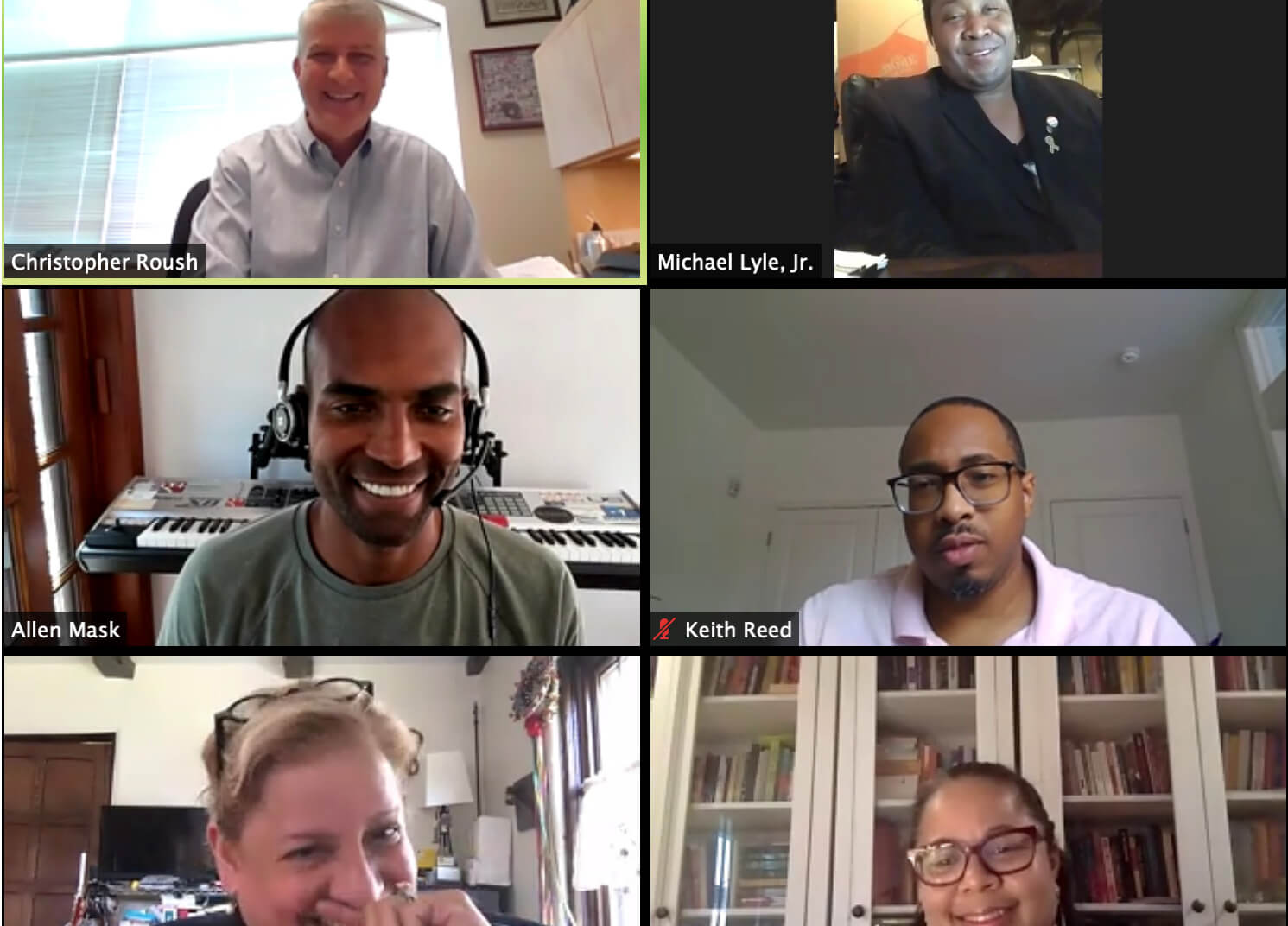
After George Floyd’s death in police custody last May and the thousands of racial injustice protests that followed, coverage of race-related stories by predominantly white newsrooms sparked a renewed criticism of the industry.
Five panelists discussed this structural failure during a webinar titled, “Race, and Racism, in the Media,” sponsored by the School of Communications. The program took place a few weeks before the start of the fall semester.
“In my 26 years in this business, I haven’t really seen the kinds of conversations we’re having in the newsroom now around race and coverage of race,” said Philana Patterson, a managing editor at USA Today.
“That said, I have concerns ... about the way it’s been carried out,” she added. “One of the things I’m very concerned about is the idea of getting newsrooms to be more diverse as a numbers game: ‘Let’s check off this many of this. And this many of that.’ And I see it happening.”
Patterson is not alone.
“It’s unfortunate that in the year 2020, we are still having discussions ad nauseum, and even as we discuss these issues, we see minimal progress being made,” said moderator Michael Lyle, a broadcast journalist and part-time professor in the School of Communications.
For years, diversity in American newsrooms has been populated by tokenism and quotas. “People of color and women get brought into professional situations where our opinions are not valued because we’re not part of the dominant culture that runs that newsroom,” said Kevin Reed, a former senior editor at ESPN.
It’s the same dominant culture that has bent the historical narrative for 400 years, he suggested.
“American history needs to include the history of all people and stop being exclusionary about who’s written about and who’s talked about,” Reed said. “So when you’re a journalist ... you enter your workplace or your profession with the foundational knowledge of what the country actually is and not a sanitized version.”
Ultimately, the interpretation becomes a battle of calculated perception versus ugly reality.
“The numbers regarding race and the media are startling,” said Chris Roush, dean of the School of Communications.
According to the Pew Research Center, 58% of Blacks and 55% of Hispanics say the news media misunderstands them. At the same time, data from the U.S. Bureau of Labor Statistics indicates that 88 percent of public relations professionals are white.
Sandy Gonzalez-Wilson, a former journalist at Bloomberg Television and the New York Post, has watched too many newsrooms hire an extra Hispanic reporter or an extra Black reporter to placate communities of color during a crisis.
The newsroom managers figure if they hire someone who looks like the protesters, the reporter will get “The Quote” because of melanin, not moxie.
“I want people to be hired because they’re professional, because they’re outstanding writers and researchers,” Gonzalez-Wilson stressed.
Maggie Leung, the vice president of content for Nerd-Wallet, remembers covering the Rodney King beating by Los Angeles police officers in 1991. She sees the same racial tensions and the same monochromatic newsrooms today.
“I got my start in traditional news. One of the earliest things that happened was the Rodney King beating and the subsequent trial of police in LA who were responsible for beating him,” Leung said.
“A colleague and I were talking about it recently, how it just feels like it’s a rewind of that history, that nothing has progressed significantly since then.”
Allen Mask, the chief of staff at Sonos, believes today’s newsrooms must be more thoughtful in their hiring as well as their coverage of events such as Floyd’s death and the Black Lives Matter movement.
“One thing we can change is the role we play in each one of those moments,” Mask said. “It’s also a good chance to step back and think through how we bring more of ourselves to these en- vironments. How can we contribute in a way we haven’t before?”
As a kid growing up in Ramsey, New Jersey, Russell Anderson ’04 loved tinkering with technology. After his dad bought him some old video equipment at a garage sale, Anderson became the neighborhood kid running around with a huge Betacam camera perched on his shoulder.
Read More
At Quinnipiac’s award-winning, student-run, interdisciplinary communications agency, there’s no safety net, no mock briefs and no made-up clients. It’s not pretend. It’s the real thing.
Read More
Like a light bulb illuminating a dark room in the late 1800s or the introduction of the World Wide Web in the 1990s, in the span of a mouse click, ChatGPT has transformed the way we interact and reimagined the future of technology in a thoughtful, new light.
Read More
In September, the Frank H. Netter MD School of Medicine celebrated the 10-year anniversary of its dedication and naming of the school. It was more than a milestone, of course. It represented a sustained and collaborative commitment to excellence in medical education at Quinnipiac.
Read More
As he prepared to serve as oversight chairman of the Quinnipiac GAME Forum — the largest student-run financial conference in the world — Dylan Jones ’22, MBA ’23, was already training for a half-marathon. He would tend to his GAME Forum duties for seven or eight hours, find time for an 8-mile run and then unwind with a guitar in his hands.
Read MoreQuinnipiac Today is your source for what's happening throughout #BobcatNation. Sign up for our weekly email newsletter to be among the first to know about news, events and members of our Bobcat family who are making a positive difference in our world.
Sign Up Now