
Best Seat in the House
February 08, 2021
February 08, 2021
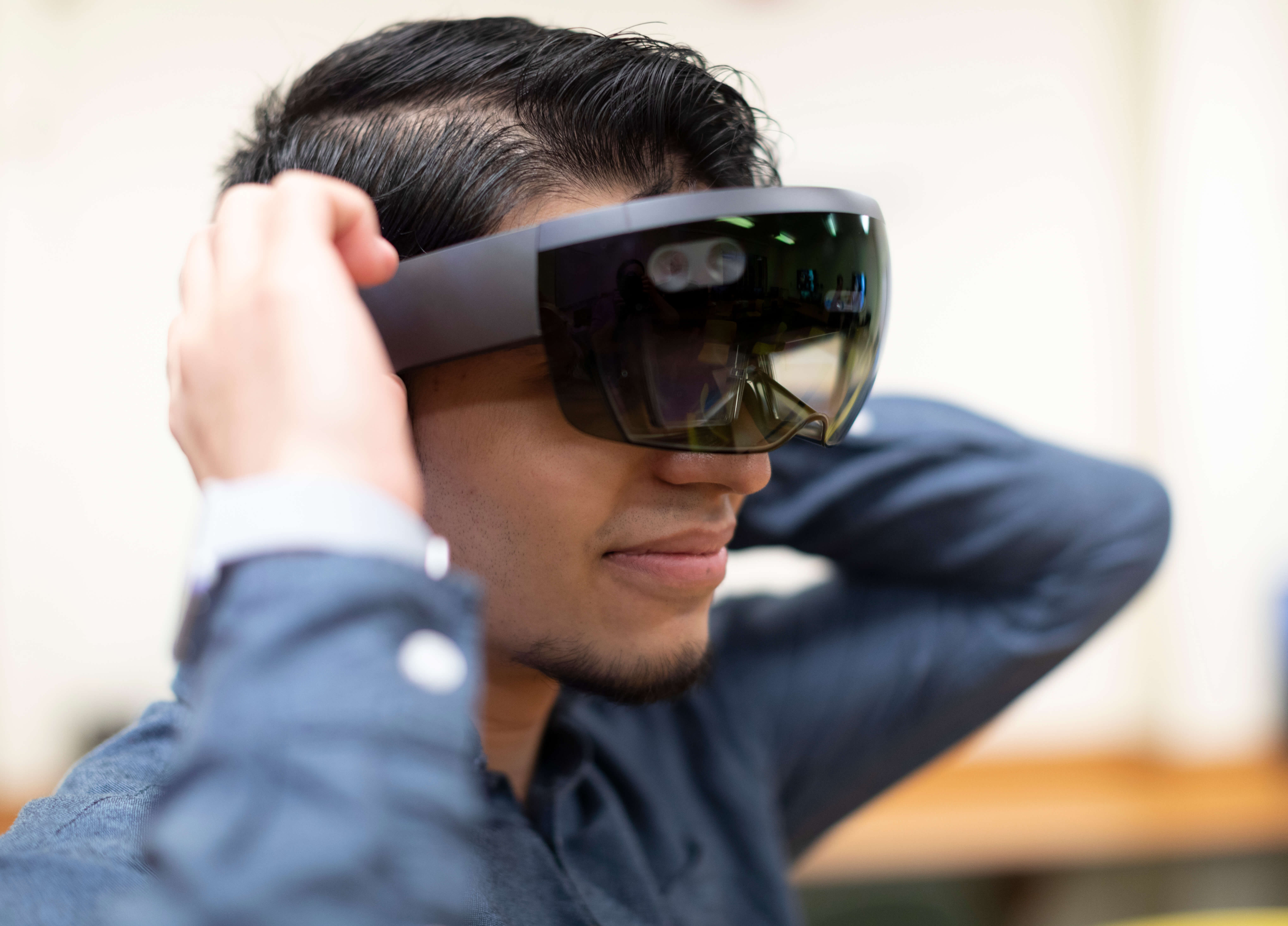
Until you take off the virtual reality headset.
At a time when traditional on-site revenue streams—ticket sales, parking, food and beverage concessions and merchandise sales—have evaporated during the COVID-19 pandemic, pro sports executives are searching for new ways to generate income.
“Digital technology is going to provide an in-venue experi- ence at home, a far better one than just flat television,” predict- ed Peter Guber, co-owner and co-chairman of the Warriors. “It will make the audience feel even more participatory. I’ve seen many things with VR. This is the beginning of the beginning.”
Guber and Michael Zavodsky ’06, the chief business officer for the Pistons, joined Quinnipiac President Judy Olian for an hour-long discussion in September about the future of pro sports in the wake of COVID-19. The conversation was part of the president’s new virtual speaker series, “The Way Forward.” The series features thoughtful exchanges with industry vision- aries about today’s social, economic and health challenges.
Last summer, Bill Weldon ’71, former chairman and CEO of Johnson & Johnson, and Dr. David Feinberg, vice president of Google Health, discussed “Innovations in Health Care and Health Technology Post-COVID-19.” Other recent speakers have included Ynon Kreiz, the chairman and CEO of Mattel, and Jim Loree, chairman and CEO of Stanley Black & Decker, who spoke about “Managing Global Supply Chains During and Post-COVID” in November.
But health care and manufacturing aren’t the only sectors impacted by COVID-19. Professional sports franchises also are searching for untapped innovation.
Zavodsky, who earned bachelor’s degrees in marketing and psychology, also is looking to the digital marketplace to attract new audiences—and perhaps, more important- ly—retain current ones.
“We have a model we’re going to run out ... with a virtual tick- et that allows people the in-arena experience, but at home,” said Zavodsky, who spent the previous 14 years working for Brooklyn Sports & Entertainment and the NBA’s Brooklyn Nets.
“I do think consumption patterns will likely change, regardless of the outcome of this [pandemic]. We know how to do the fan scenario,” he added. “Now, we need to focus on the scenario with no fans and how we can monetize that.”
Zavodsky said popular in-person events, such as autograph sessions and meet-and-greets, can be reimagined digitally. However, lucrative TV deals remain the largest source of revenue for the Pistons. By far.
In addition to a multimillion dollar contract with Fox Sports Detroit for local broadcasting rights, the Pistons get a share of the NBA’s historic nine-year, $24 billion TV deal that expires in 2025.
The Warriors also get a share of that revenue, but local TV rights are not the team’s primary source of income. “Television is not the ‘big market maker’ for the Warriors. San Francisco is not a big market,” Guber said. “Without butts in the seats, there are no bucks in the pockets.”
Both executives also noted the importance of NBA players serving as agents of racial reckoning during this time.
“They have the platform, obviously, to help cause change,” Zavodsky said. “What the NBA has continued to do is help call attention and awareness to something that we as a country obviously need to make sure we’re focused on and paying attention to. As we proceed forward, I think they’ll continue to be engaged leaders in that effort.”
Guber agreed.
“They’re active participants. They feel it. They live it. They’re not observers of it,” Guber said. “The attitude of the players and the aptitude of the work they’ve done ... will be a big difference maker.”
The business of pro sports can’t exist without athletes who perform at the highest level. At the same time, the economic model can’t survive without fans enjoying in-venue experiences.
For Guber, the pivot to profitability is even more urgent with no fans in the stands.
Along with his stake in the Warriors, Guber is the owner of the Los Angeles Dodgers and its 56,000-seat stadium, the largest baseball venue in the world. He’s also the owner and executive chairman of the Los Angeles Football Club and co-chairman of the esports company aXiomatic.
Last year, the Warriors moved from Oakland to San Fran- cisco and opened the privately financed Chase Center, a $1.4 billion arena with 18,000 seats and luxury suites. Although the Warriors are the main draw, the 16-acre site is a destination with restaurants, retail shops, a huge theater and a major park.
“We think of ourselves in the location-based entertain- ment business,” Guber said. “We believe that rendering experiences to an audience is a valuable business proposition, and our basketball team is at the center of it.”

In my first few months at Quinnipiac, what’s captured both my attention and my heart is the sense of pride across our community.
Read More
Nearly a century after 11 students each contributed $100 in seed money to found the business school that would become Quinnipiac University, their pioneering spirit continues to inspire.
Read More
Elena Giacomini MBA ’25, MS ’26, returned to the Quinnipiac women’s volleyball team for another graduate season after a stellar debut in which she excelled on the court and in the classroom while bringing the Bobcats to the brink of the NCAA Tournament.
Read More
In addition to recording 58 points across 170 career games for the men’s ice hockey team, TJ Friedmann ’22, MBA ’23, was the Bobcats’ go-to barista.
Read More
Last spring, as he contemplated a basketball future outside of Hamden, Amarri Monroe ’26 was steered by more than his heart.
Read MoreQuinnipiac Today is your source for what's happening throughout #BobcatNation. Sign up for our weekly email newsletter to be among the first to know about news, events and members of our Bobcat family who are making a positive difference in our world.
Sign Up Now