
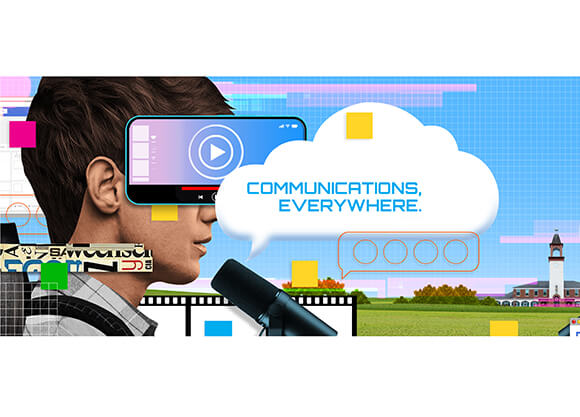
Communications, Everywhere.
November 09, 2026
November 09, 2026
Every concert has a different audience. The challenge isn’t filling seats. It’s creating a connection people will remember long after the final encore.
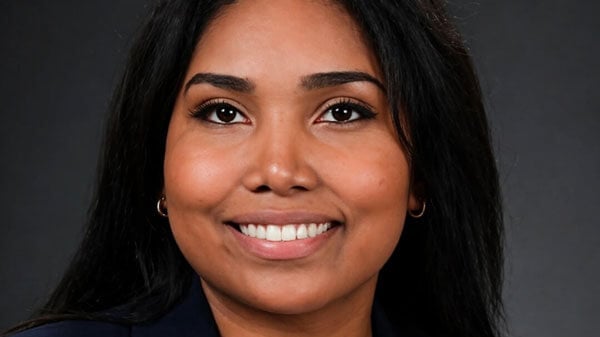
Parents bringing their children to a Kidz Bop show expect something different than fans attending Rod Stewart's farewell tour or a Five Finger Death Punch concert. Jennifer Moglia ’24, MS ’25, spends every day translating those differences into strategy.
Working with Live Nation Entertainment, Moglia develops social media and digital campaigns for eight concert venues across the Northeast, New England and Great Lakes regions. Each artist, venue and audience requires its own strategy.
“At the end of the day, if I can’t say, ‘This is going to connect with someone,’ I don't want to make it,” said Moglia. “We’re in the business of putting on people’s dream days, sometimes one of the best days of their lives. We want our shows to be those core memories for people.”
In a role where every post reflects one of the world's leading live entertainment companies, Moglia develops social media campaigns that build anticipation before a show, enhance the fan experience and keep audiences engaged afterward. It’s a highly visible job that leaves little room for self-doubt.
“As a communications and media studies major, from my first semester I was creating campaigns I could include in my portfolio. By the time I graduated, I felt ready to trust my ideas and own my work,” said Moglia. “If I hadn't been at Quinnipiac, I don’t think I'd have this level of confidence just one year into my first full-time job.”
At first glance, she says her job looks like she’s just “posting on social media.” In reality, every message is backed by audience research, brand development, campaign planning, storytelling and digital strategy. It’s a career that looks very different than it did a decade ago.
The world of storytelling and digital media continues to evolve, and Quinnipiac’s School of Communications is evolving with it.
The school recently expanded its academic offerings with four new and reimagined programs— a minor in content creation and influencing, an undergraduate certificate in content creation and influencing, a graduate certificate in digital and multimedia in journalism, and a reimagined Master of Science in digital content creation and strategy — designed to prepare students for careers that may not even exist yet.
“Our focus has shifted to what we call a ‘communications everywhere’ approach,” said Nadine Barnett Cosby, dean of the School of Communications. “We're still preparing outstanding journalists, public relations professionals and advertisers, but we’re also recognizing that every industry needs skilled communicators. Regardless of where our students end up, they’re going to need those communication skills.”
Students are already creating content every day, Barnett Cosby said. The goal is to help them understand not only how to create compelling content, but why it works, who it reaches and how it supports organizational goals.
Terry Bloom, senior associate dean of the School of Communications, has seen the role of the communicator broaden as new technologies and platforms have emerged.
“When I started teaching, we were preparing students for traditional media industries,” Bloom said. “Today, every organization needs people who can communicate clearly and tell compelling stories. Communication isn’t confined to the media anymore. It’s everywhere.”
The School is thinking beyond individual majors and career paths, focusing instead on the communication skills students can carry into any field. Writing clearly, telling stories, understanding audiences and connecting with people are capabilities that remain valuable wherever the work takes them. Bloom has seen that broader role of communication emerge firsthand.
“I actually think AI is highlighting how important messaging, storytelling and audience understanding really are,” she said. “The tools are different, and the pace is faster, but the need for communicators has never been greater. We’re seeing a communications renaissance.”
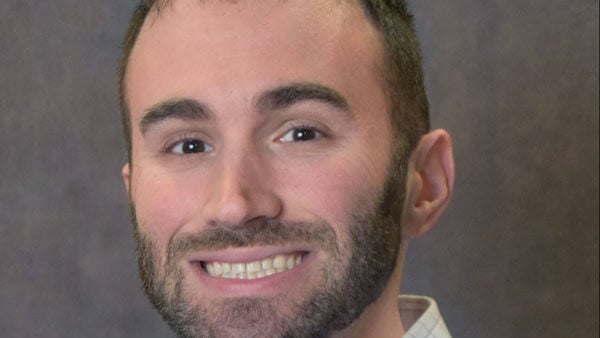
For Sam Bloch, MS ’23, program manager in Trust and Safety operations at Google, those skills have become even more valuable as AI transforms his work. Focusing on YouTube content, he works to improve the people, policies and AI systems that identify and remove harmful content.
While he uses AI to prototype new tools, improve workflows and turn ideas into working solutions more quickly, he says the technology works best when paired with human creativity and judgment.
“Companies are hungry for people who can see opportunities and then actually use AI to build solutions. At Google, I see every day how fast the tools are changing, but the skills that matter haven't gone away,” Bloch said. “Quinnipiac taught me to think in a human-centered way, build real-world experience and use AI to improve my work, not replace it.”
Across the School of Communications, faculty share a common belief: AI will continue to evolve, but the fundamentals of human communication endure.
“Technology will keep changing. Platforms will come and go. But the ability to understand an audience, craft a message that matters and build human connection through stories — that’s the through-line,” Bloom said. “Whether you're studying civil engineering, nursing or film, you’re going to need to explain ideas clearly, connect with people and make sense of complex information. That doesn’t go away in an AI-driven world. If anything, it becomes more important.”

Want to learn what Quinnipiac is all about? We invite you to join us at an Open House, where our students, faculty and staff will introduce you to life as a Bobcat through a variety of sessions and tours.

Megan (Martucci) Parlanti ’18, MBA ’19, hasn’t just found her calling at work. She’s made it the purpose that drives her career.
Read More
Projects Day and Illuminate showcase student innovation across disciplines
Read More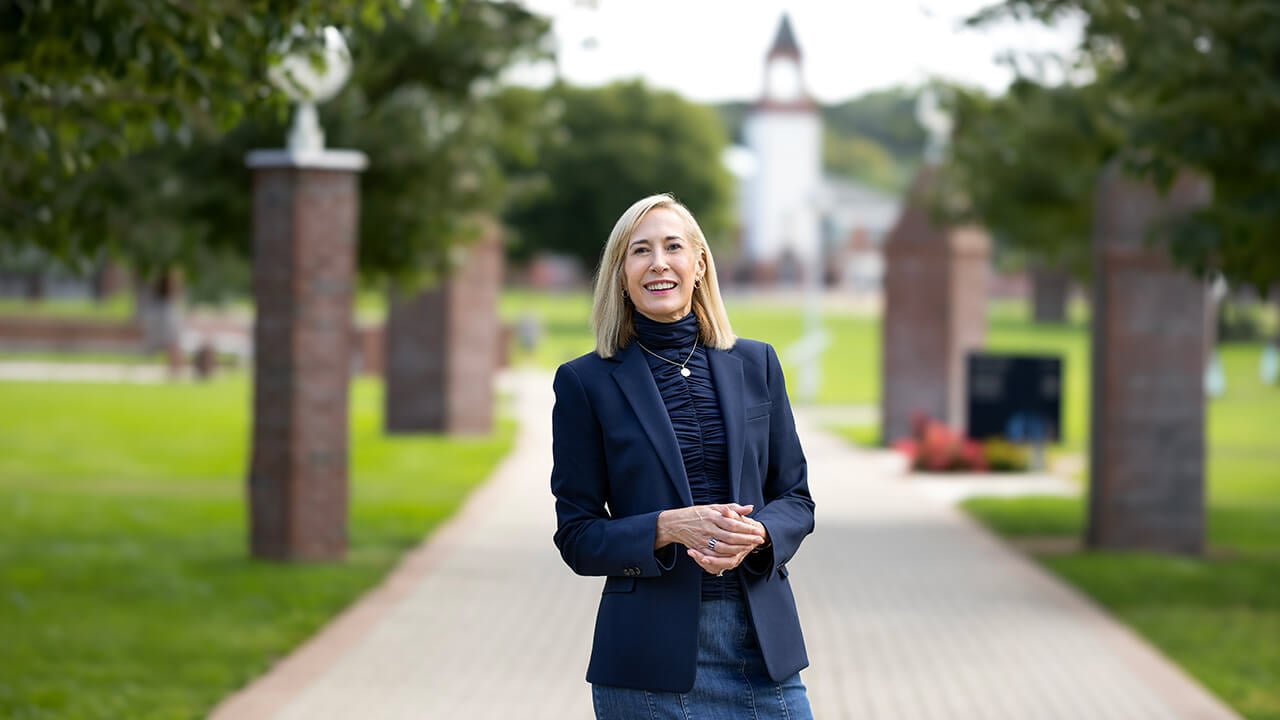
One of my favorite times of the year takes place when our new students arrive on campus.
Read More
As editor of Quinnipiac Magazine, one of my favorite jobs is compiling our story list. The ideas sprout from every corner of our community — the musings of my colleagues, the conversations with faculty and staff, and, of course, the email submissions of our alumni.
Read More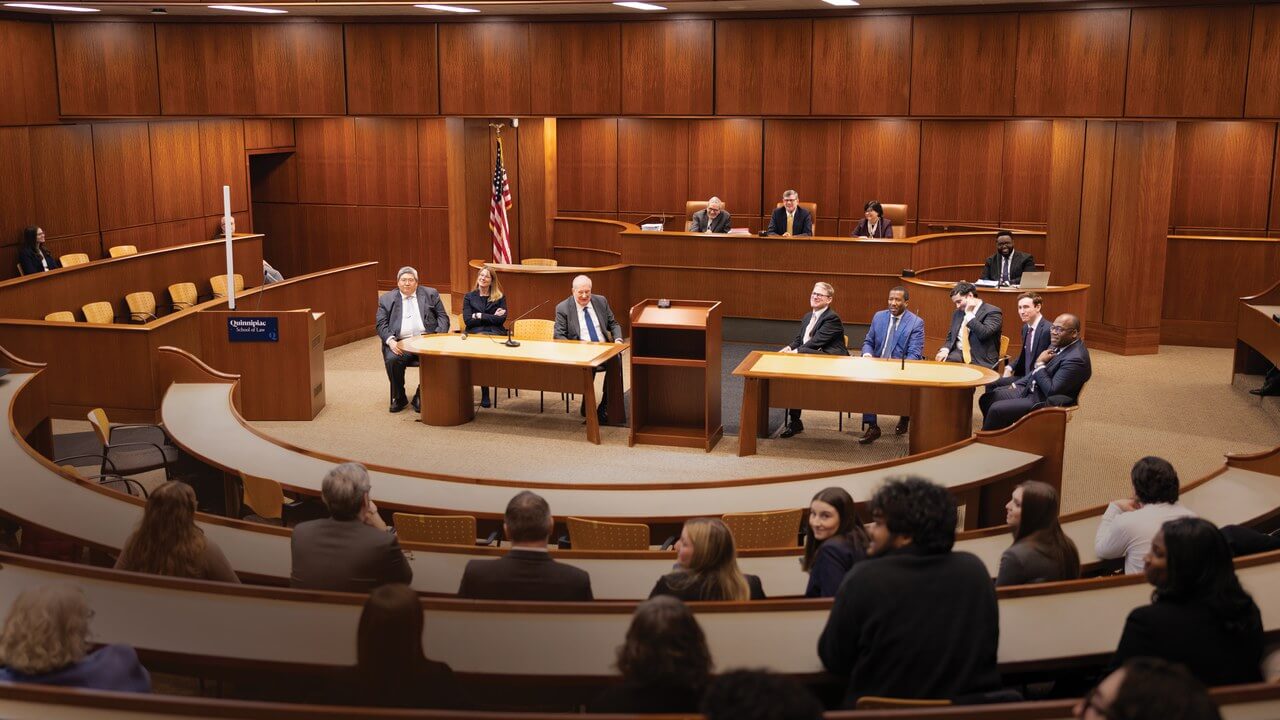
A historic visit from the U.S. Court of Appeals for the Second Circuit offered a powerful example of Quinnipiac Law's nationally recognized approach to experiential legal education.
Read More










Quinnipiac Today is your source for what's happening throughout #BobcatNation. Sign up for our weekly email newsletter to be among the first to know about news, events and members of our Bobcat family who are making a positive difference in our world.
Sign Up Now