


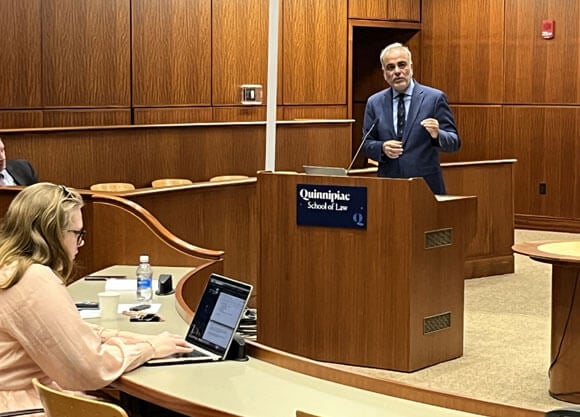

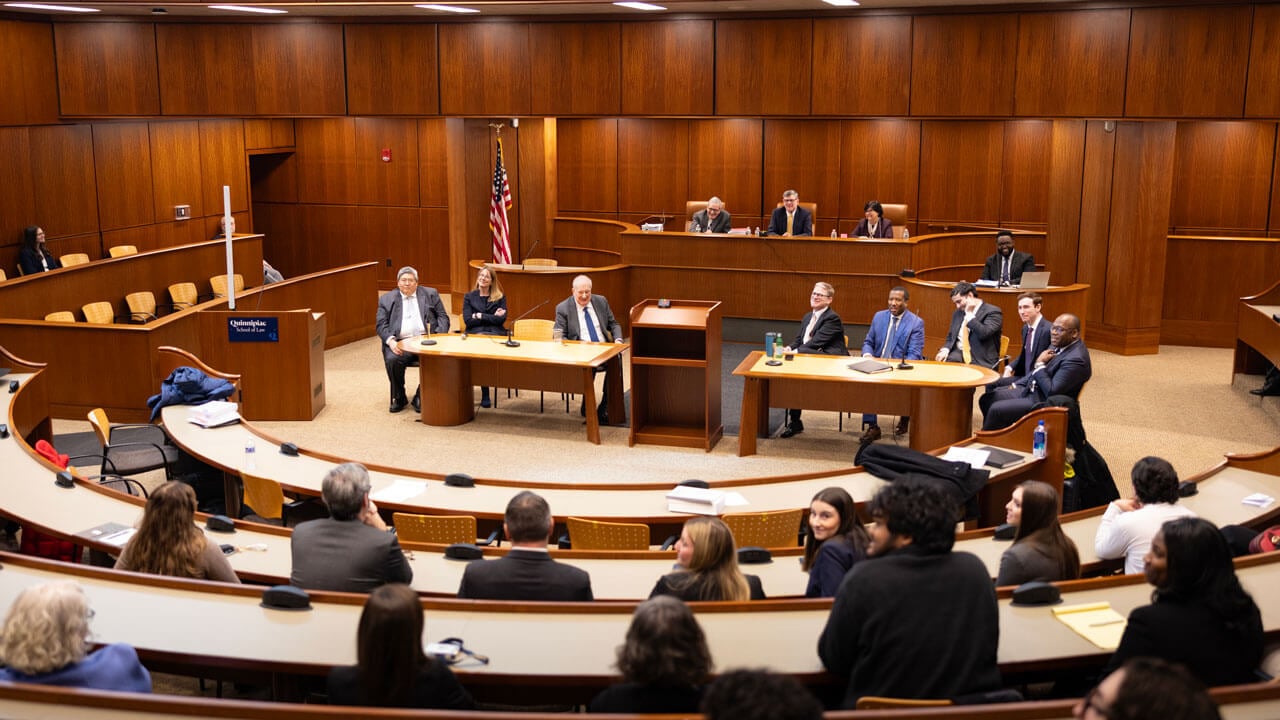
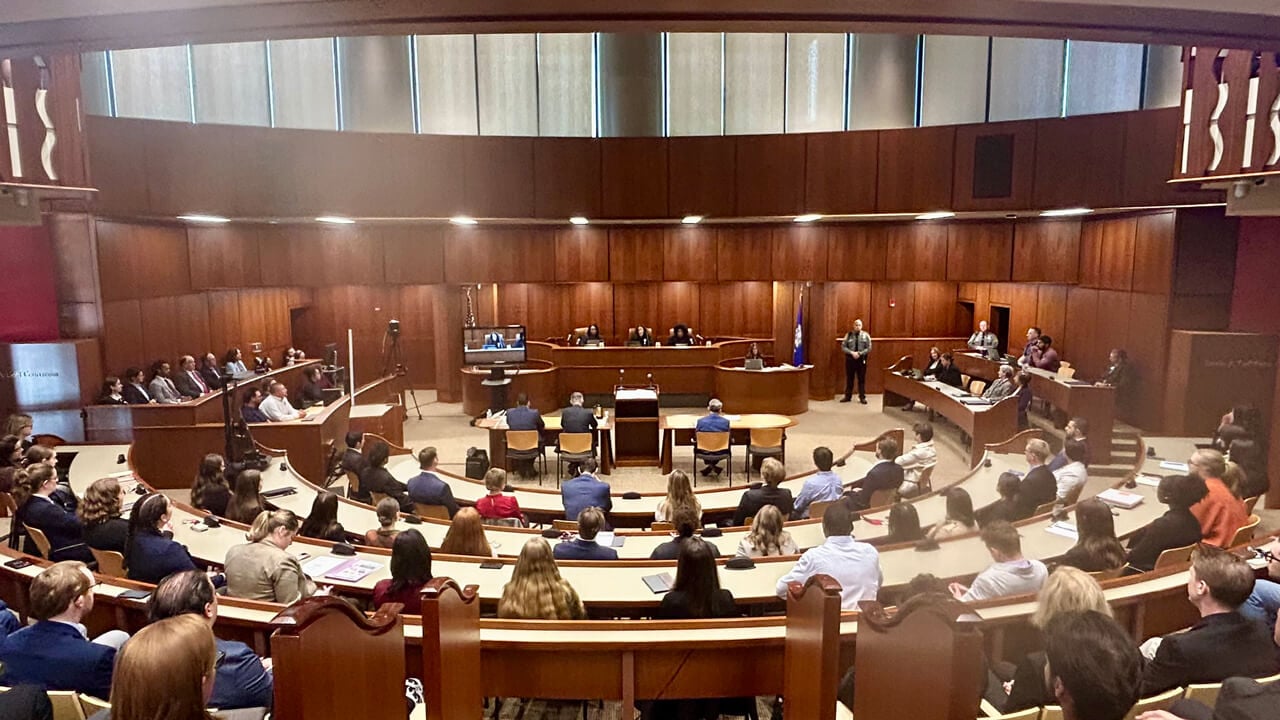
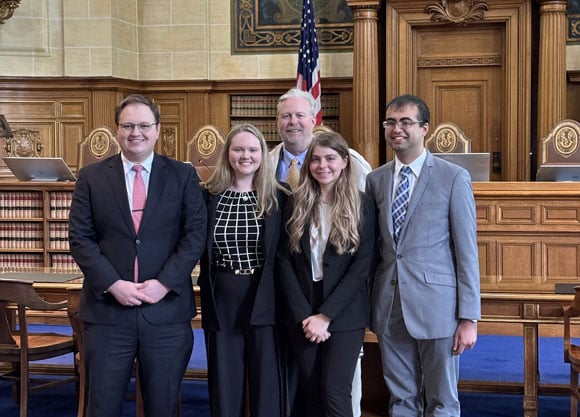
Hosted at the School of Law’s Brooke A. Goff Courtroom on January 9, the special event drew alumni, faculty, staff, and friends to share recollections and personal stories surrounding the law school’s rich history and enduring legacy. Attendees included those who were there for the law school’s beginnings in Wethersfield and Bridgeport as well as those who experienced its transformative years on the Mount Carmel Campus in Hamden and those engaging with the school at its current home on the North Haven Campus.
Months in planning, the symposium was organized by staff of the Quinnipiac Law Review, Quinnipiac Health Law Journal, and Quinnipiac Probate Law Journal, with the support and assistance of Dean Brian Gallini, said Quinnipiac Law Review Editor in Chief Olivia Ventura, JD ’26.
“Today is a really special day for the law school. We have the rare opportunity to pause, look back, and appreciate just how far our school has come,” said Ventura. “Each chapter carries its own challenges, character, and stories; and today is about honoring all of them.”
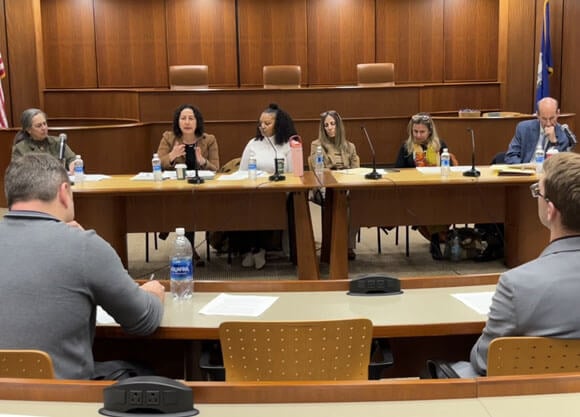
During four interactive panel discussions, key members of the law school family throughout the years discussed foundational challenges, periods of growth, and the innovations that have shaped the identity of Quinnipiac School of Law and continue to define its mission of educating the whole lawyer.
People with resilience and vision have shaped the school, Gallini said.
“This law school was built by people who refused to let a good idea die. People who believed in educating the whole lawyer and advancing justice. That spirit is alive and well today,” Gallini said. “As we reflect on our past, I hope we have a chance to also ask, “How do we honor that legacy? How do we continue to innovate and to lead?”
As Dean of Wethersfield School of Law, which got its start in 1973, Edward Rodriguez recalled the determined spirit of faculty, students and staff. The beginning of their pursuit of legal education was based out of borrowed spaces at a school which was facing creditors and legal battles over licensures.
During the day’s opening panel discussion, moderated by Quinnipiac School of Law founding faculty member Professor Marilyn Ford, Rodriguez recalled his decision to act after one creditor executed a writ leading to a sheriff’s sale of the school library.
“I came to the sheriff’s sale not as the dean, but as an individual; and I bought the library,” Rodriguez said, as applause and cheers broke out in the room.
Rodriguez next formed the nonprofit Wethersfield School of Law Library Fund to solicit donations further supporting the library.
“Students were strongly encouraged to make a contribution -- I think recommended $500. And that fund was pretty successful over the course of the next year, allowing us to purchase a decent starting library,” Rodriguez said.
The day’s second panel reflected on finding stability in the mid-1970s as the University of Bridgeport School of Law, including gaining accreditation by the American Bar Association (ABA). But by the early 1990s, the broad-based university was faced with severe financial distress.
With the fate of the law school in the balance, alumni recalled the dramatic and bold actions of Dean Terence H. Benbow. On November 28, 1991, the day he was fired by the university, Benbow refused to leave his office. His decision drew responses from Bridgeport police, TV news crews, and supportive students who gathered outside his office window during the hours-long standoff. The firing came two days after the Quinnipiac College board of trustees had agreed, in principle, to a merger with the law school.
Gallini noted Benbow held his ground because the law school faculty had just voted to take 700 students to Quinnipiac College – a bold move to preserve the school’s integrity and its future.
“Under courageous leadership, the law school seceded and sought a new home. By August of 1992, the American Bar Association approved the transfer of Quinnipiac College, making us the first law school in U.S. history to separate from a parent institution and affiliate with another college without any interruption in accreditation,” Gallini said.
Members of the afternoon panel, “A Period of Growth: The Mount Carmel Years” shared memories and stories of the next two decades at the law school’s home on the Mount Carmel Campus.
“That move was more than a change of address. It signaled a new era in stability and growth. It gave us the space to expand programs, to deepen our mission, to strengthen our identity as part of a thriving university community,” said Gallini.
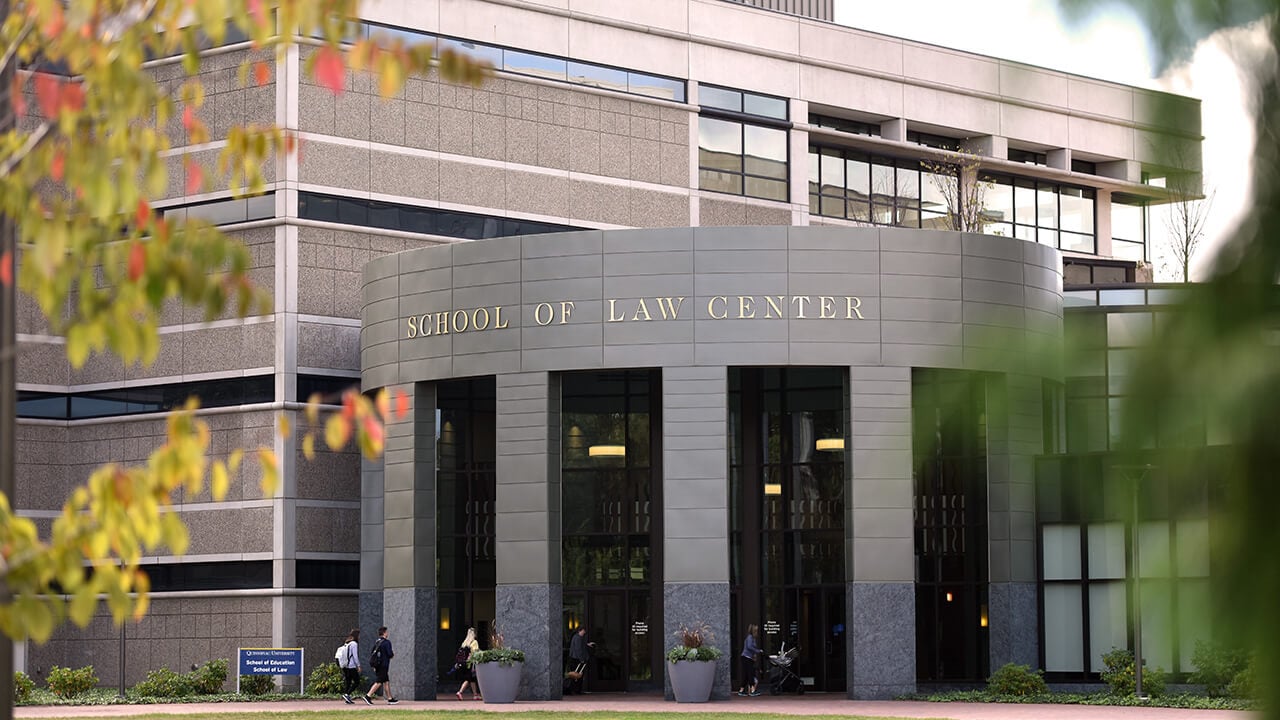
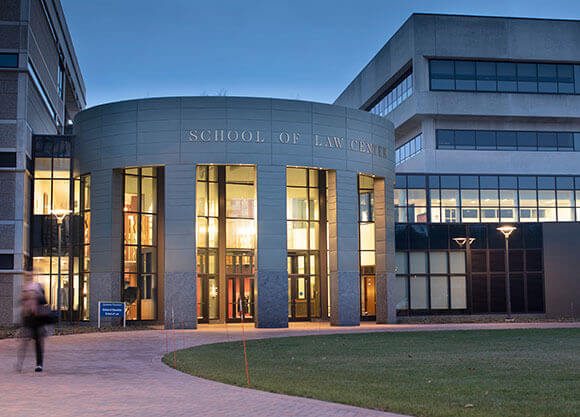
In 2014, Quinnipiac School of Law moved to its state-of-the-art facility on the North Haven Campus. The school’s magnificent, innovative spaces purposefully designed for innovation and collaboration.
During the panel discussion, “Carrying the Legacy Forward: The North Haven Era,” former Dean Jennifer Brown talked about how efforts to deepen leadership development and experiential legal and clinical education opportunities for students helped to define the school’s tagline “Educating the Whole Lawyer.”
“I always like to remind people that the tagline, at least as I had first thought of it, was that Quinnipiac is educating the whole lawyer to understand and serve the whole client. And that second part is just as important as the first part,” said Brown.
Brown also gave huge credit to the admissions team for grabbing onto the tagline.
“I think there’s something almost magical about trying to capture that in a phrase like that,” Brown said. “It started to attract students who thought, ‘I’d like to be at a law school that makes that a priority. And when the building starts to be filled with students who care about that, they make it a reality. We can do all we want with curriculum and administration, but it’s the students and the energy that they bring that makes it real.”
Following the symposium’s panel talks, the spirit of community continued with a pregame reception at On the Rocks pub on the York Hill campus, followed by cheering on Quinnipiac Men’s Ice Hockey as the Bobcats defeated Union in the M&T Bank Arena.
Ventura said it was a full but meaningful day.
“When I first started learning about the history of this law school, I was honestly amazed,” Ventura said. “The resilience, the growth, the transitions -- each era has its own story that is essential to understanding who we are today. Being able to bring those stories together and create a space for them to be shared has been an absolute honor for me. It’s a community, and it means a great deal to have such strong representation from every corner of the law school community.”
In this Article
Read This Next




















Stay in the Loop
Quinnipiac Today is your source for what's happening throughout #BobcatNation. Sign up for our weekly email newsletter to be among the first to know about news, events and members of our Bobcat family who are making a positive difference in our world.
Sign Up Now