



Provost Update: Spring 2026
To faculty and staff
January 14, 2026
January 14, 2026
Our work together will help us imagine how best to amplify QU’s distinctiveness and further strengthen academic excellence and student success. To begin this community-wide effort, please join us during the common hour on January 22 for the State of Admissions presentation. We will continue our Strategic Visioning process with community engagement sessions in February. Please watch for event invitations from President Hardin, all are encouraged to participate. We look forward to engaging with you throughout this endeavor, and to innovate together!
Innovation at Quinnipiac isn’t abstract. It must be real, supported and rooted in the daily work of our faculty and staff. A great recent example that showcases the breadth of our health-related expertise and interdisciplinary collaboration: Chetan Jaiswal (School of Computing and Engineering), Karen Majeski (School of Health Sciences), Brian O’Neill (School of Computing and Engineering), and students Jack Duggan and Michael Ruocco earned the university’s first patent for AccessiMoveTM, demonstrating how mission-driven ideas can become impactful solutions for our community.
As we embark on this work together, innovation will be a guiding principle, not only in envisioning Quinnipiac’s future, but in improving the everyday experiences that shape how we teach, learn and support one another. That’s why we’ve been focused on reducing friction by improving the systems and processes that shape your everyday experience. We’re rethinking tools, workflows and policies so they better support your teaching, research and service, while expanding faculty development to help you grow.
Below you will find updates from across the Provost’s Office on ongoing and upcoming innovations in:
All of this is grounded in a culture of experimentation and trust. As we test new ideas and pilot new systems, just like when we try new things in the classroom, not everything will land perfectly the first time (and that’s expected). Progress comes from trying, learning and iterating together, supported by open communication, shared learning and mutual respect.
Thank you for your partnership, your commitment to our students and the work you do every day. I look forward to continuing our work together in shaping what comes next.
New Hires: Please join me in welcoming our newest faculty and academic leaders. Their expertise and fresh perspectives strengthen our capacity to innovate.
Academic Affairs & Leadership:
Courtney Gunter - Pre-Award Specialist in the Office of Research & Sponsored Programs
Kiku Jones - Interim Associate Dean of Faculty Affairs for School of Business
Olga Levine - Director of Academic Budgets and Resource Planning
College of Arts & Sciences:
Mikayla Carr - Visiting Assistant Professor of Theater
Joshua Sukumar - Visiting Instructor of Mathematics & Statistics
School of Health Sciences:
Morgan Bagley - Clinical Assistant Professor of Pathologists’ Assistant Program
Molly Band - Clinical Assistant Professor of Physician Assistant Studies
Bryan Hall - Clinical Associate Professor of Social Work
Evan Johnson - Professor of Exercise and Health Sciences
Sarah Shaver - Clinical Assistant Professor of Physical Therapy
School of Law:
Larisa Bowman - Assistant Professor of Law
School of Nursing:
Corinne Lee - Clinical Associate Professor of Nursing
Research & Sponsored Programs: Quinnipiac has been selected for a prestigious NSF-funded initiative led by the National Organization of Research Development Professionals (NORDP). This opportunity will help us strengthen our research infrastructure and capacity, which support innovation. We are finalizing an engagement plan with NORDP consultants Faye Farmer and Debra Reinhart.
Have an idea for an innovation in research that could be supported by NORDP? Contact maureen.mccarthy@quinnipiac.edu to explore next steps.
Open Access Publishing: Quinnipiac Libraries now offer four transformative agreements (Elsevier, Springer, Cambridge, University Press, & ACM Open) that allow faculty to publish open access with no processing fees. Publishing open access increases the reach and visibility of your scholarship and innovations in peer-reviewed journals. Several colleagues have already benefited – consider taking advantage of these resources. For details, reach out to the library or visit the program website.
Sabbaticals: Congratulations to our 2026-27 sabbatical recipients! This dedicated time supports scholarly innovation and renewal.
Awardees: Charles Brooks (School of Business), Alan Bruce (College of Arts and Sciences), Carrie Bulger (College of Arts and Sciences), Xi Chen (College of Arts and Sciences), Christina Dickerson (College of Arts and Sciences), Maya Doyle (School of Health Sciences), Tilottama Ghosh Chowdhury (School of Business), Julia Giblin (College of Arts and Sciences), Sam Edwards (College of Arts and Sciences), Jesse Kalinowski (College of Arts and Sciences), Sarah Lawson (College of Arts and Sciences), Mary Phillips Ho (School of Computing and Engineering), Jennifer Sacco (College of Arts and Sciences) and Laura Willis (School of Communications).
Reimagining General Education: The University Curriculum review is a major opportunity to reimagine General Education as a distinctive, future-focused experience that reflects our institutional values and the evolving world our students will enter. General Education is not just a set of requirements; it is the foundation for developing curiosity. This is an opportunity to shape an innovative curriculum that addresses the challenges of today’s world and prepares students to lead and thrive in complex environments. We must create curriculum that use courses and co-curricular activities to build:
Intellectual agility
Interdisciplinary thinking
Human literacies
Adaptable, real-world skills
This work will be led by the General Education Review Committee:
Chair - Jill Fehleison (College of Arts and Sciences) – Director of General Education
Terry Bloom (School of Communications) – Associate Deans Council
Jenna Curren (College of Arts and Sciences)
Jennifer Dauphinais (School of Education)
Christian Duncan (School of Computing and Engineering) - University Curriculum Committee
Caitlin Hanlon (College of Arts and Sciences) - Faculty Senate Chair
Ruth Kaplan (College of Arts and Sciences)
Sue Norkus (School of Health Sciences) - University Curriculum Committee
Sara Rzeszutek (QiLT) – Faculty Development & University Curriculum Committee
David Tomczyk (School of Business)
Tyler Traister (School of Nursing)
Annalisa Zinn (Provost’s Office)- ex-officio liaison with accreditation
Faculty Development Support: Faculty and staff attended Semester Spark this week where they explored innovative approaches to curriculum and student learning that ties seamlessly with the General Education review.
College-In-Three Program: Faculty are encouraged to explore proposals for reduced-credit bachelor’s degree programs, especially integrated dual-degree pathways that combine a 90-96 credit applied bachelor’s degree with a graduate degree in an aligned field. These innovative integrated pathways could provide students with accelerated options to earn both credentials, enhancing their career readiness and academic experience.
If you are interested in developing an innovative program, or want guidance on the proposal process, please reach out to your dean or Arts & Science Dean Adam Roth who is leading our work in this area.
Artificial Intelligence (AI) is reshaping every sector, including higher education. To prepare students for a world where AI is ubiquitous, we must teach students how to use them ethically, creatively and effectively. To do so, we have offered various faculty development opportunities on AI:
Winter Warmup: We hosted our first winter faculty development session on AI before the break with strong participation. Explore materials here: Winter Warmup 2025 resources.
AI Resources, Policy and Guidelines: QILT curated AI Resources and Quinnipiac has published its AI Policy. Instructors should provide students with a clearly stated policy about the acceptable use of AI tool in each course (e.g., syllabus statements, assignment directions, in-class instructions). If an instructor has reasonable suspicion of unauthorized use of AI by a student in the completion of a test of assignment, then per the Academic Integrity & Accountability Policy, the instructor must file an academic integrity violation report for the student. Instructors should NOT use AI detection software due to its technical imperfections and potential violations of student privacy under FERPA. Reports of violations that use these methods cannot be processed.
One Book, One University Initiative: We're continuing our One Book, One University conversations around The Opposite of Cheating: Teaching for Integrity in the Age of AI (Bertram Gallant & Rettinger, 2025). Join a session:
Friday, January 30, 10-11 a.m. – MNH-165 (North Haven), register
Thursday, March 5, 12:30-1:45 p.m. – SC-120 (Mount Carmel), register
Monday, March 16, 9-10 a.m. – MNH-165 (North Haven), register
Thursday, April 9, 12:30-1:45 p.m. – SB-350 (Mount Carmel), register
Additional AI Platforms: This spring, we’ll evaluate additional AI platforms to compliment Microsoft Copilot. We'll be including an evaluation group. Interested in joining the pilot? Complete the Spring 2026 AI Pilot Interest Form.
Change is never easy and innovation takes support. We know faculty need time, resources, and community to thrive. That’s why we’re offering a range of development opportunities designed to spark ideas, build skills, and make innovation practical and sustainable. We hope you will consider registering for these sessions:
New Faculty Support: Applications are open for the second cohort of Building Opportunities for Broader Classroom Achievement & Teaching Success (BOBCATS), a Davis Educational Foundation-funded initiative supporting faculty hired within the last three years to strengthen their teaching skills and build community across the university.
Program dates: August 5-7 and 10-11
Opportunities:
Participants: Full-time faculty who have taught at Quinnipiac for less than three years are eligible to participate in the orientation and can learn more and apply here.
Mentors/Facilitators: Full-time faculty who have served at Quinnipiac for at least six years are eligible to serve as mentors/facilitators and can learn more and apply here.
Questions: Contact Sara Rzeszutek (sara.rzeszutek@quinnipiac.edu) or Stephanie Jacobson (stephanie.jacobson@quinnipiac.edu)
NCFDD Membership: This semester we are partnering with NCFDD to curate a list of high-impact development opportunities for Quinnipiac faculty, staff, and graduate students. If you haven’t already, activate your free NCFDD profile to access innovative workshops, webinars, writing support and more.
Faculty Writing Retreat: Need focused time for innovation and writing? Join us for structured retreats:
Monday, March 9 9 a.m.-5 p.m. in RTSC-303 & RTSC-311 – register
Monday, March 9-Sunday, March 22 – Exclusive 14-Day Writing Challenge – register
Monday, March 23 9 a.m.-5 p.m. in in RTSC-303 & RTSC-311 – register
Faculty Development Lunches (Common Hour): Join us each month for targeted, practical sessions:
Old Fashioned Cheating: Quotation, Paraphrasing, & Plagiarism - Thursday, January 29 12:30-1:45 p.m. (SB-250 and live streaming in MNH-165) –Hosted by the Office of the Provost, QILT, and the Academic Integrity Board Please bring your own lunch and register.
Am I an Innovator or Entrepreneur? Reframing Innovation and Entrepreneurship (I&E) for the Modern Academic – Thursday, February 26 12:30-1:30 p.m. (SB-150) – Co-hosted with the M&T Bank Center for Innovation & Entrepreneurship. Lunch will be provided, please register.
Sabbatical Leave Presentation – Thursday, March 26 12:30-1:30 p.m. – details forthcoming
Innovation isn’t just about new ideas, it’s about making work easier. We know that outdated systems create unnecessary friction, so we’re streamlining processes to save time and reduce complexity. These changes will help faculty focus on what matters most: teaching, research, service and student success.
Course Evaluations: We are excited to announce that Watermark will become our new platform for course evaluations beginning Fall 2026. A huge thank you to the Course Evaluation Working Group (Poonam Arora, Michael Ben-Avie, Emmanuel Chang, Stephanie Jacobson, Richard Lane, Linda Merritt, Christina Pavlak, Alyssa Ryan, Sara Rzeszutek, & Angela Walker) for their thoughtful review of options. This transition will:
Streamline the evaluation process
Reduce administrative burden
Provide a more consistent experience for faculty, staff, and students.
Interested in helping develop a common course evaluation tool? Email stephanie.jacobson@quinnipiac.edu.
Streamlining Reviews: By 2027, we will transition from Galaxy to Watermark for Annual Reviews and Reappointment, Promotion, & Tenure (RPT). This integrated system will be transformational, reducing duplication and improving transparency and consistency. Thank you to the RPT Working Group (Lynn Byers, Julie Dwyer, Doug Goodman, Julia Fullick-Jagiela, Gina Robertiello, Tracy Wall, & Kearston Wesner) for championing this change.
Canvas Updates:
Course shells for Spring courses are now available on your Canvas Dashboard under Unpublished Courses.
Review our Getting Ready for the First Day of Class guide to set yourself up for a smooth start to the semester.
Need help? Canvas offers 24/7/365 support via phone and chat. You can also submit a request directly through Canvas if you need assistance.
Spaces and schedules shape how we connect and collaborate. We are thinking creatively about how our physical spaces and schedules can support learning, community-building, and innovation. These changes aim to make time and place work for you, creating more opportunities to engage meaningfully with students and colleagues.
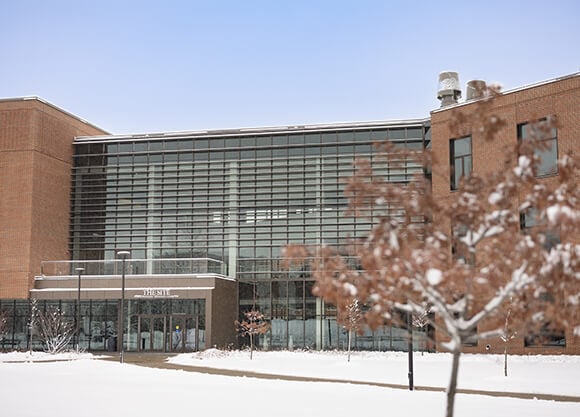
Facilities: Thank you to the faculty in the Science, Innovation, Technology, and Exploration (SITE) and School of Business buildings for their ongoing collaboration with Liz Bender, Director of Capital Planning and Construction, and her team. An ambitious punch list was executed during the winter break, including programming lights and addressing faculty requests in lab spaces. Thank you for everyone’s hard work and flexibility in managing the unexpected. We have additional renovations coming soon, including:
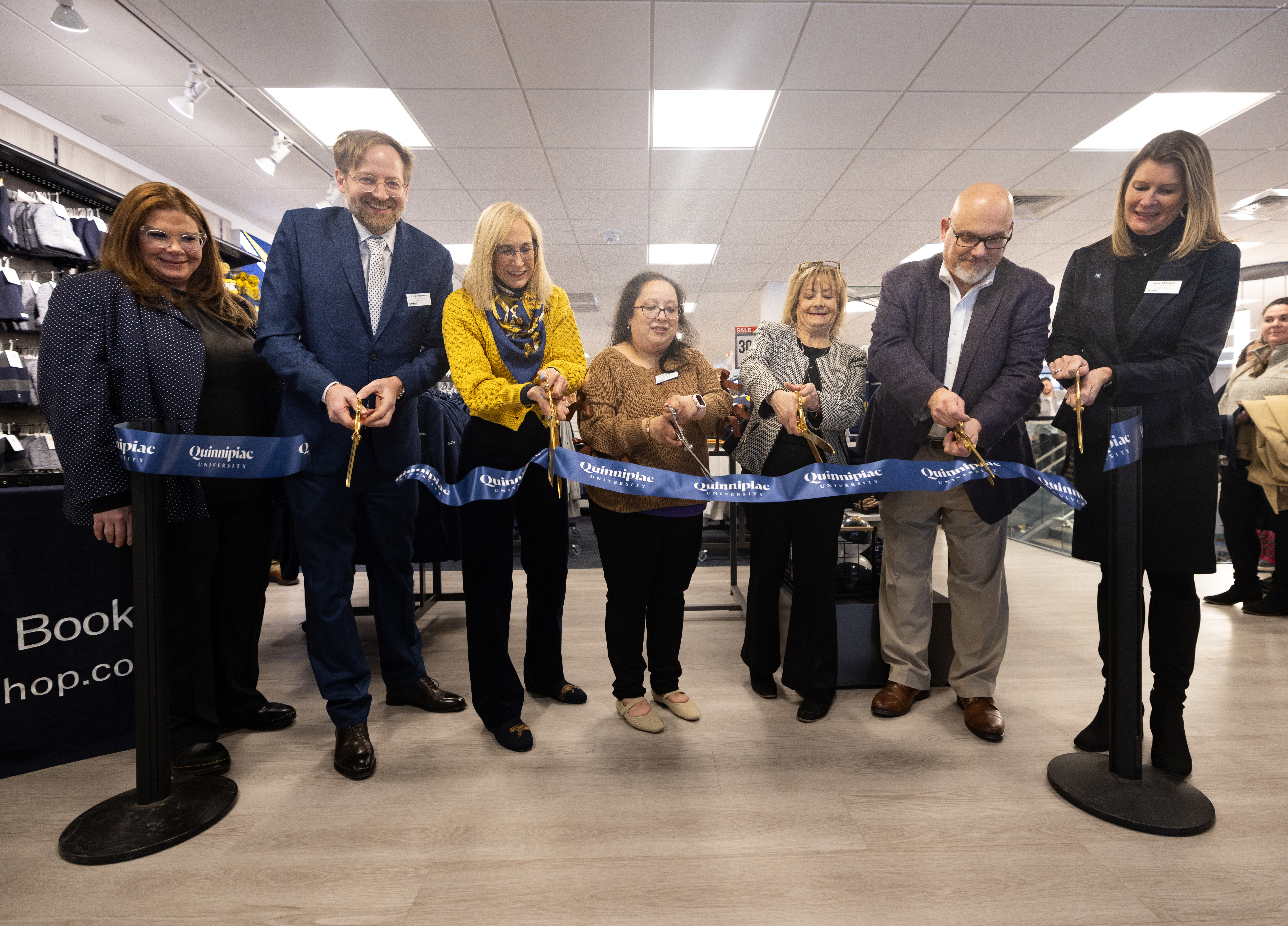
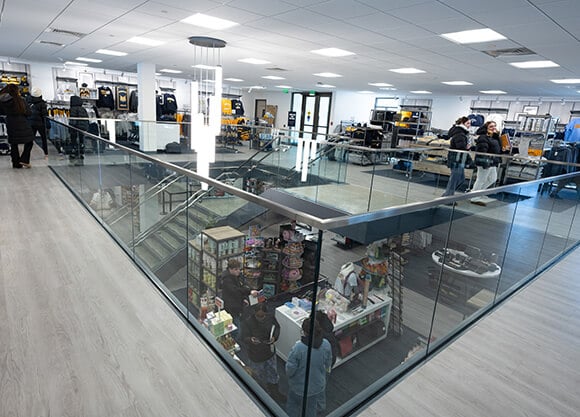
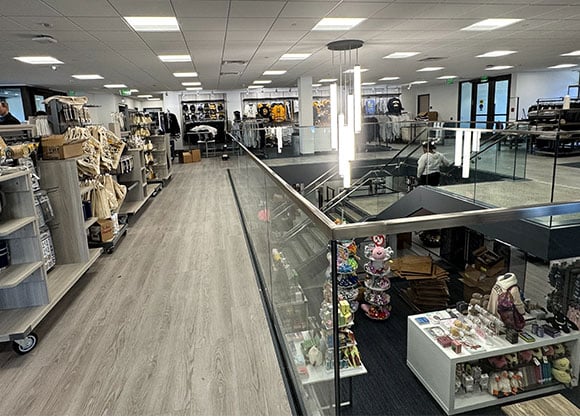
Bookstore: Visit the new location of the QU bookstore in the former Faculty Office Building (off North Lot) which opens on January 20th!
Buckman: Buckman has been razed. Please be mindful of fencing which will remain while the foundation is cleared.
Parking: New dedicated faculty parking has been added. For more information see the email communication from OneStop.
Fall 2026 Planning: Units have been meeting with the design team regarding new OSA testing space on the second floor of Echlin and moves into the DOME.
Common Hour: Thank you to all who engaged in the first semester of the Common Hour. As we try new things, we need to be flexible. In response to your feedback, we’re making a small but meaningful shift to how Common Hour will work moving forward.
What’s Changing:
We’ll now identify a limited number of key Thursday Common Hour programs that we hope faculty and staff will prioritize.
All other Thursday Common Hour times will be open, giving you flexibility to use this time in ways that best support:
Department meetings
Collaborative planning
Student engagement
Community-building with colleagues
What’s Staying the Same:
Tuesday Common Hour remains unchanged with weekly campus-wide events.
We hope that opening up Thursdays will boost faculty participation on Tuesdays and strengthen campus engagement.
Thank you to all faculty whose cross-unit collaboration is making innovative partnerships possible. These efforts are helping us expand:
Student experiential learning and internships
Professional upskilling and non-degree offerings
Pre-college and dual-enrollment programs
Leadership and workforce-focused initiatives
Community-engaged learning and public-impact projects.
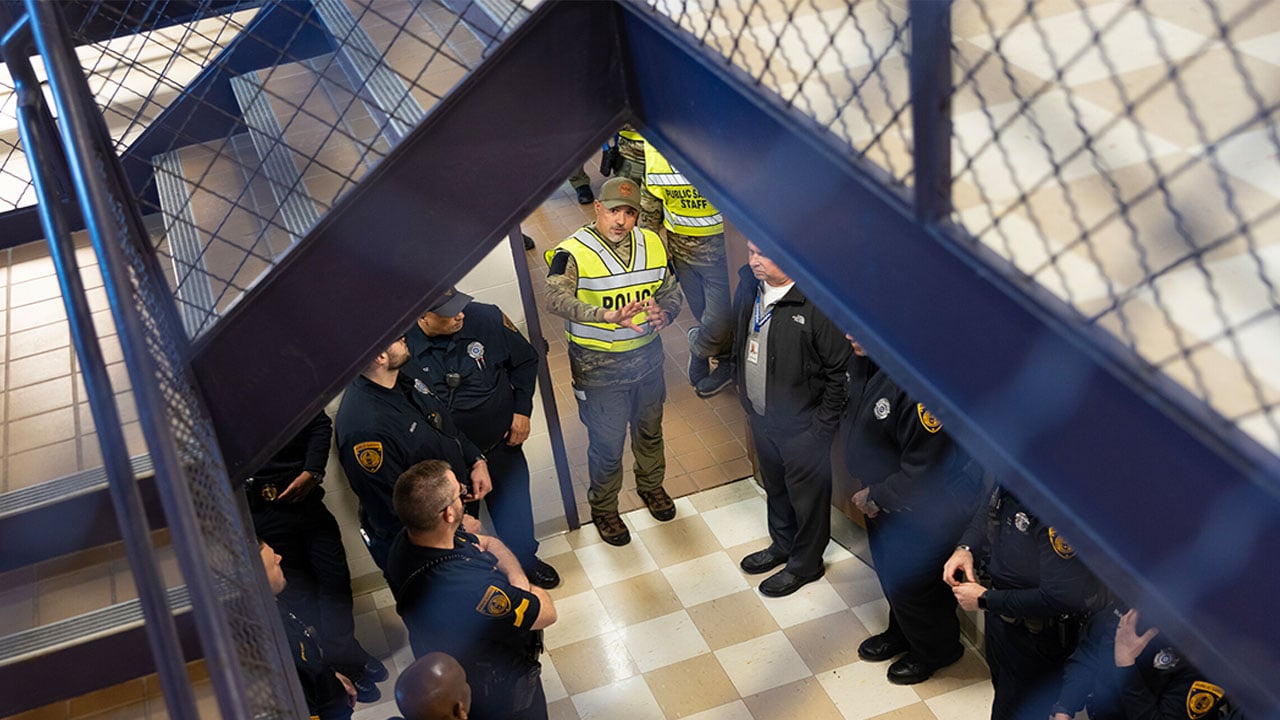
Our growing partnerships with organizations, such as Masonicare, Medtronic, YMCA, CCAT, Wheeler Health, and the Connecticut Department of Corrections are:
Enhancing student learning
Increasing faculty impact
Supporting regional workforce needs
Strengthening community relationships.
These multifaceted, mutually beneficial partnerships are only possible because of the dedication of faculty and staff who work collaboratively, through shared governance, trust, and a willingness to innovate together, to enhance thoughtful experimentation and fast, informed decision-making.






Quinnipiac Today is your source for what's happening throughout #BobcatNation. Sign up for our weekly email newsletter to be among the first to know about news, events and members of our Bobcat family who are making a positive difference in our world.
Sign Up Now