


Rare Disease Day calls community to action
March 05, 2026
March 05, 2026
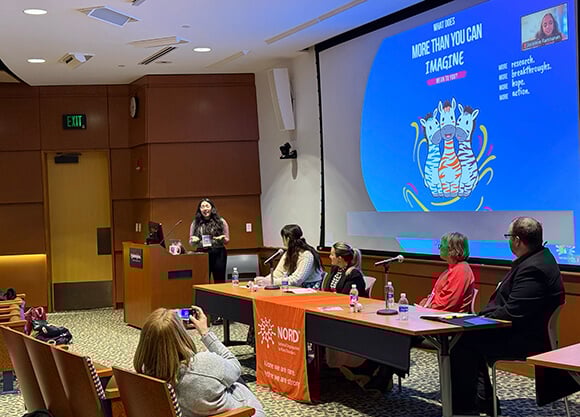
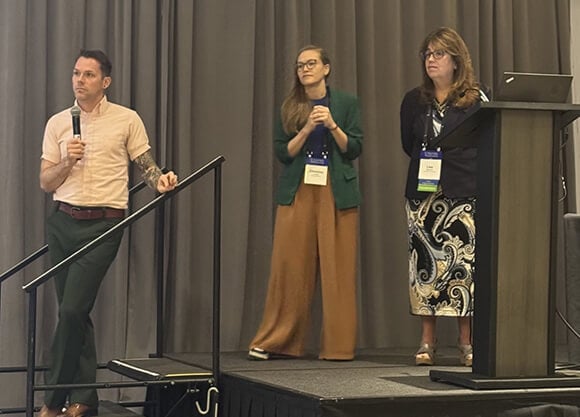
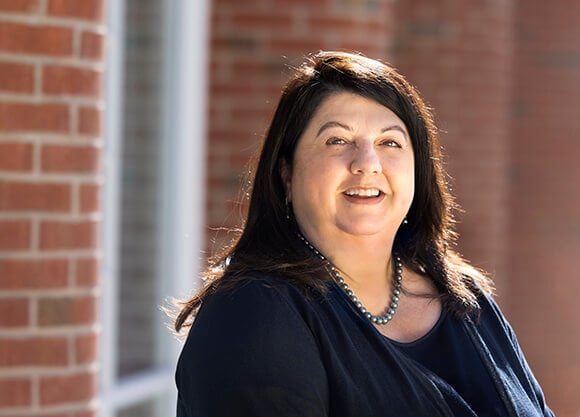
One of the panelists, Carolyn Macica, a founding member of the Frank H. Netter MD School of Medicine faculty, shared her extensive work in rare disease research. She is the director of research operations and development at the Connecticut Children’s Research Institute and co-director of its Scientific Center for Rare Disease.
“Rare disease organizations are incredibly important to moving the initiatives forward for every rare disease to get a therapy and to have research conducted on it. They create that community so that everyone feels like they are heard, and they also collaborate to share information and resources. It is a great opportunity for scientists and clinicians to come together and talk about what they know about OI,” said Macica.
Macica has worked directly with students at the university to provide new therapies and treatments.
“Here at Quinnipiac University, working with the physical therapy department, we created an evidence-based disease-specific physical therapy program. We also brought patients here to Quinnipiac and studied a full body analysis,” said Macica. She then pointed to a student in the audience. “He is actually doing phase two of that study in a gait analysis and functional range of motion that are characterizing the disorder.”
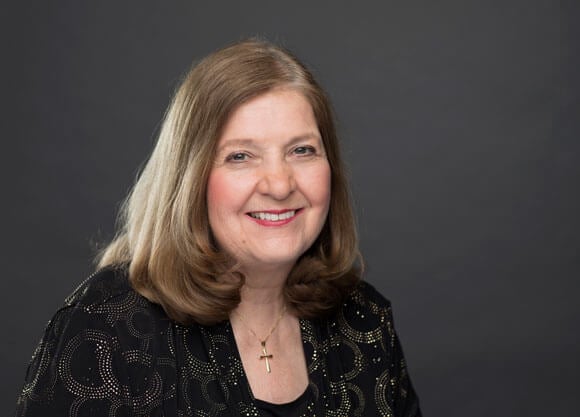
Another panelist at the event, Michelle Fynan, serves as the co-vice president of the Osteogenesis Imperfecta Foundation. In this role, she integrates professional expertise and personal insight as a clinician, mother and woman living with OI to educate, advocate and advance conversations around sexual wellbeing, medical trauma and mental health.
“It was the OI Foundation that really helped my family navigate my diagnosis, and I grew up going to the national conferences,” said Fynan. “It was becoming a mom of daughters with OI that really lit a fire underneath me to see how advocacy can be more than just another branch of what we are doing. It can be that acceleration for moving in the right direction in rare disease.”
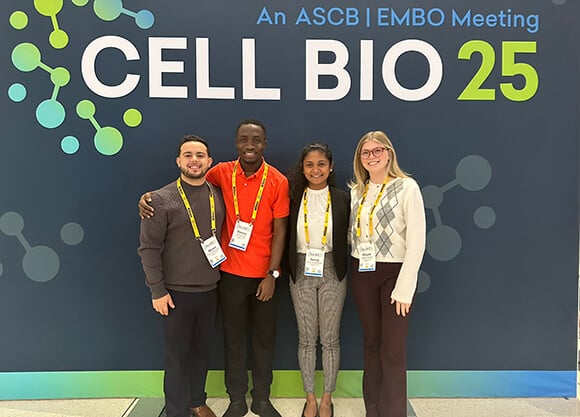
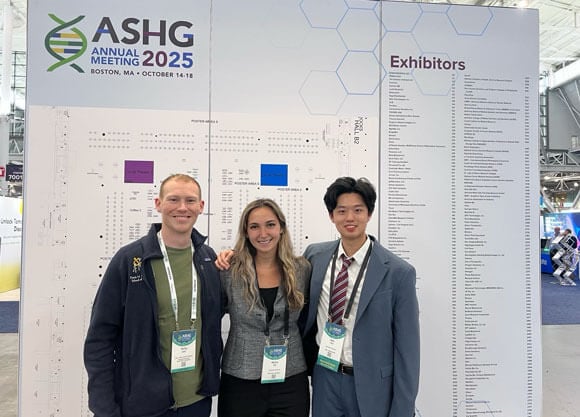
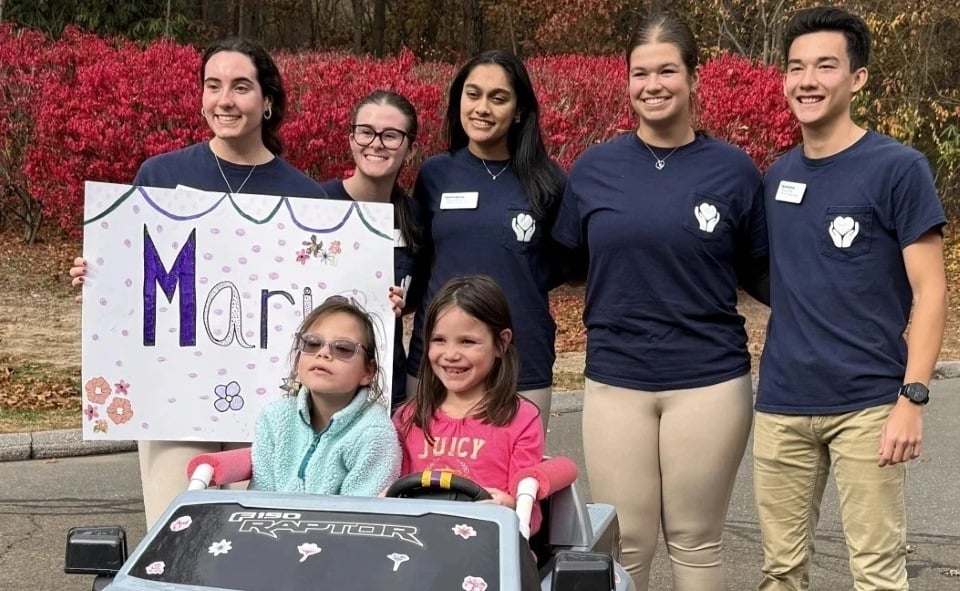
The four students who represented the Students for Rare at Quinnipiac during the conference were Eve Behrens ’27, DPT ‘30, a student in 3+3 dual-degree accelerated health science studies and doctor of physical therapy program; and Brenda Blanco, MD ’28, Meghana Nair, MD ’28, and Brendan Ng, MD ’28, second year medical students at Quinnipiac’s Frank H. Netter MD School of Medicine.
The student group leading the event all joined the Students for Rare team at Quinnipiac based on their own experiences and interests.
“I became involved with Rare Disease Day because I believe that hearing firsthand from stakeholders about their lived experiences carries a powerful and impactful effect that can help train more equipped and confident healthcare professionals,” said Blanco.
Ng shared about the personal experience his family had navigating a rare disease.
“My interest in rare diseases began because of my adopted older brother, Brian. At age 2, Brian was diagnosed with Xeroderma pigmentosum (XP), an autosomal recessive genetic disorder which affects about 1 person per million in the United States,” said Ng. “Many physicians and medical providers have no or limited knowledge and experience diagnosing and caring for XP patients and research and funding are limited.”
The group is passionate about advancing the future of healthcare quality and access for patients living with rare diseases.
“The initial push for rare disease inclusion at the Frank H. Netter MD School of Medicine has expanded across disciplines with our Students for Rare team, represented by communities in several undergraduate and graduate programs across Quinnipiac University. Our group has been working diligently throughout the year to raise funds and awareness for the National Organization for Rare Disorders (NORD),” said Behrens. “We also advocate for rare disease education within our education, ensuring that Quinnipiac students enter the workforce prepared to help patients with rare diseases.”
Students for Rare was supported in hosting this event by their faculty adviser, Maureen Helgren, who is an associate professor of medical sciences.
Helgren expressed her fulfillment in advising the Students for Rare group. She received funding for the Rare Disease Day through an educational grant from Ultragenyx.
“The reality is that it is hard to live with a rare disease and to care for family and friends with a rare disease. Organizations such as NORD or disease-specific foundations began and continue to support the rare disease community,” said Helgren. “Together, we can bring to fruition the event theme, ‘more than you can imagine,’ with more research, more breakthrough treatments, more accessibility, more wellness, more joy and more hope. I am honored to be a part of an institution that values rare disease education through dedicated curricular time.”
The event was also supported by the Center for Interprofessional Healthcare Education at Quinnipiac. The center is nationally recognized and hosts many events throughout the year, with many focused on rare disease. The Center for Interprofessional Healthcare Education has encouraged students from various programs to collaborate as they prepare to support their patients.
As more awareness is spread about the rare disease community and the need for research on rare disorders, many patients living with these conditions are more hopeful for their future.
One patient who felt significant hope for the future is Josie Ramnanan, a senior at Queens College with career aspirations to teach in both secondary and higher education. She is a strong advocate for Osteogenesis Impefecta and documents her journey on her Instagram page.
“There’s a lot more focus now on pain management that comes after the fractures and surgeries and pain management that comes within a holistic and multidisciplinary perspective, and that gives me hope because treatment doesn’t just end at the fractures — it’s treating the whole person,” said Ramnanan.
The students also had the opportunity to hear from clinicians who work directly with rare disease patients at Connecticut Children’s Medical Center, including James Santanelli, lead clinical research associate, and Eliza Baker, clinical research nurse coordinator.
Baker shared with students the value in making patients a top priority.
“It was important to me to see the child and their loved ones as a family unit — to understand their dynamics. It is important to see your patient as a person, not as a number, not as a subject and not as a task to complete” said Baker. “Yes, I work for Connecticut Children’s. But at the end of the day, I work for my patient first.”
The students in attendance learned a lot from the panelists, including concepts that directly related to their course curriculum.
“At Quinnipiac, I have learned about many rare diseases through my curriculum, last year’s Rare Disease Symposium, and interprofessional education events. Through these various experiences, I have heightened my awareness and knowledge about rare diseases and their impact on patients and their families,” said Ng.
The Students for Rare group hope that students feel empowered after learning about the rare disease community.
“This program symbolizes the partnership and ownership we have each taken in honoring the patients and families, recognizing the work of clinicians and researchers in the field, and reaffirming our commitment to supporting persons living with rare conditions,” said Nair.
The event concluded with remarks from Helgren, who put responsibility on the students to continue learning more about rare disease at Quinnipiac and beyond.
“I look out here and am so confident that there are now going to be more clinicians who are prepared to hear the patients with rare or undiagnosed diseases and they are not going to have that long diagnostic journey. You are going to be able to approach care in a really meaningful way for patients,” said Helgren.




Get the latest news and events sent right to your email by subscribing to Quinnipiac Today.
Subscribe