

After suffering cardiac arrest at 17, alumnus thanks School of Health Sciences graduates
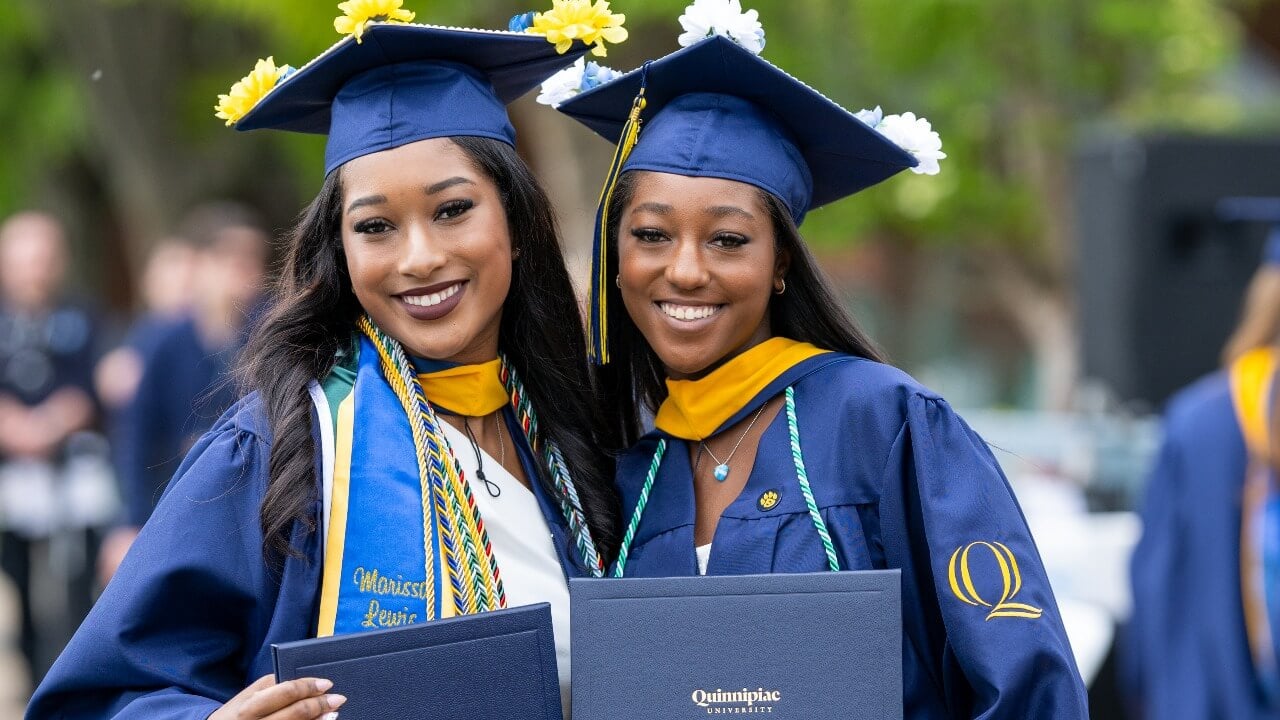
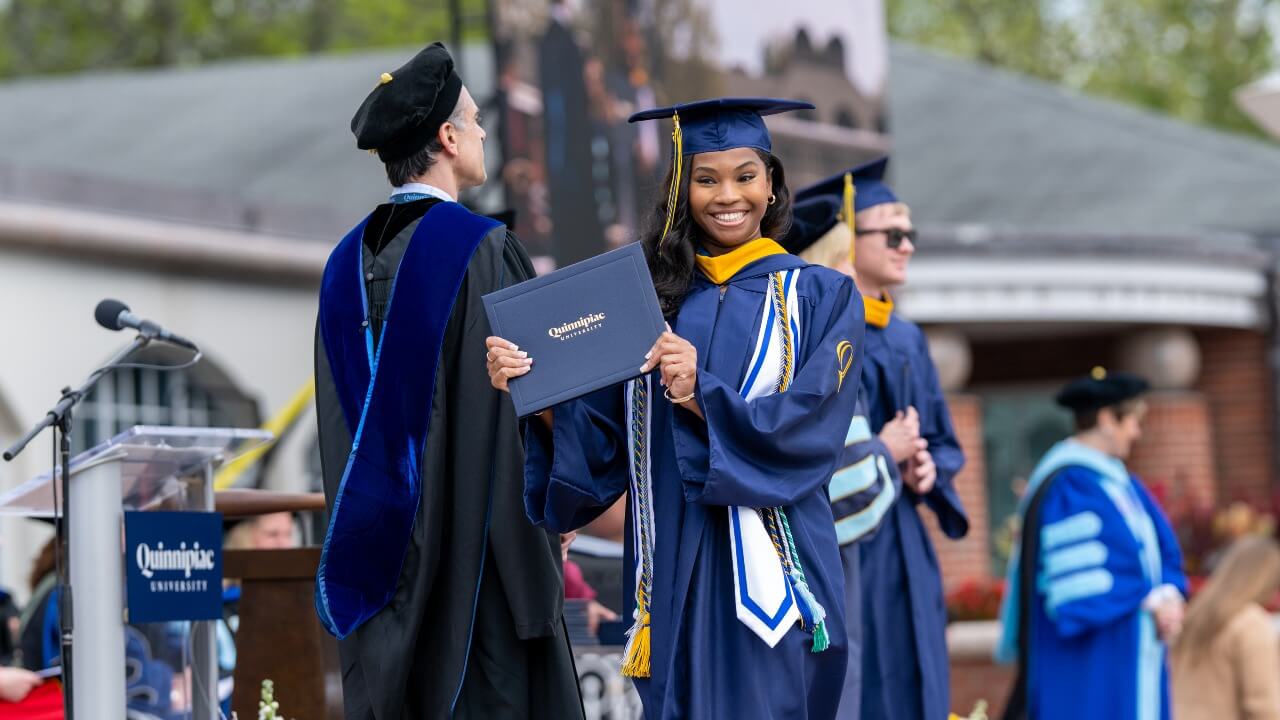
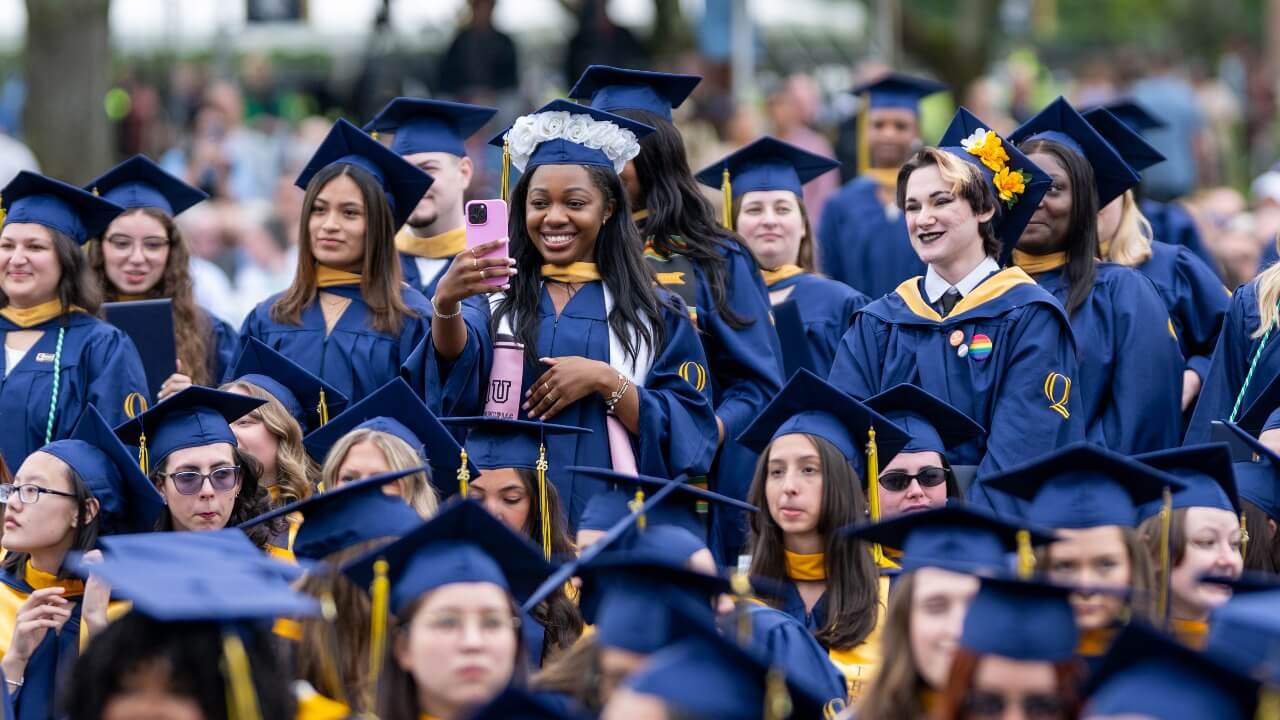
School of Health Sciences Undergraduate and Graduate Commencement 2026

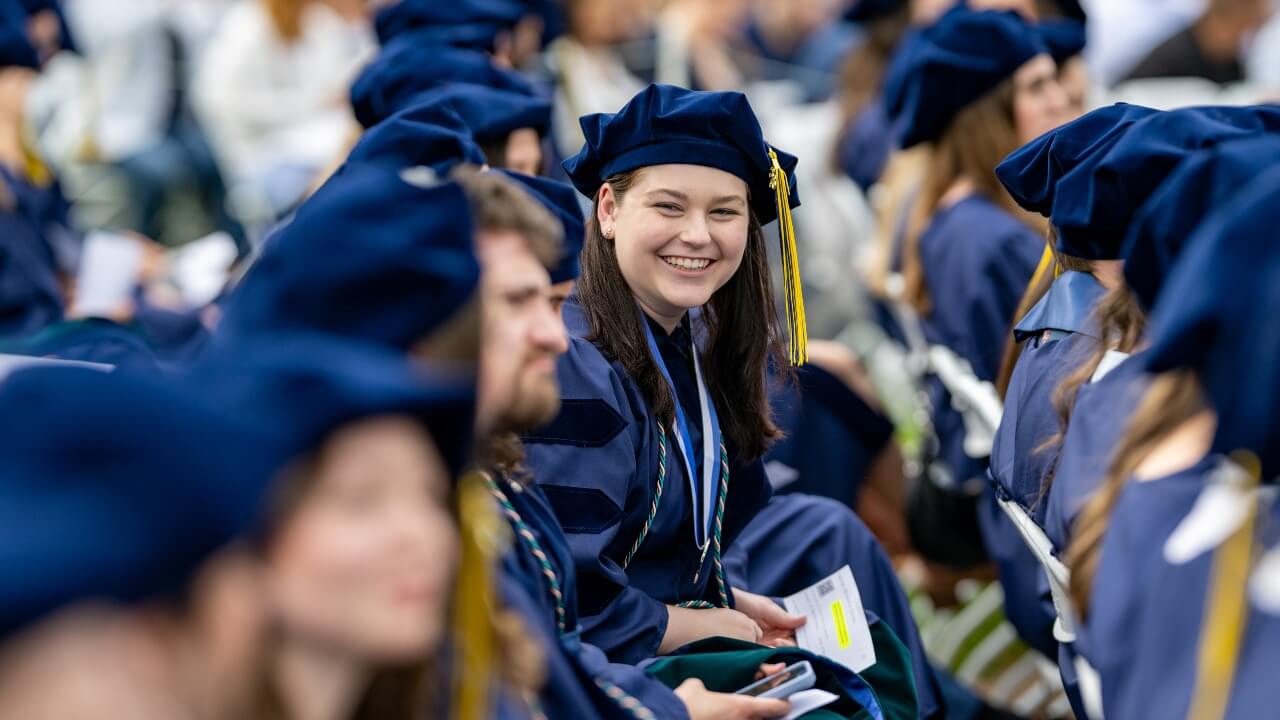
School of Health Sciences Undergraduate and Graduate Commencement 2026
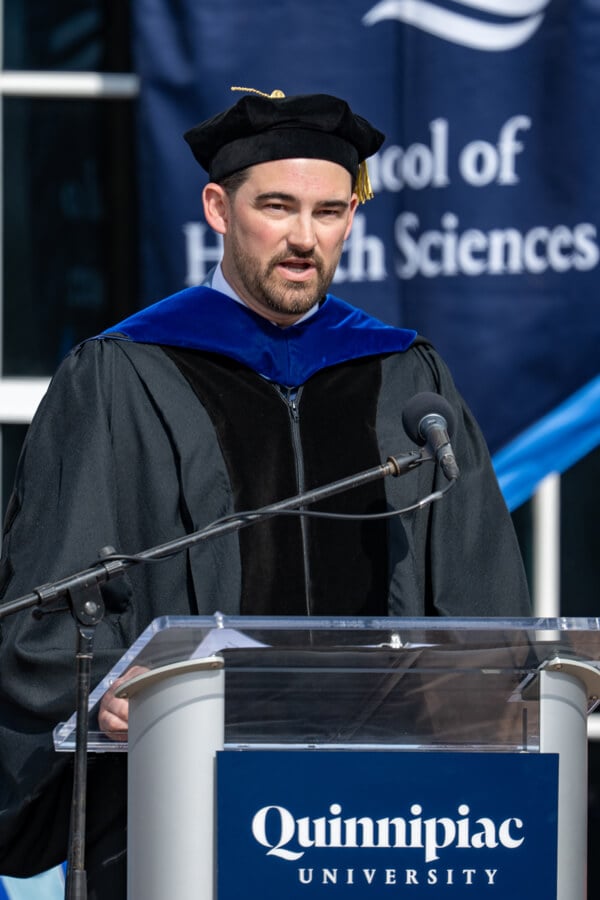
“Twenty years ago, I survived something I probably should not have survived,” Papale told the 732 graduates of the School of Health Sciences at his Commencement address. “The people who saved my life, the people who diagnosed me, treated me, comforted my family, operated on me, rehabilitated me and kept me alive are the people represented here today.”
Papale, founder and president of the In A Heartbeat Foundation, doesn’t remember all of the details, but said he’s heard the story 1,000 times: He collapsed on the court, turned blue and the clock didn’t care.
It just kept ticking.
“Someone just like the student who served on the QU EMS team here on campus heard the call, ran over, found me unresponsive and performed CPR,” Papale said. “He saved my life, he saved my brain and he really gave me a chance to be here today.”
Papale spent the next three days in the hospital. His parents were shocked, confused and scared. Fortunately, there were highly trained healthcare workers ready to act with compassion and care.
One by one, specialty by specialty, Papale highlighted the health sciences professionals who saved his life. There were the physician assistants, physical therapists, occupational therapists, social workers and more.
“Healthcare workers are often the first faces the terrified family sees,” Papale told the graduates. “You are the ones who take the vitals, explain procedures and calm parents. You were the first ones who made my parents feel like maybe — just maybe — I was going to be OK.”
The contributions of health sciences professionals were just beginning, Papale explained. There were more tests, more diagnostic images and more decisions ahead.
“Graduates of diagnostic medical sonography performed the echocardiograms and MRIs that revealed the truth about my heart. And it was radiologic science graduates who took the X-rays that guided decisions about my treatment,” Papale said. “Your images told my doctors what my body couldn’t. Your work helped diagnose me with hypertrophic cardiomyopathy.”
“Thanks to people with your expertise, I’m here today. Thanks to people with your passion, my life is normal,” Papale said. “Thanks to people like you, my parents didn’t have to go through the one thing that no parents should ever have to go through — and that’s losing a child.”
“Thanks to you, I get to wake up every single day and try to make a difference,” he added. “You don’t just change lives, you restore them. You protect them and you give them back. My life went on because of you.”
In 2015, with a better understanding of sudden cardiac arrest, Papale founded the In A Heartbeat Foundation to raise awareness for hypertrophic cardiomyopathy among children. Since its founding, the nonprofit has built an automated external defibrillator (AED) donation program and organized early-detection events for children and their parents.
Since then, the In A Heartbeat Foundation has provided more than 11,000 EKGs, trained more than 7,000 people in CPR/AED and saved more than 75 lives. Quinnipiac has also become the biggest partner for the nonprofit organization, he said.
For President Marie Hardin, it was a Commencement ceremony acknowledging the best of community and the best of gratitude.
“You have inspired me, Class of 2026, to do more than utter my thanks to you, but to live by what I have learned from you,” she said. “To combine ambition with kindness. To prioritize helping others, understanding that I also benefit. And to remember that the small gesture can change the world as much as the grand one.”
And then, after pausing for a minute, Hardin added warmly, “Please know this: We will never forget you. I hope you don’t forget us.”
Sofia Konkolics ’26 wove her undergraduate remarks with her time as a circus performer.
“What you may not know is that long before Quinnipiac, before healthcare was even part of the plan, I joined the circus — not metaphorically, but literally,” Konkolics said. “At 7 years old, I learned how to juggle, walk tight ropes and perform under bright stage lights. My circus career ended years ago, but the lessons I have learned have shaped me far beyond that stage.”
“And honestly, our time at Quinnipiac has felt a lot like the circus. We've all been juggling exams, clinical hours, friendships, leadership roles, jobs, family expectations and the quiet pressure to figure our futures out,” she added. “In the circus, the goal is simple: Don't let the ball drop. In healthcare, it can feel the same way, but here's what I learned early on: A ball might drop, and that's OK. That doesn't mean you're failing. It means you're learning.”
Abigail Lambert, MHS ’26, spoke about the lasting impact of serving the whole patient.
“One thing that my time in the School of Health Sciences has taught me is that learning how to care is just as important as learning the science itself,” Lambert said. “We’ve spent countless hours studying disease pathways and research methods.”
“But what would stay with us is something less tangible: The ability to see the person behind the diagnosis,” she added. “Our education has not occurred in isolation. Courses like Seminar in Healthcare Disparities challenged us to look beyond the textbook and into the realities of the communities we serve.”
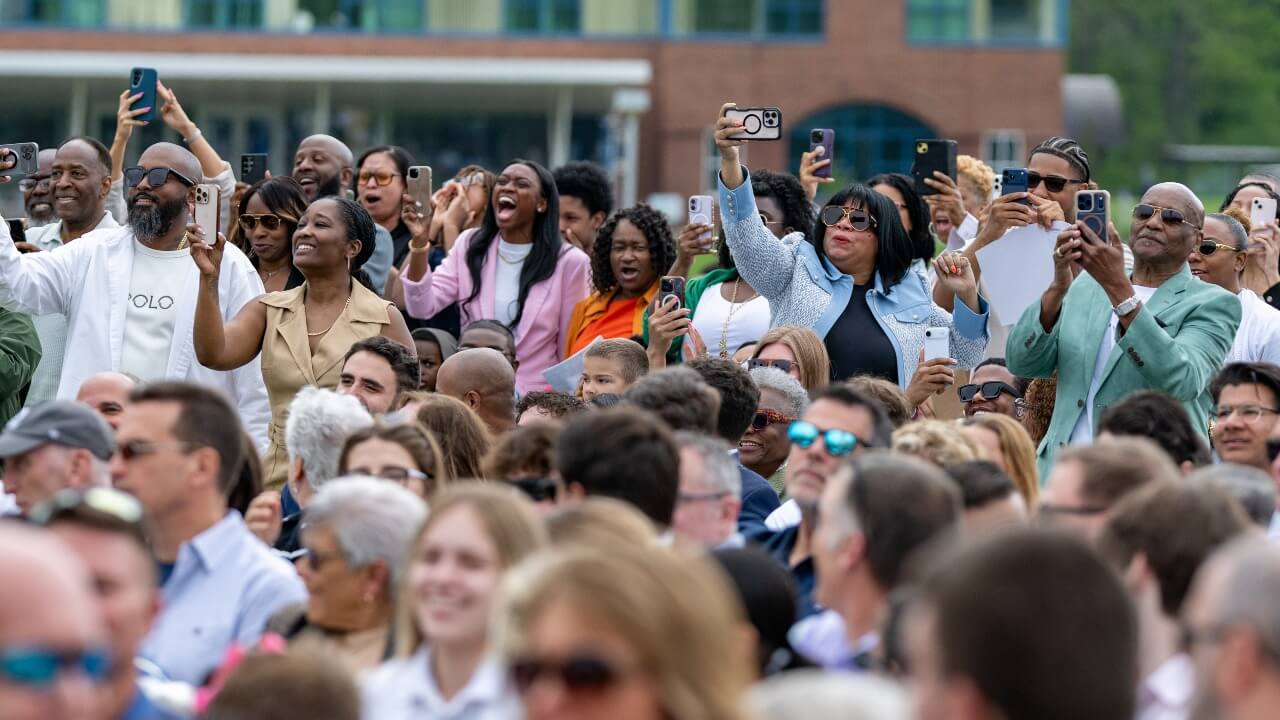
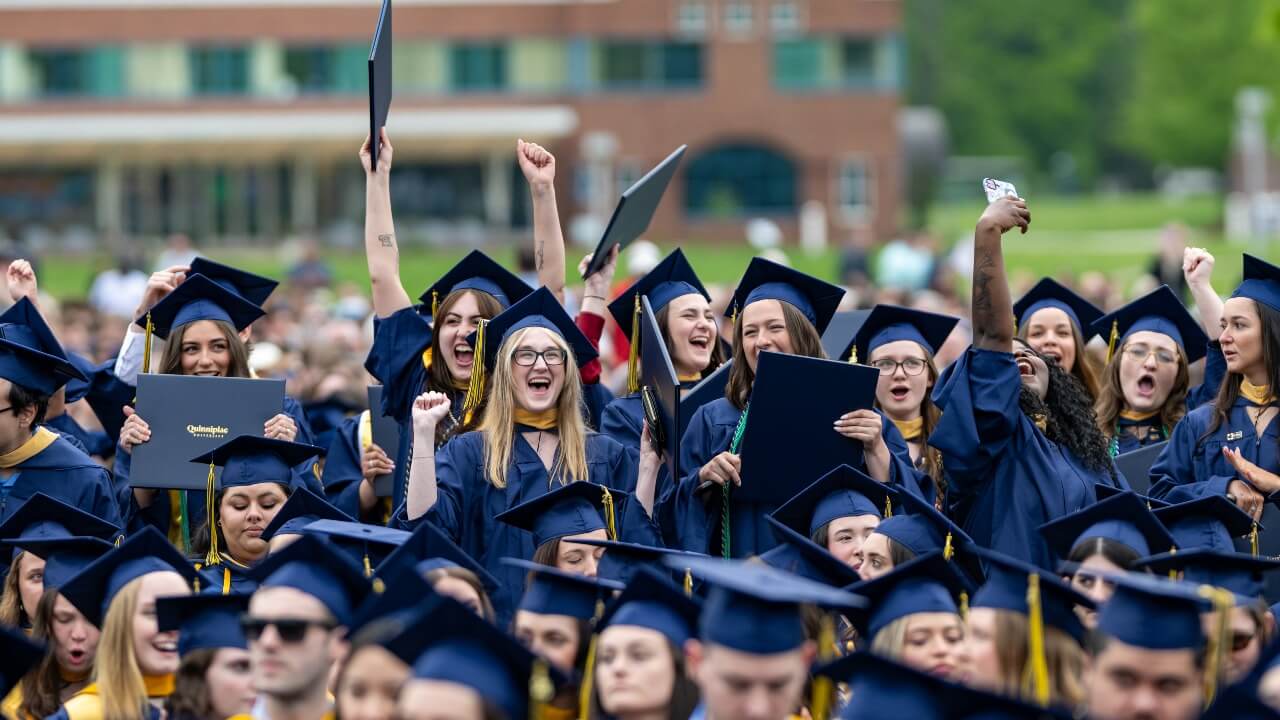
After Provost Debra Liebowitz began the proceedings with the call to Commencement, Delaney Grady ’26 sang the National Anthem before thousands of Quinnipiac parents, family members and friends.
At the conclusion of the ceremony, Sophia Marshall ’21 welcomed the Class of 2026 into an alumni family of more than 70,000 members around the world, with a reminder that a Quinnipiac community is a relationship that lasts a lifetime.
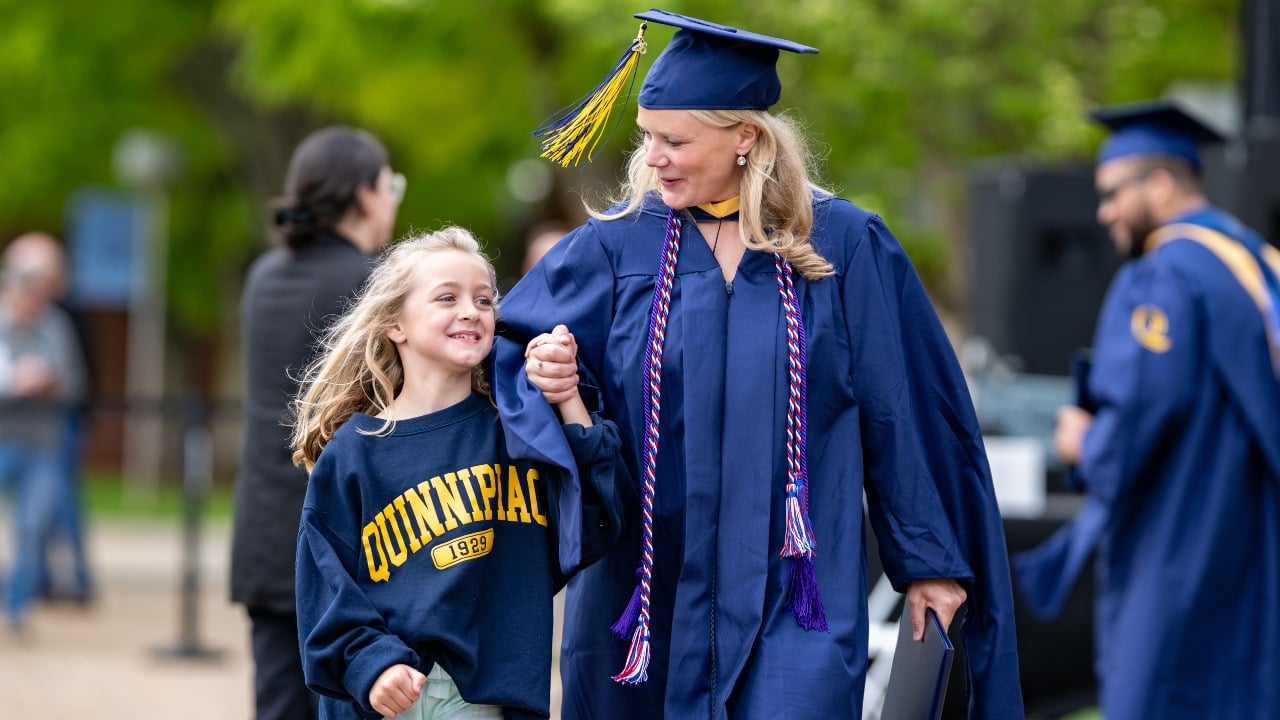
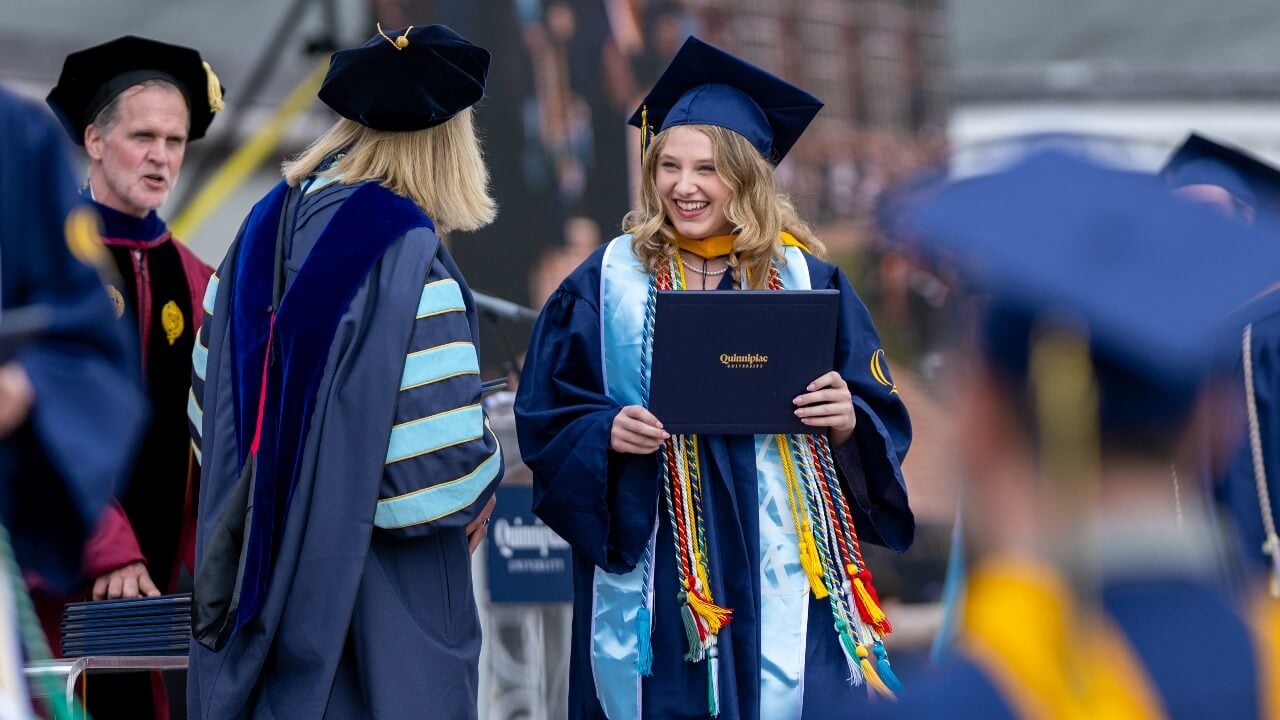
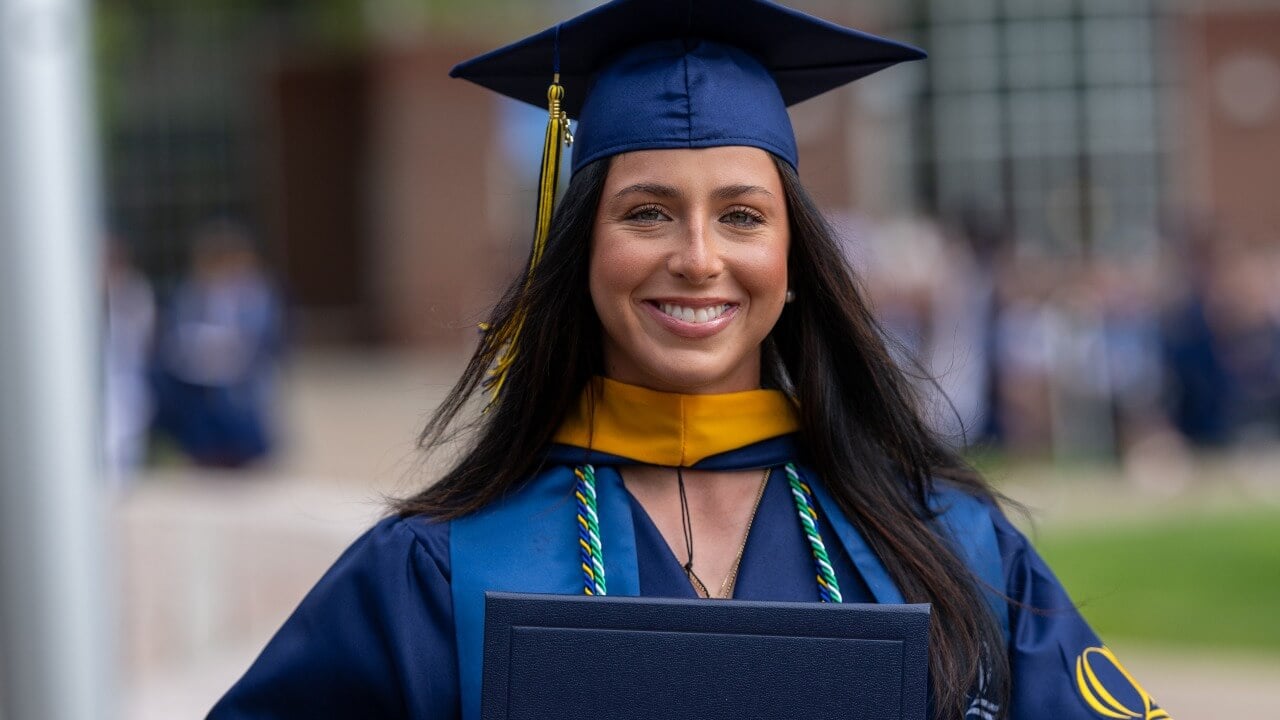
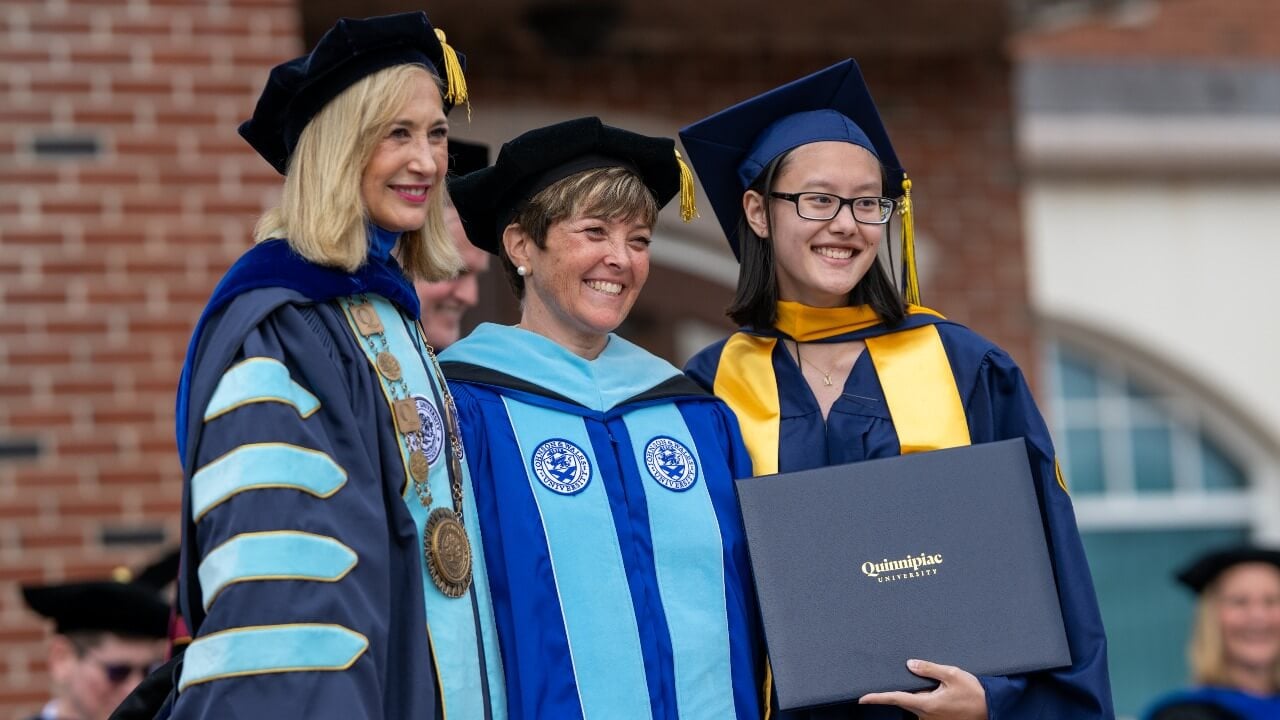
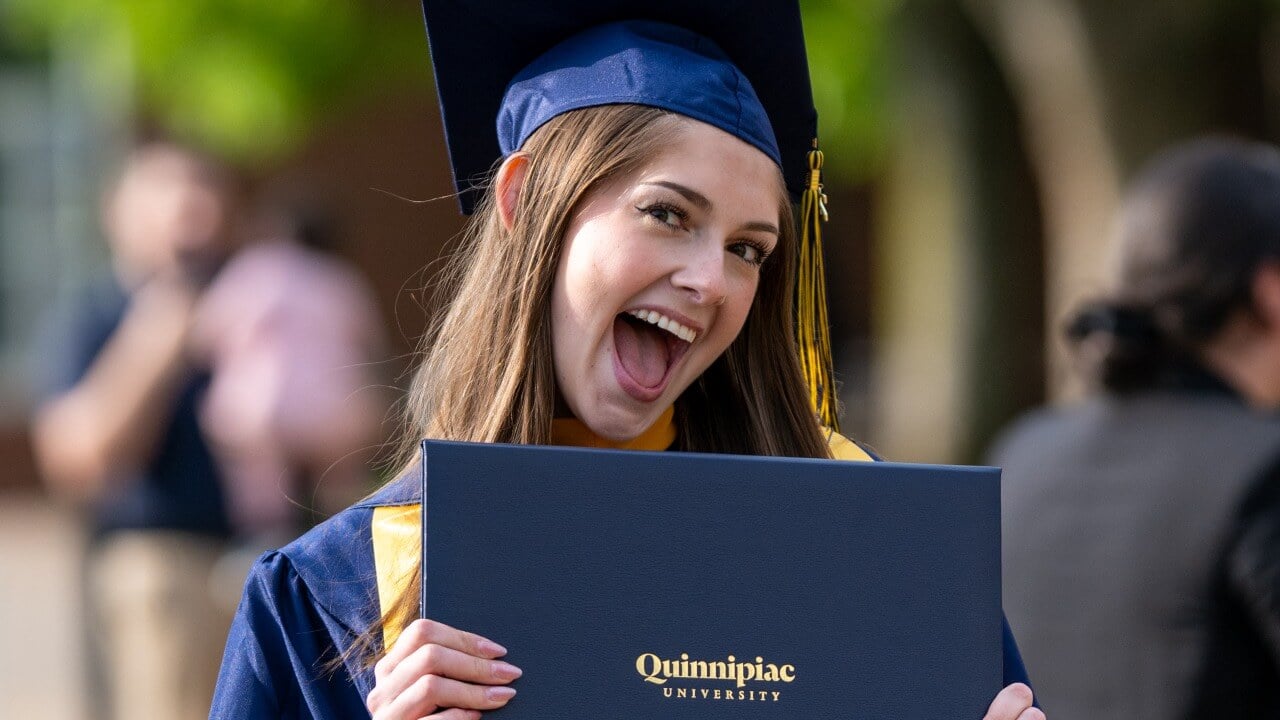
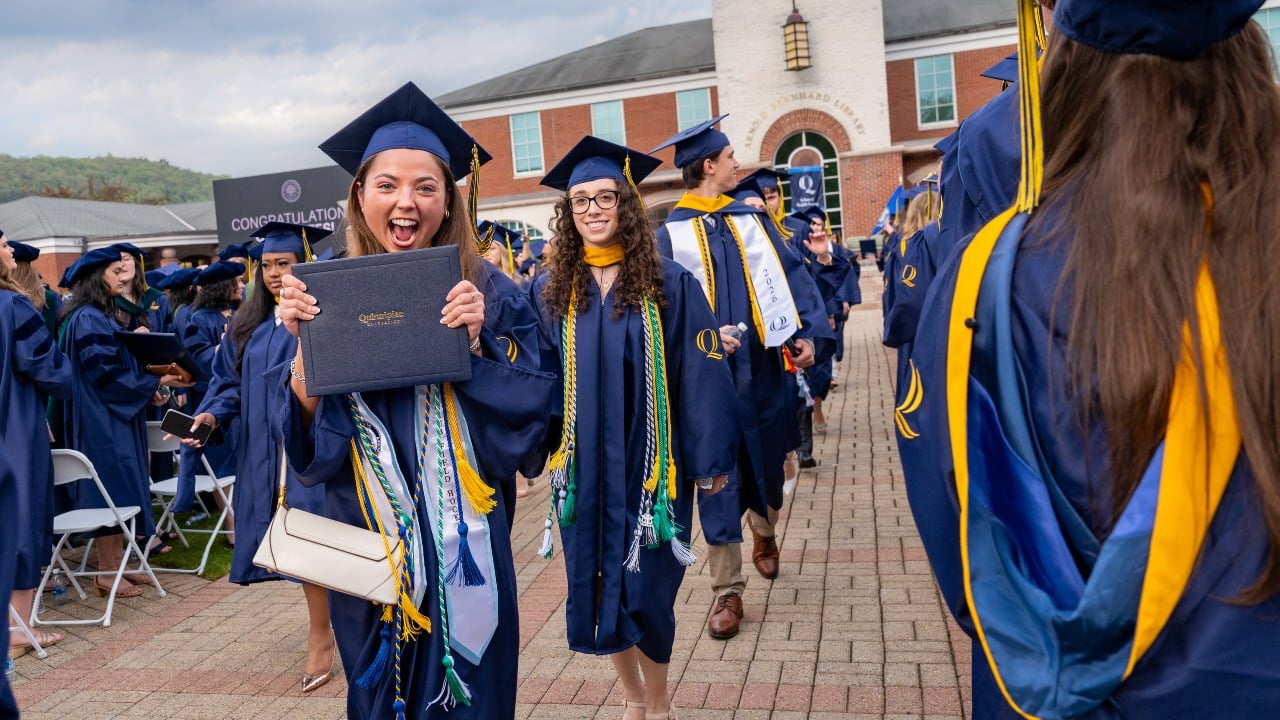
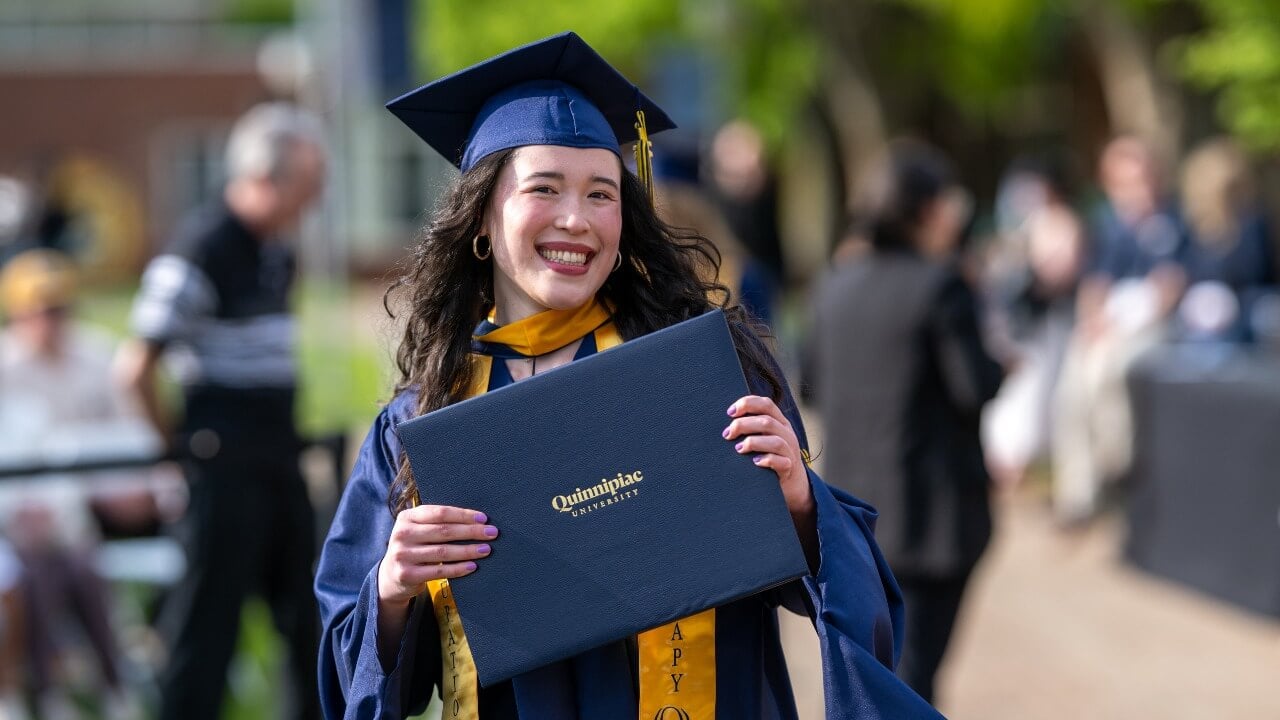
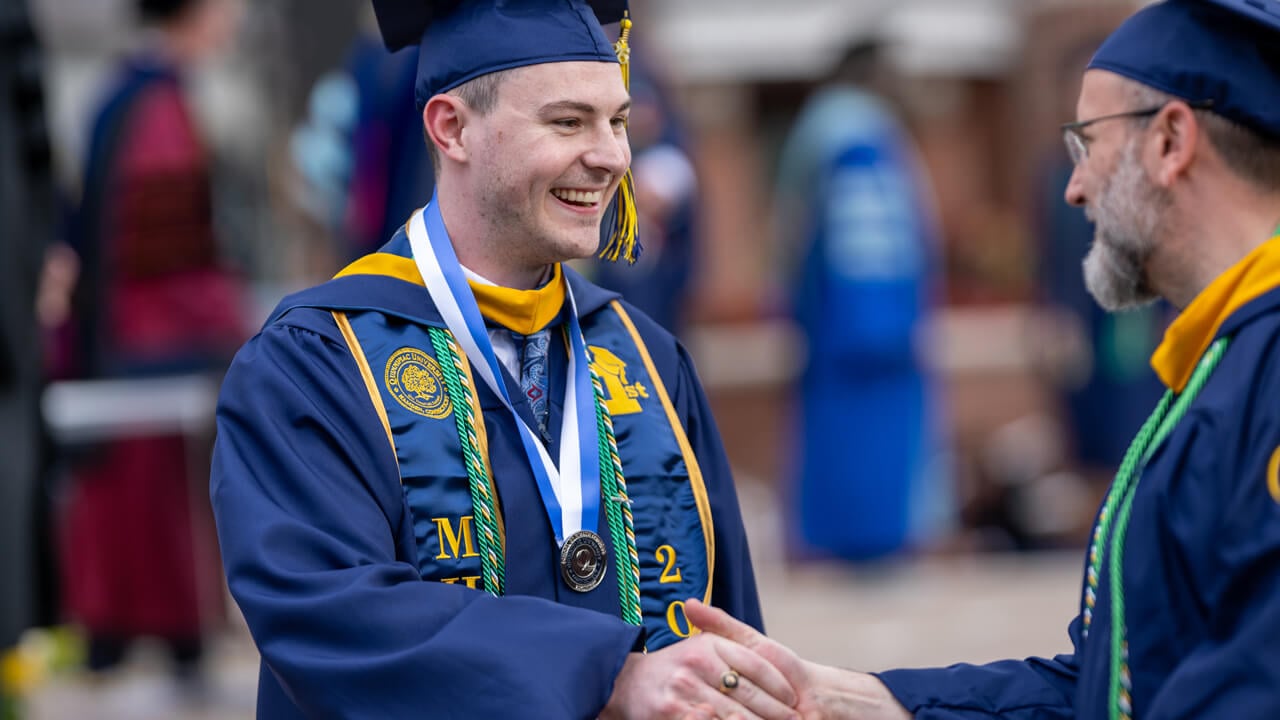
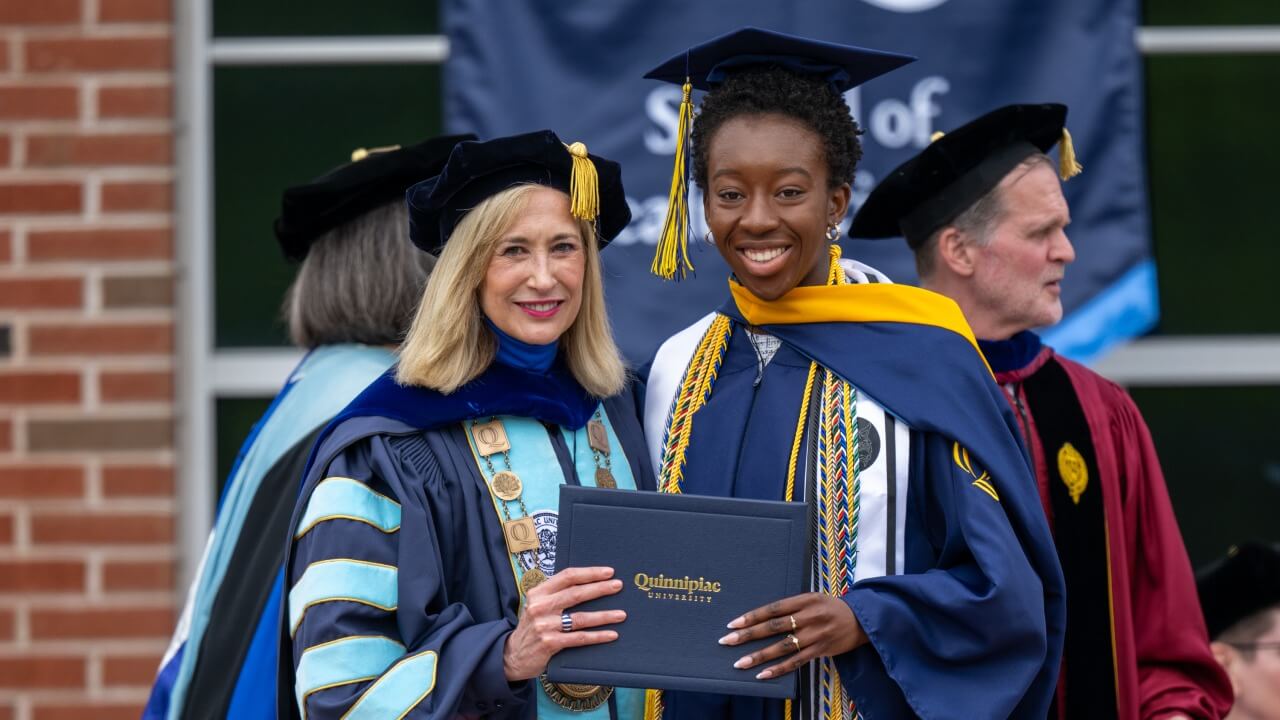
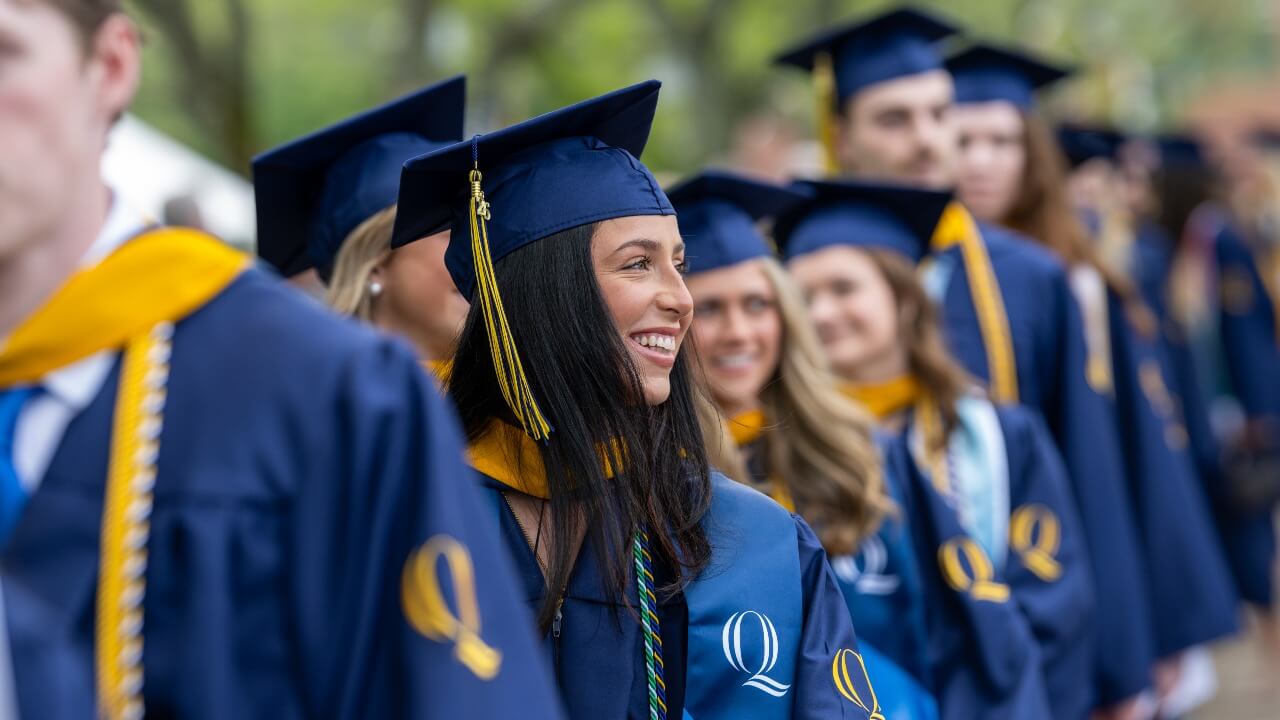
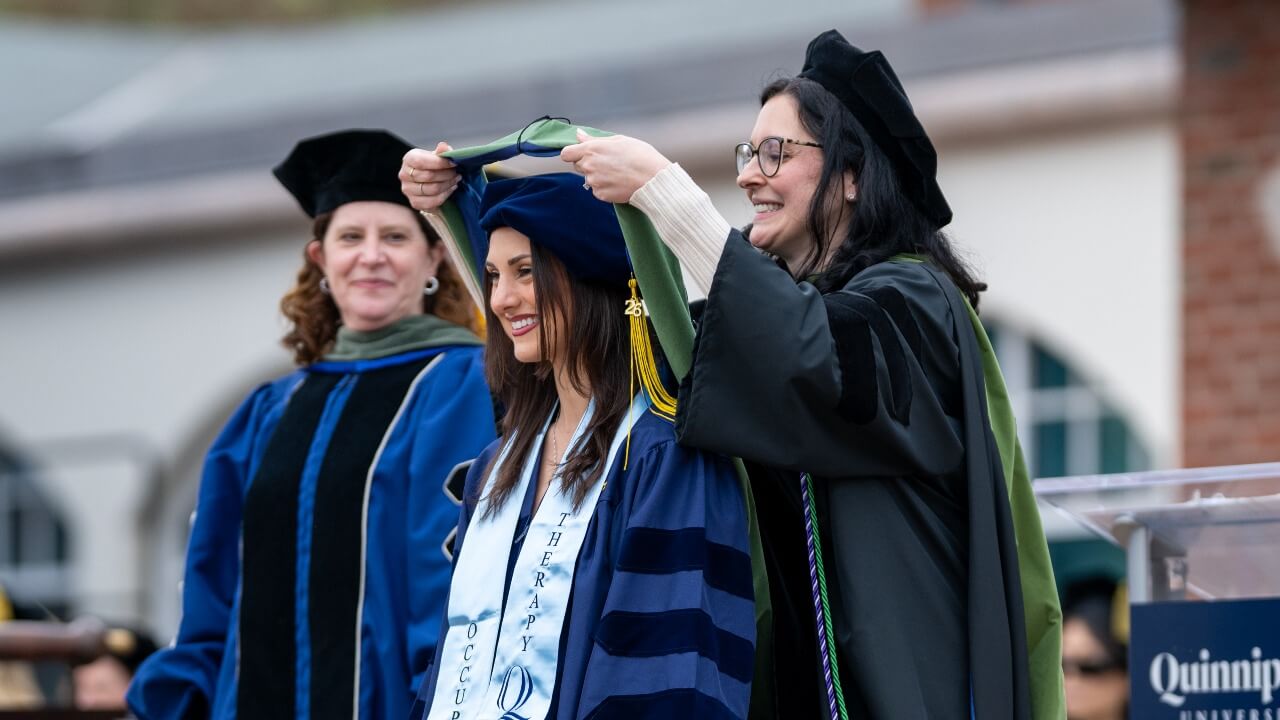
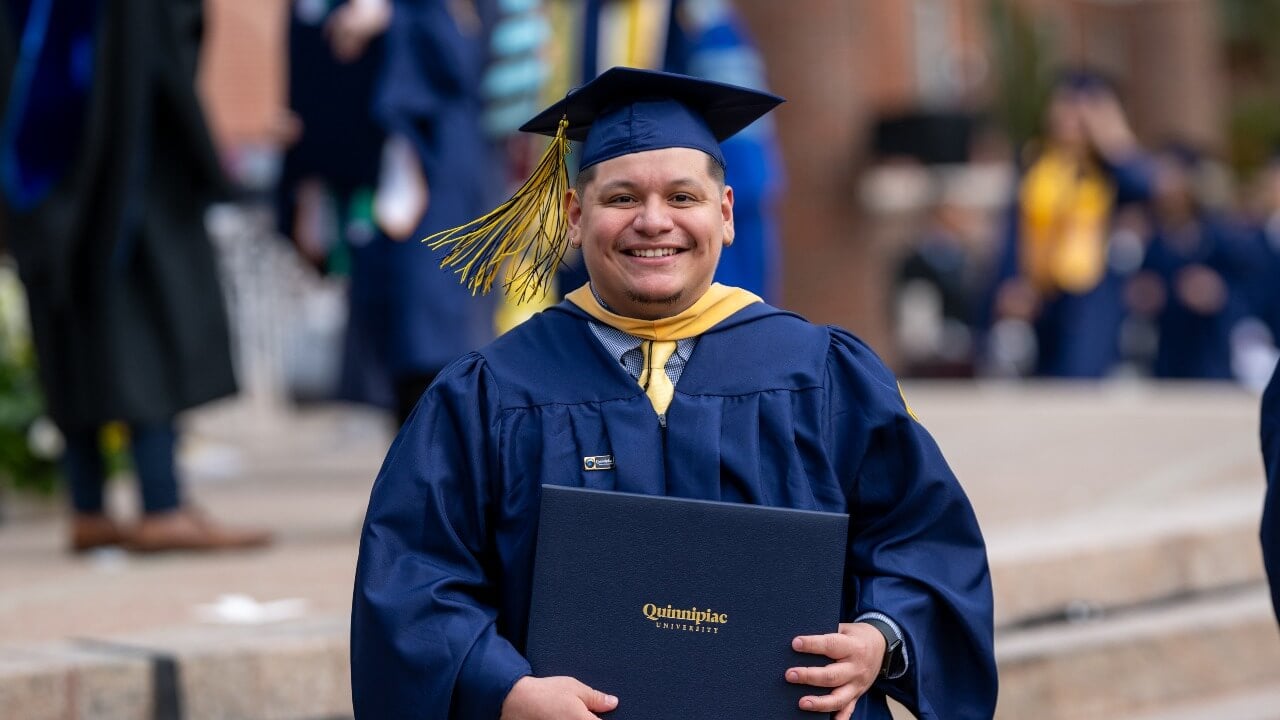
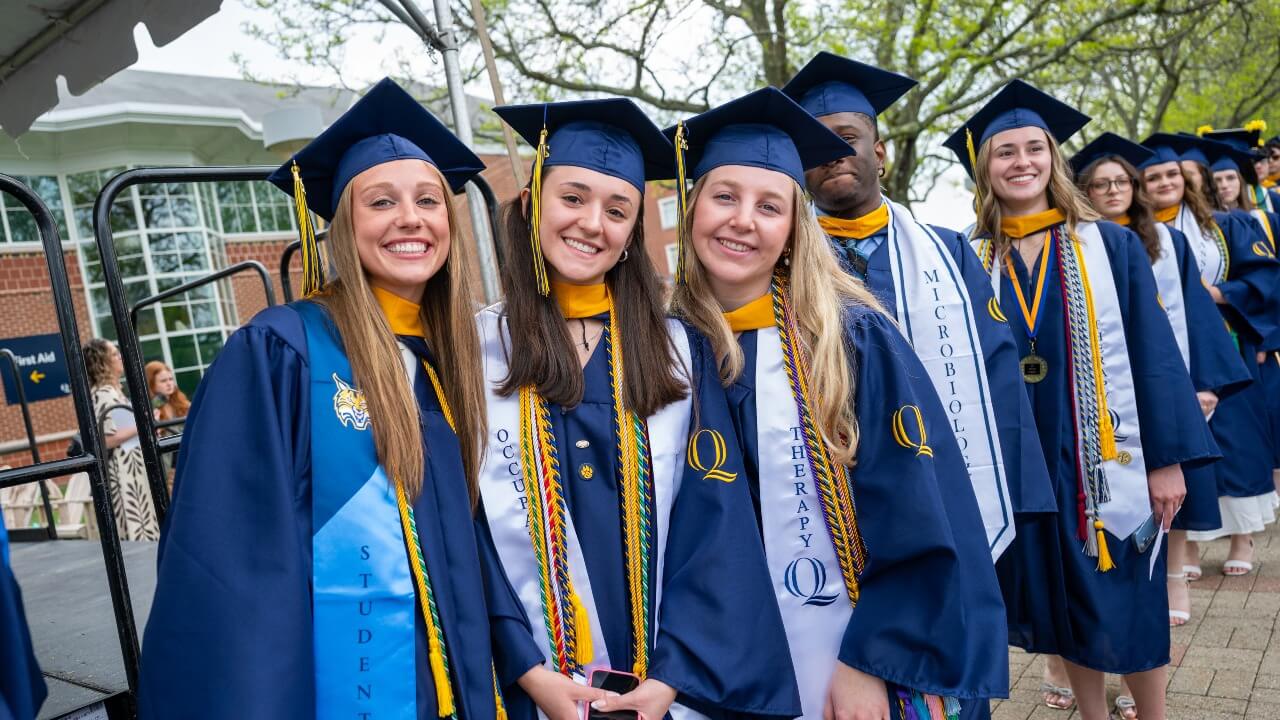
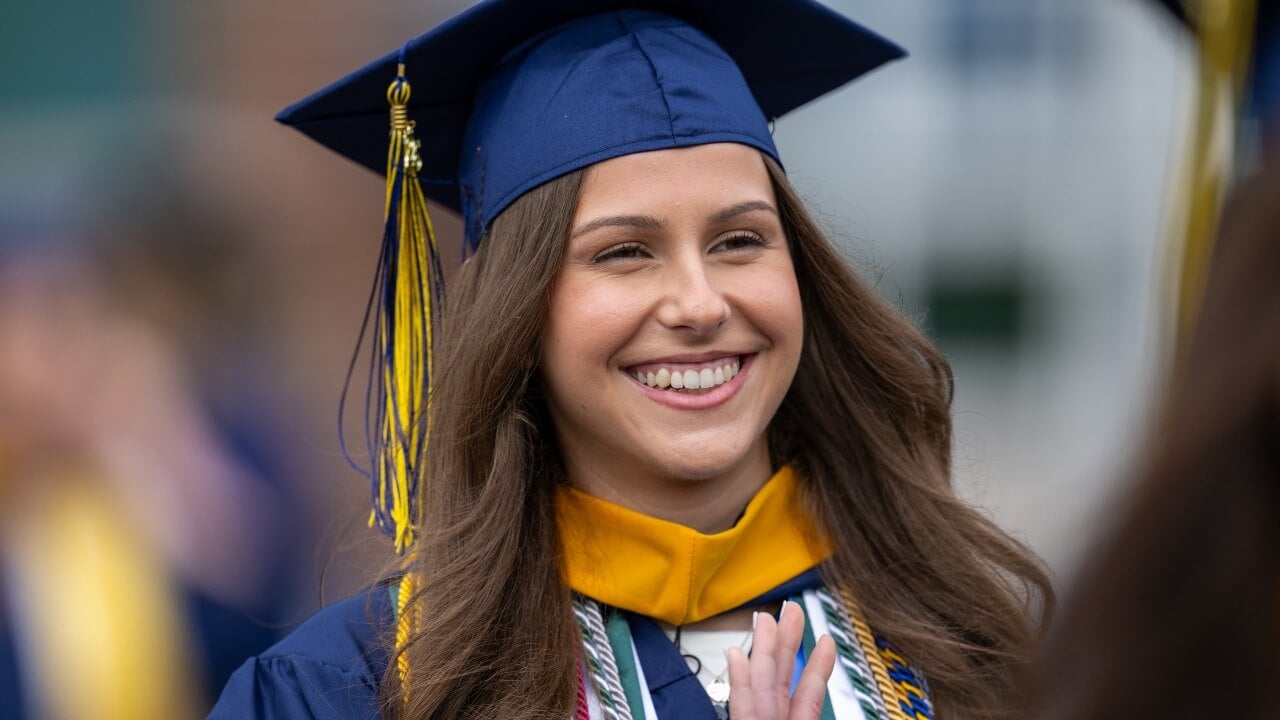
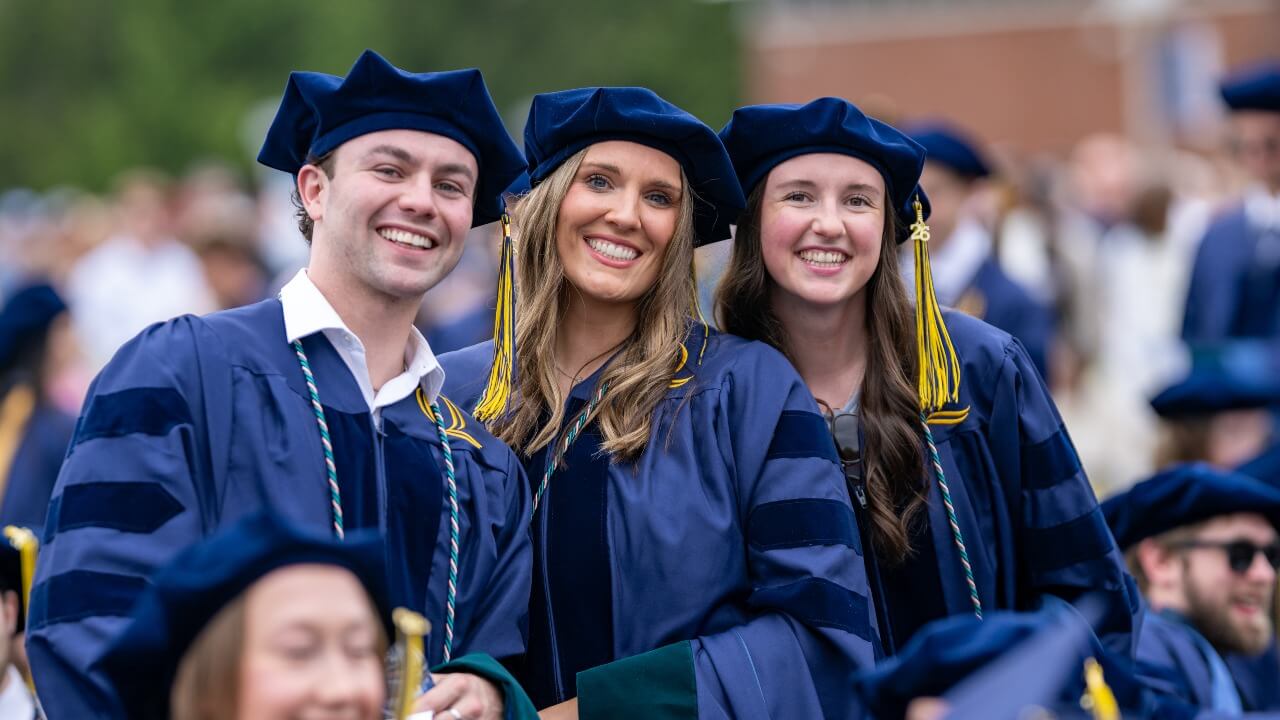
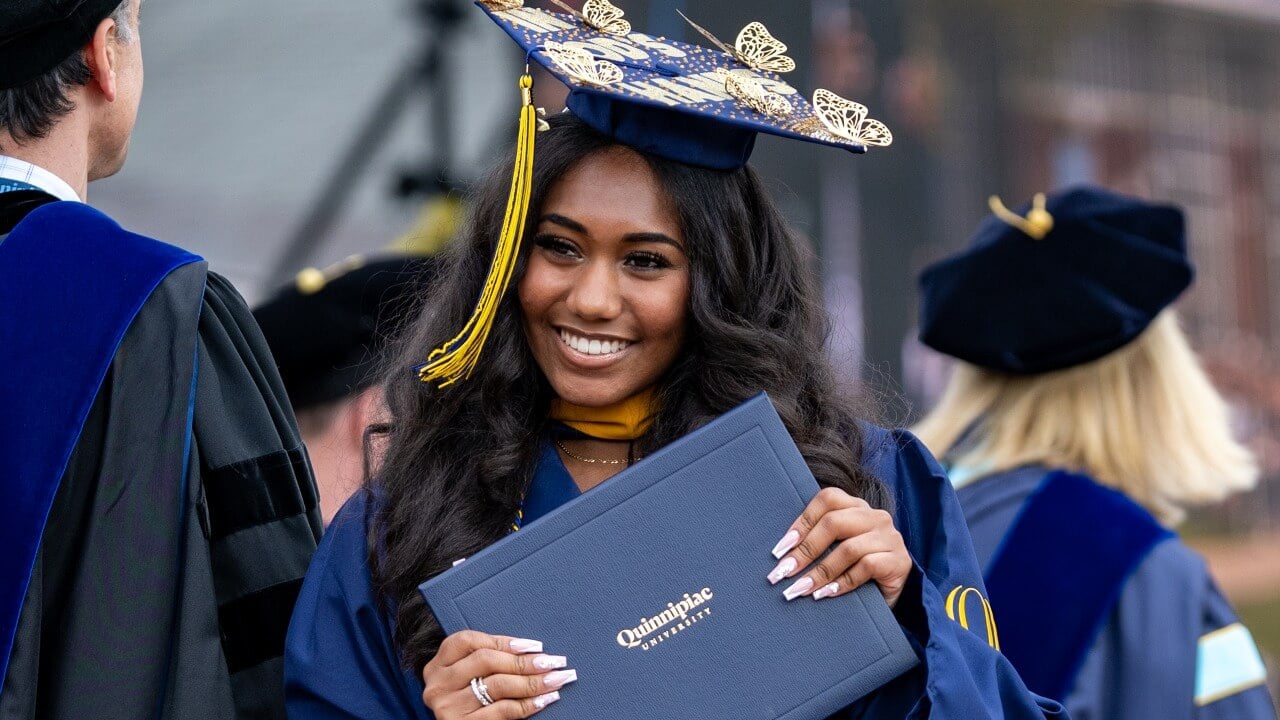
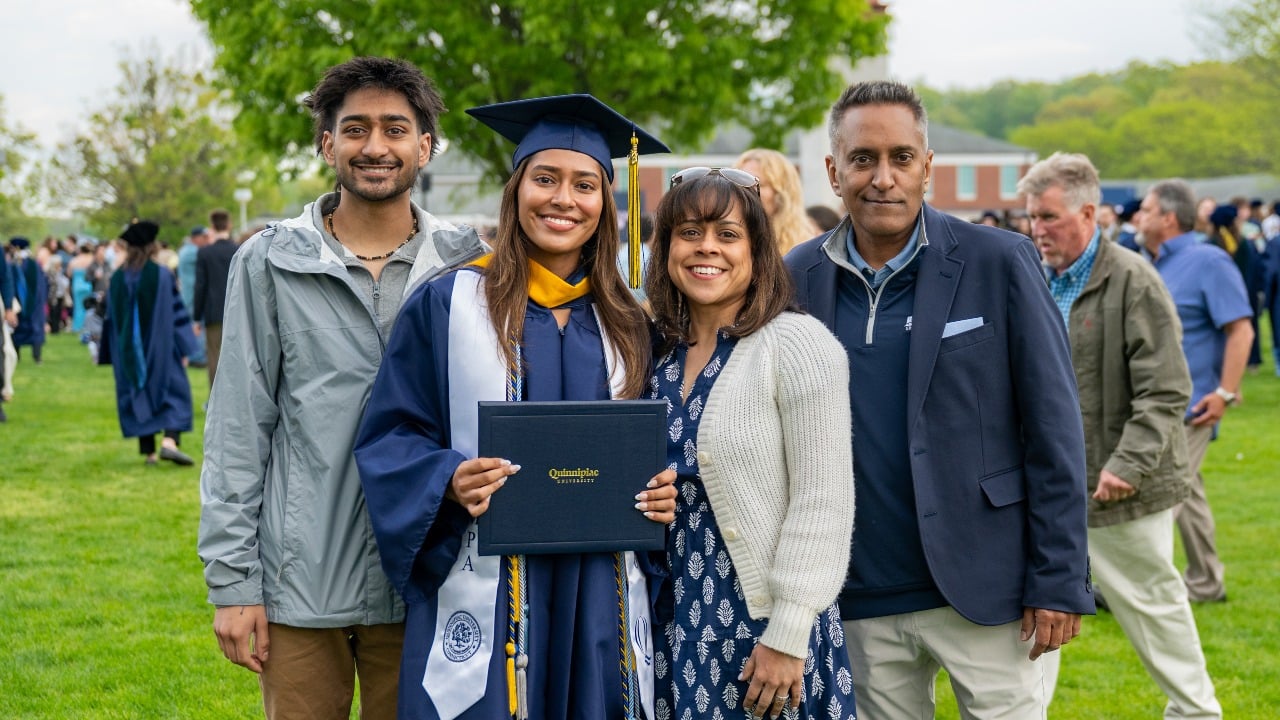
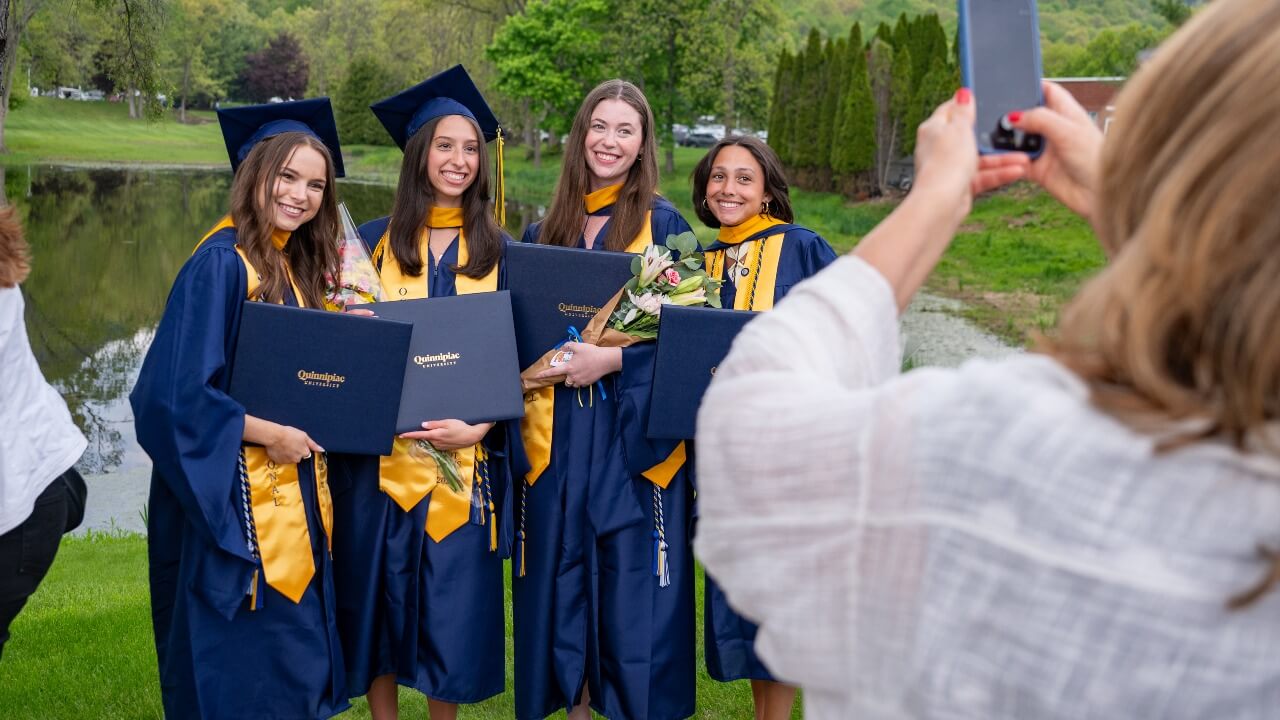
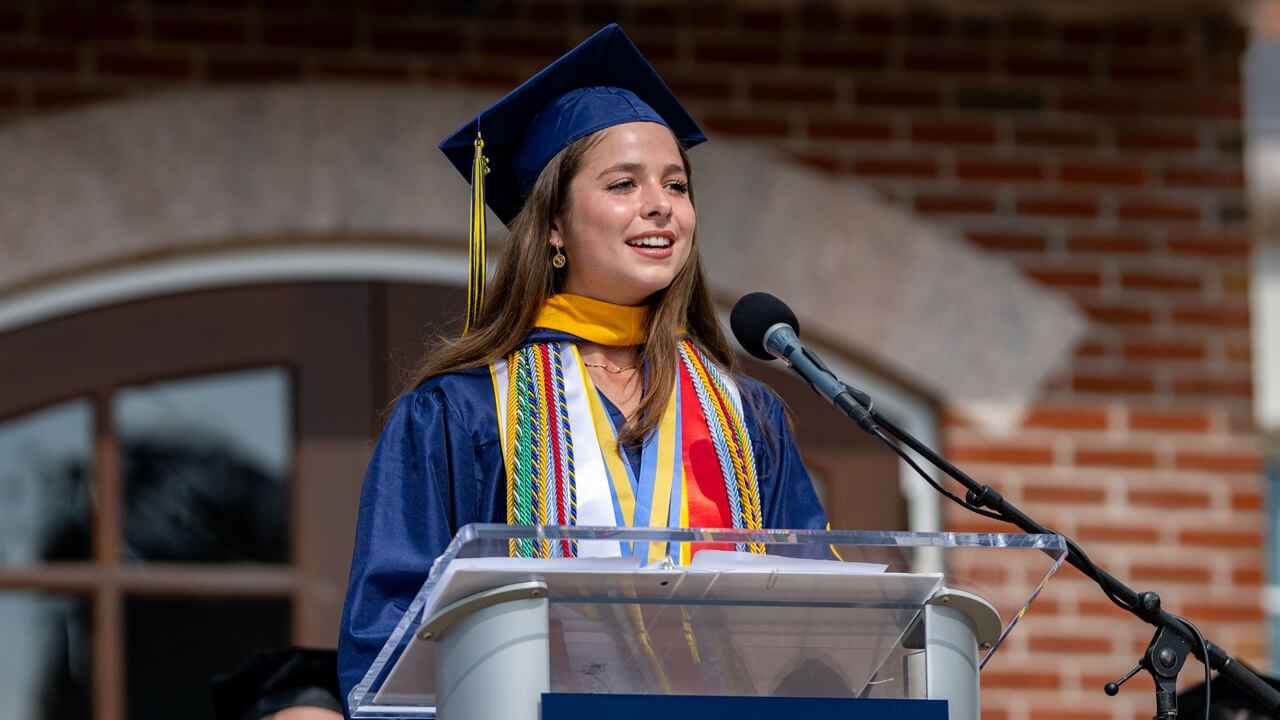
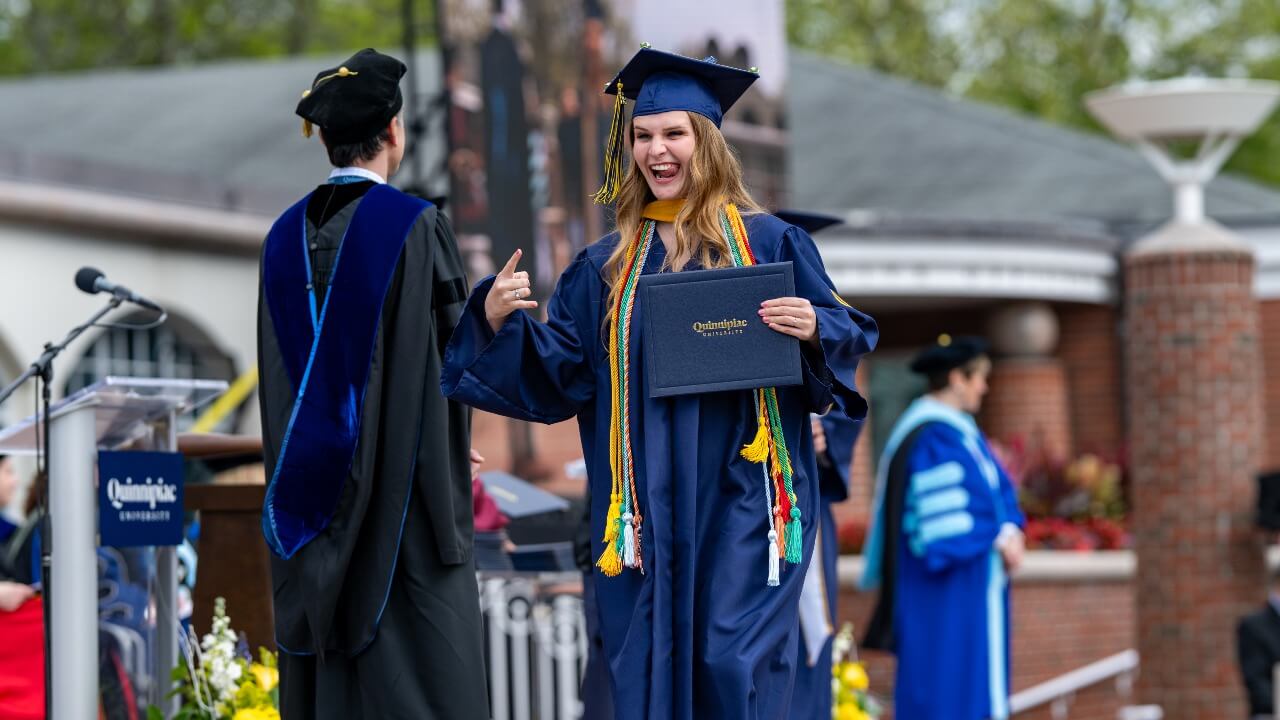
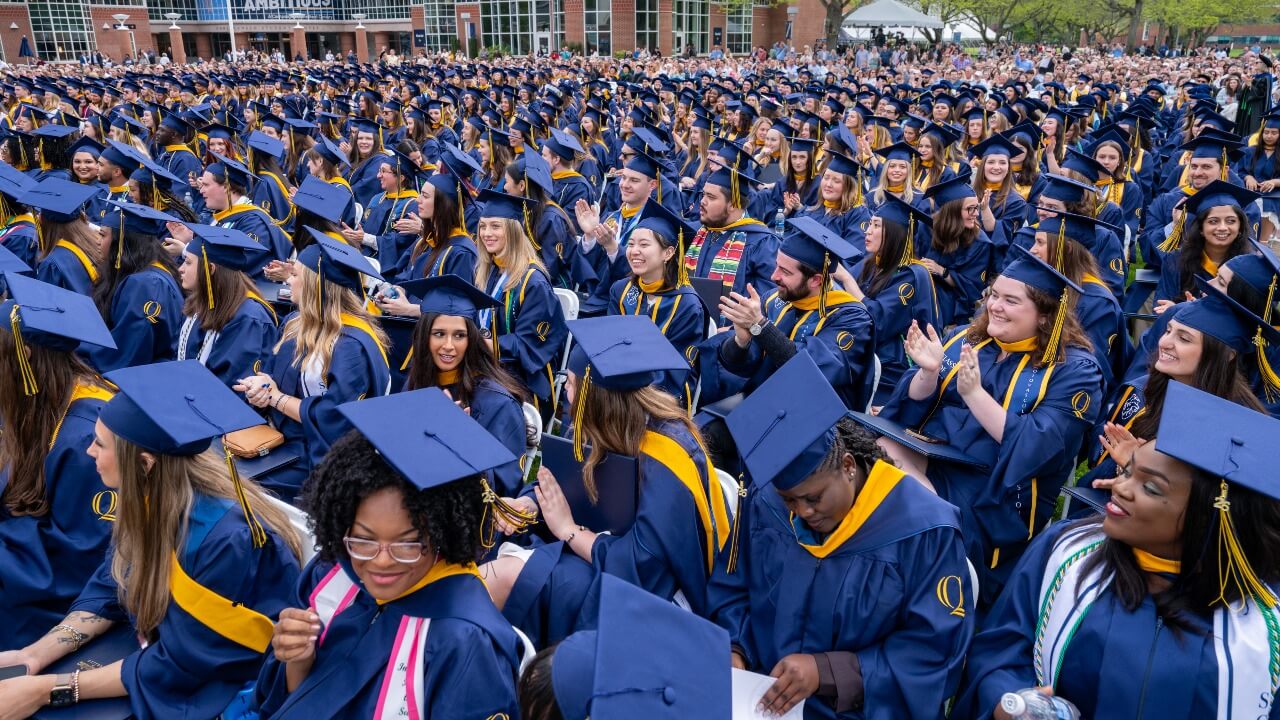
Sofia Konkolics '26 provided remarks on behalf of the graduating undergraduate class from the School of Health Sciences.
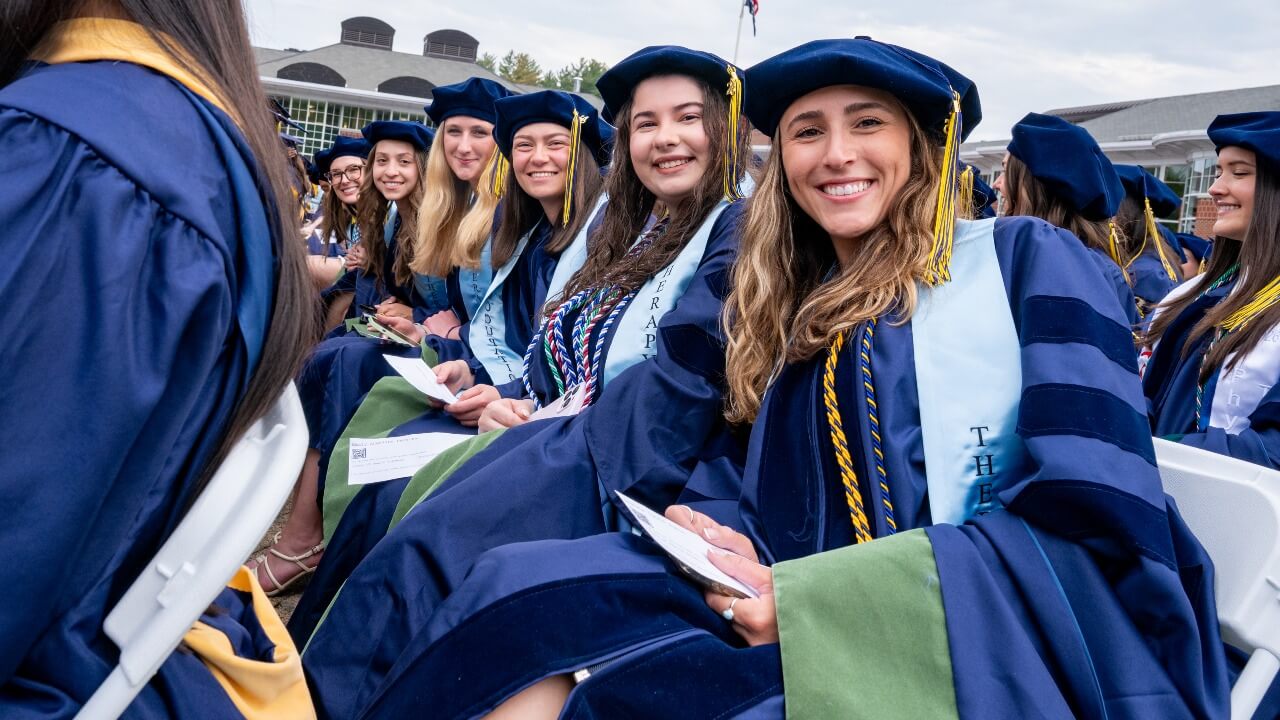
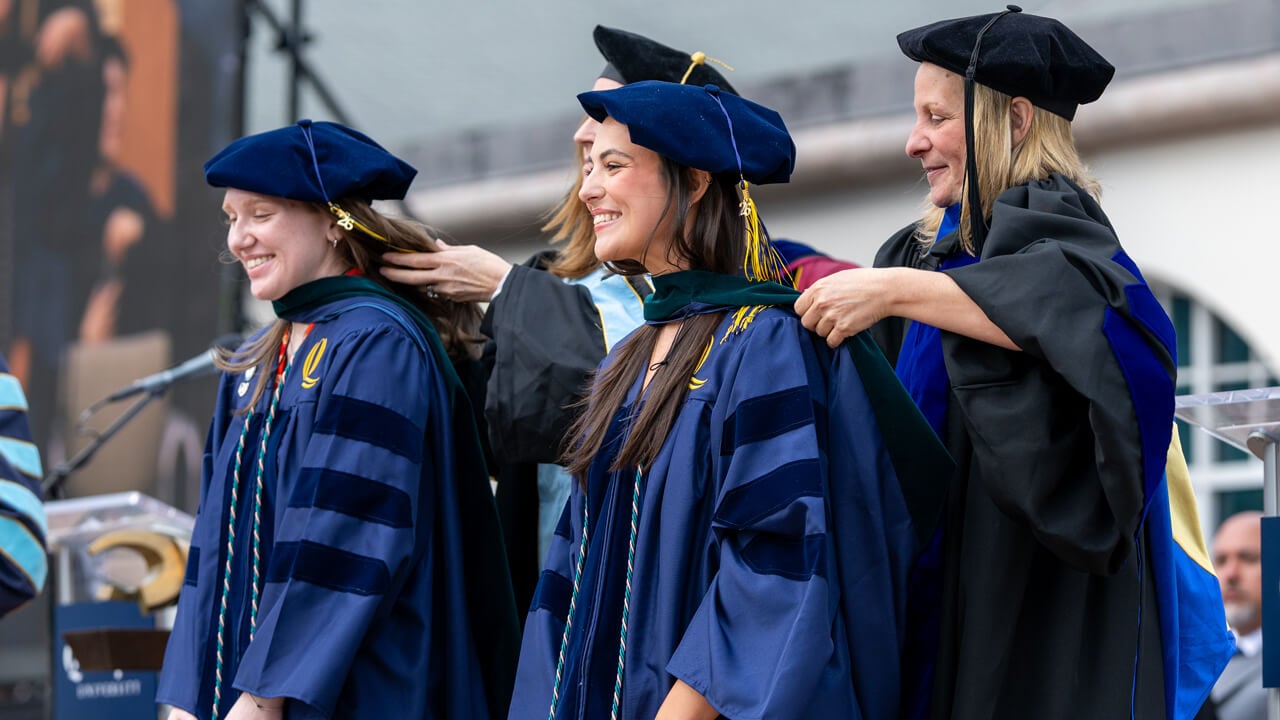
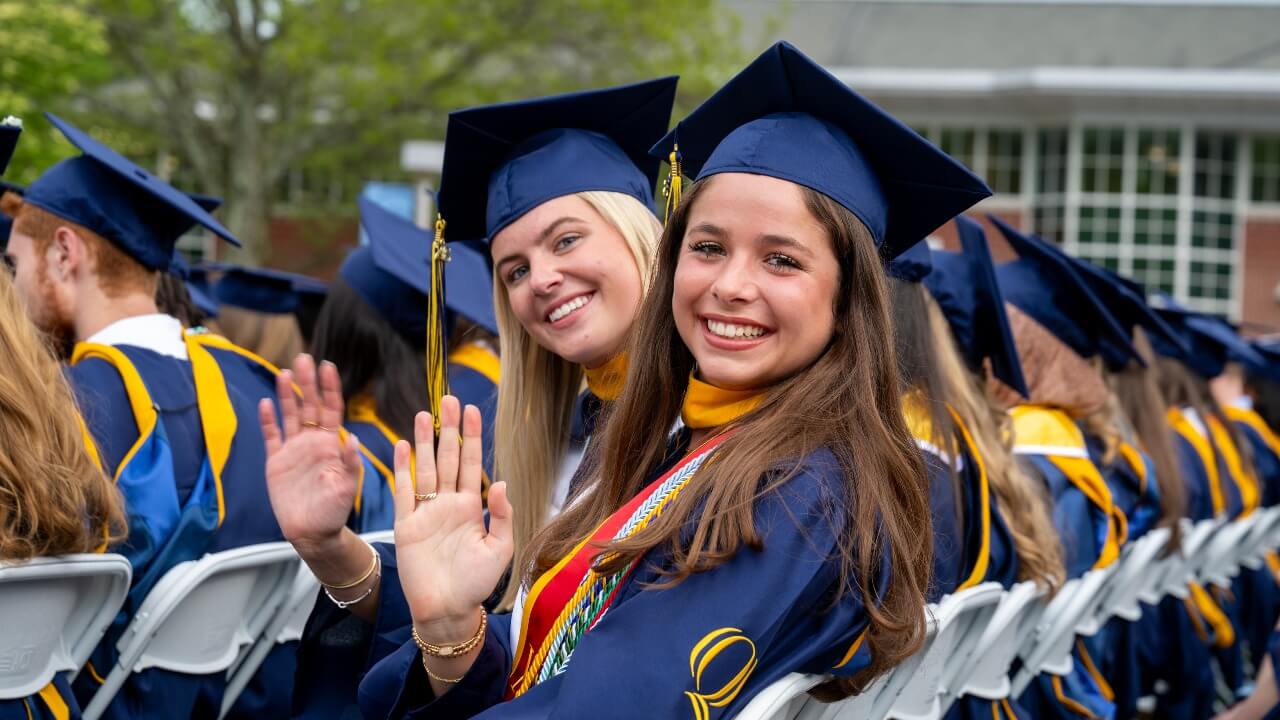
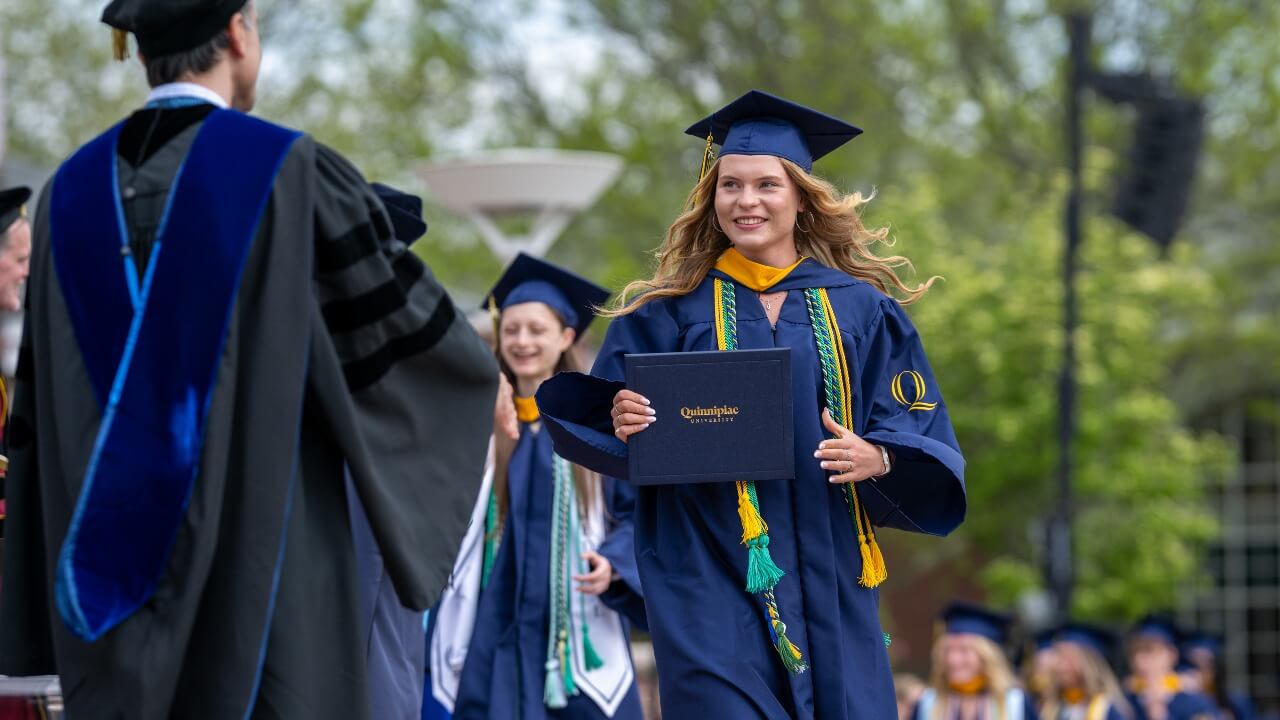
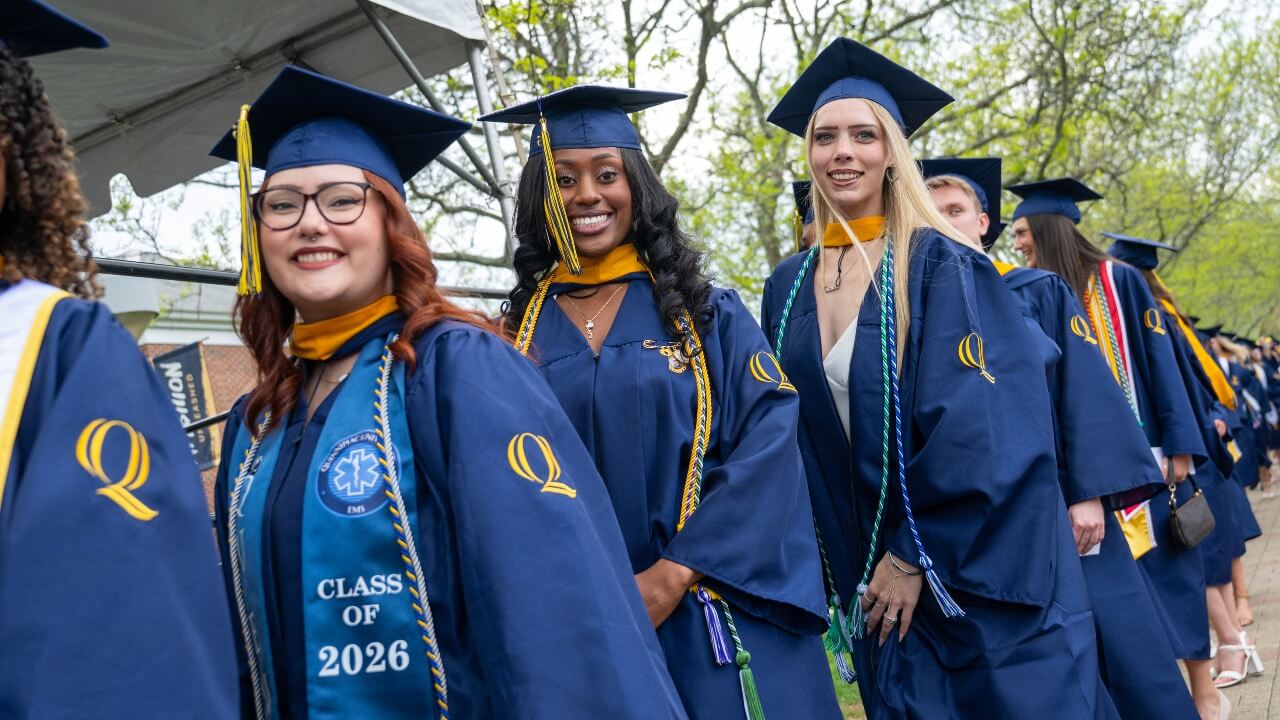
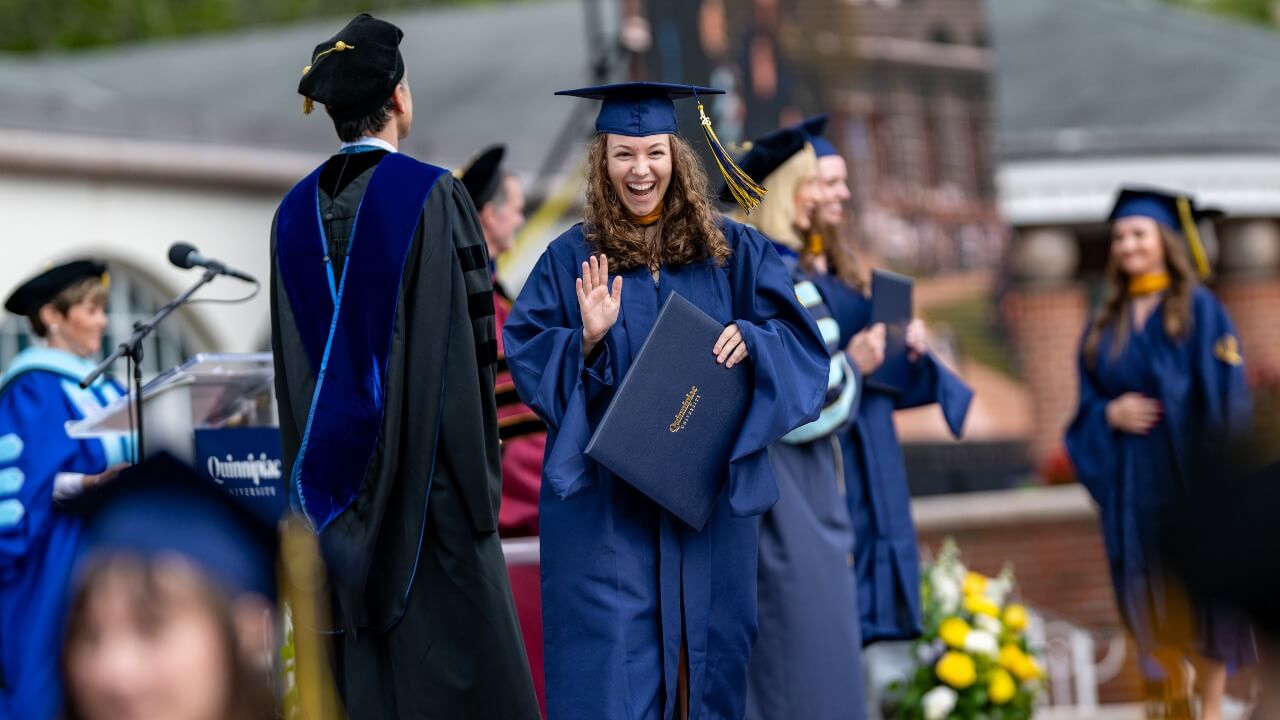
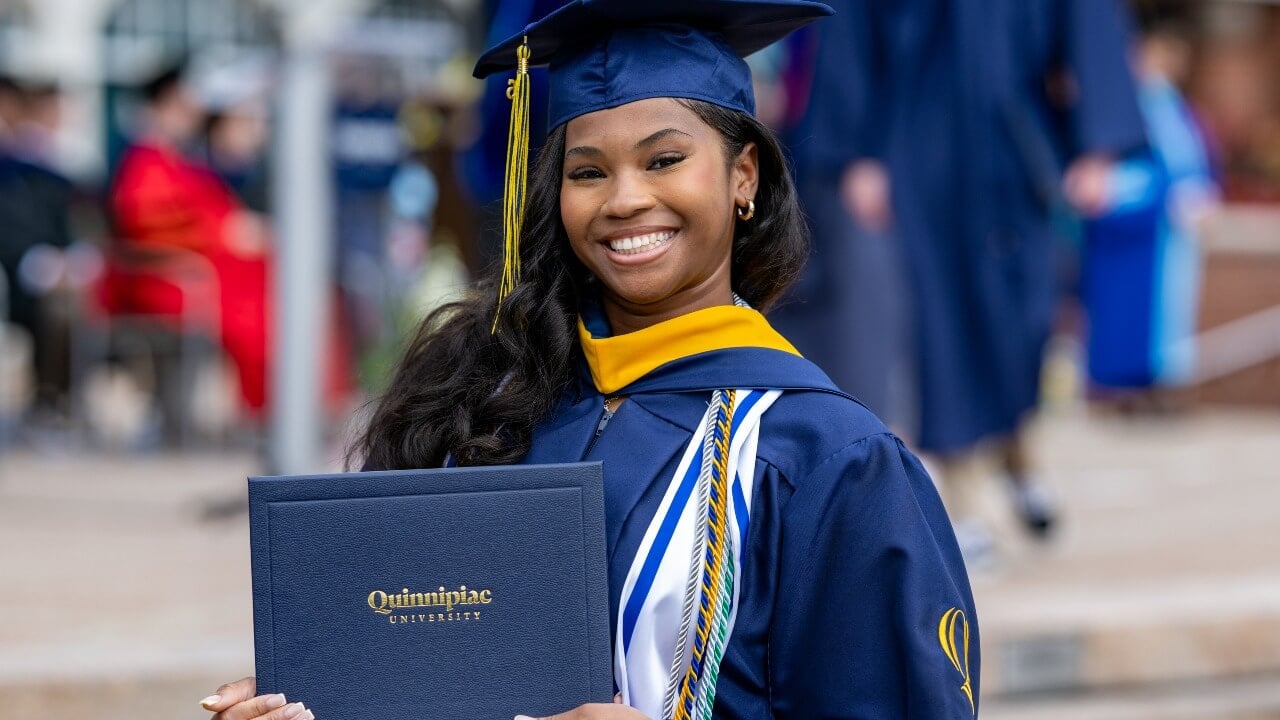
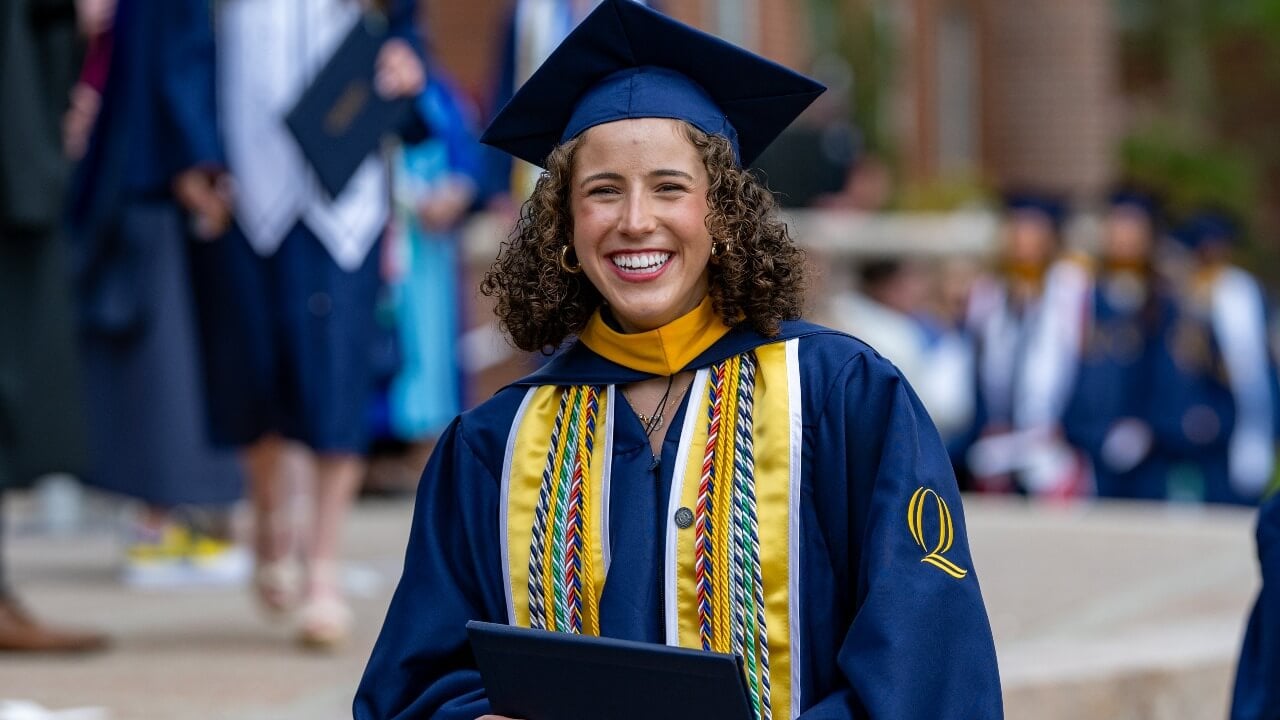
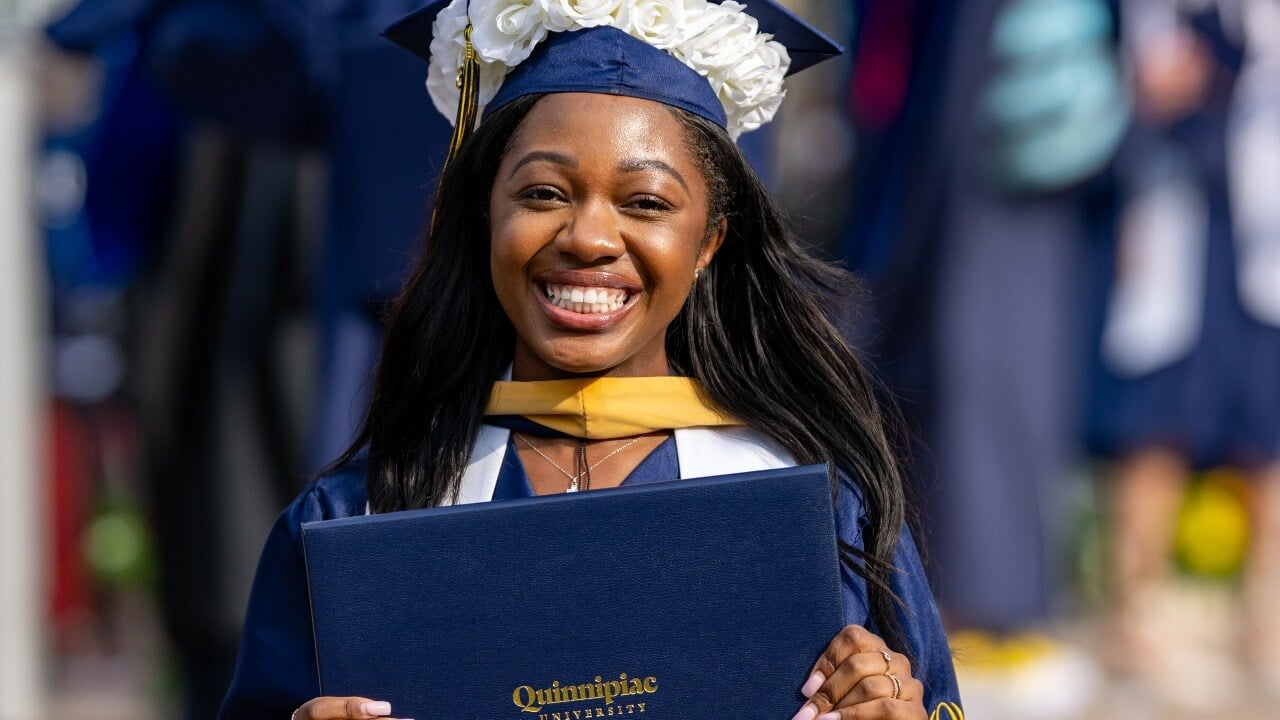
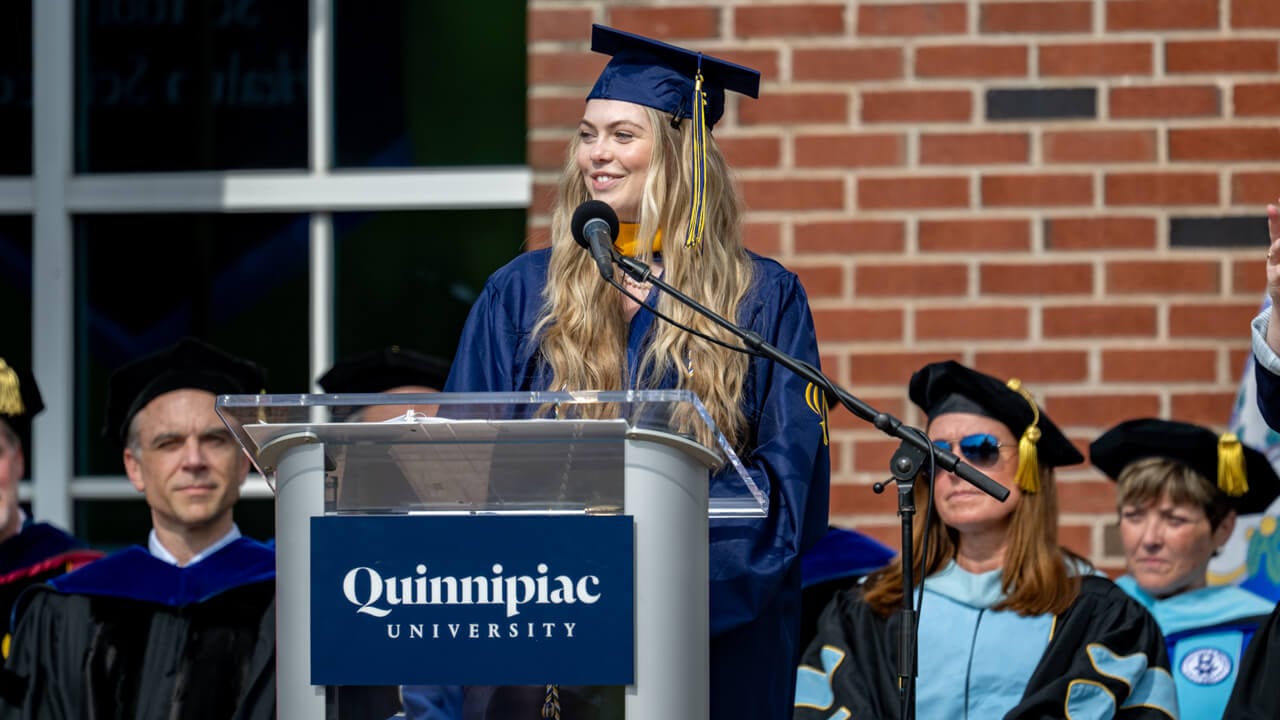
Abigail Lambert, MHS '26, provided remarks on behalf of the graduating graduate class from the School of Health Sciences.
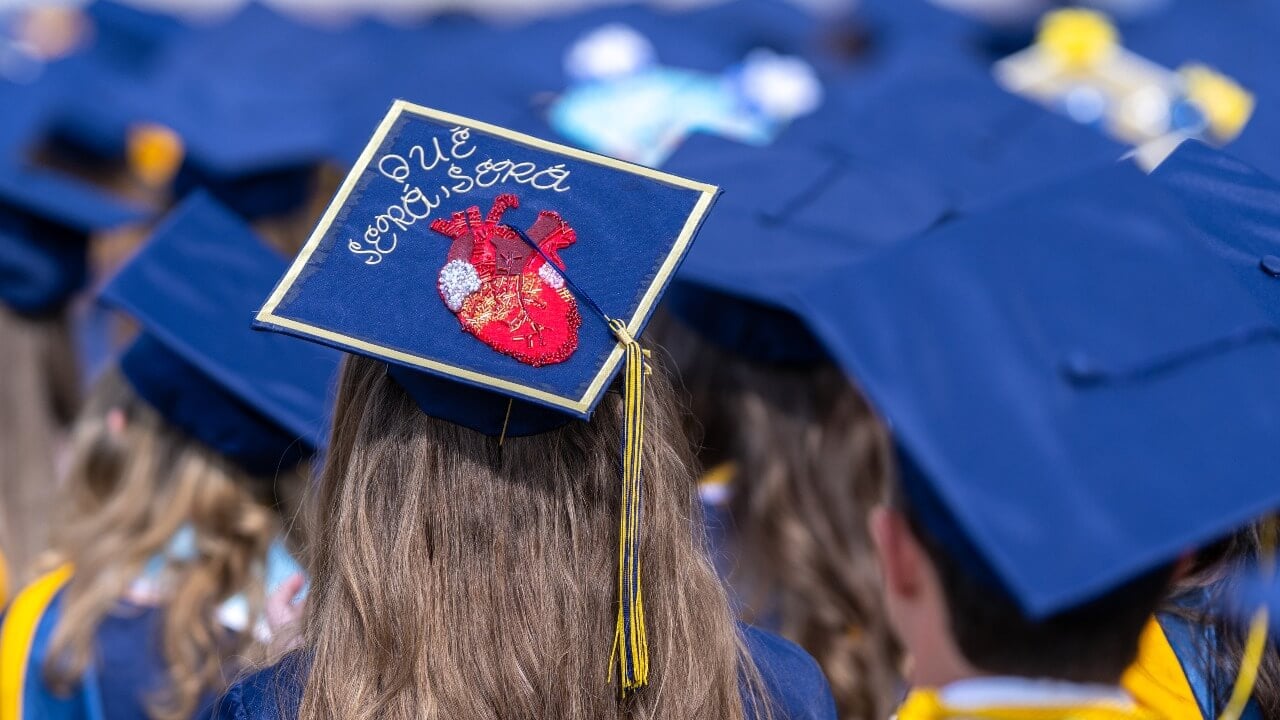
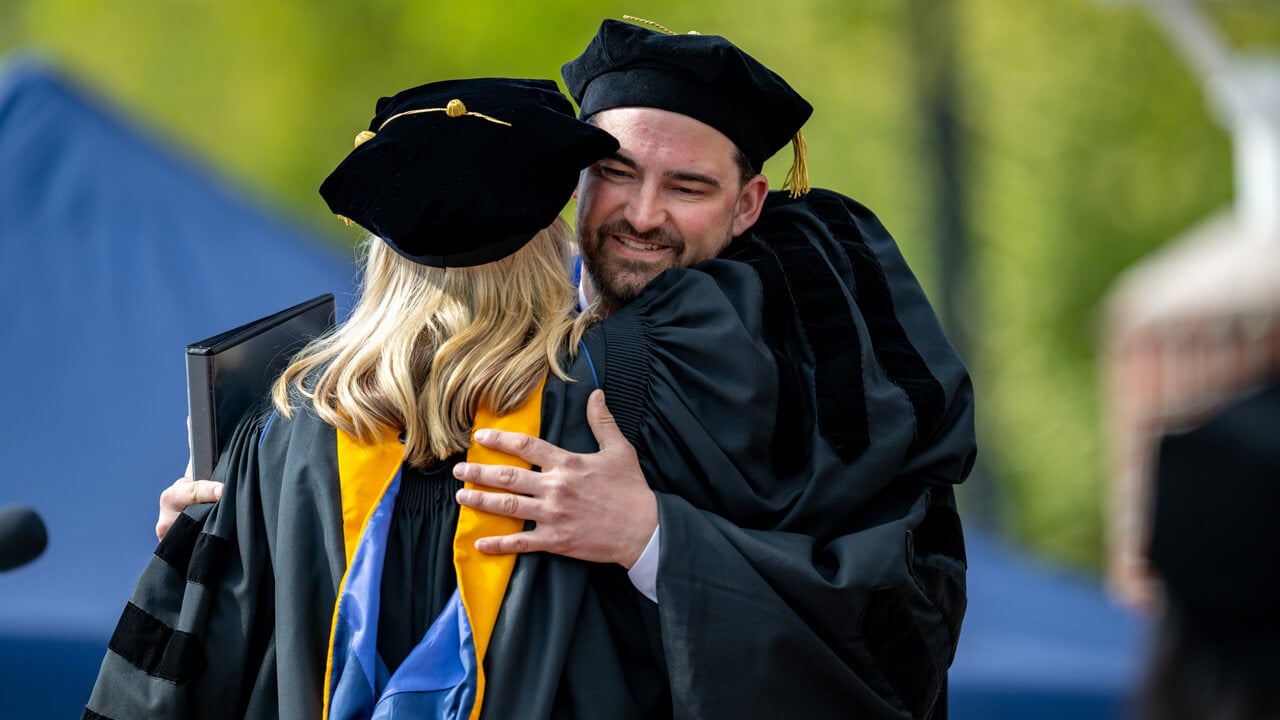
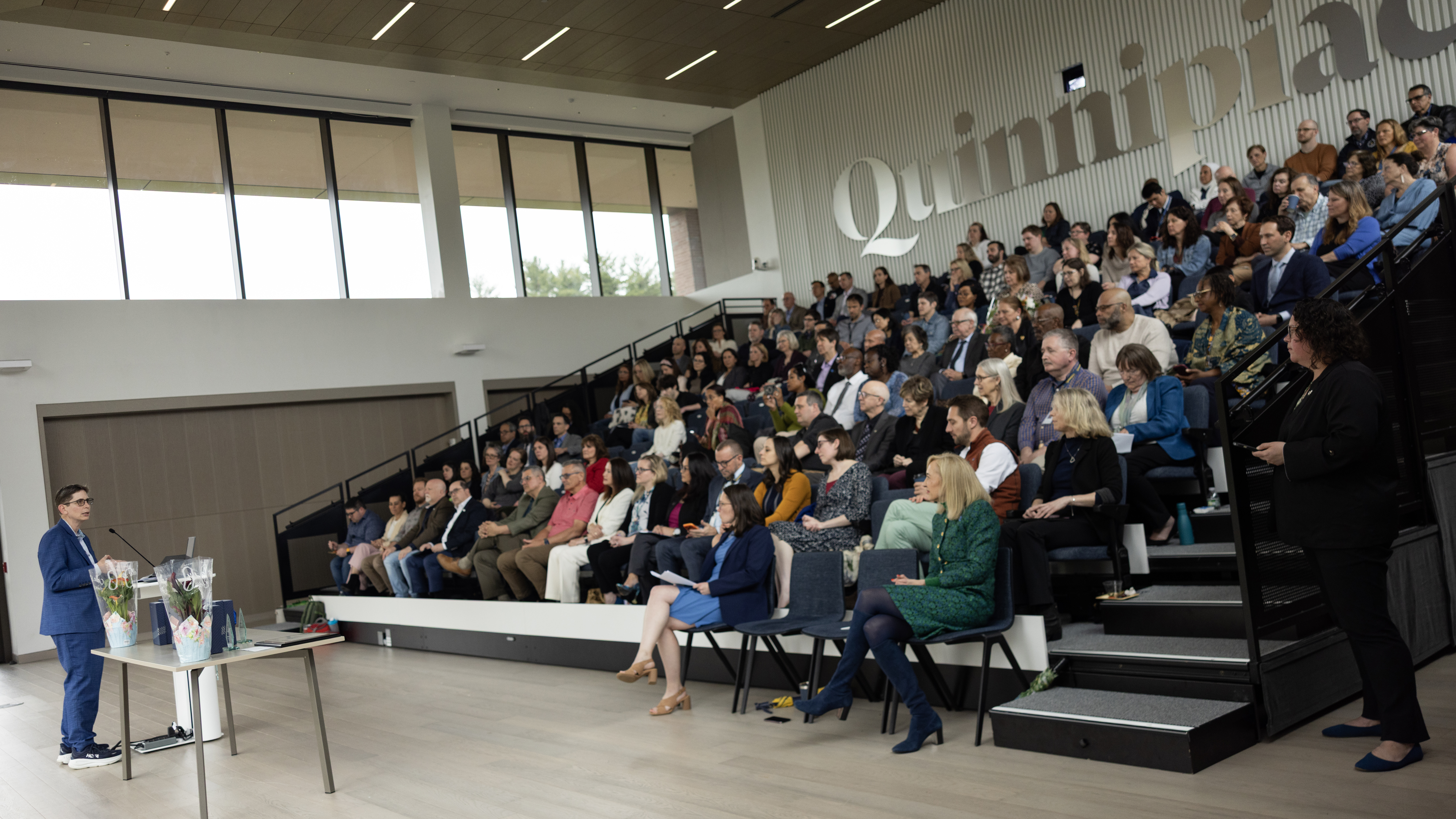
Michael Papale ’11 delivered the keynote address, and was introduced by Sara MacDonough-Civitello.
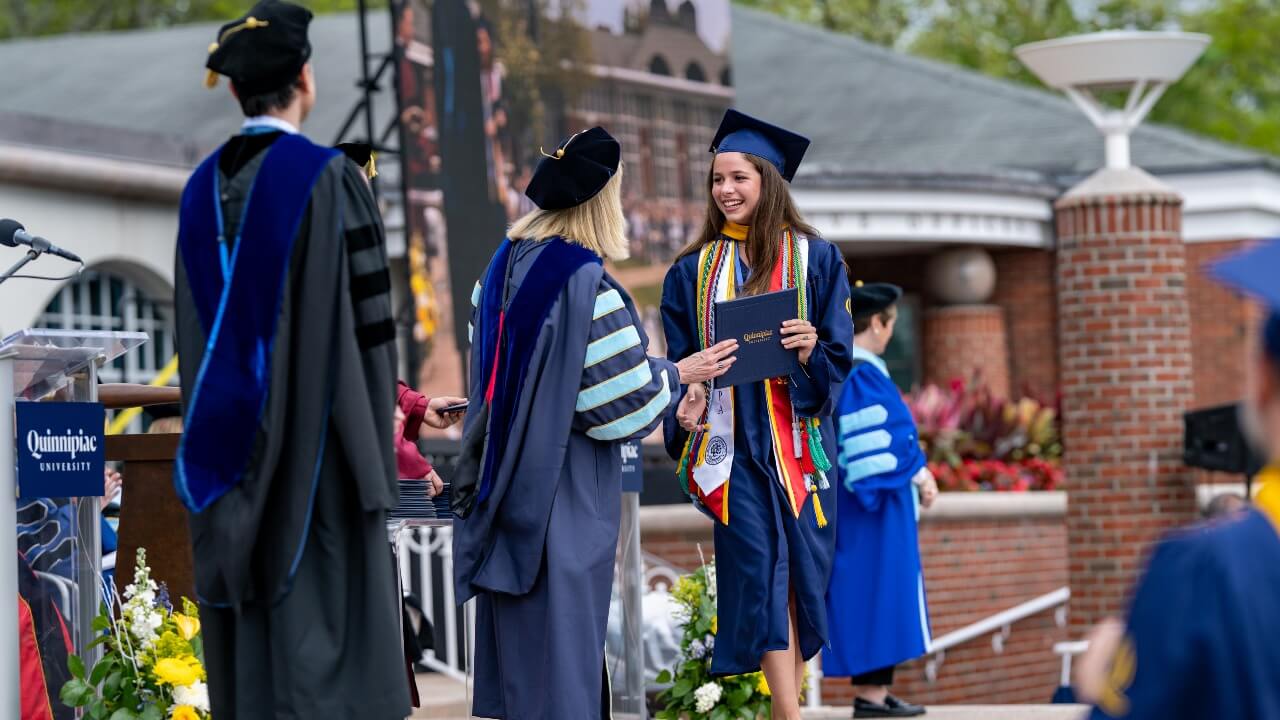
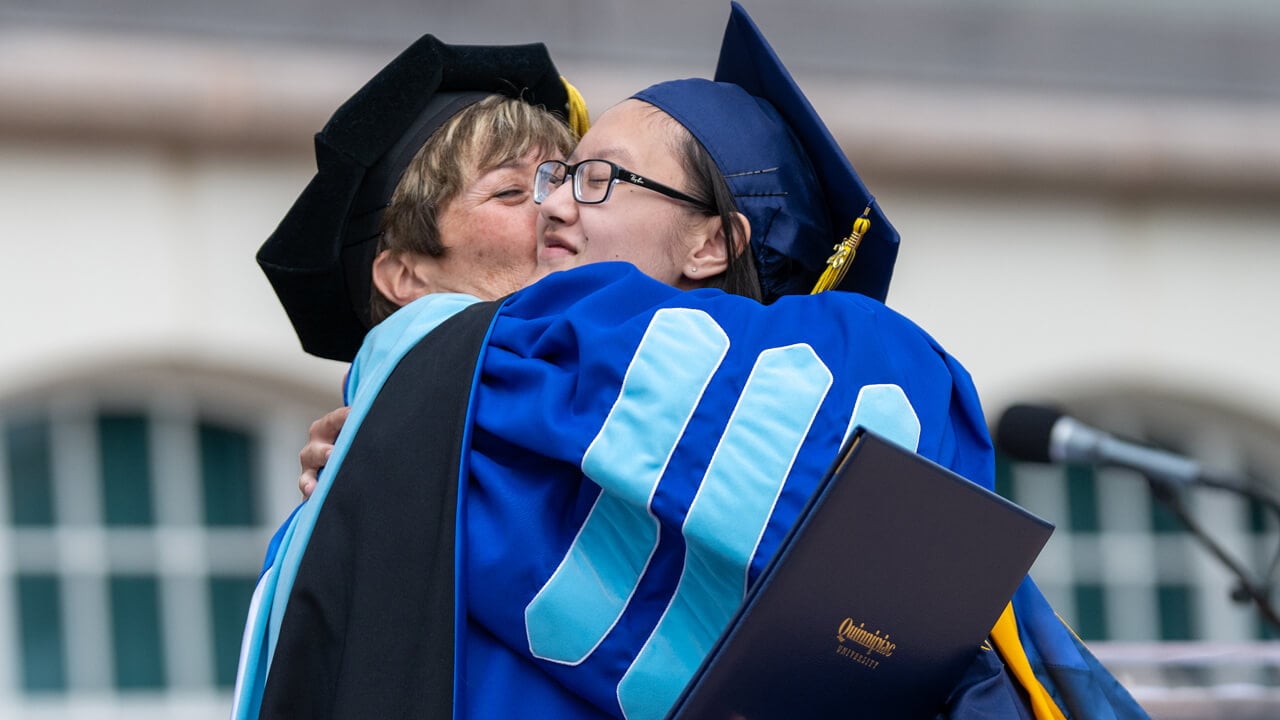
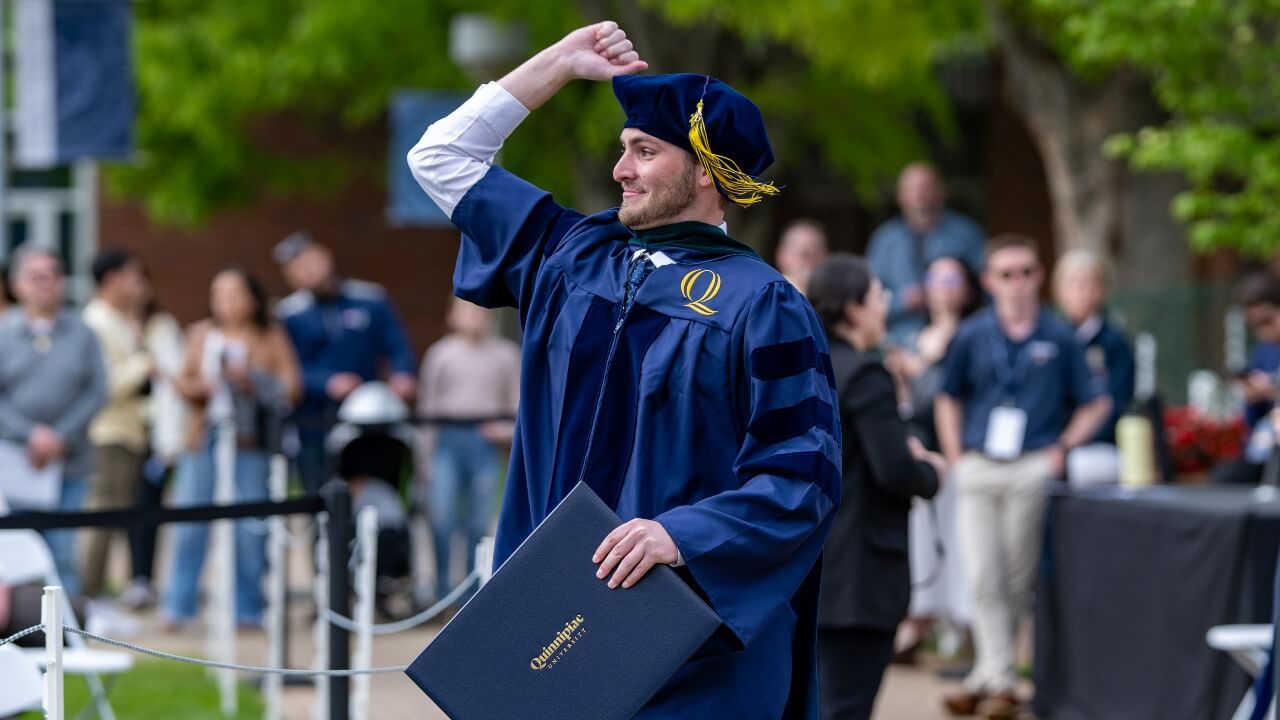
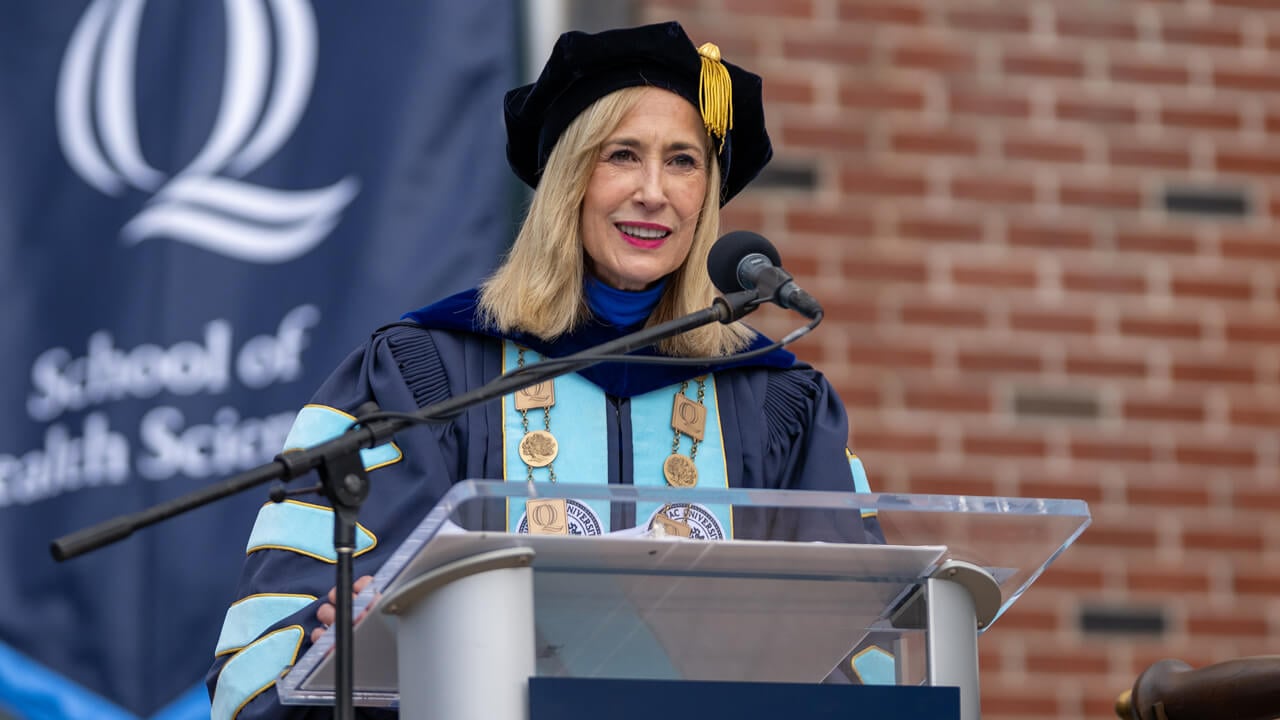
President Marie Hardin delivered remarks during the Commencement ceremony.
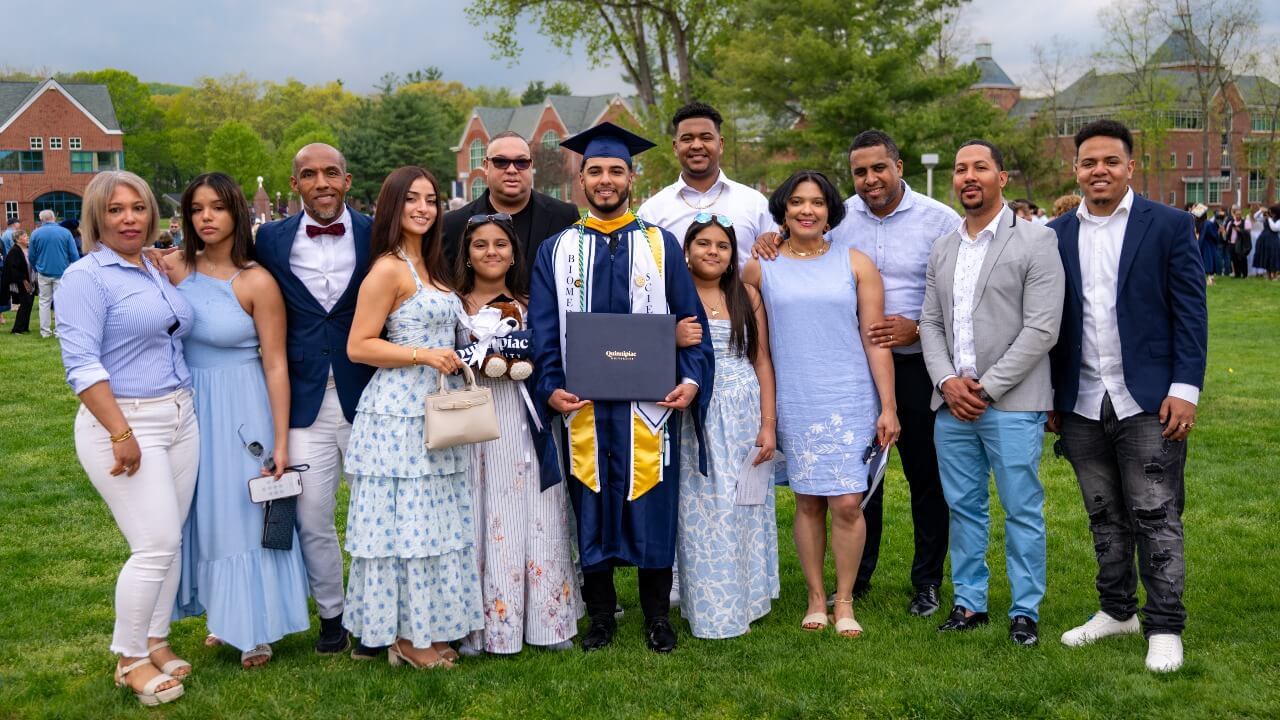
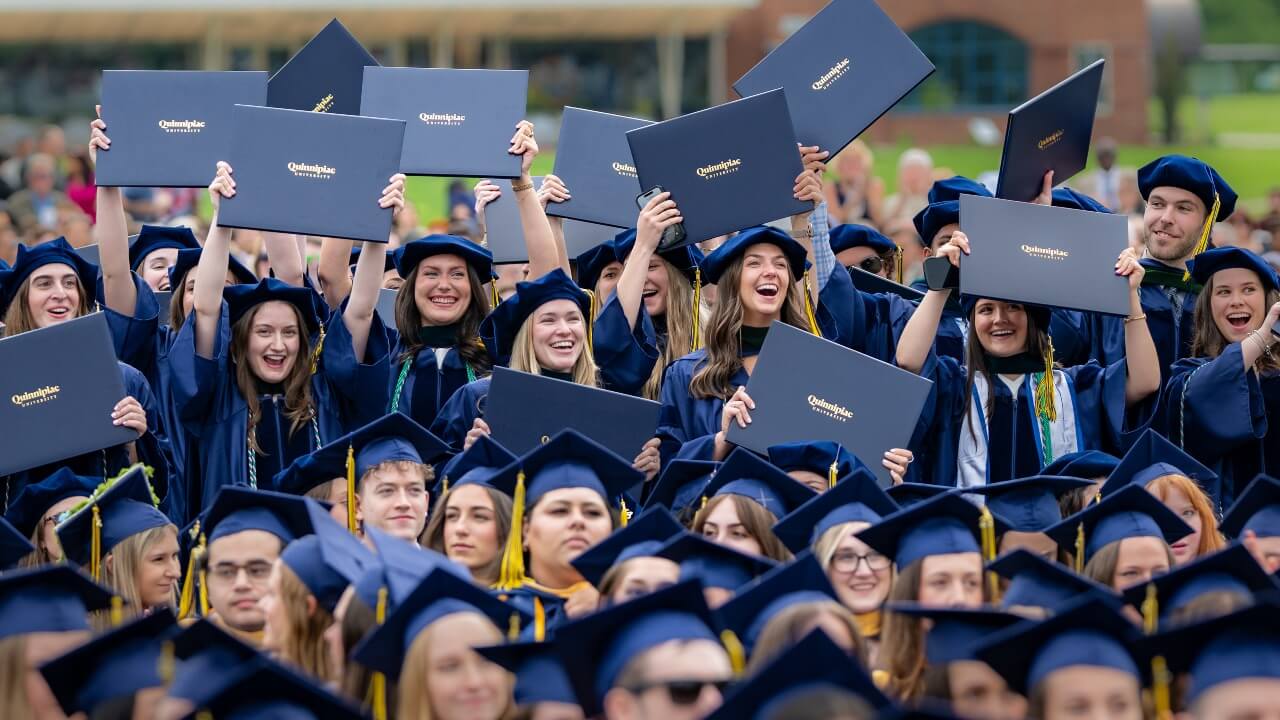
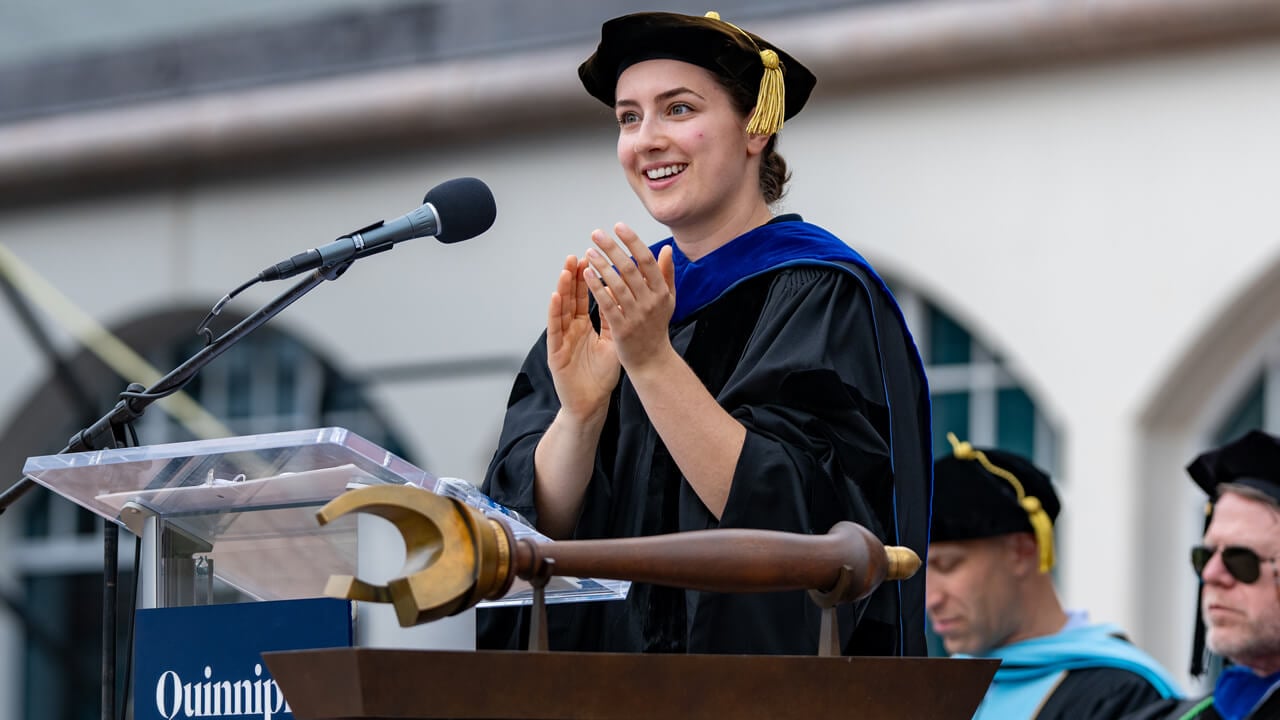
Sophia Marshall ’21 welcomed the new class of graduates on behalf of the alumni community.
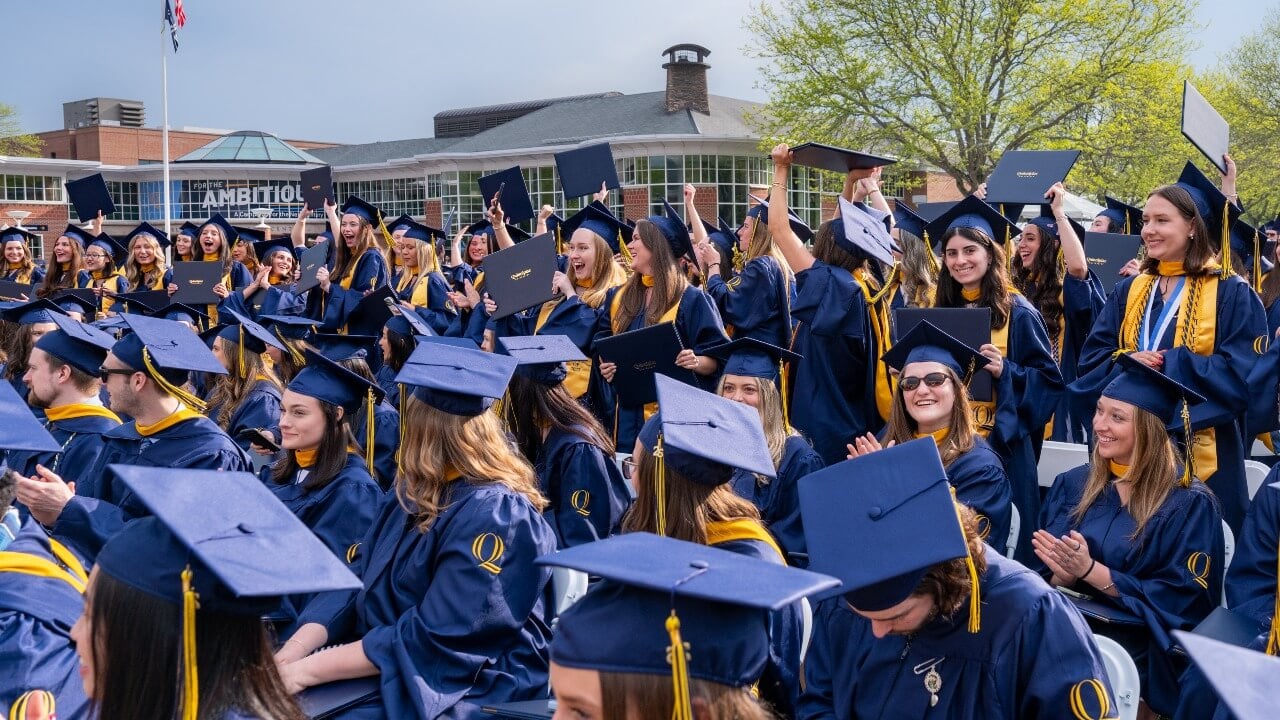
Watch the livestream of the School of Health Sciences Undergraduate and Graduate Commencement.
Pomp and Circumstance, Sir Edward Elgar
Debra J. Liebowitz, PhD
Provost
Delaney Grady ’26
Marie C. Hardin, PhD
President
Undergraduate: Sofia Nicole Konkolics
Graduate: Abigail Lambert
Sara MacDonough-Civitello
Senior Associate Athletic Trainer
Michael Papale ’11
Founder and Chief Executive Officer, In a Heartbeat Foundation
Trenton Honda, PhD
Dean
Marie C. Hardin
Sophia Marshall ’21
Alumni Association Board
Founder and CEO, In A Heartbeat Foundation
School of Health Sciences Commencement | Sunday, May 10, 4 p.m.
Mike Papale is the founder and president of the “In A Heartbeat Foundation,” a nonprofit organization whose mission is to prevent death from sudden cardiac arrest and hypertrophic cardiomyopathy (HCM) by raising awareness, enabling research and donating automated external defibrillators (AEDs) to places that need them.
Papale knows firsthand how 10 minutes can alter a lifetime. He experienced cardiac arrest when he was just 17 years old because of undiagnosed hypertrophic cardiomyopathy. He likely would have lost his life if a nearby EMT had not immediately administered CPR.
Inspired by his experience, Papale founded “In A Heartbeat” in 2015 to raise awareness around hypertrophic cardiomyopathy and sudden cardiac arrest among children. Since its founding, the nonprofit has run an AED donation program and organized early-detection events for children and their parents. “In A Heartbeat” also raises money for research projects that focus on sudden cardiac arrest.
After graduating from Quinnipiac in 2011 with a Bachelor of Arts in communications, Papale served several years as a college basketball coach at UMass-Lowell, Quinnipiac and Southern Connecticut State University before channeling his transformative journey into the pages of his book, “A Big Heart.”
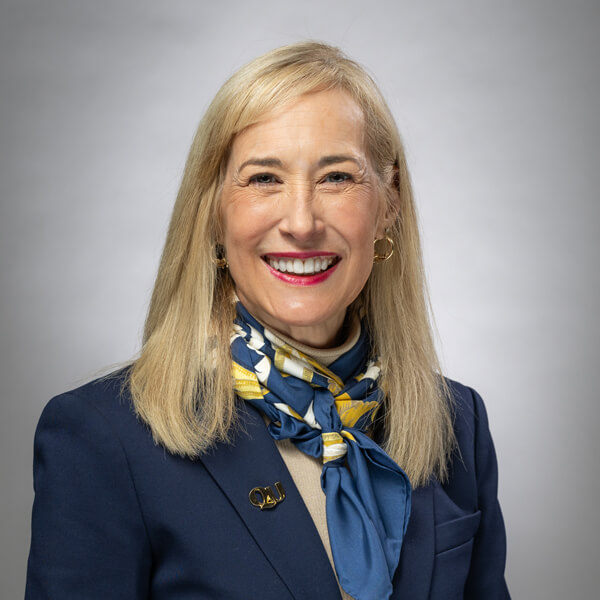
Congratulations to the Class of 2026 as we celebrate you for achieving this transformative milestone. You are well positioned to continue your journey as the leaders and professionals who will impact the workplaces of the future and the communities you call home.
We are confident you will apply your education, your talent and your purpose to make the world a better place. Your values embody all that it means to be a Bobcat. You have been taught and uplifted by a distinguished faculty and a committed staff. Together, they have watched you become the epitome of human flourishing and the stewards of tomorrow.
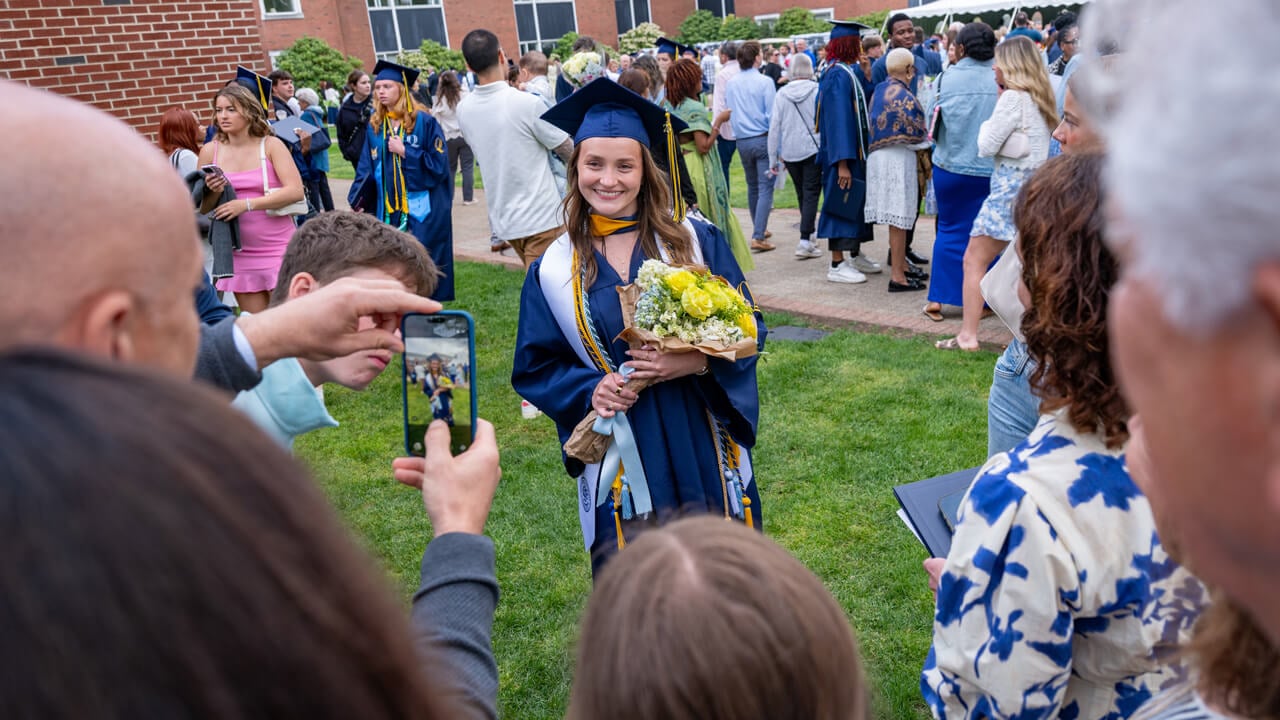
Please stay connected with us as a member of our Quinnipiac family. Cherish the many memories you have made here. But also remember those who have cheered for you and supported you along the way — your families and friends. They, too, deserve applause and hugs on this most special day.
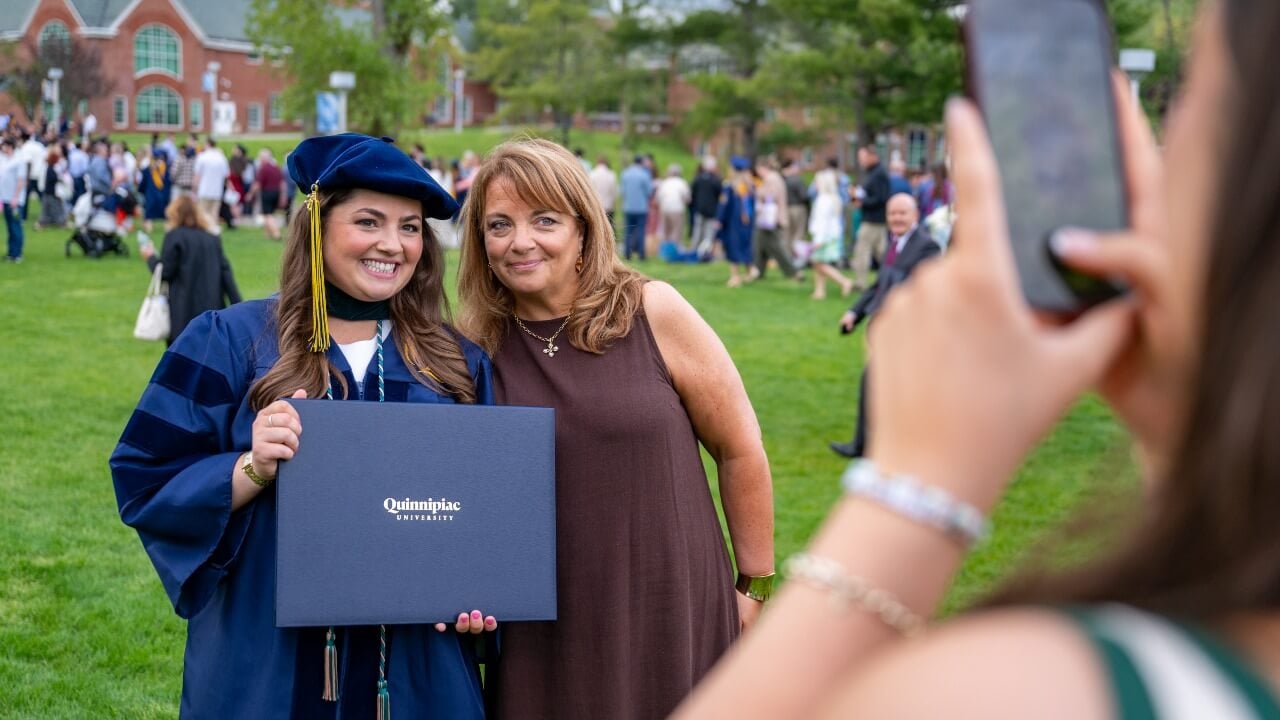
So enjoy this moment, Class of 2026. Take lots of pictures. Soak it all in. You’ve earned it!
Warmly
Marie C. Hardin, PhD
The mace — a symbol of authority — has antecedents in both Roman and Medieval history. The Roman mace (fasces) was carried by a lictor before the chief magistrate of the city, as well as before the legions. During the Middle Ages, the mace (mateola), a weapon of war, became first a symbol of victory and then a symbol of authority. The mace emblazoned with the Great Seal of England became a symbol of authority in Parliament by the end of the 13th century. It is this form of the mace that was the prototype of those symbols of authority, not only of legislative bodies, but also of cities and universities.
In 1246, following some 20 years of strife, the University of Paris was finally conceded the right to its own common seal. Since then, the use of the seal engraved on the mace has come to symbolize the authority of the academic community. In July 2000, Quinnipiac commissioned the noted sculptor Robert Meyer of Westport, Connecticut, to design and execute a new mace for Quinnipiac University. Cast in bronze, the mace incorporates elements of the university seal.
The medallion (medal of office), like the mace and the seal, is also a symbol of authority. It is possible that its roots may be traced back to the Roman “bulla” (a gold amulet of honor). The obverse of the medallion shows the seal of the office the wearer holds — in our case, the seal of the university. Not infrequently, the reverse would show the personal seal or coat of arms of the bearer. Since the High Middle Ages, the medallion has been worn by such officials as the chancellors of England, mayors of cities, and rectors of universities, and came to signify the high personal position such figures occupied in their respective governments. During the Renaissance, medallion design reached unique artistic heights, and in certain portraits the medallion was given particular prominence. The medallion is worn by the university’s president. The Quinnipiac medal showcases the university seal, sculpted in relief and cast in bronze.
The 12th and 13th centuries saw the formation of universities under the jurisdiction of the Church. Most students of the day were clerks in the Holy Order, monks or priests. Cowls or hoods adorned their habits and protected the young scholars from harsh weather and the pervading dampness of the stone buildings in which they studied. Hoods also served to cover tonsured heads before the use of the skullcap.
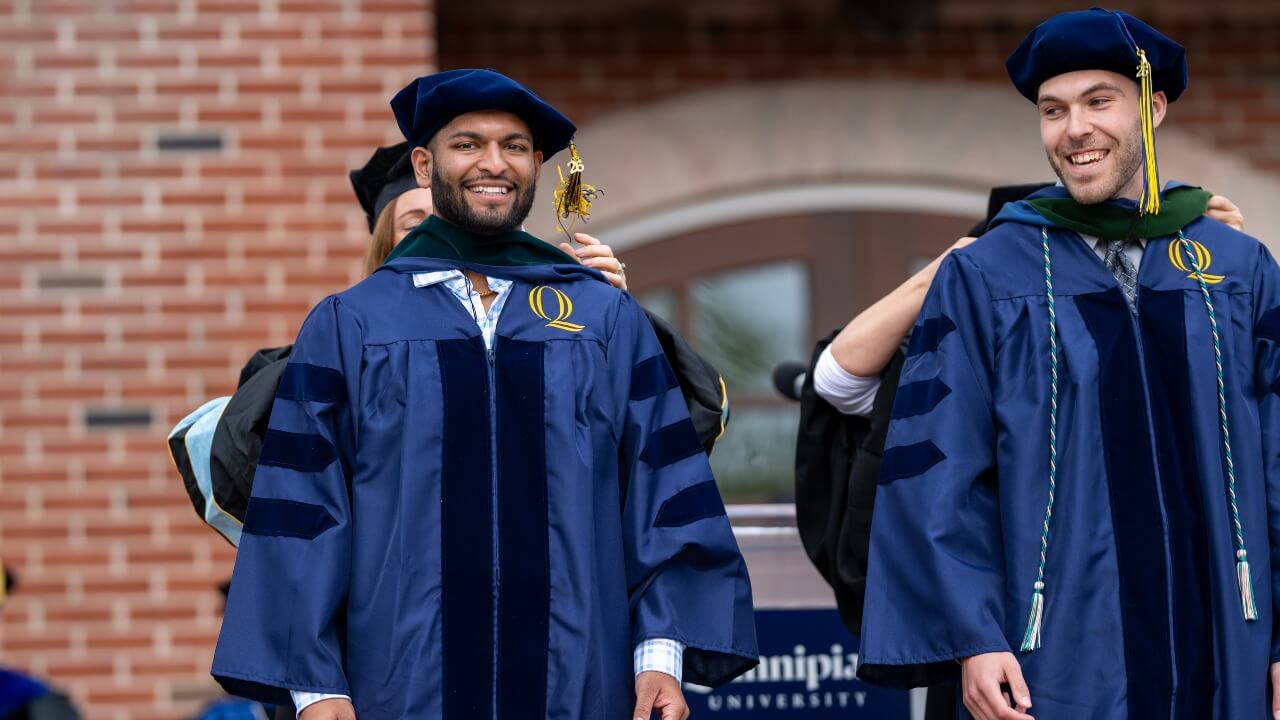
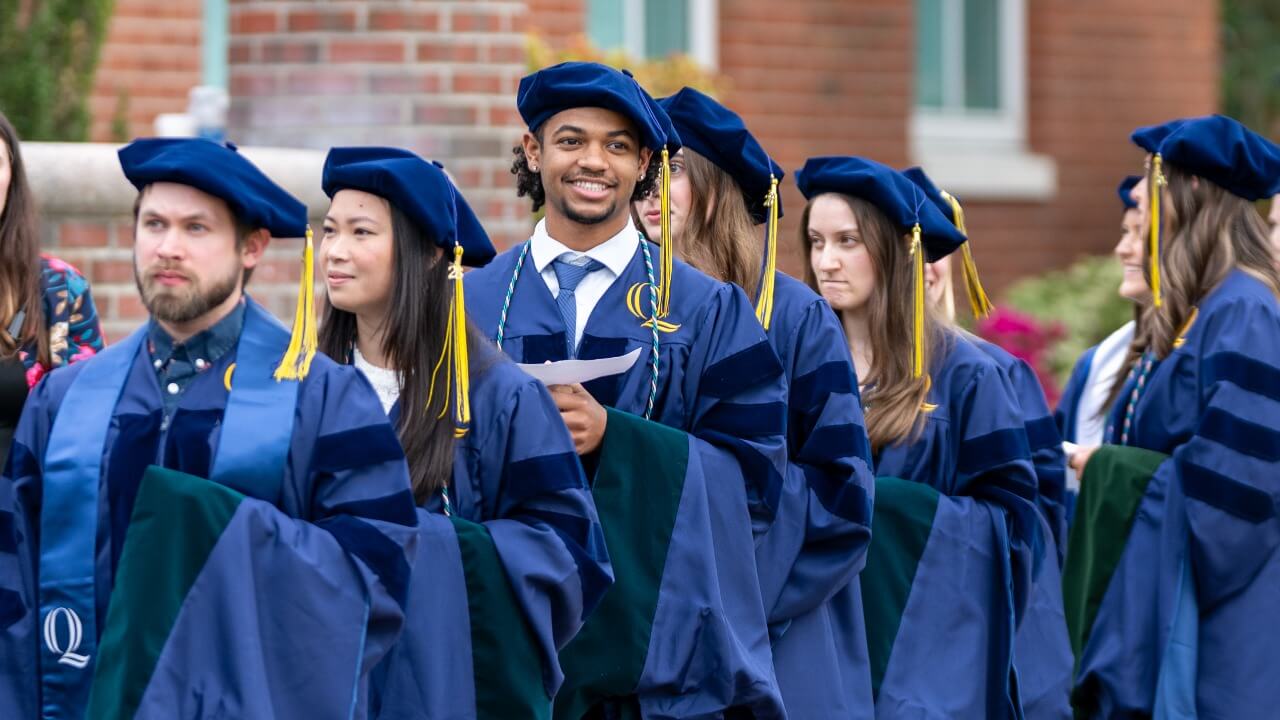
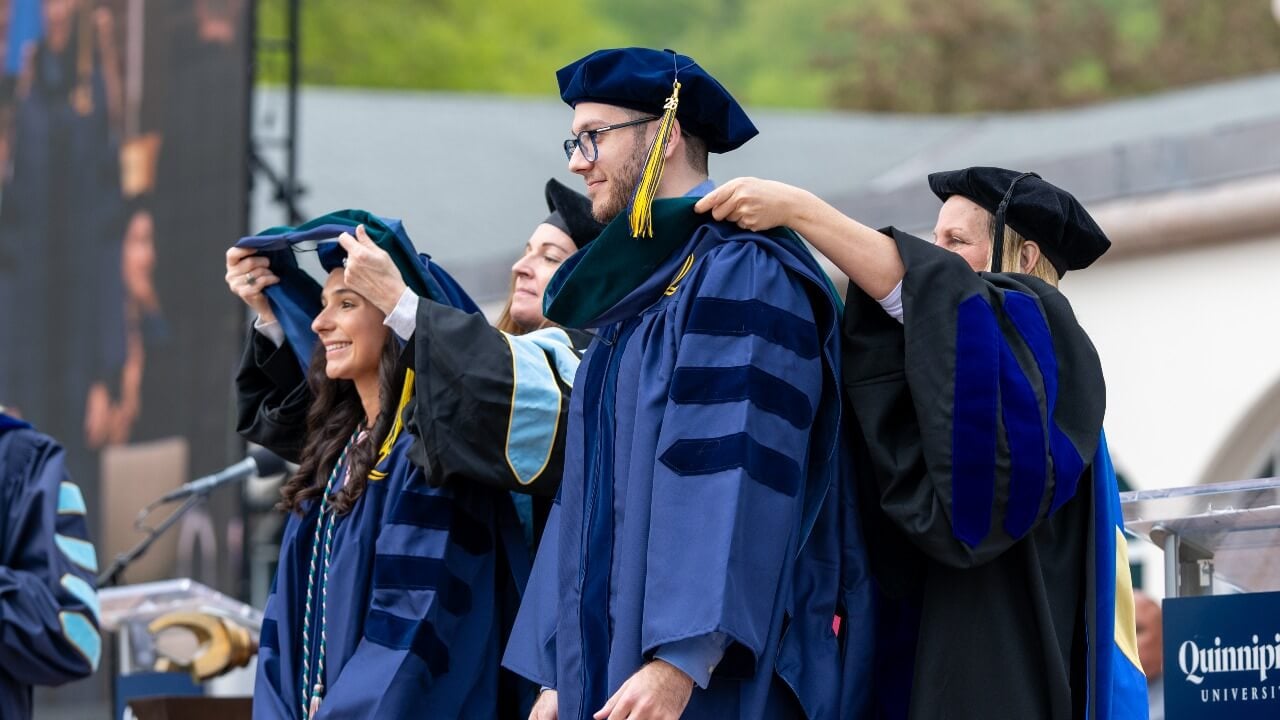
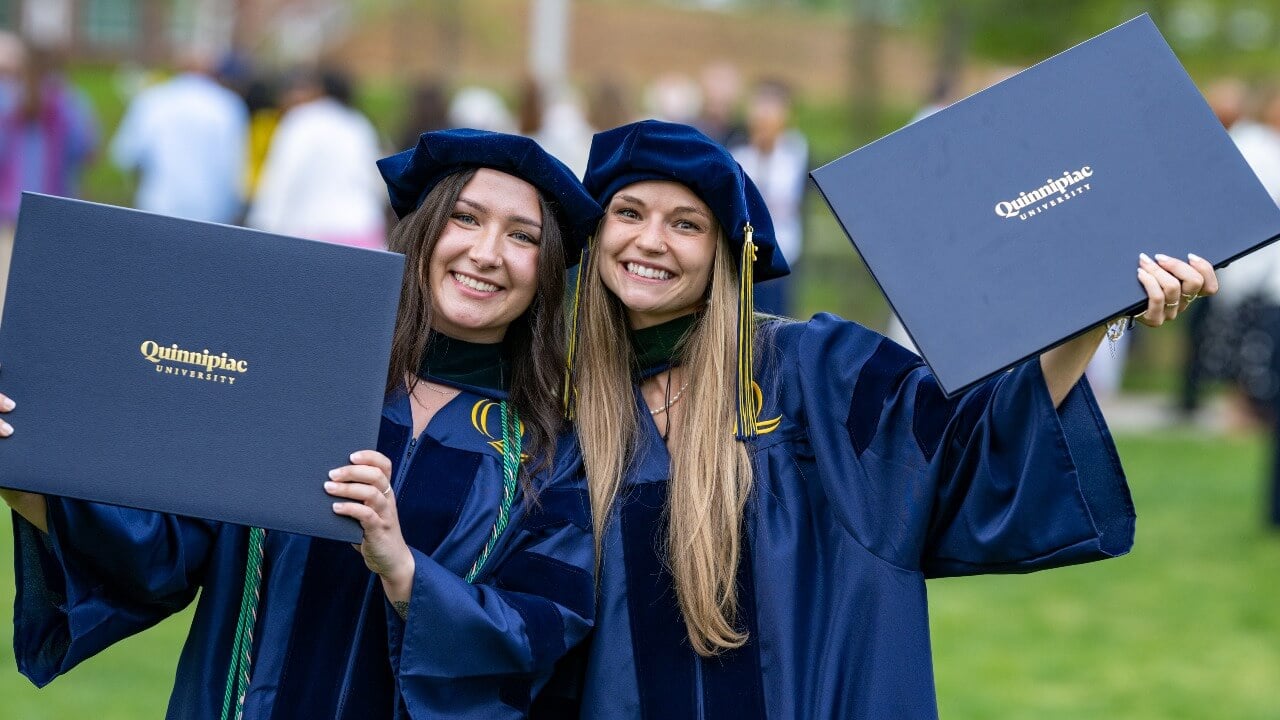
Today, the cap, gown and hood have taken on a symbolic meaning. Color and shape conform to an academic code signifying a university’s conferral of the degree and the nature of the degree conferred. Gowns for the doctoral degree carry velvet panels and three horizontal velvet bars on the upper arm of the full, round, bell-shaped sleeves.


Quinnipiac Today is your source for what's happening throughout #BobcatNation. Sign up for our weekly email newsletter to be among the first to know about news, events and members of our Bobcat family who are making a positive difference in our world.
Sign Up Now