



Student-led TEDx QuinnipiacU spotlights the power of purpose
May 05, 2026
May 05, 2026
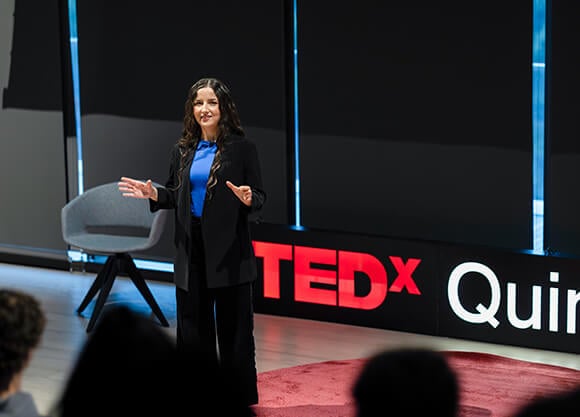
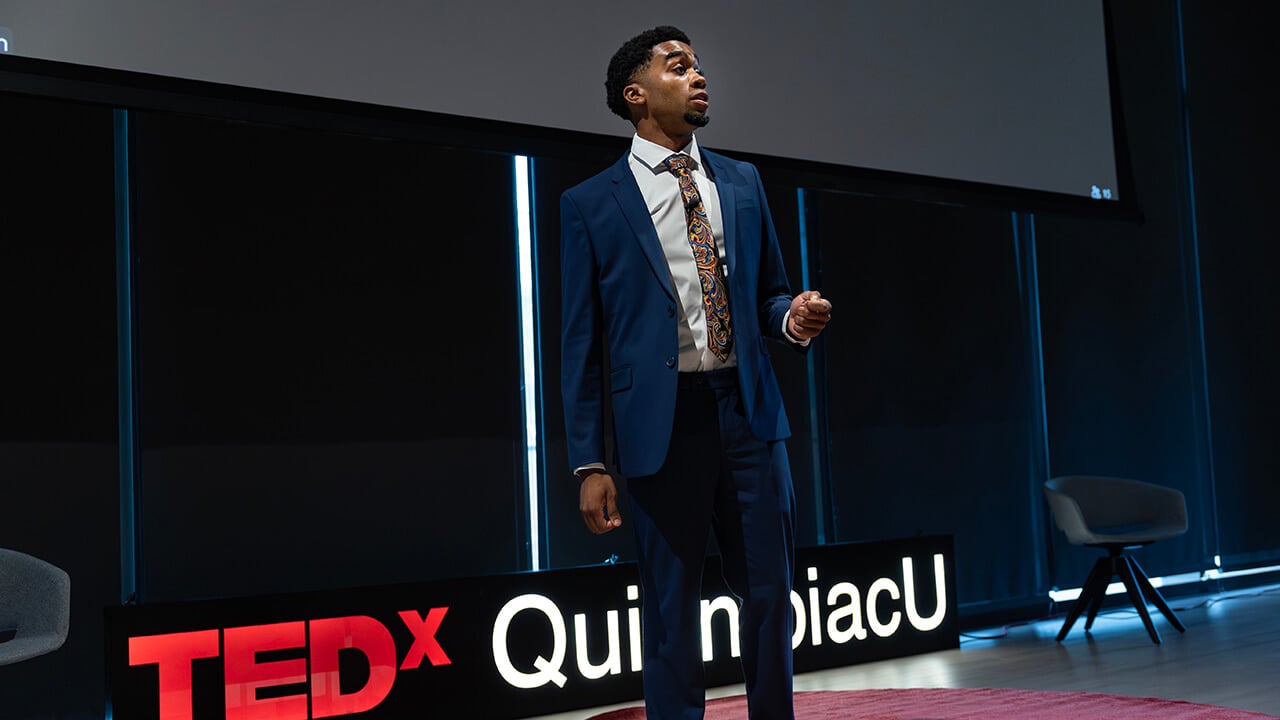
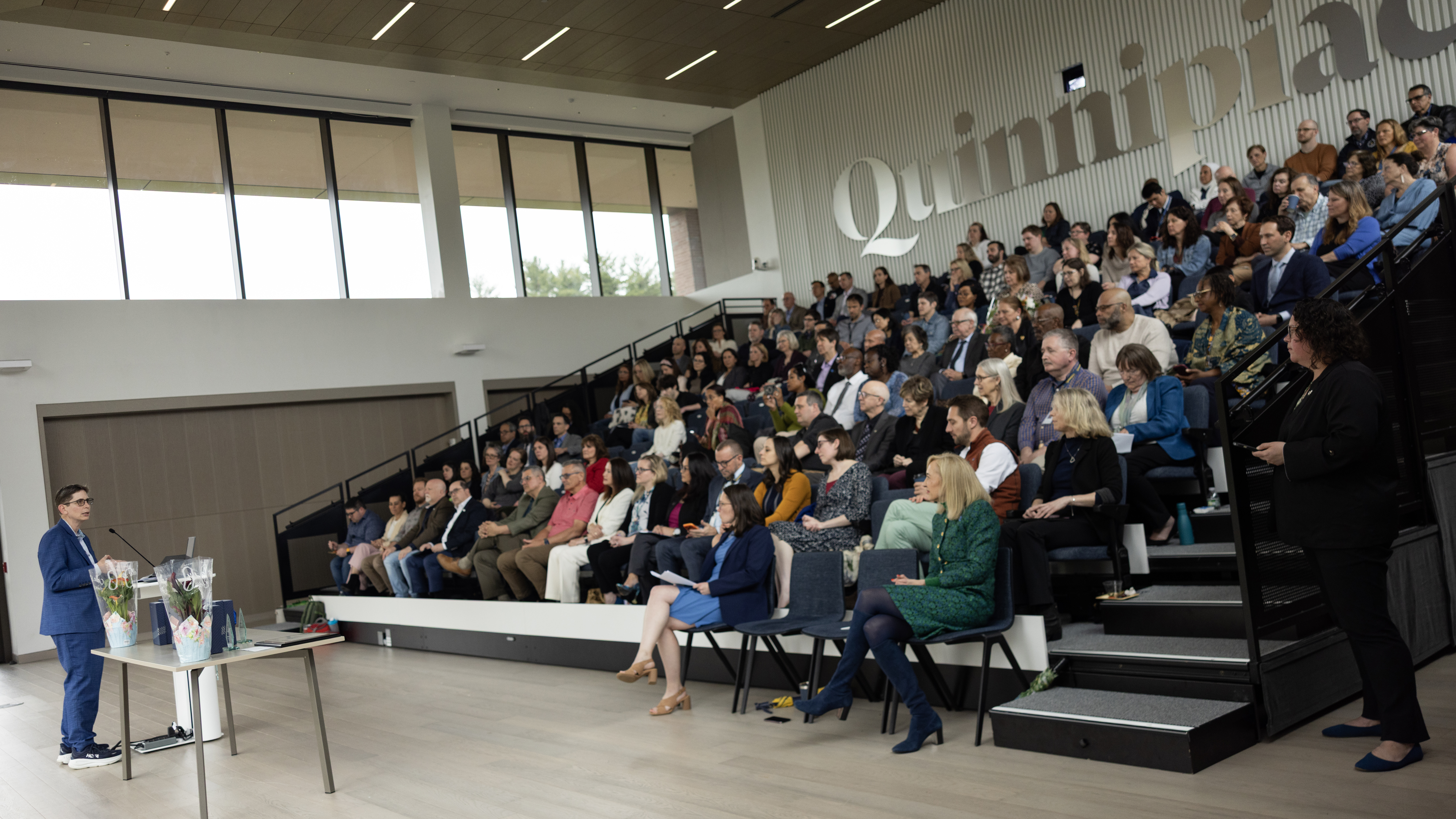
Organizer Amari Smith ’27 was joined by a dedicated student team to produce TEDx QuinnipiacU as a student-centered effort. Their hard work culminated in bringing the transformative experience of a TEDx event back to the university after a seven-year hiatus.
“The last time it was held here was in 2019; and it was fully organized by faculty and staff, which was amazing. But what inspired me is that, at the end of the day, a university is a student body – so why not make it all student-based? I know there are so many people here that have a story to tell,” said Smith, a journalism major.
The program was sponsored by Quinnipiac Student Government Association, Office of the President, M&T Bank Center for Innovation and Entrepreneurship, M&T Bank Center for Women and Business, and Office of Marketing & Communications. Advisers from the Office of Inclusive Excellence provided guidance and support.
As the night’s emcee, Smith seamlessly wove the program together with eloquent speaker introductions. Smith said the night’s talks and real-life stories would emphasize the process by which purpose elevates passion into a powerful impact.
“Passion is at its greatest form when it expands upon yourself and improves on other people’s lives. This is how purpose is found in passion. Every passion has a way to have purpose mended within it, and this is where power is found,” Smith said.
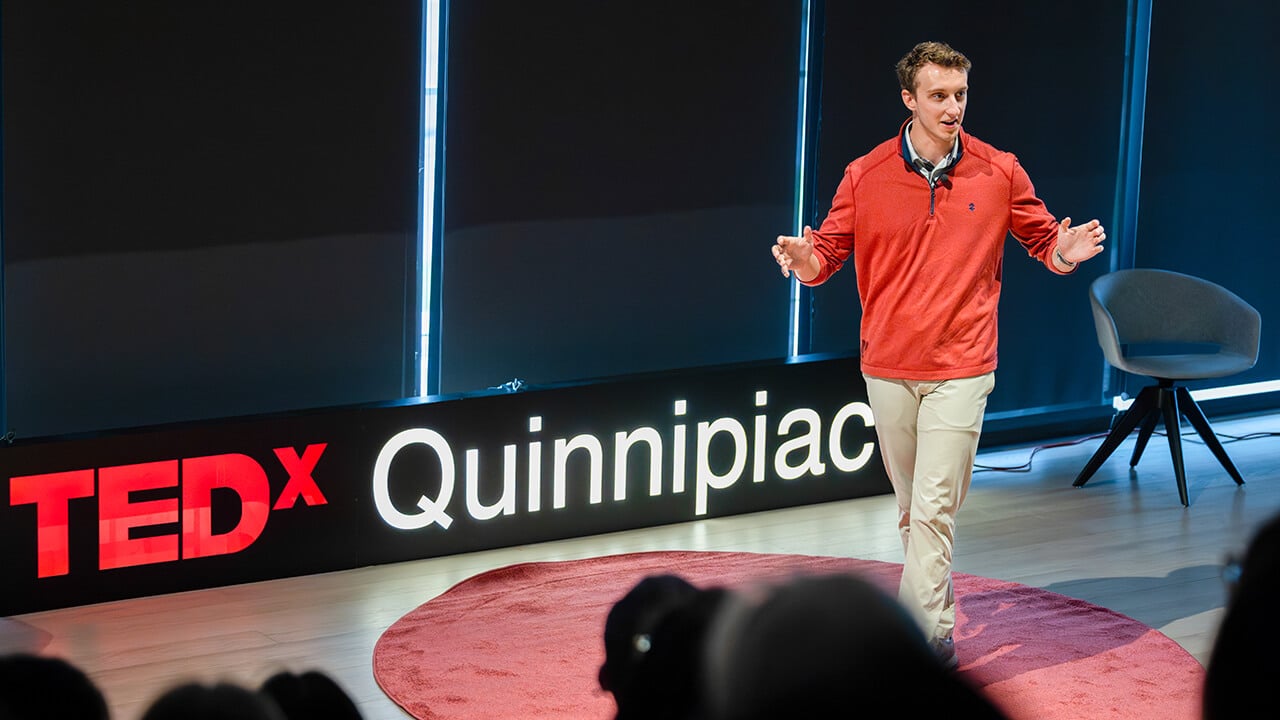
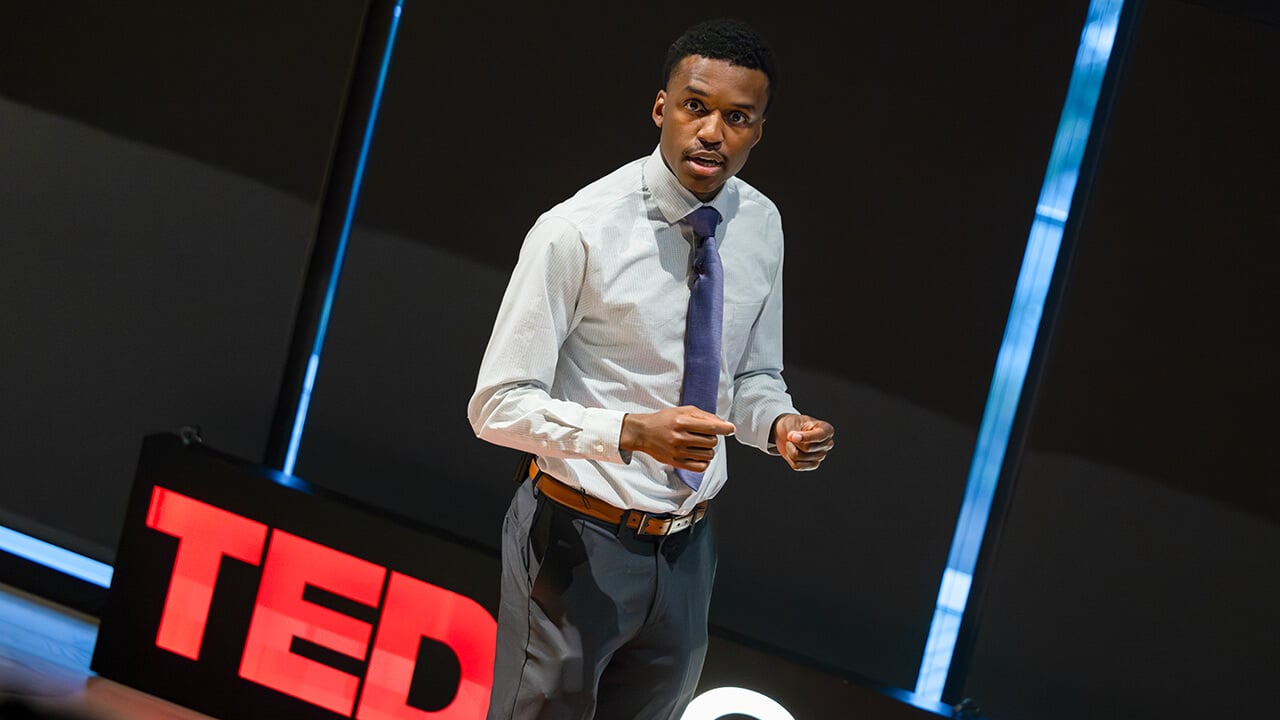
As someone with a passion for car mechanics who’s also fascinated by the interaction between automation and humans, industrial engineering major Gavin Grim ’26 challenged the idea of a future that’s fully automated, rather than augmented.
“As we see today, more and more inventions are being made with the idea of trying to take away the human experience,” Grim said.
Grim’s idea for his talk was kickstarted by trying to repair a racing simulator in the industrial engineering lab. That led to researching a grant to fund the fix, which led to learning about steer-by-wire technology. The tech replaces the traditional mechanical linkage between a car’s steering wheel and tires with electronic sensors, actuators and software.
“The by-product of this is there is no more physical connection, so all the forces you feel are no longer part of the system,” Grim said. “So I wanted to see if that is inherently part of the mechanical system, or is it something humans actually need to operate the vehicle?”
The bottom line: humans driving cars respond better to nuances, surroundings and sensations that technology can’t pick up on. As we rapidly rely more deeply on AI-driven tech, Grim said these findings tell a cautionary tale.
“I challenge you to think about how you interact with the world around you,” Grim said. “Are there areas where automation would be great, or are there areas where automation would take away the human experience? A computer can give you all the data in the world; give you millions upon millions of data points. But you are the only one who can give that data meaning.”
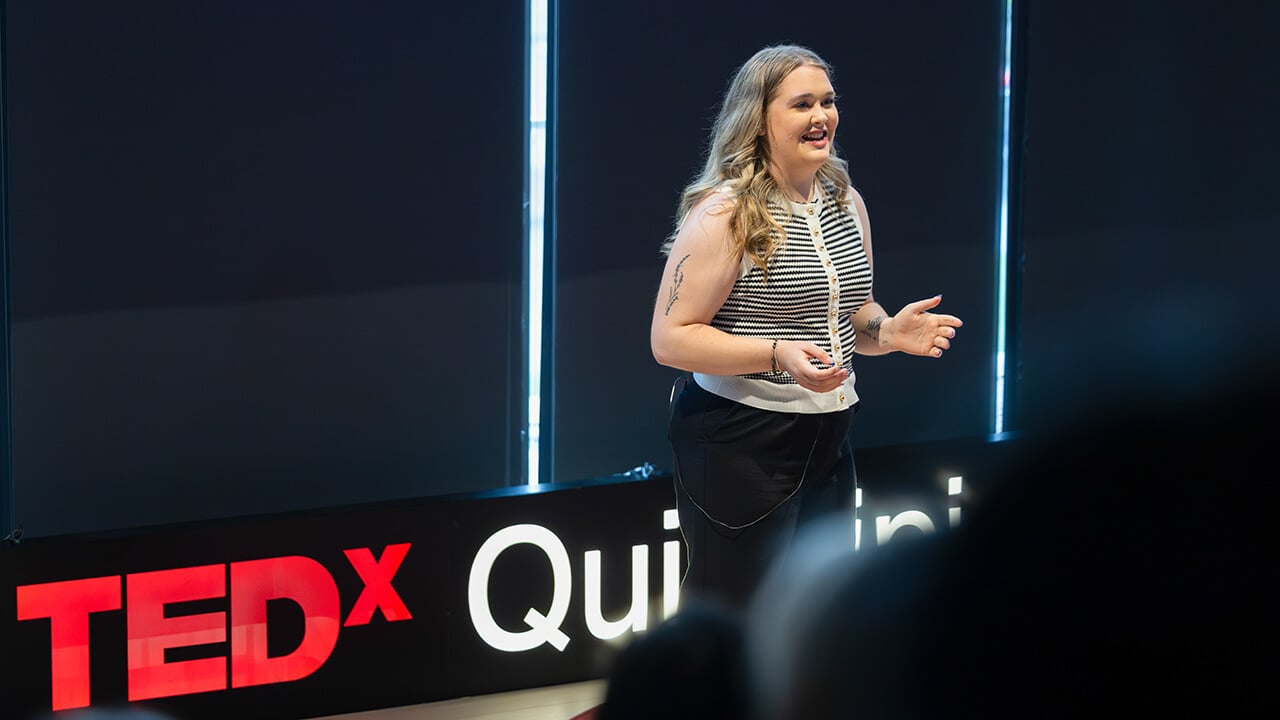
Kayla Dupper ’26, MAT ’27 shared her talk on “Redefining Intelligence: What Special Education Taught Me about Human Potential.” Dupper’s talk highlighted the importance of special education and how it inspires her to become the best educator she can be. Duffer’s understanding of her passion and purpose began with an impactful interaction with a student in her mom’s special education classroom.
The nonverbal student used augmentative and alternative communication. After months of visits, the first time the student said Dupper’s name was “the loudest moment in the room,” Dupper recalled.
“One day, after visiting that classroom again and again, he walked over, looked at me, said hello and said my name. Just three words. At that moment, it felt like the world had completely stopped. And that moment did not just change how I saw education. It changed how I saw intelligence,” said Dupper.
Dupper said she often reflects on the student who communicated differently, yet shared a meaningful connection by saying, “Hi Miss Kayla.”
“A student who after time, patience and consistency, said my name. Just three words. And that’s what this is all about,” Dupper said. “Because intelligence is about potential, and it’s about giving these students the opportunity to succeed in a way that works for them. And when we choose to see that, to value it, to hear it, we don’t just change education. We change lives.”
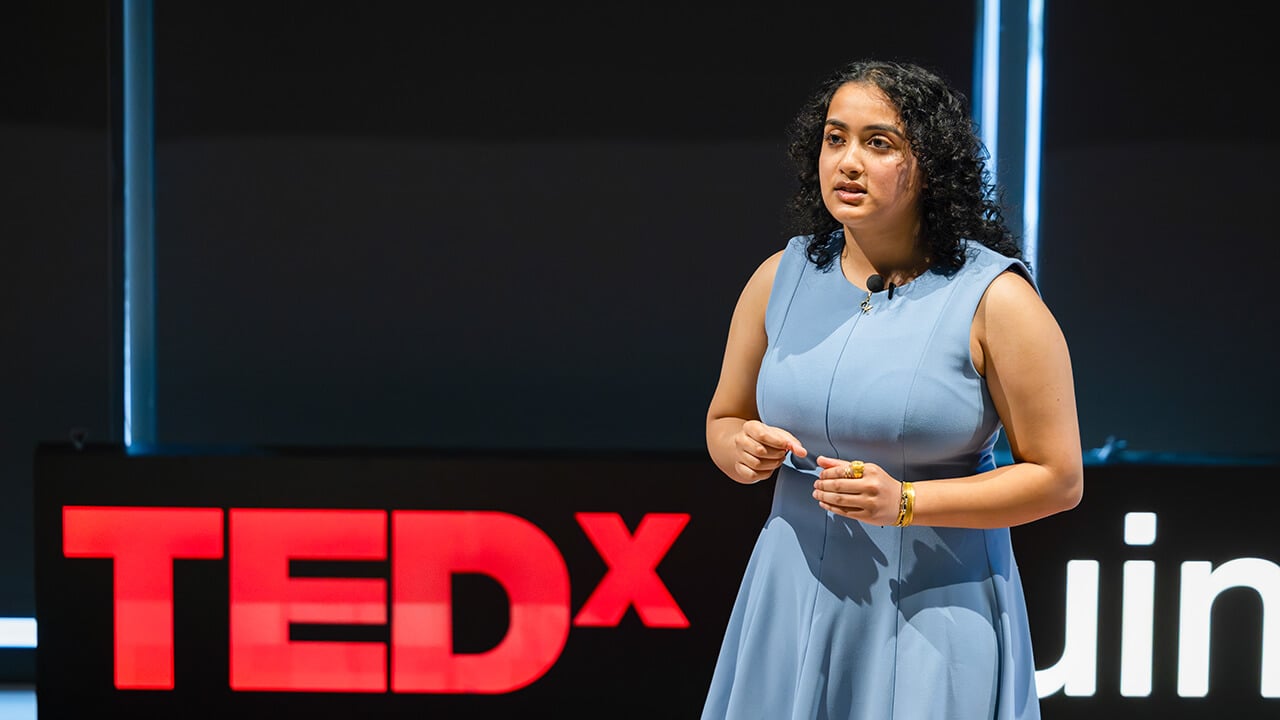
Computer science major Aditi Baghel ’27 emphasized success is a personal journey and not everyone starts at the same baseline. She shared the story of a girl diagnosed at a young age with autism spectrum disorder who navigated success with her family’s support and her own determination. At Quinnipiac, she overcame initial failure by channeling emotions of fear and concern into effort.
Tragically, in August of 2025, the girl suffered an unimaginable loss when her father drowned while swimming during a family boating trip. Her adviser suggested withdrawing for the fall semester, but the girl chose to keep going, said Baghel.
“She now carried her dad’s wings. Her definition of success changed forever from achievement to meaning. Looking back, she realized something powerful. She used to think success meant catching up. But now, she knows that success means continuing your starting line, even when it changes,” said Baghel, who revealed she is the girl in her story.
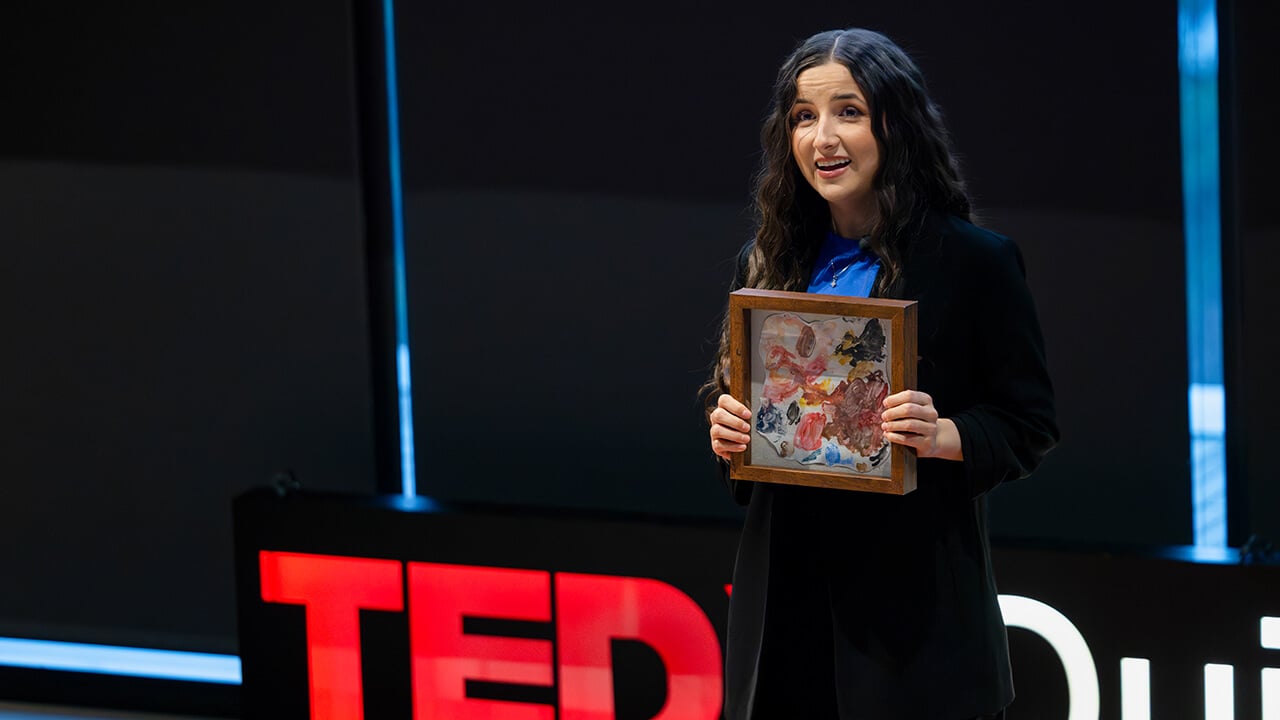
Savannah Mohacsi, a first-year candidate at Quinnipiac’s Frank H. Netter MD School of Medicine, puts paint to skin with anatomical body painting to reveal anatomy that’s often impacted by disease or injury.
Working at the intersection of art and medicine, Mohacsi said she’s growing in her knowledge while honoring the story behind the person acting as her canvas. What began as a passion project in 2019 now bleeds into her medical studies, informing how she thinks about care, connection and engaging with people beyond their diagnosis.
“In doing this practice of anatomical body painting for all these years, I’ve learned that medicine isn’t just about treating disease. It’s about seeing people fully,” said Mohacsi. “If we just see the diagnosis, we miss the person behind it. I’m an artist. I am medical student. Those two sides of me are coming together to one day be a physician who will see and carry people’s stories with compassion and trust. And it’s important for me that I will see people fully, whole, themselves; from the inside out.”
Marcus Pierre ’24, MS ’25, a cybersecurity graduate, returned to campus to share his passion for supporting youth cybersecurity education in an increasingly digital world, as the founder and executive director of Digital Defenders, Inc. The Connecticut-Massachusetts nonprofit is dedicated to youth internet safety.
“When you expose children to cybersecurity concepts earlier, something cool begins to happen,” Pierre said. “Exposure becomes curiosity. Curiosity becomes confidence. Confidence creates passion, and passion creates purpose.”
It’s a transformational process Pierre said he’s seen not only in young students, but in himself.
“That’s how purpose begins. Not when you’re an adult. Not when you’re in college or you’re in high school, but the moment you realize that you can make an impact. And if we can create more of these moments, we can begin to create a generation of smarter, safer, more responsible people, and this gap that we currently have begins to close,” said Pierre.
A safer future begins with better-prepared people rather than better technology — and now is the time to act, in classrooms across the world, he said.
“The goal isn’t to make them all cybersecurity experts. It’s to make them feel empowered. It’s to help them navigate the digital world confidently and safely. And maybe, just maybe, even discover passion along the way,” said Pierre.
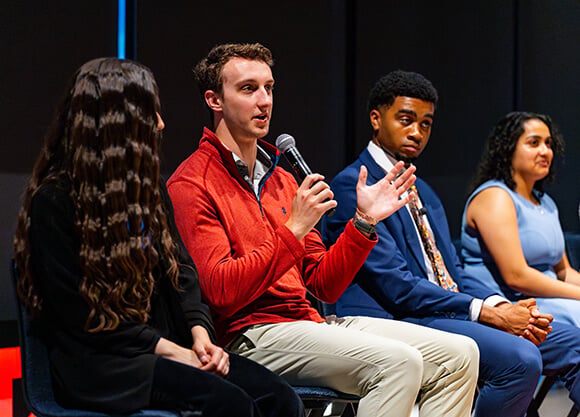
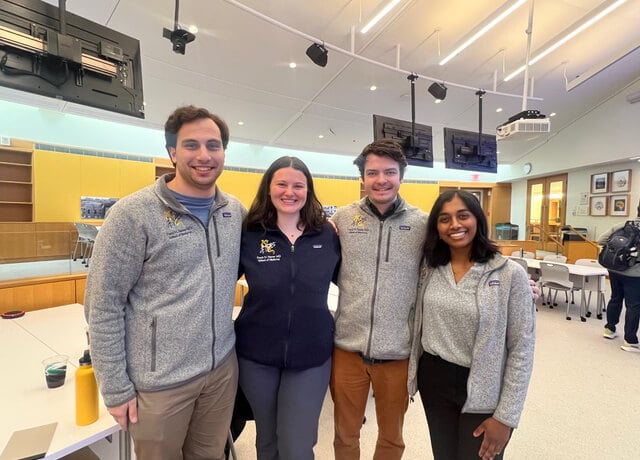
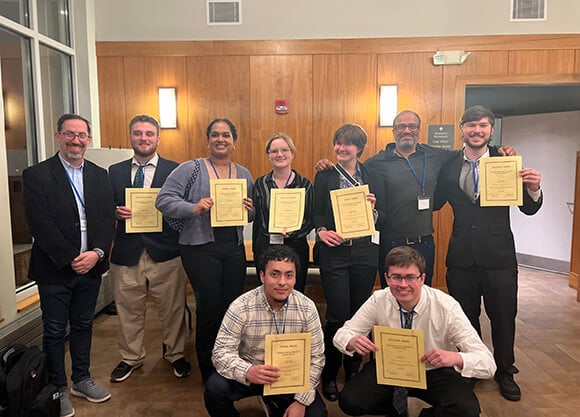
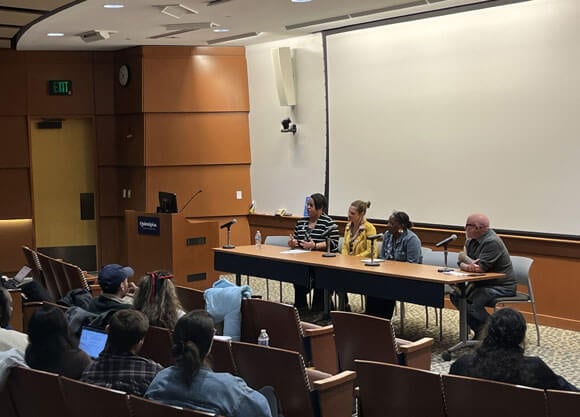
The inspiring night closed with an interactive audience Q&A with Smith and the night’s speakers, who learned they had inspired many with their remarkable poise, pacing and the possibilities their talks presented. The group was joined by the entire TEDx QuinnipiacU student team to take a bow.
Ranging from first year to graduate students, the 11-person TEDx QuinnipiacU team is made up of Smith together with Andrew Allison ’27, executive director; Brynn Pinkes ’26, MS ‘27, event manager; Lia Mercure ‘26, marketing and communications manager, Xiomara Saaverdra ’26, MS ’27 and Rachel Elizondo ’25, MS ’26, social media and design co-managers; Nicholas Pestritto ’25, MS ‘26, video and production manager; and volunteers Trenton Hill ’29, Logan Wills ‘28, Carleigh Beck ’25, MS ‘26 and Katarina Dewitt ‘28.
“I couldn’t ask for a better team or better speakers,” said Smith. “I’ll be forever grateful for the work that was put in behind the scenes. We all had that fire inside of us, trusted each other and helped each other out.”
Quinnipiac Today is your source for what's happening throughout #BobcatNation. Sign up for our weekly email newsletter to be among the first to know about news, events and members of our Bobcat family who are making a positive difference in our world.
Sign Up Now