



Education and nursing graduates reminded that leadership begins with service
School of Education and School of Nursing Undergraduate and Graduate Commencement 2026
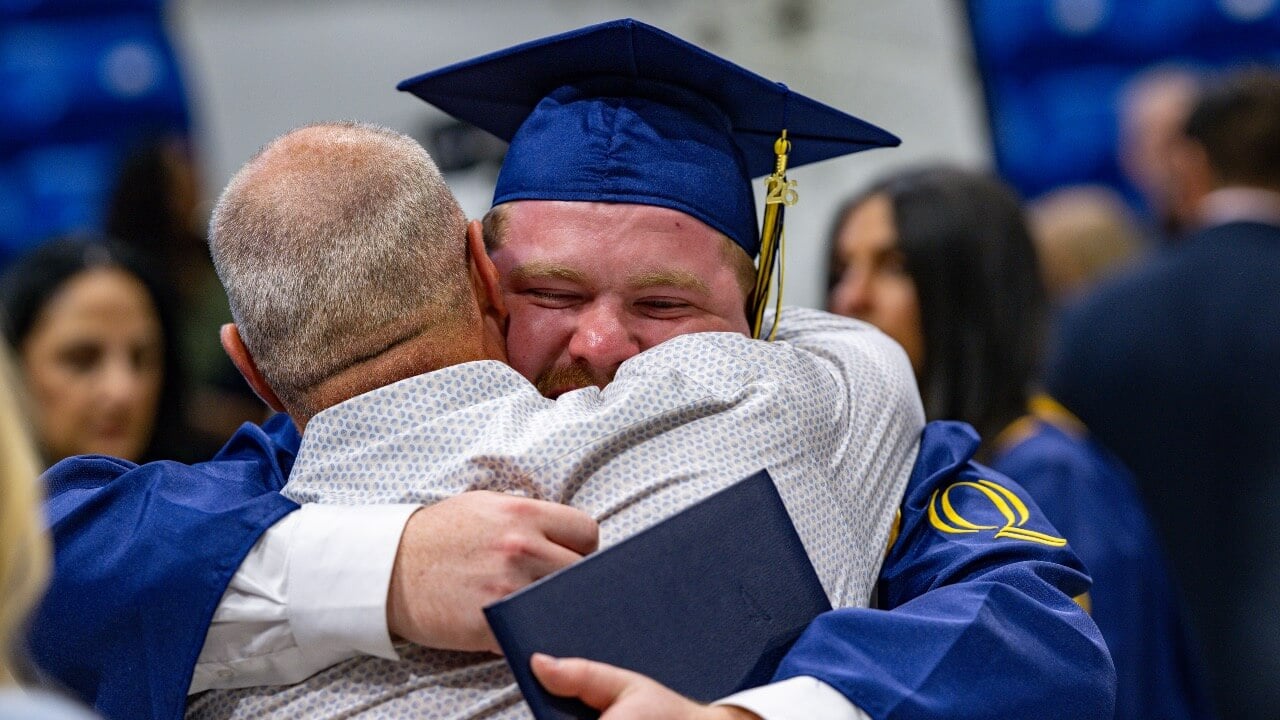
School of Education and School of Nursing Undergraduate and Graduate Commencement 2026
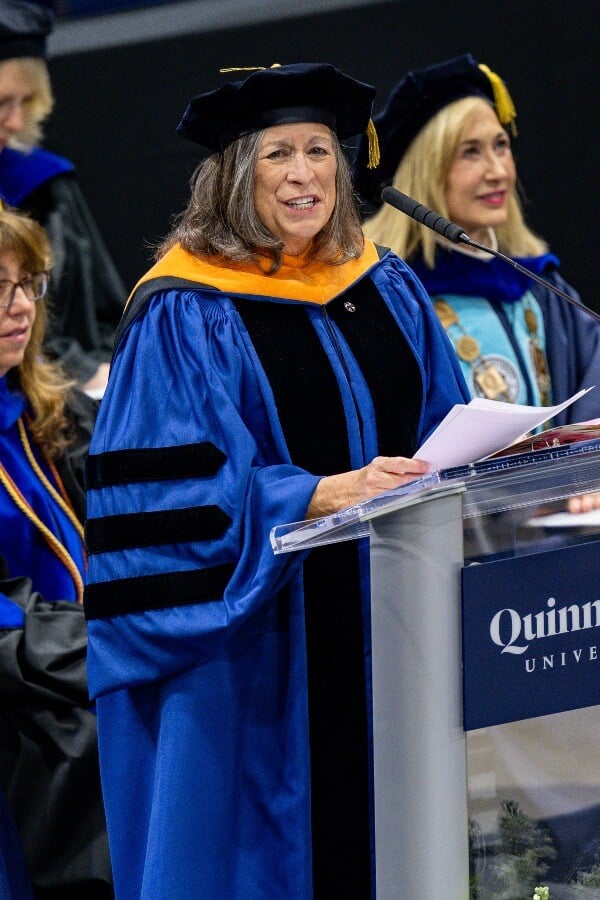
United by a commitment to service, compassion and leadership, graduates were encouraged to lead with both ambition and kindness by Commencement keynote speaker Chief Marilynn Malerba, the 18th Chief of the Mohegan Tribe — the first woman to serve in the role in the tribe’s modern history. A registered nurse by training, she also made history in 2022 when she was appointed by President Joe Biden to serve as Treasurer of the United States, becoming the first Native American to hold the position.
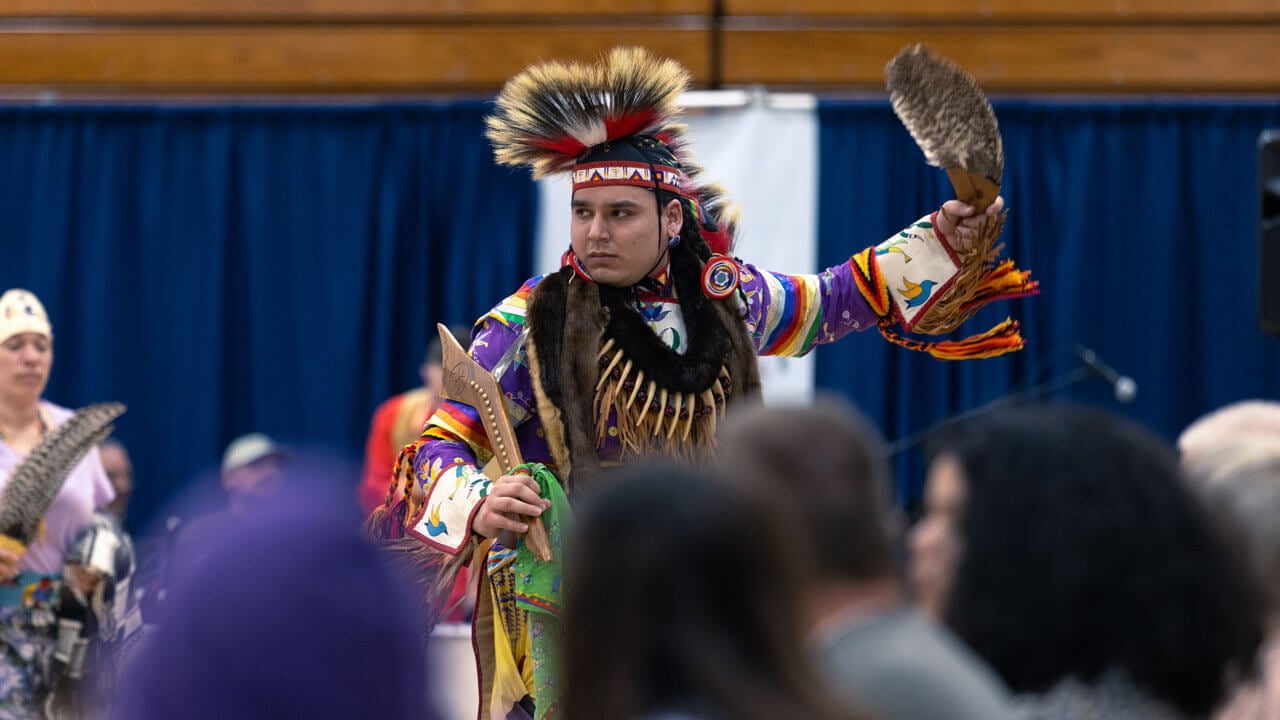
Malerba opened her remarks by welcoming graduates and guests in the Mohegan language, honoring her heritage and setting a tone of community and connection for the ceremony.
Drawing from her journey from registered nurse to tribal chief and national public servant, Malerba urged graduates to embrace uncertainty, remain open to unexpected opportunities and stay grounded in service to others. Sharing memories of being a shy and reserved student, she reminded graduates that meaningful work and leadership are often found in places they never anticipated.
“You may have a very specific plan for yourself, as I did so many years ago. However, the universe may have other equally important plans that you cannot yet see,” said Malerba. “Know that you are uniquely prepared for the challenges ahead because you understand humanity and know how to connect with people where everyone’s voice is heard, celebrated and respected. If you allow yourself that flexibility, you may experience the best adventure you could have never imagined, all while improving the lives of others.”
Throughout her address, Malerba emphasized the deeply personal role educators and nurses play in the lives of others, describing both professions as rooted in compassion, support and human connection.
“For the educators in this graduating class, your efforts may not be as immediately apparent to you, but I assure you that what you do each and every day will make an impression on your students,” said Malerba. “Teachers have lasting impacts that will continue to be felt deeply by their students.”
Malerba said both educators and nurses hold uniquely important roles in guiding and supporting others through some of life’s most formative and vulnerable moments.
“For the graduating nurses, I remind you that everyone, without exception, is touched by a nurse on their life’s journey in healing ways,” Malerba said. “Whether you are helping to bring a baby into our lives, cope with an unexpected illness or helping someone travel to the ancestors peacefully, you are by our side. You take care of us in life’s most vulnerable moments.”
Malerba also spoke about the importance of relationships and gratitude, encouraging graduates to remember the people who supported them throughout their journeys and to measure success not only through accomplishments, but through the lives they touch along the way.
“Please remember all the people who have walked on this path with you, who have cheered you on each and every step of the way — your families, your friends, your favorite professor,” Malerba said. “Remember that all of the things you will accomplish in your lifetime, nothing will be more important than your relationships with them. I leave you today with this image: In our tradition, diamond shapes connote Umusk Wigo or good medicine. You are all diamonds on the path of life, bringing good medicine.”
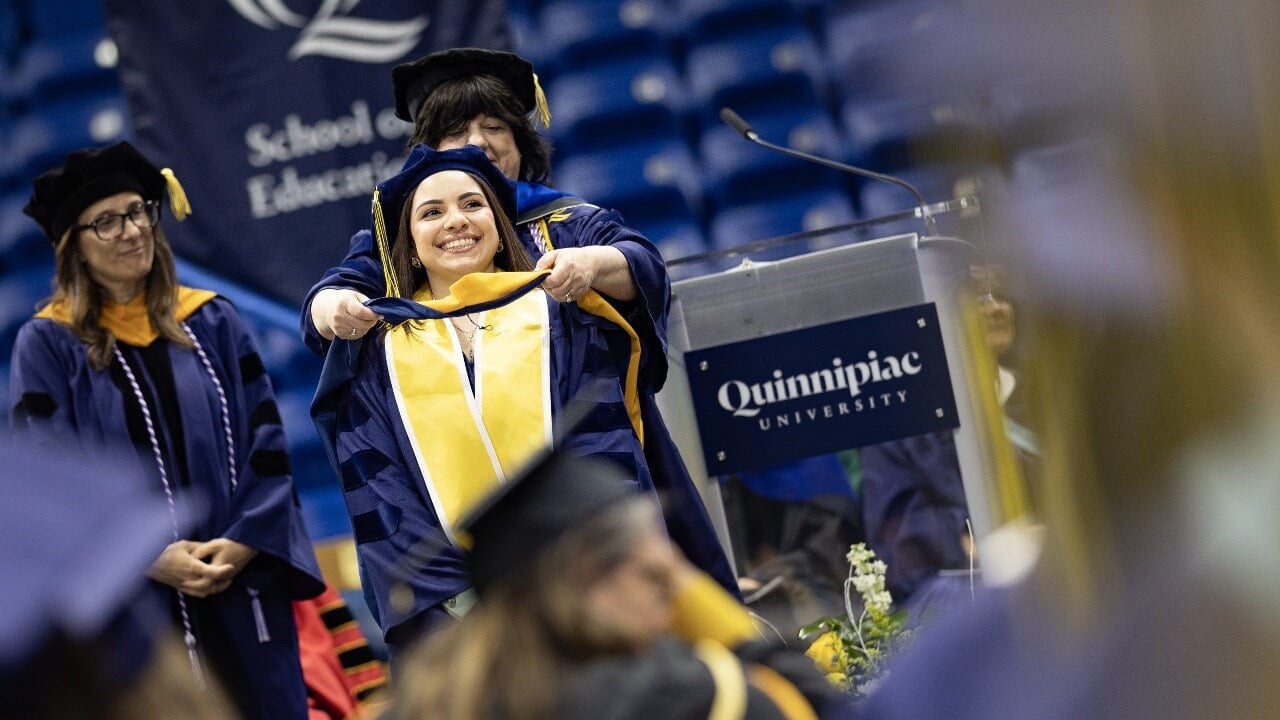
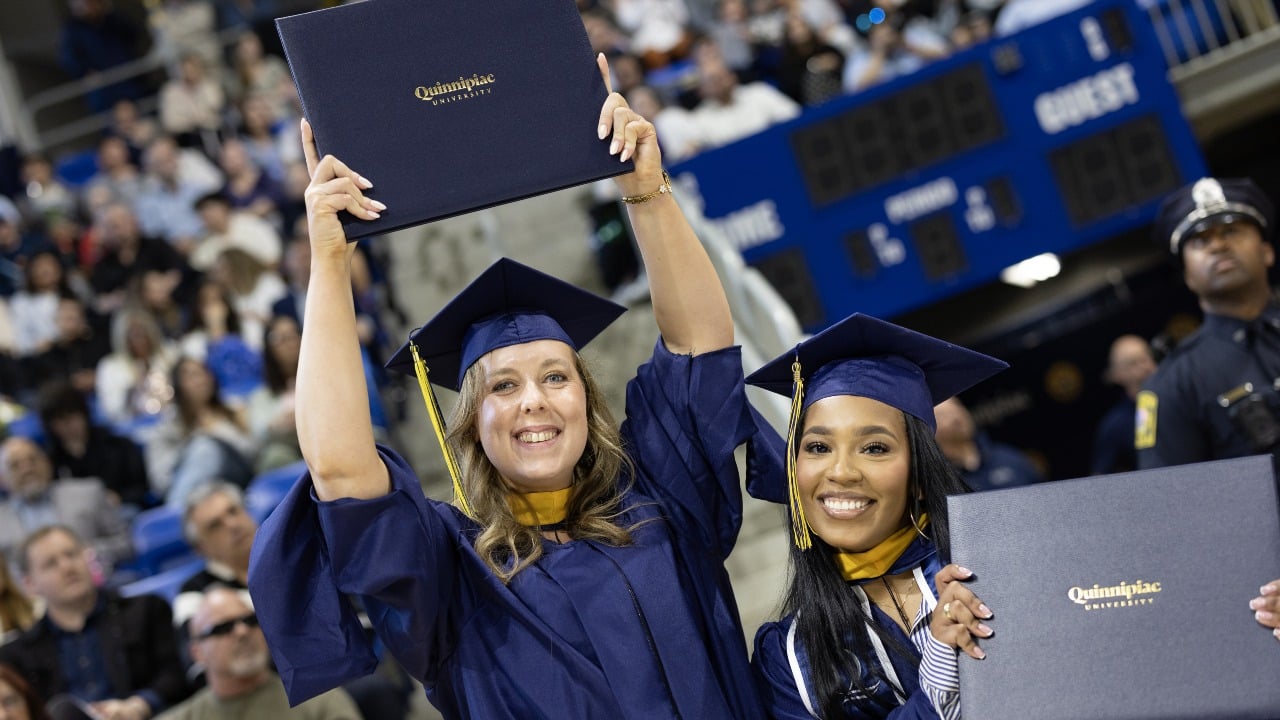
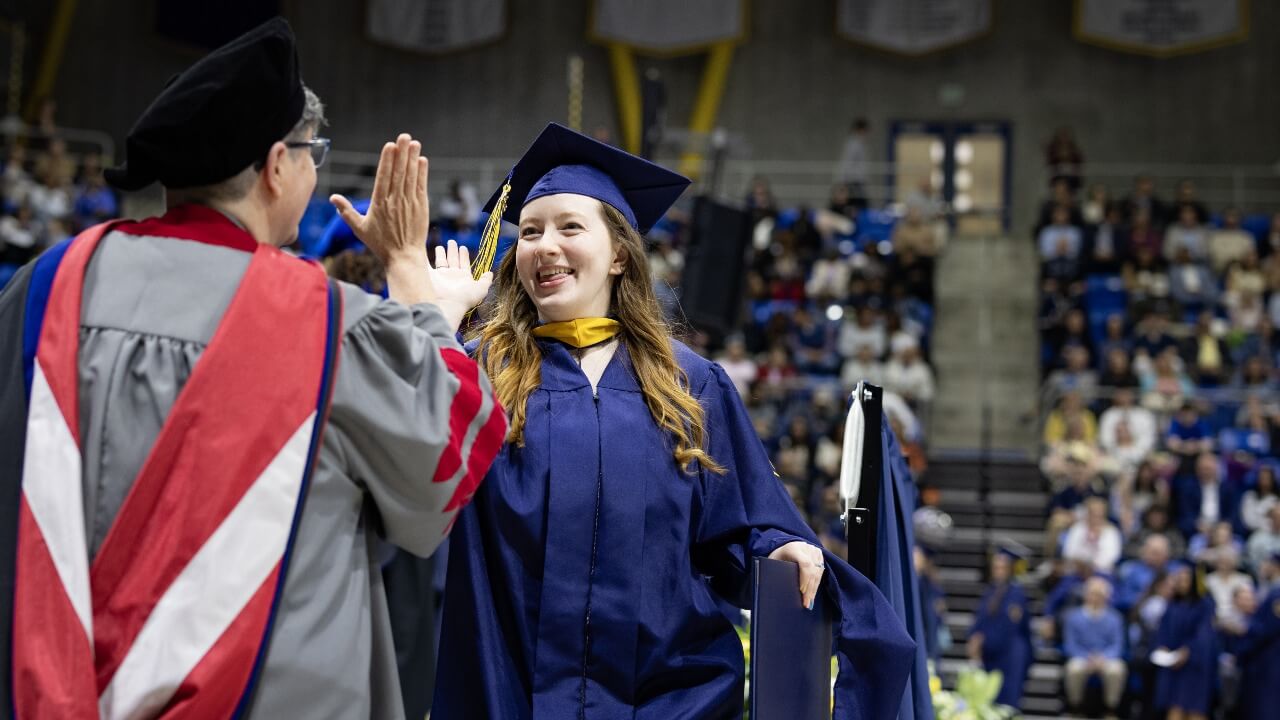
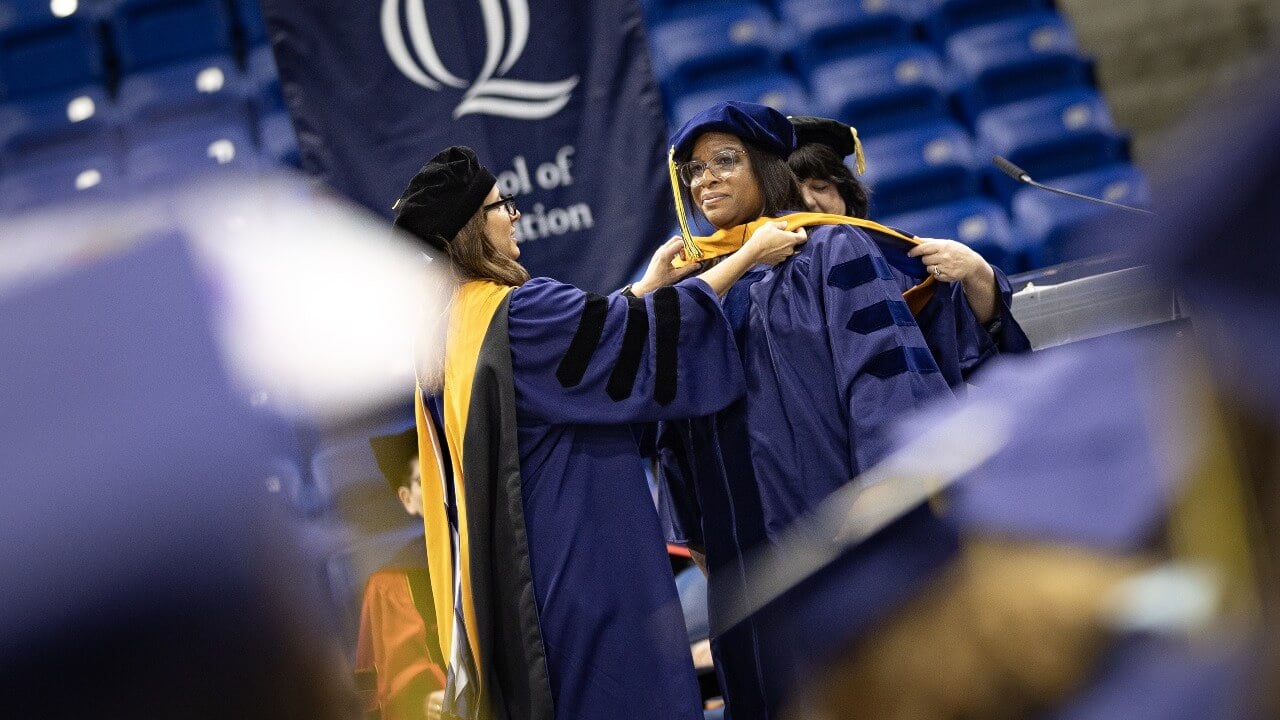
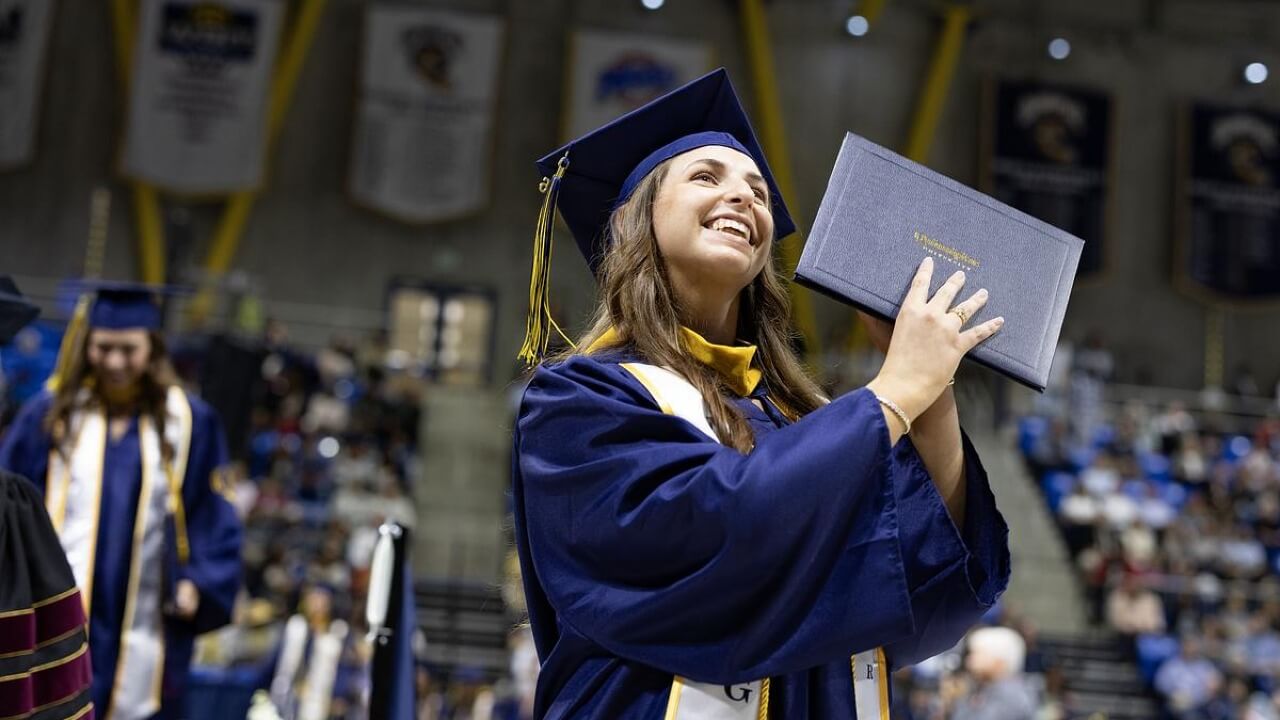
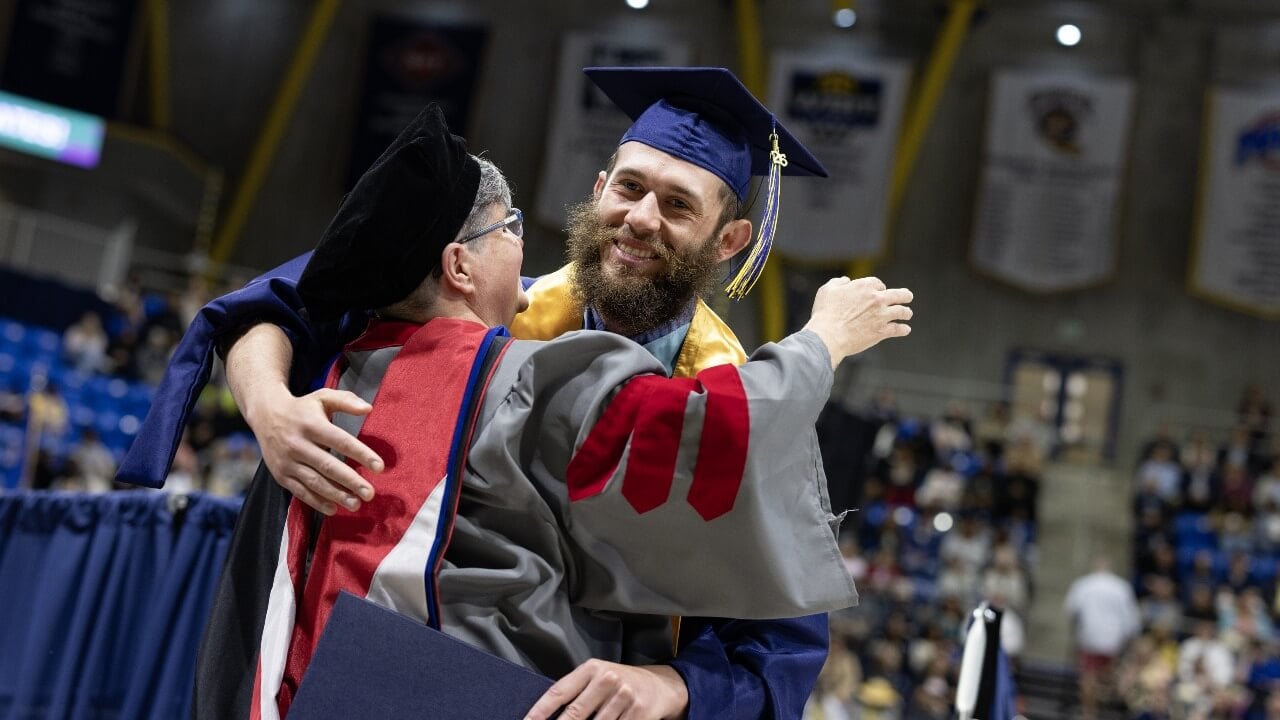
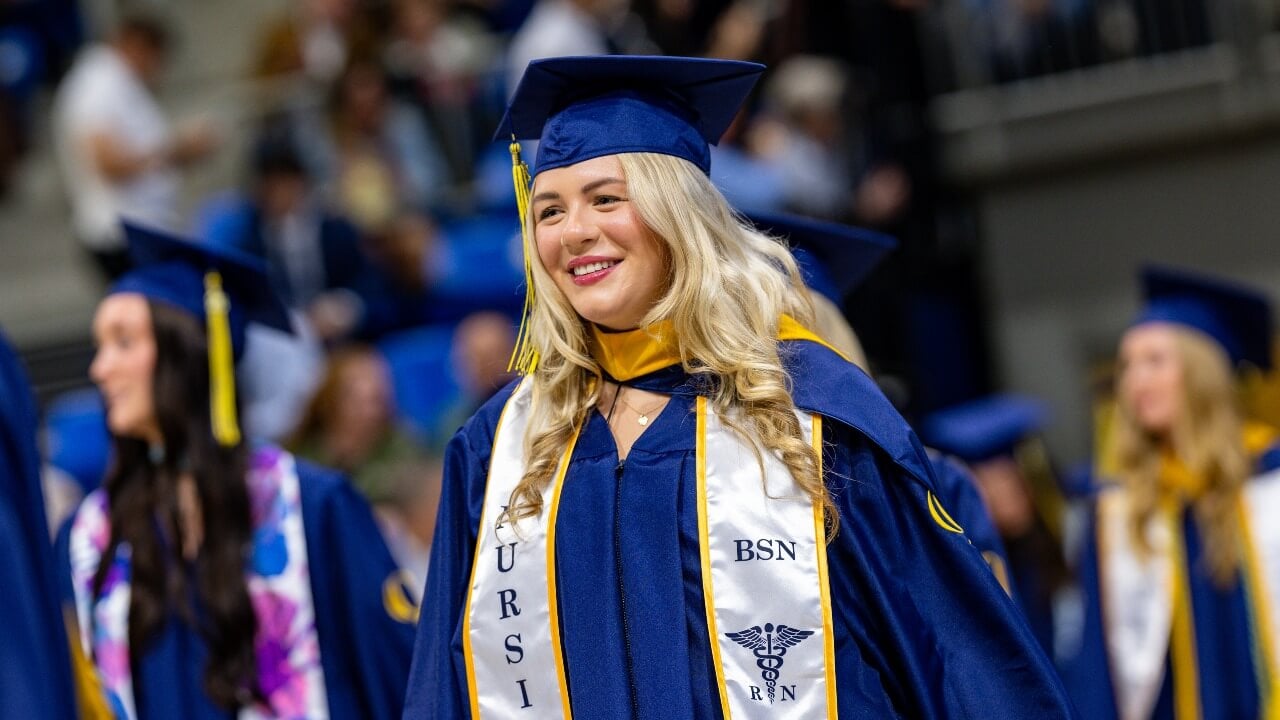
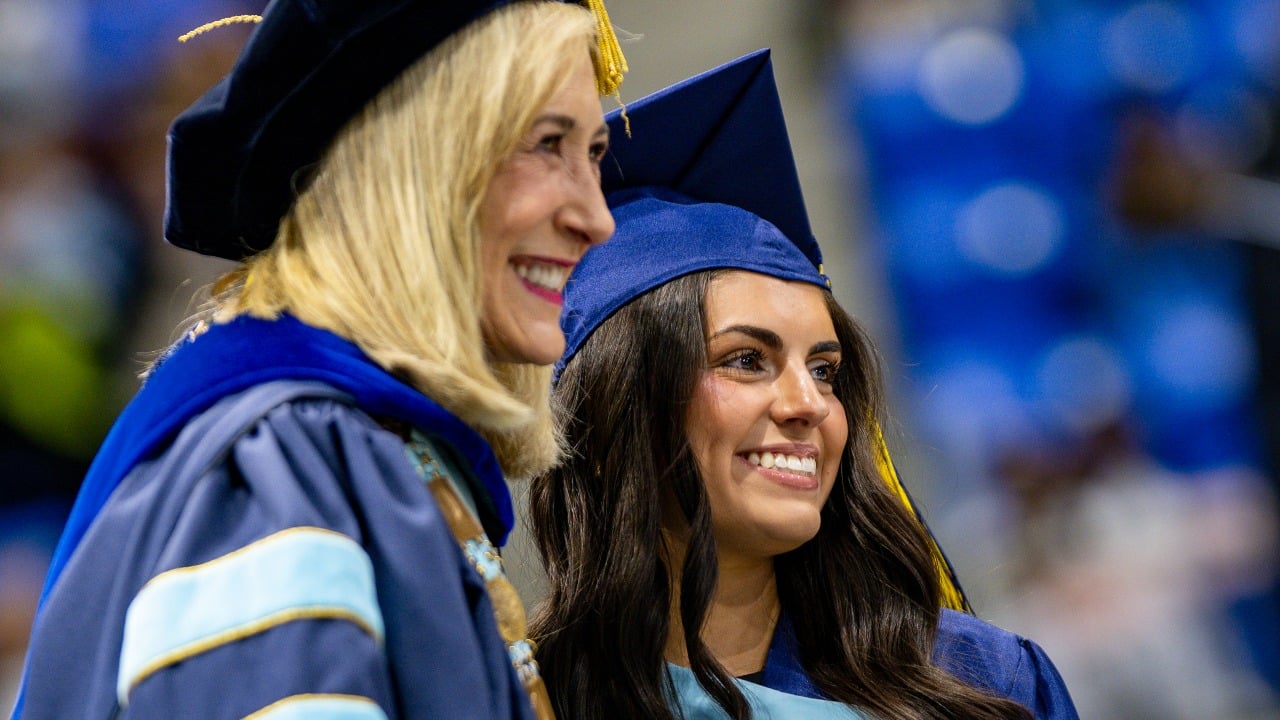
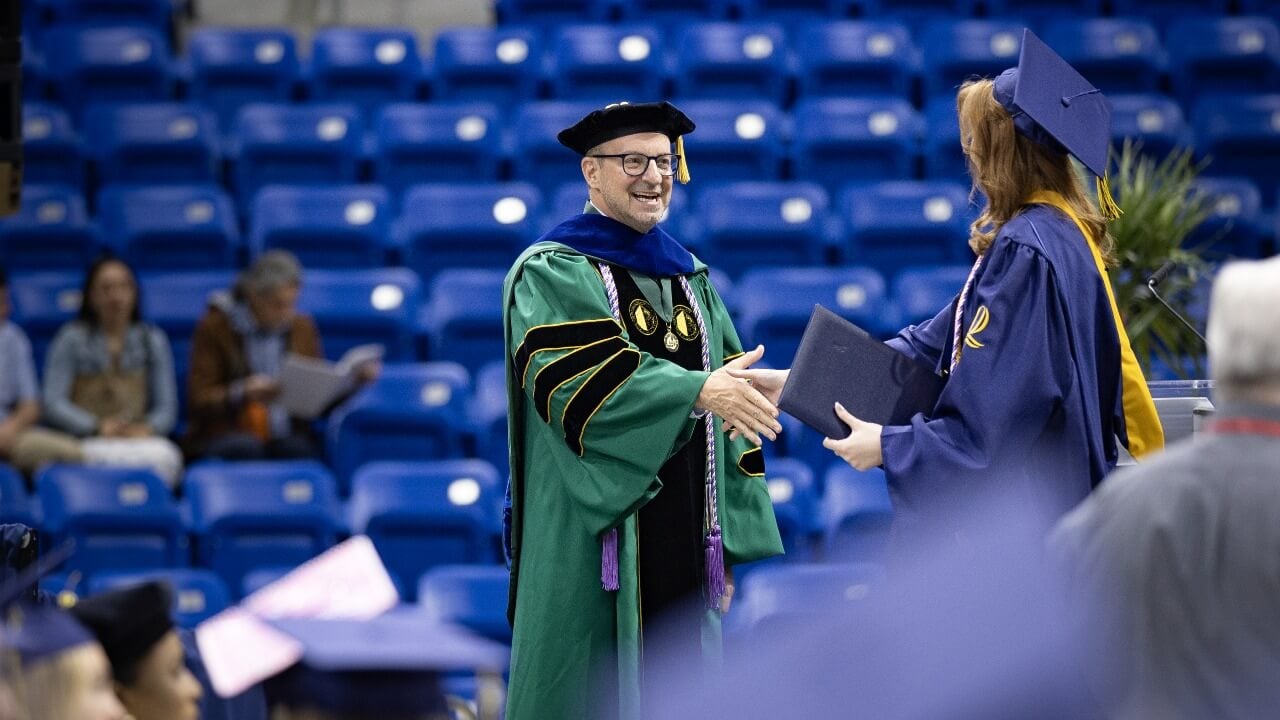
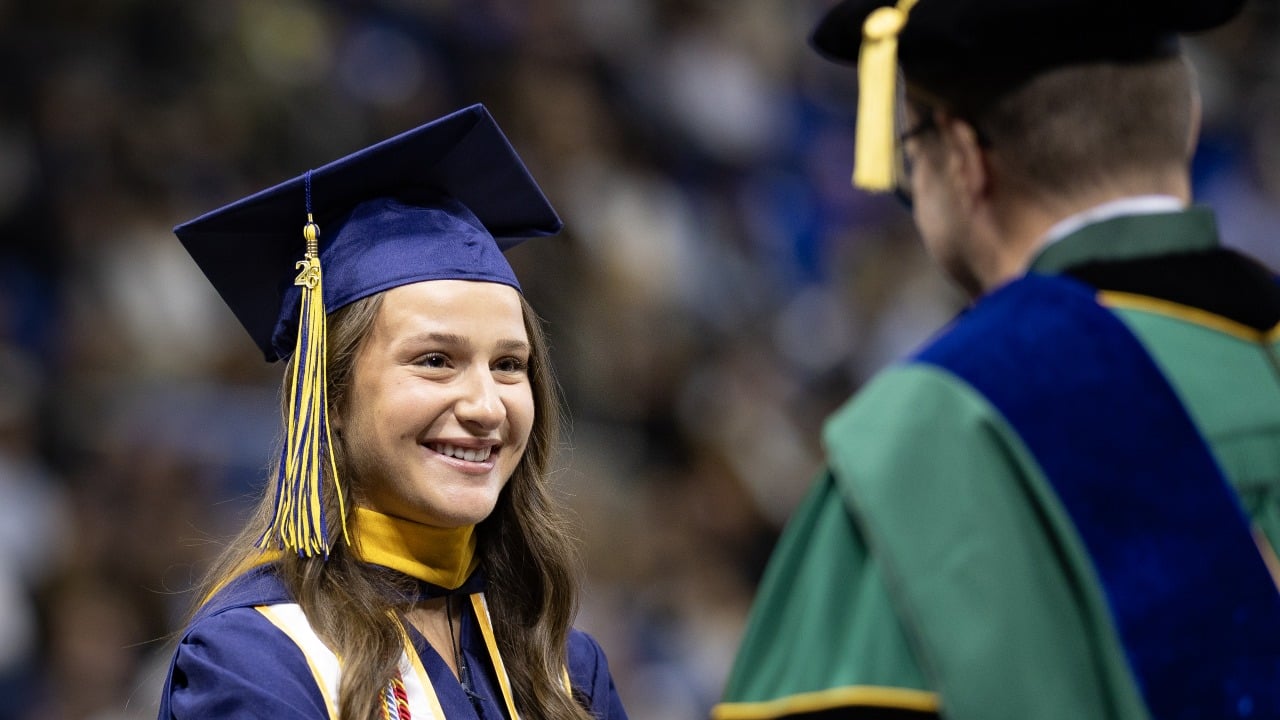
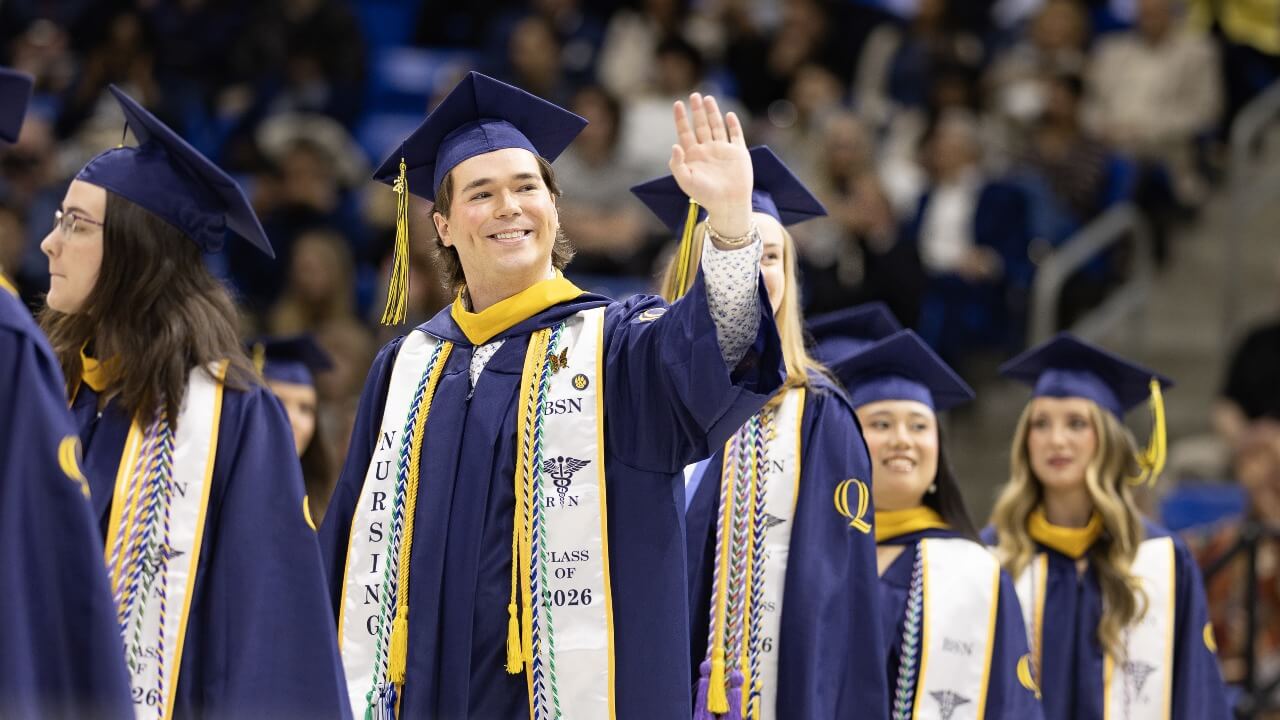
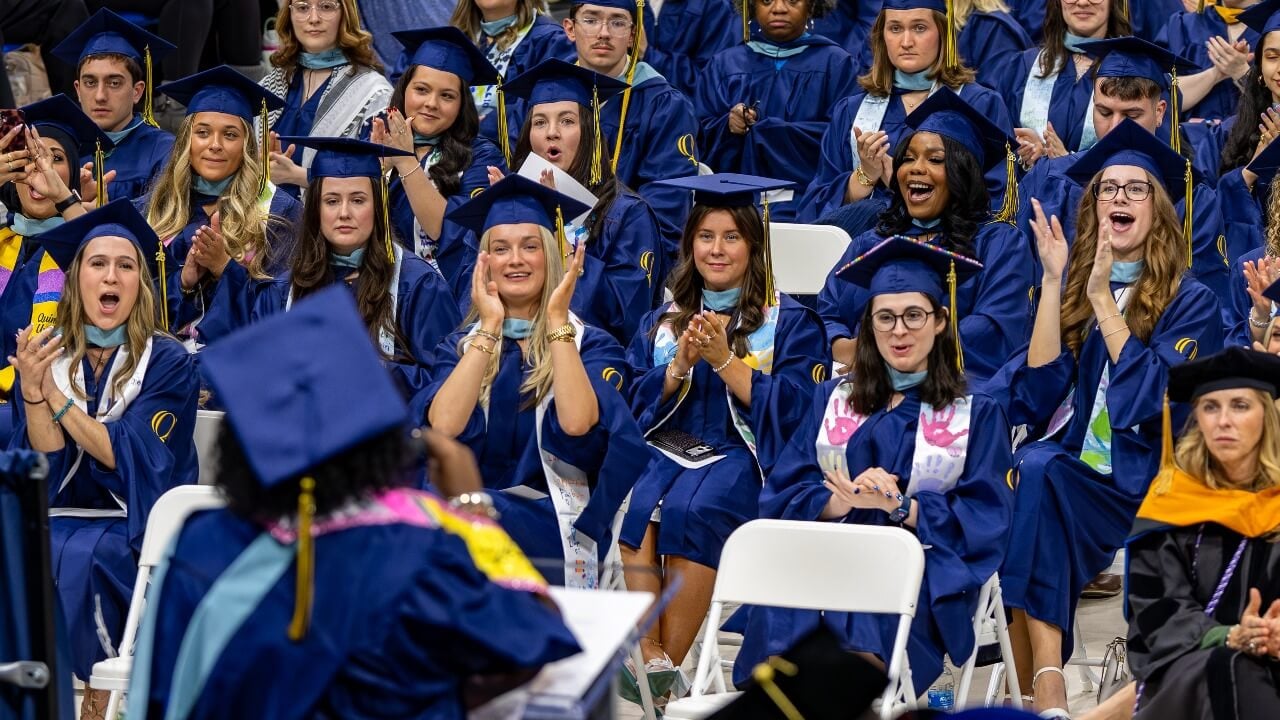
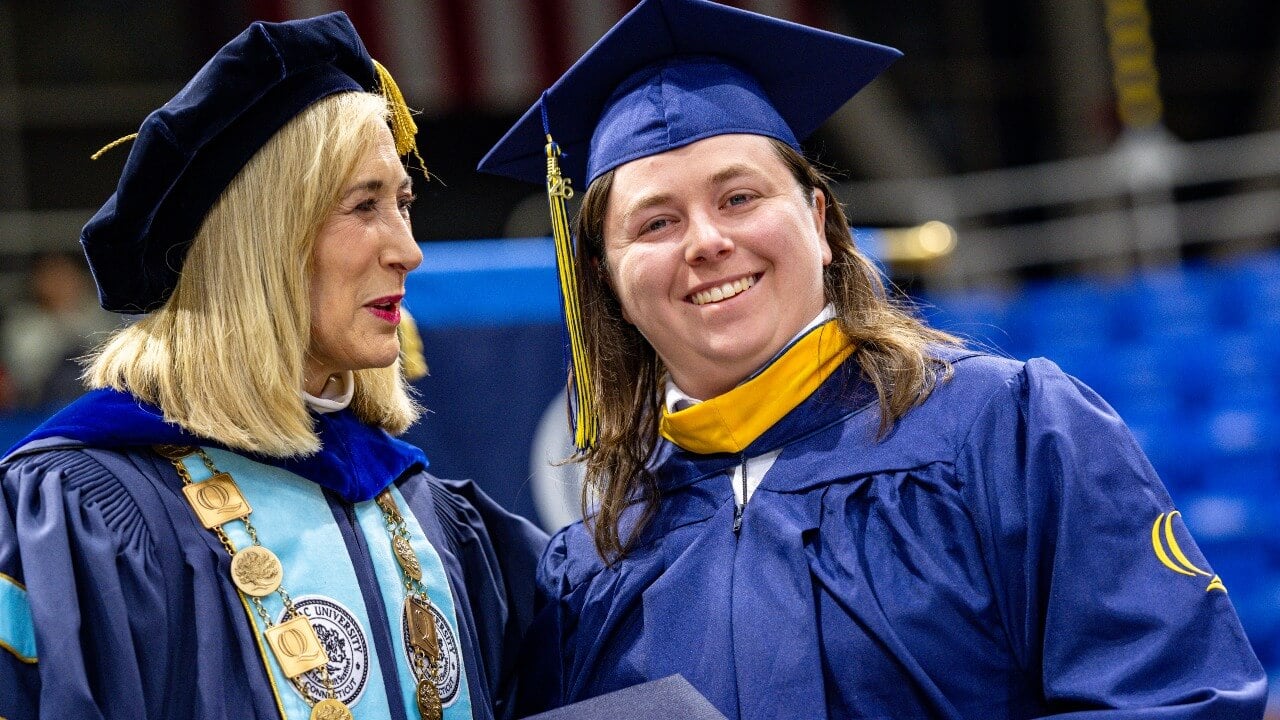
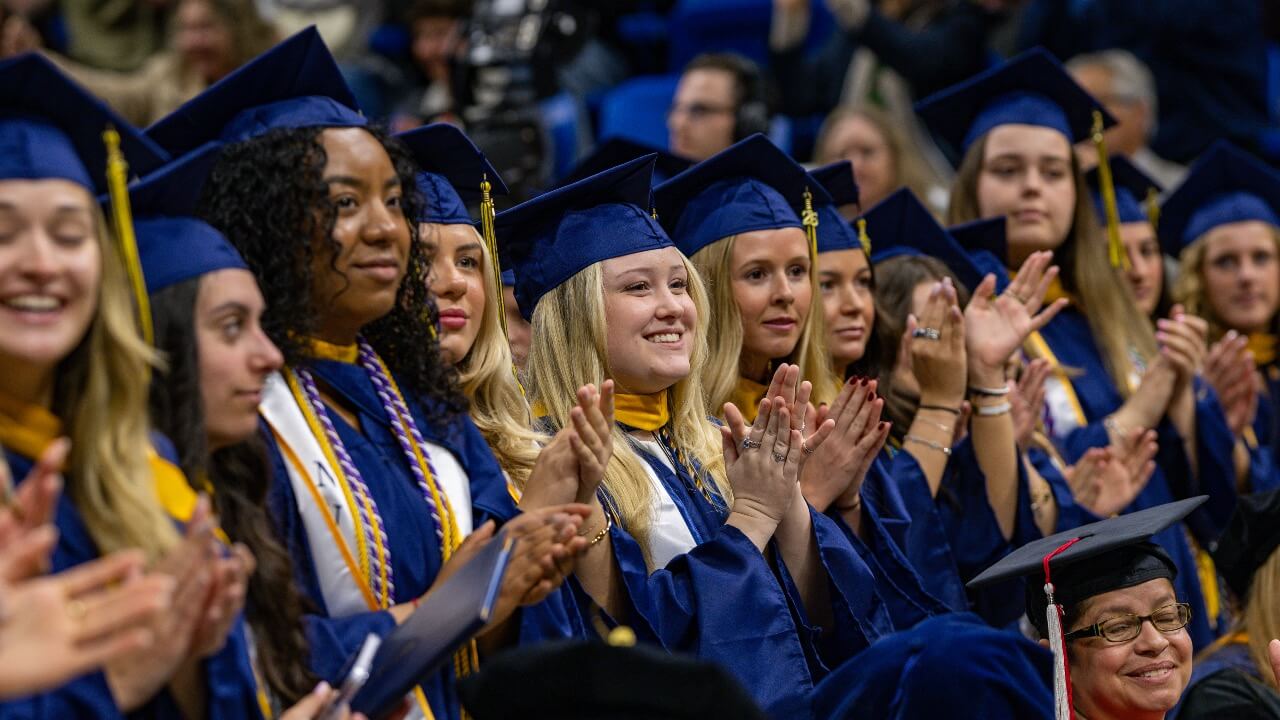
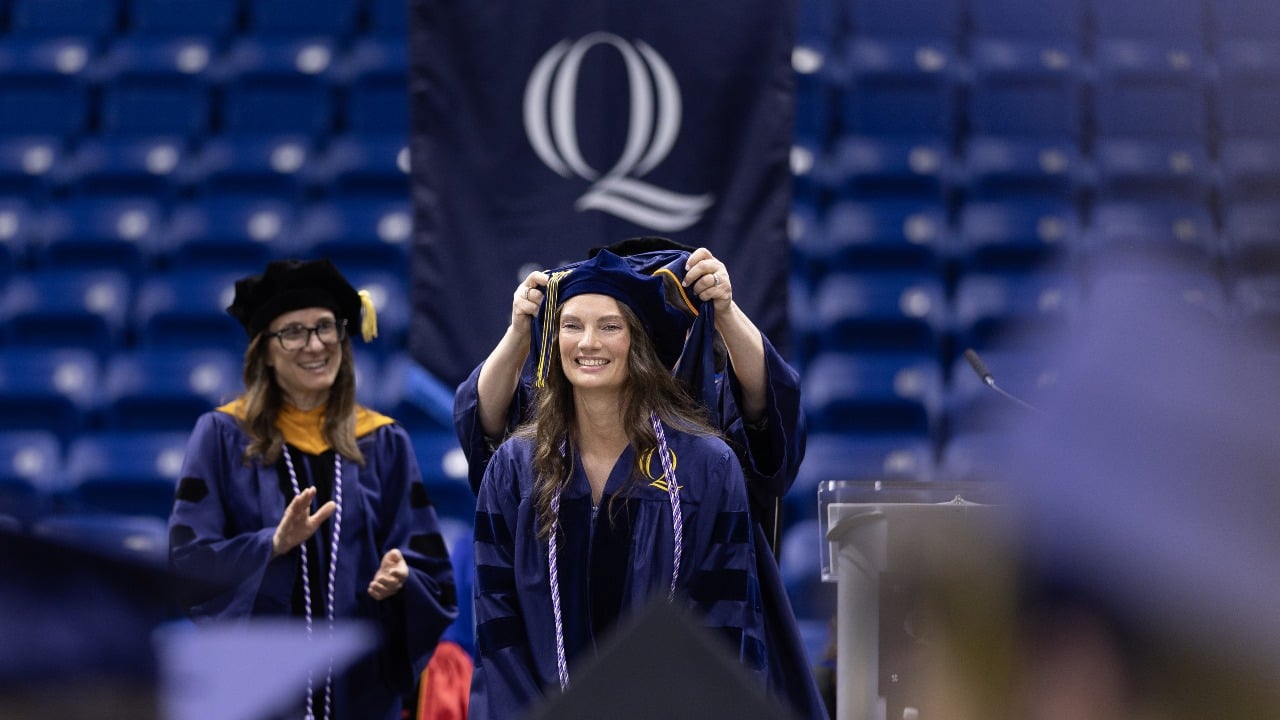
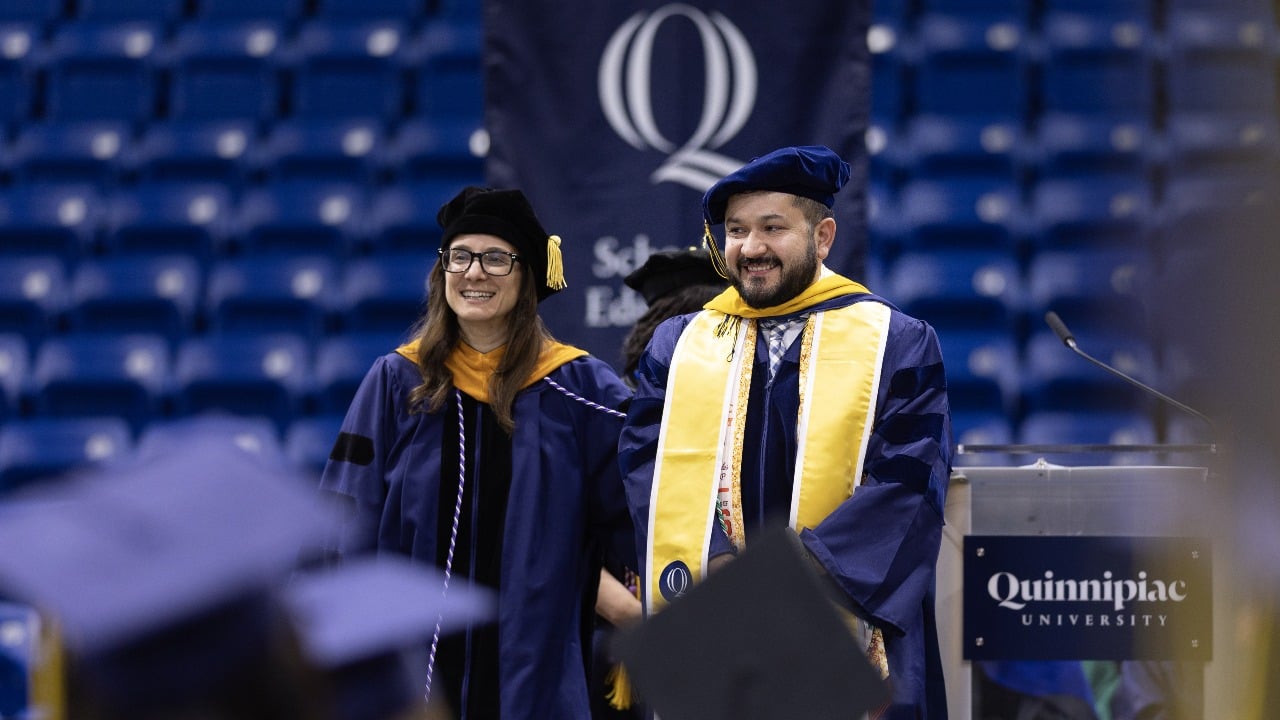
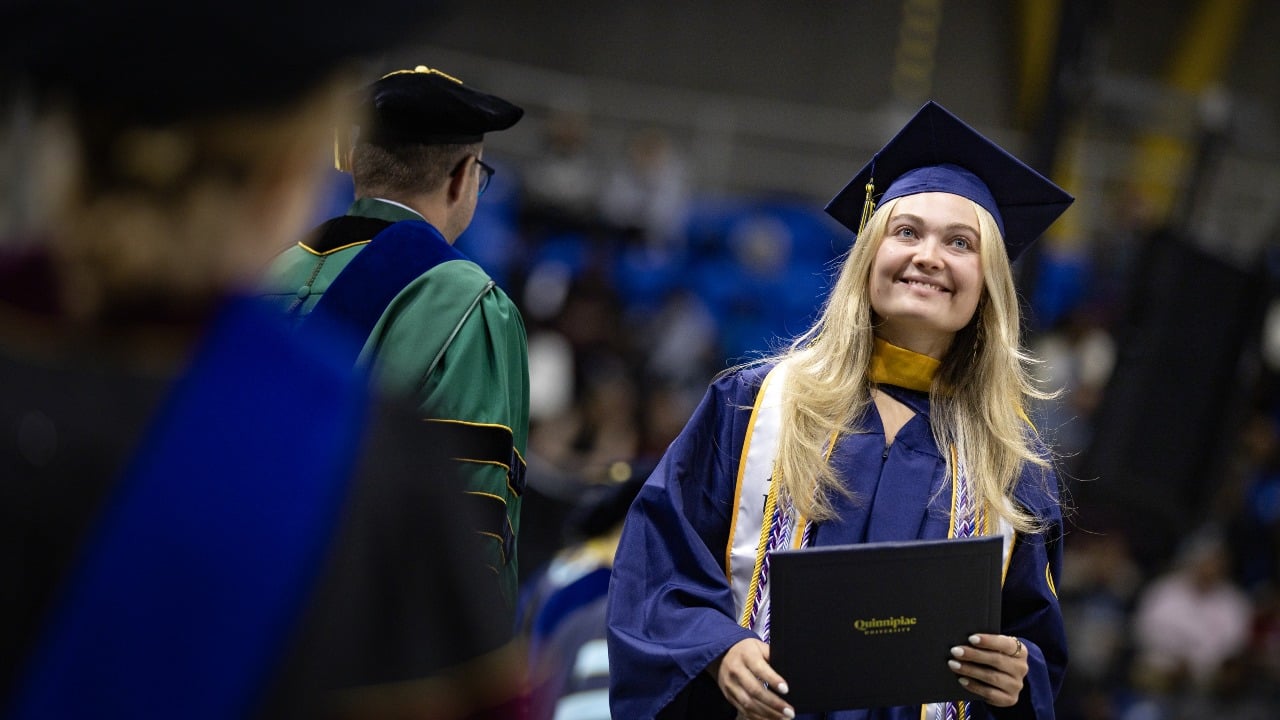
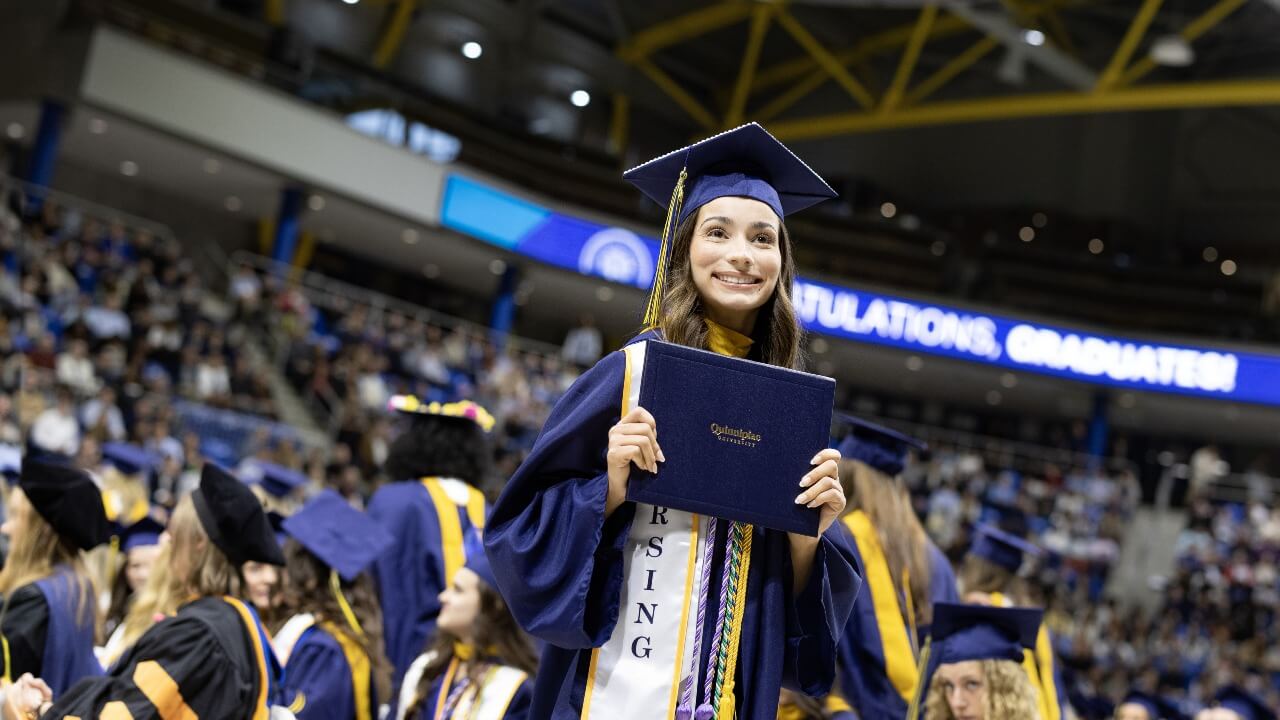
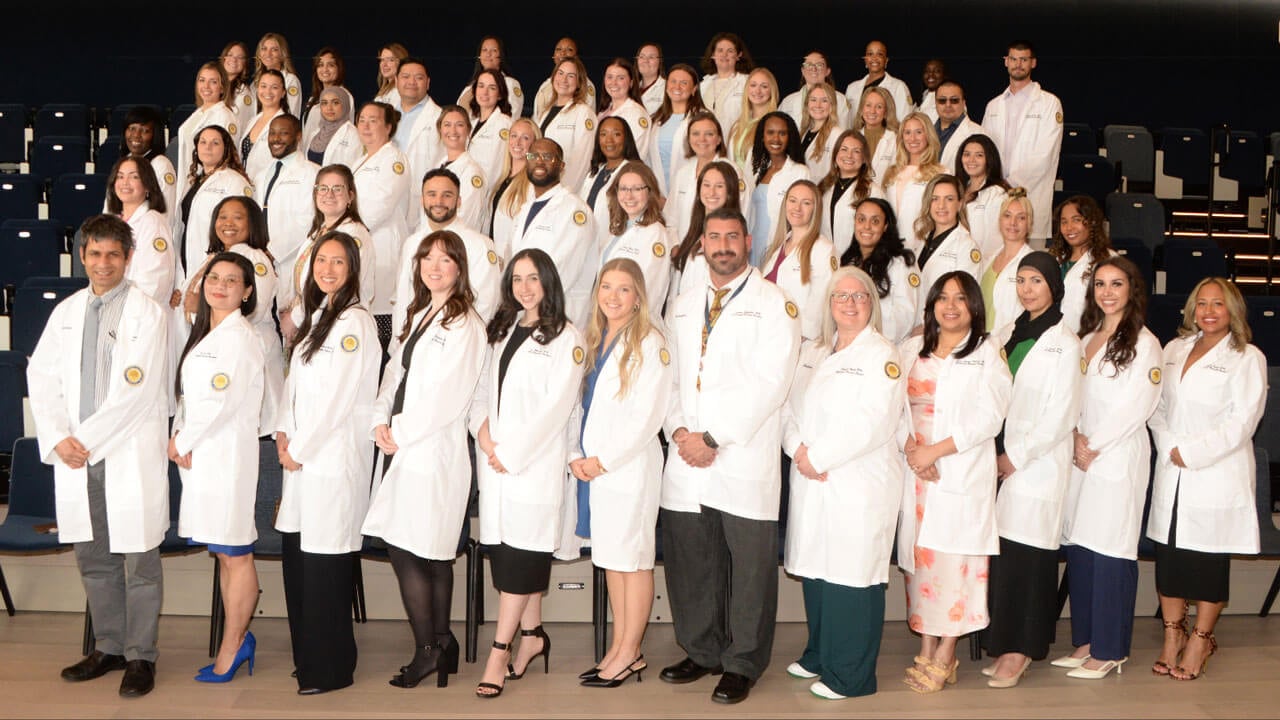
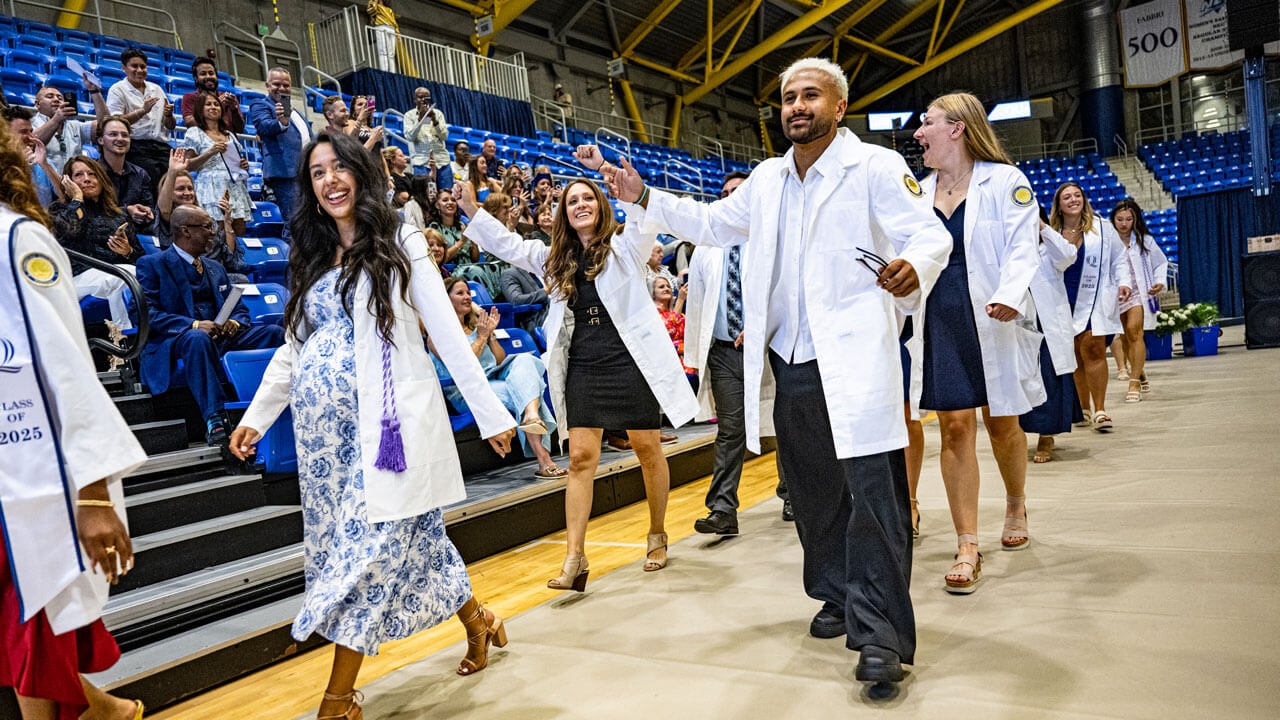
During the Saturday morning ceremony, the university conferred 185 degrees on School of Education graduates and 386 degrees on School of Nursing graduates. School of Education Dean Anne Dichele and School of Nursing Dean Larry Slater joined President Marie Hardin in recognizing graduates as they crossed the stage to receive their diplomas.
Provost Debra Liebowitz opened the ceremony by welcoming graduates, families and friends to the celebration. Following the national anthem performed by Chloe Patton, Hardin reflected on the resilience, compassion and accomplishments of the Class of 2026.
“What makes this class truly remarkable is that your drive is matched by your kindness and inclusion. I’ve seen the way you support one another through exams and projects, the way you mentor your peers, and the genuine warmth and light you bring to our campus culture,” said Hardin. “To combine ambition with kindness. To prioritize helping others... And to remember that the small gesture can change the world as much as the grand one.”
Representing the School of Education graduates, Shamara Wethington Mizell, MAT ’26, spoke about the challenges and rewards of becoming an educator and the responsibility that comes with helping students find their voices.
“Education is a voice. It is the ability to speak, to question, to understand and to be heard,” said Mizell. “We are not just teaching content, we are continuing a legacy. We are helping students find their voices and reminding them that their voice matters. And that is powerful.”
Mizell also spoke about the uncertainty that comes with stepping into a new chapter, comparing graduation to the nervous excitement of the first day of kindergarten.
“Each phase of life demands something of us. It requires us to grow,” Mizell said. “And growth is not always comfortable, but it is always worth it. Because teaching is not just a career, it is a commitment to people.”
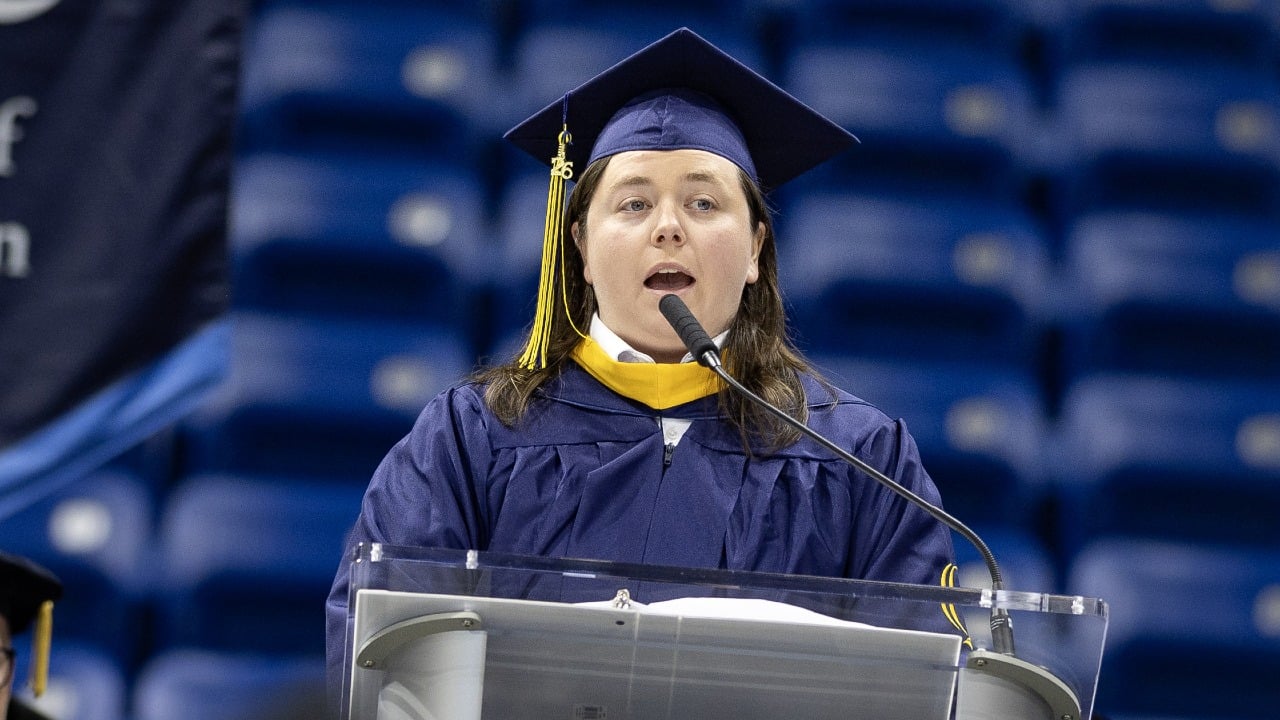
Chosen to speak on behalf of the School of Nursing graduates, Sarah Urrea ’26 compared the experience of nursing school to the journeys faced by fictional heroes, describing the resilience and perseverance required to reach graduation.
“We continued to show up for ourselves and each other... but we also had people showing up for us,” said Urrea. “This class showed resilience, perseverance and determination. What started as a group of strangers quickly became something so much more. We became a team, a support system, a family. When one of us struggled, someone stepped in. When one of us felt overwhelmed, someone else reminded them they were capable.”
Urrea also encouraged graduates to continue advocating for patients, embrace discomfort and trust themselves as they begin their nursing careers.
“If there’s anything I hope you take with you today, it’s this: continue to show up. Be a hero in all your patients’ stories,” Urrea said. “Use your voice and advocate for them. Stay comfortable with being uncomfortable, because success does not grow where comfort lives. The world isn’t just gaining more nurses today — it’s gaining the Quinnipiac Nursing Class of 2026, and that is something truly extraordinary.”
As the ceremony concluded, alumni representative Tess Timpson welcomed graduates into
Quinnipiac’s alumni community before graduates officially moved their tassels from right to left.
“With this simple motion, you officially transition from student to alumnus, joining a global network of Bobcats who will always be here to support and celebrate you,” Timpson said before graduates moved their tassels. “This is not goodbye — it’s just the beginning of your lifelong connection with Quinnipiac. Wherever life takes you, remember: you are a Bobcat for life.”
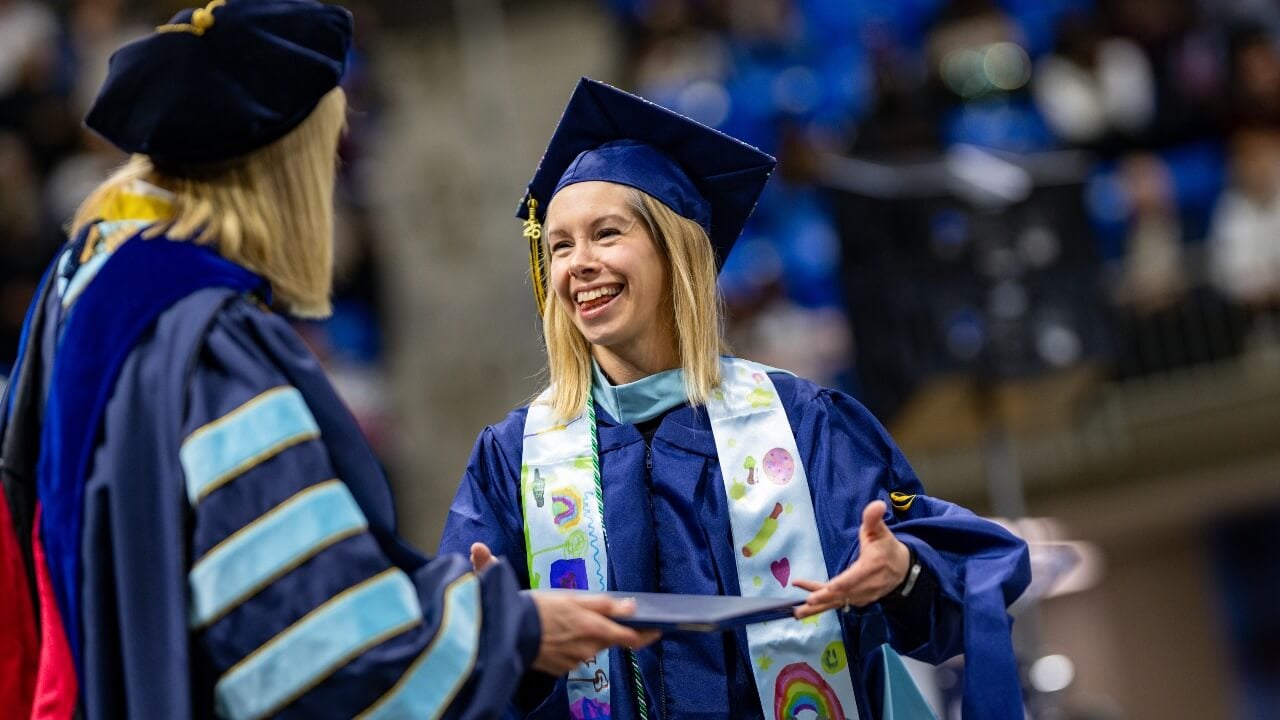
Shamara Wethington Mizell '25, MAT '26, provided remarks on behalf of the graduating class from the School of Education.
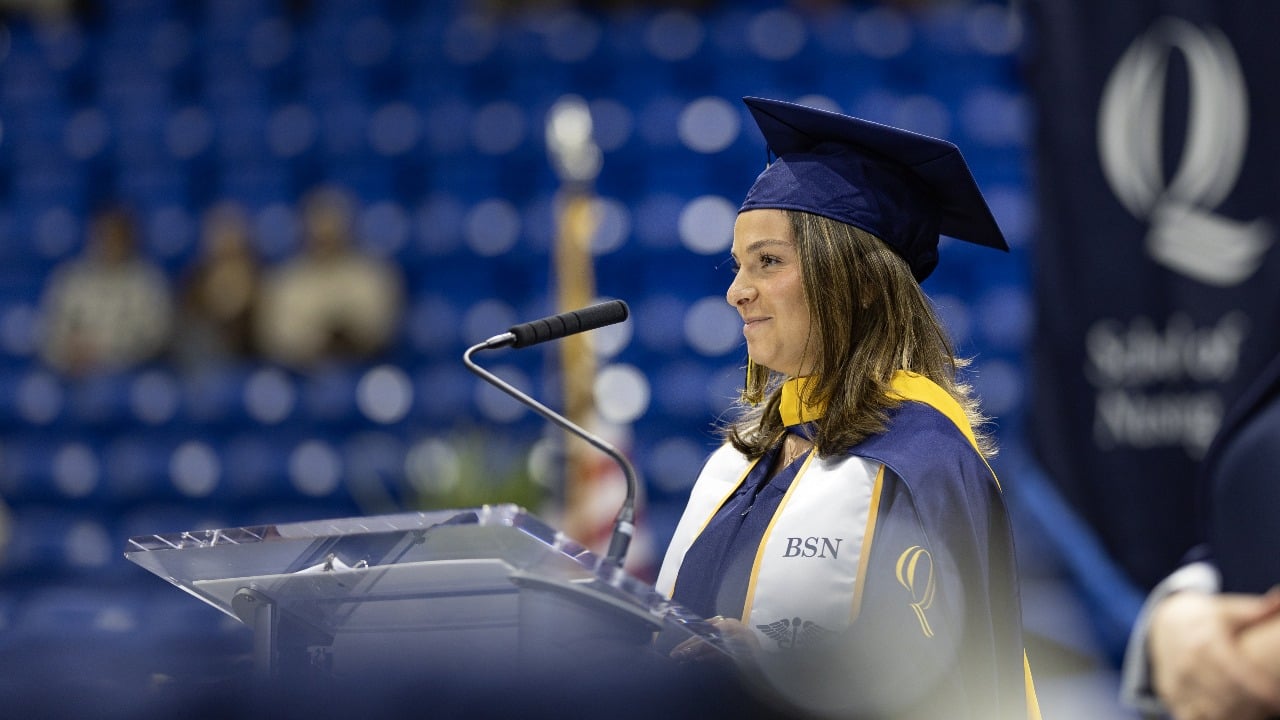
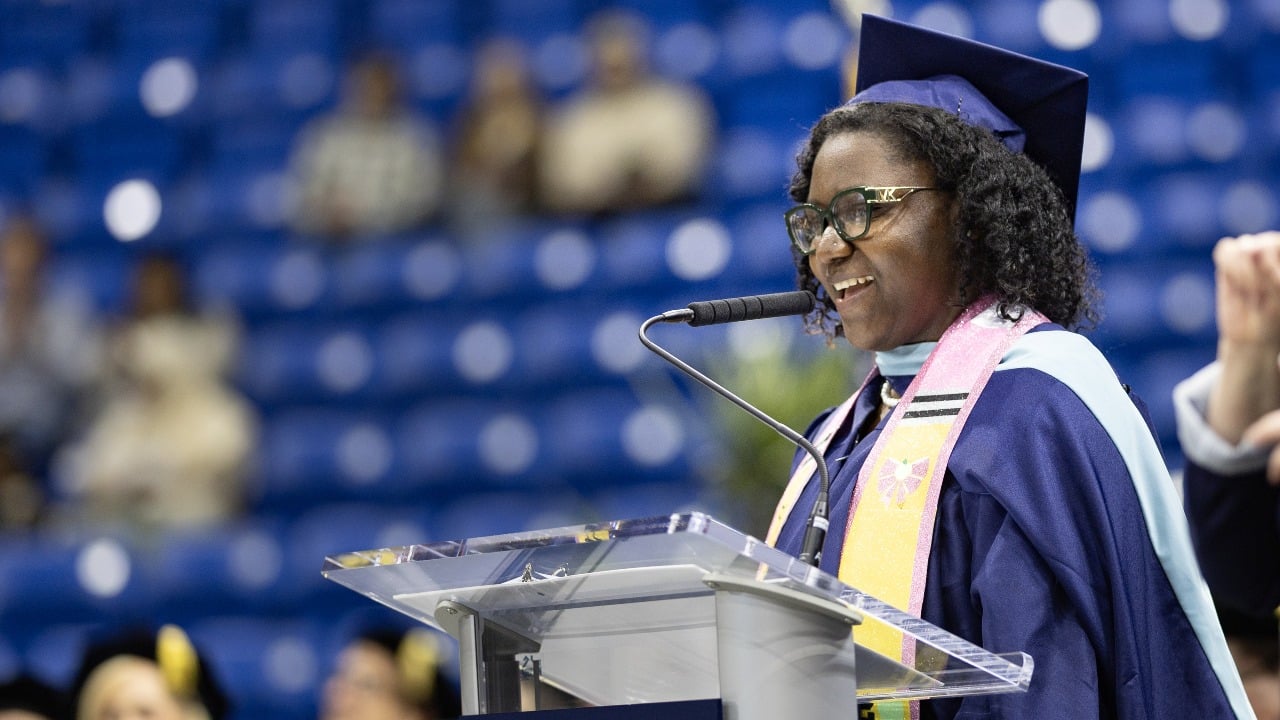
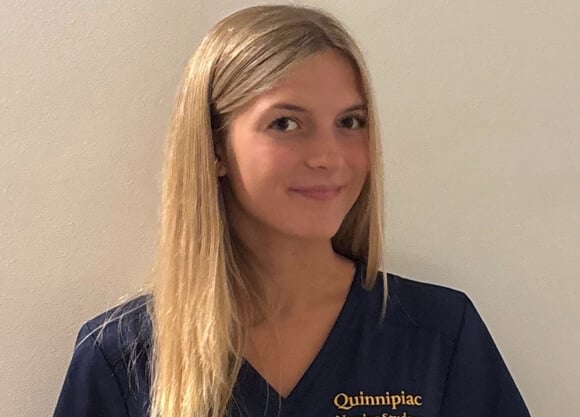
Sarah Urrea '26 provided remarks on behalf of the graduating class from the School of Nursing.
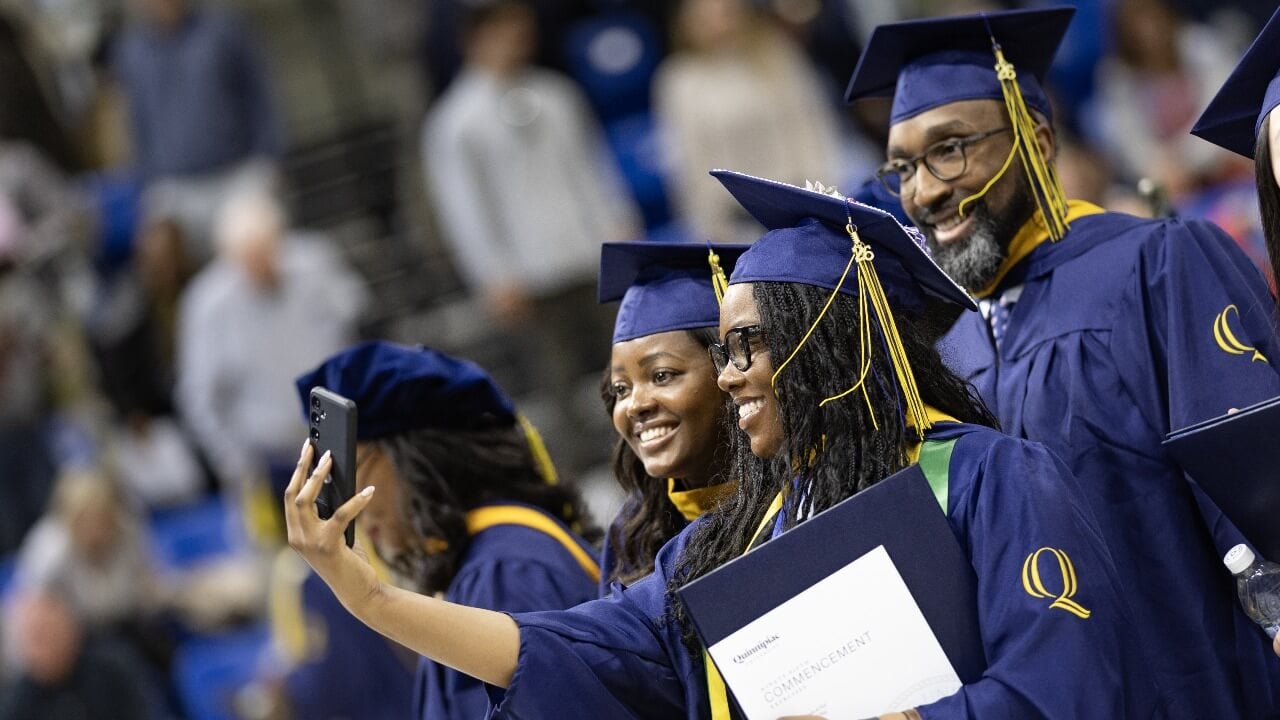
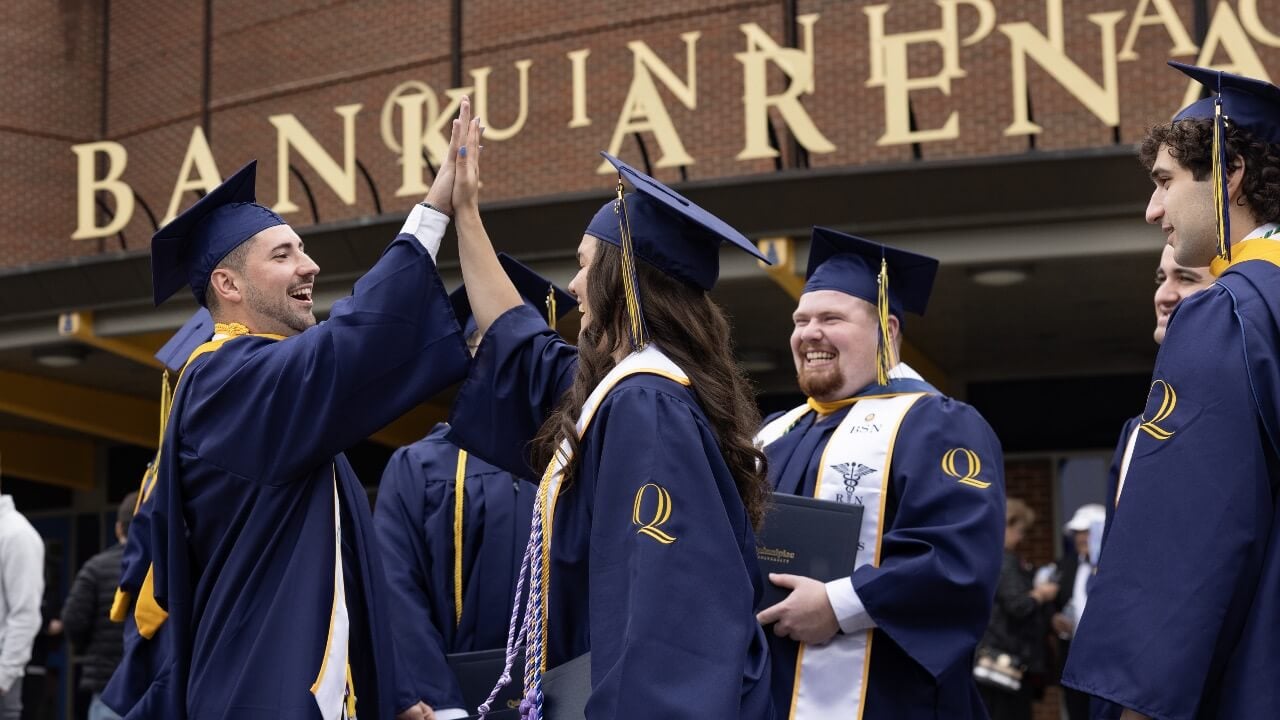
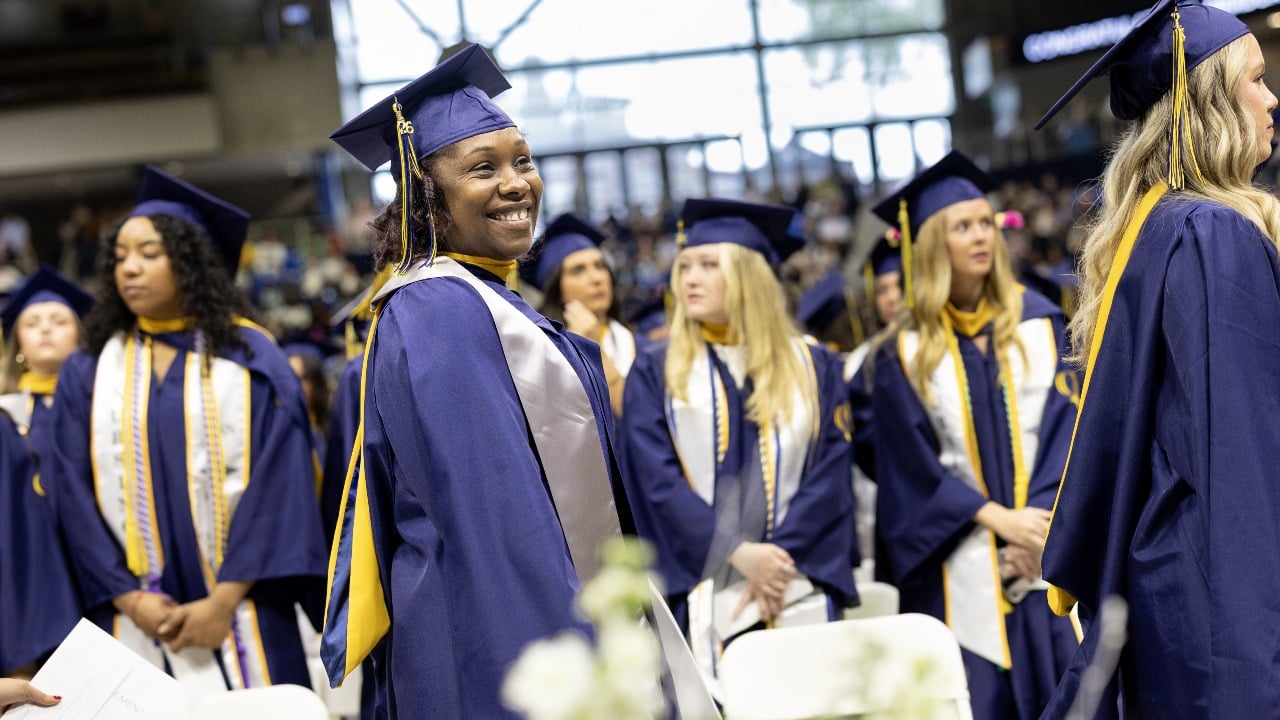
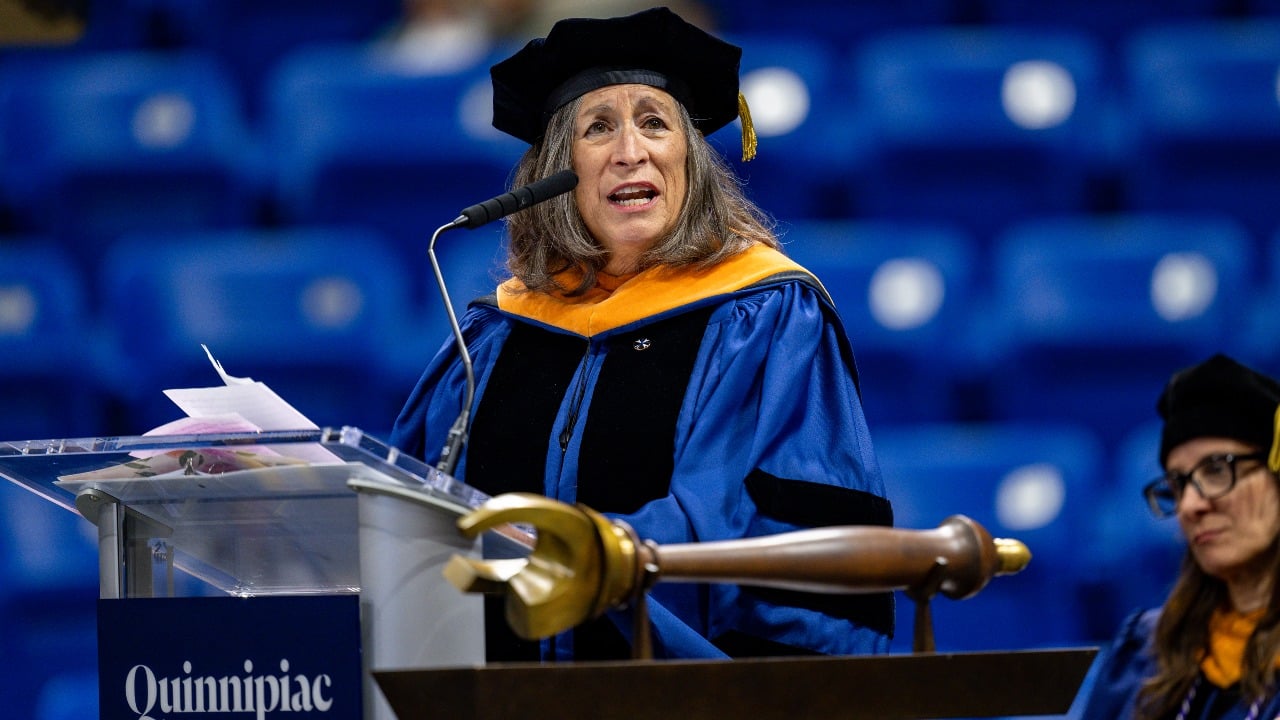
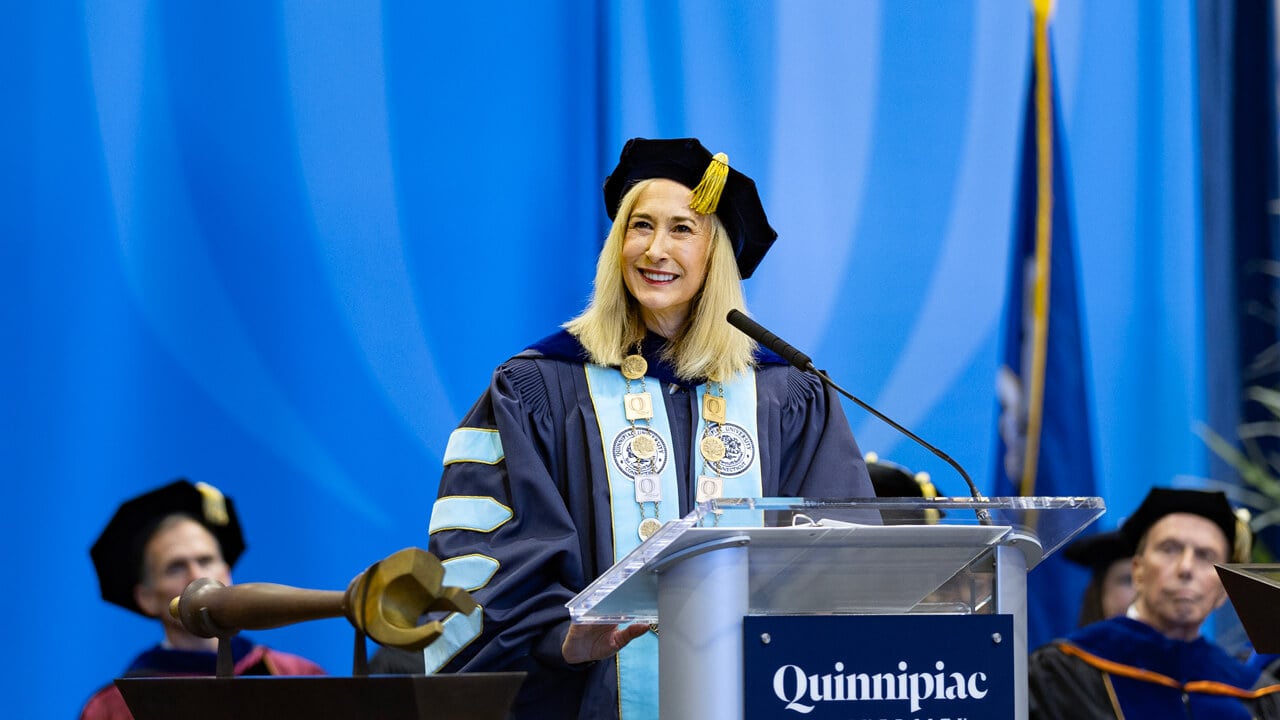
Chief Mutáwi Mutáhash Marilynn Malerba delivered the keynote address.
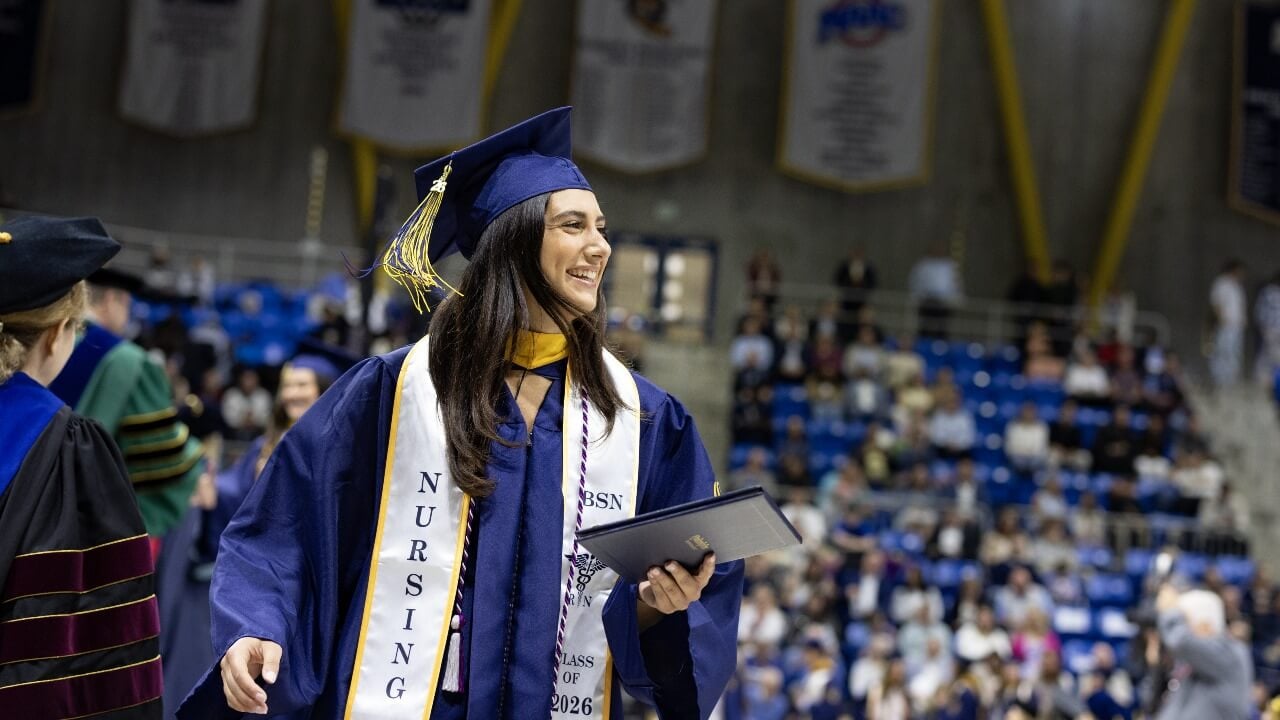





Chloe Patton performed the National Anthem.

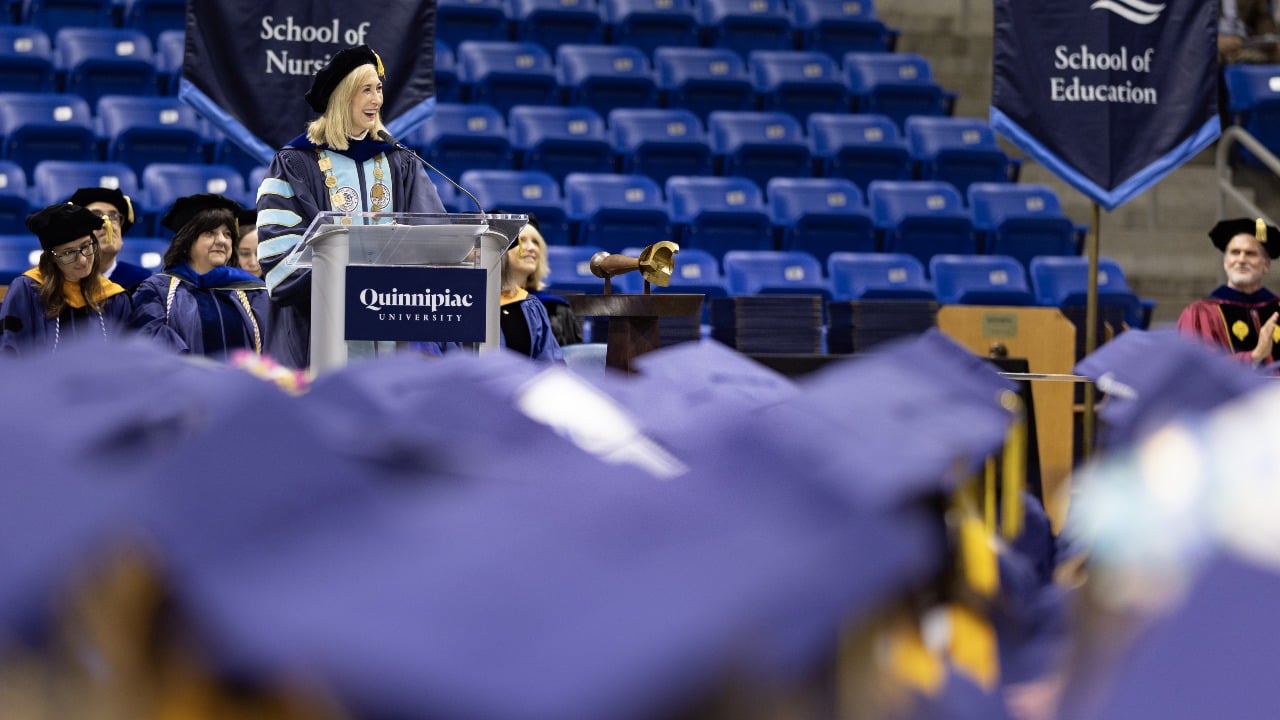
President Marie Hardin delivered remarks during the Commencement ceremony.
Tess Timpson ’18, MAT ’19, MS ’26, welcomed the new class of graduates on behalf of the alumni community.




Watch the livestream of the School of Education and School of Nursing Undergraduate and Graduate Commencement.
Pomp and Circumstance, Sir Edward Elgar
Debra J. Liebowitz, PhD
Provost
Chloe Patton
Marie C. Hardin, PhD
President
School of Education: Shamara Ameena Wethington Mizell
School of Nursing: Sarah Marie Urrea
Nicole Casbarro, DNP
Assistant Professor of Nursing
Chief Mutáwi Mutáhash Marilynn Malerba
Chief, Mohegan Tribe
School of Education: Anne Dichele, PhD, Dean
School of Nursing: Larry Slater, PhD, Dean
Marie C. Hardin
Tess Timpson ’18, MAT ’19, MS ’26
President, Alumni Association Board
Chief of the Mohegan Tribe
School of Education and School of Nursing Commencement | Saturday, May 9, 10 a.m.
Chief Mutáwi Mutáhash (Many Hearts) Marilynn “Lynn” Malerba became the 18th Chief of the Mohegan Tribe on Aug.15, 2010, and is the first female chief in the tribe’s modern history. The position is a lifetime appointment made by the tribe’s Council of Elders.
She returned full-time to Connecticut after serving as the Treasurer of the United States. When she was appointed by then-President Joe Biden in June 2022, she was the first Native American to serve in that role. Prior to becoming Chief, she served as chairwoman of the Tribal Council and executive director of health and human services.
Before working for the Mohegan Tribe, she had a lengthy career as a registered nurse ultimately serving as the director of cardiology and pulmonary services at Lawrence & Memorial Hospital in New London, Connecticut.
She earned her Doctor of Nursing Practice at Yale University and was named a Jonas Scholar. Earlier, she earned her Master of Public Administration from the University of Connecticut, her Bachelor of Science in Nursing from the College of St. Joseph and her diploma in nursing from the Hartford Hospital School of Nursing.
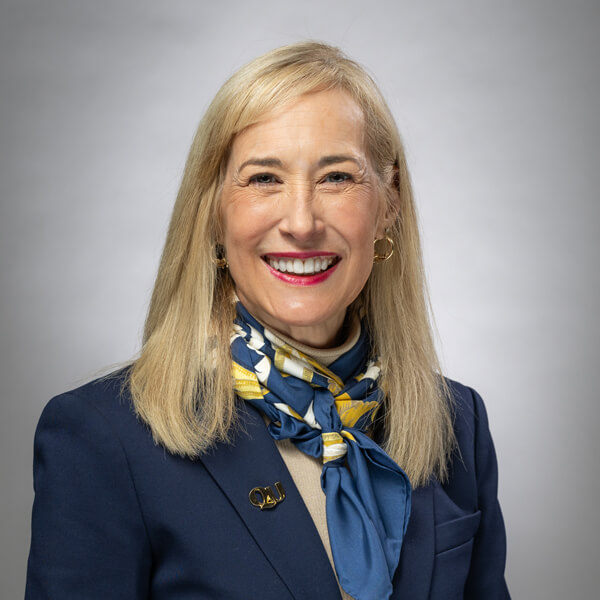
Congratulations to the Class of 2026 as we celebrate you for achieving this transformative milestone. You are well positioned to continue your journey as the leaders and professionals who will impact the workplaces of the future and the communities you call home.
We are confident you will apply your education, your talent and your purpose to make the world a better place. Your values embody all that it means to be a Bobcat. You have been taught and uplifted by a distinguished faculty and a committed staff. Together, they have watched you become the epitome of human flourishing and the stewards of tomorrow.
Please stay connected with us as a member of our Quinnipiac family. Cherish the many memories you have made here. But also remember those who have cheered for you and supported you along the way — your families and friends. They, too, deserve applause and hugs on this most special day.
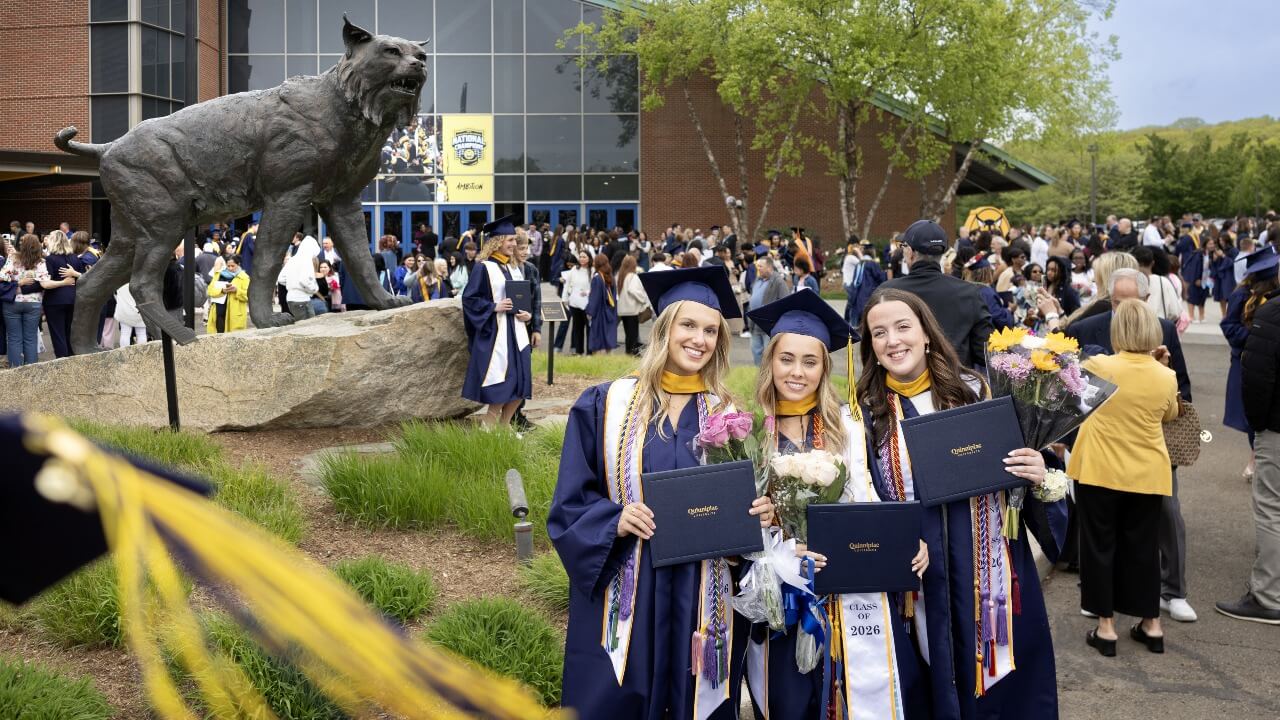
So enjoy this moment, Class of 2026. Take lots of pictures. Soak it all in. You’ve earned it!
Warmly
Marie C. Hardin, PhD
The mace — a symbol of authority — has antecedents in both Roman and Medieval history. The Roman mace (fasces) was carried by a lictor before the chief magistrate of the city, as well as before the legions. During the Middle Ages, the mace (mateola), a weapon of war, became first a symbol of victory and then a symbol of authority. The mace emblazoned with the Great Seal of England became a symbol of authority in Parliament by the end of the 13th century. It is this form of the mace that was the prototype of those symbols of authority, not only of legislative bodies, but also of cities and universities.
In 1246, following some 20 years of strife, the University of Paris was finally conceded the right to its own common seal. Since then, the use of the seal engraved on the mace has come to symbolize the authority of the academic community. In July 2000, Quinnipiac commissioned the noted sculptor Robert Meyer of Westport, Connecticut, to design and execute a new mace for Quinnipiac University. Cast in bronze, the mace incorporates elements of the university seal.
The medallion (medal of office), like the mace and the seal, is also a symbol of authority. It is possible that its roots may be traced back to the Roman “bulla” (a gold amulet of honor). The obverse of the medallion shows the seal of the office the wearer holds — in our case, the seal of the university. Not infrequently, the reverse would show the personal seal or coat of arms of the bearer. Since the High Middle Ages, the medallion has been worn by such officials as the chancellors of England, mayors of cities, and rectors of universities, and came to signify the high personal position such figures occupied in their respective governments. During the Renaissance, medallion design reached unique artistic heights, and in certain portraits the medallion was given particular prominence. The medallion is worn by the university’s president. The Quinnipiac medal showcases the university seal, sculpted in relief and cast in bronze.














Quinnipiac Today is your source for what's happening throughout #BobcatNation. Sign up for our weekly email newsletter to be among the first to know about news, events and members of our Bobcat family who are making a positive difference in our world.
Sign Up Now