


School of Medicine professor earns Physician-Educator Healthcare Warrior Award
June 02, 2026
June 02, 2026
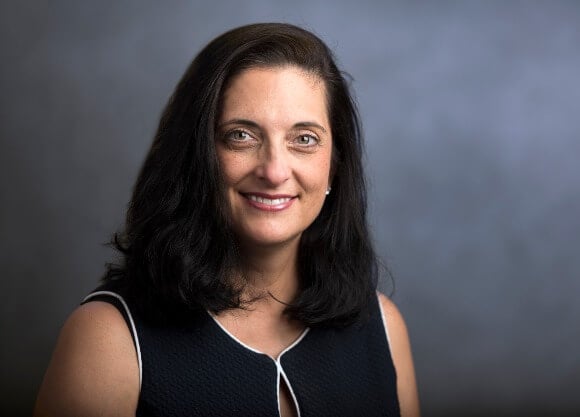
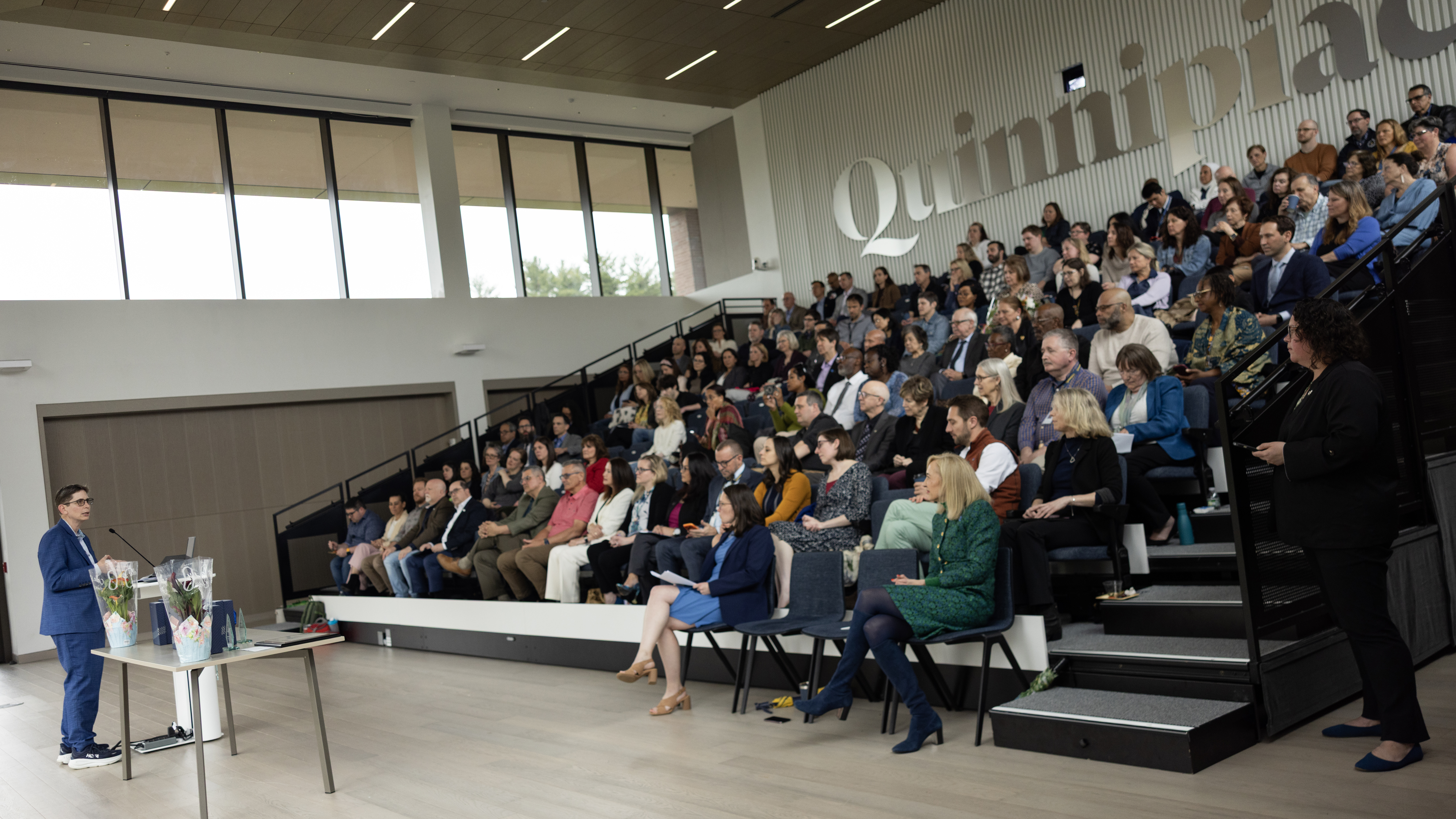
The work of Marquis-Eydman was celebrated during the Chamber’s Healthcare Warrior Awards event on April 16. The annual awards recognize the exceptional contributions of outstanding community healthcare professionals and essential workers.
School of Medicine Dean Dr. Lisa Coplit said the recognition underscores Marquis-Eydman’s extraordinary leadership, measurable impact and unwavering dedication to rural and underserved populations.
“Dr. Marquis-Eydman is an exceptional physician-educator, visionary leader and passionate advocate whose work has meaningfully advanced rural health education, strengthened the primary care workforce and improved access to care for underserved populations across Connecticut and beyond. Her career reflects a deep and sustained commitment to addressing the needs of communities that have long been overlooked — particularly rural populations and individuals with intellectual and developmental disabilities,” said Dean Coplit.
Marquis-Eydman humbly thanked the Chamber for highlighting those who provide acts of service and conveyed her deep appreciation to Hartford HealthCare for supporting clinical programs in rural healthcare and populations with developmental disabilities. She also expressed her gratitude to her School of Medicine mentors, Dean Coplit and Scott Kurtzman, as well as Quinnipiac and the leadership of President Marie Hardin and Provost Debra Liebowitz.
“Thank you for always saying yes to our ideas to expand educational curriculum and clinical exposure into the areas of rural healthcare, and also the care of people with developmental disabilities and neurodivergence,” said Marquis-Eydman.
Marquis-Eydman credited her husband, Bill, and children, Will and Abby, for their unwavering support. She also shared that her life’s work is rooted in her childhood and inspired by her parents, who have always modeled a deep dedication to volunteer service. Marquis-Eydman said her father's mantra, to "make a difference," has served as her ultimate inspiration.
Dean Coplit said Marquis-Eydman has made a significant difference in the lives of others through leadership that’s grounded in collaboration and community partnership.
“She has worked closely with rural healthcare systems, community organizations and professional societies — including the Connecticut Academy of Family Physicians and multiple student-led initiatives — to ensure that educational programs are responsive to real community needs. Her mentorship of students and trainees further extends her impact, fostering a culture of service, curiosity and commitment to primary care,” Dean Coplit said.
A native of Maine, Marquis-Eydman earned a bachelor’s in biology from Colby College and Doctor of Medicine from Dartmouth Medical School (now the Geisel School of Medicine). She completed her family medicine residency at Deaconess/Forest Park Hospital in St. Louis, Missouri, engaging in public health work before relocating to Connecticut. Over a 13-year career in ambulatory primary care, she practiced full-spectrum family medicine, taught medical students and advanced patient-centered care. Her leadership and commitment to clinician well-being led to her appointment as the inaugural Chief Experience Officer for Northeast Medical Group.
Since joining Quinnipiac in 2016, Marquis-Eydman has made profound contributions in advancing rural health education and building sustainable workforce pathways.
“Recognizing the urgent need to address physician shortages in rural communities, she served as the inaugural clerkship director for the rural Longitudinal Integrated Clerkship, creating immersive, continuity-based clinical experiences for third-year students in rural Maine. This program has not only enriched medical education but has also inspired students to pursue careers in rural and underserved settings,” Dean Coplit said.
Building upon this foundation, as principal investigator for a Health Resources and Services Administration grant, Marquis-Eydman successfully launched the rural family medicine residency program. Now in its second year at the Frank H. Netter MD School of Medicine, the program is thriving under her leadership as inaugural program director.
“She is training physicians who are caring for some of Connecticut’s most vulnerable populations while preparing to practice in underserved areas,” Dean Coplit said. “This innovative pipeline — from undergraduate medical education to residency — represents a sustainable model for addressing rural workforce shortages and strengthening access to primary care.”
Marquis-Eydman said Quinnipiac medical students in the program have demonstrated a passion for the impactful work and for collaborating with communities to advance solutions.
“They are an incredible group of students. When they embrace a project, they go all in. I have a number of capstone mentees who are doing incredible projects, and many of them are focused on equitable access and equitable care. They see a problem and want to find a solution. They genuinely want to better understand communities’ and patients’ lived experiences because from understanding comes a solution,” Marquis-Eydman said.
Through her work, Marquis-Eydman has positioned Frank H. Netter MD School of Medicine as a leader in rural medical education and a contributor to national efforts to address healthcare disparities.
“Under her leadership, Quinnipiac School of Medicine has achieved national recognition for producing graduates who go on to practice in rural communities — a distinction that reflects both the strength of its programs and her ability to inspire a generation of physicians to serve where they are most needed,” Dean Coplit said.
Marquis-Eydman is equally dedicated to improving care for individuals with intellectual and developmental disabilities. She serves on the Health Advisory Board for Special Olympics of Connecticut and puts her principles into practice as a mentor and educator shaping a new generation of physicians dedicated to providing compassionate, equitable healthcare to underserved populations.
Marquis-Eydman said her greatest teacher and inspiration for all that she does in the disabilities space was her uncle Pat who was born with Down Syndrome in 1948. At the time, the average life expectancy was age 12 and institutionalization was the norm. Her uncle lived to 61 years of age and thrived as the center of a large extended family thanks to the support of his parents, siblings and community.
“My uncle taught me the importance of living in the moment and what true resilience, perseverance and gratitude look like. He taught me the importance of being true to yourself and true to others, the importance of honesty and integrity and not being afraid to show an emotion or tell people how you feel or what you need,” Marquis-Eydman said. “He taught me about unbridled joy and the importance of connection. He taught me that life has no limits, only the limits that we place upon ourselves. And that we should never limit others or tell them who they are or what they are or are not capable of.”
At Frank H. Netter MD School of Medicine, Marquis-Eydman has become a transformative force in medical education. As associate professor and director of the medical student home program, a faculty member in the clinical arts and sciences course, and former assistant dean for faculty engagement, she has played a central role in shaping a supportive, innovative learning environment for students and faculty alike.
“What distinguishes Dr. Marquis-Eydman is not only her vision, but her ability to translate that vision into meaningful, lasting change,” Dean Coplit said. “She has created innovative educational models, built critical workforce pipelines and advanced care for vulnerable populations — all while inspiring those around her to share in this mission. Her contributions have strengthened communities, improved access to care and helped shape the future of rural and primary care medicine.”

Quinnipiac Today is your source for what's happening throughout #BobcatNation. Sign up for our weekly email newsletter to be among the first to know about news, events and members of our Bobcat family who are making a positive difference in our world.
Sign Up Now