


Professors recognized for creating female empowering film
February 13, 2026
February 13, 2026
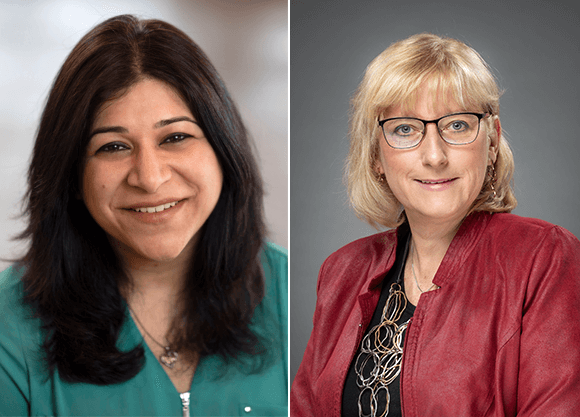
Chaya Kakade is, as Callahan describes, the “heart” of the documentary’s story.
“Kakade is a woman in India who, in 2017, staged a protest to remove a tax on sanitary pads to make them more affordable for women,” said Callahan. “Kakade had started a small company that employed women from her village to make affordable sanitary pads for rural communities. The government tax made the enterprise — and access to sanitary pads — much more difficult. Professor Gadkar-Wilcox shared Kakade’s story with me and felt strongly that it needed to be told in some form.”
Kakade was courageous and diligent, bringing light and advocacy to a vital issue.
“Kakade — drawing on Gandhian principles — organized peaceful protests and even undertook a hunger strike,” Callahan said. “Her advocacy reframed menstrual health as a fundamental human right.”
The documentary reflects a “global moment of change,” and Kakade’s work was a part of a great success.
“Sanitary pads have become more accessible in India, and many countries now recognize
menstrual products as necessities, removing taxes or providing them free in schools and public buildings,” said Callahan.
Callahan explained how drawn she was to Kakade, her story and collective female strength shown by the movement.
“When you think about the work of women, especially in communities with limited resources, you see how much they must overcome to achieve their goals,” Callahan said. “Often their goals come from a desire to improve their community and create change that benefits others. That spirit of problem-solving and community-driven innovation is what inspired me most.”
“Chaya” was Callahan and Gadkar-Wilcox’s first film created together, and it was a triumph. Following its acceptance into the Mumbai Shorts International Film Festival, the professors were honored with the Best Director Award.
Callahan was humbled by her achievements.
While Lao focused on shooting the documentary, Ashley Brandon, associate professor of film, television and media arts, edited the footage, and with the help of Gadkar-Wilcox’s Marathi translation skills, made the timing and content of Kakade’s statements accurate.
The team had to switch their work to be fully remote, so could not return to India after collecting the initial footage. They had to be creative and edit together the initial footage from their first trip in India.
"Ashley supported us throughout the project, provided guidance and edited the film,” said Callahan. “We are very grateful for her input and guidance.”
Despite challenges, “Chaya” captured the essence of female empowerment in a beautiful and unique way. It is an India film, but it resonates globally.
“Chaya” is more than a portrait of one woman, it is a celebration of collective empowerment,” Callahan said. “It shows how education, entrepreneurship and activism can intersect to uplift communities and inspire new generations of changemakers.”











Quinnipiac Today is your source for what's happening throughout #BobcatNation. Sign up for our weekly email newsletter to be among the first to know about news, events and members of our Bobcat family who are making a positive difference in our world.
Sign Up Now