



Quinnipiac and Boys & Girls Clubs partner to launch AI leadership initiative for youth
April 22, 2026
April 22, 2026
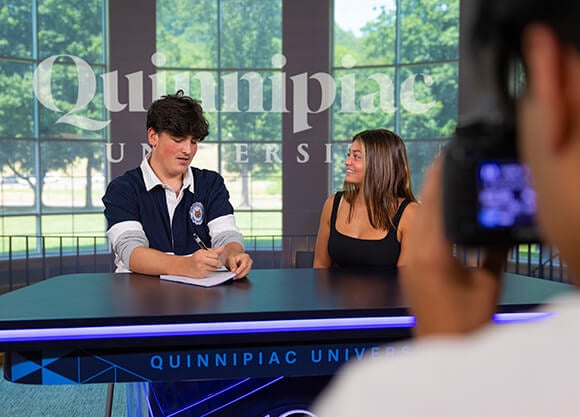
The Youth Ethical Artificial Intelligence (AI) Leadership Program, a six-week pilot initiative, combines university faculty expertise and community-based youth development to help students move beyond simply using technology and toward understanding how to apply it responsibly in real-world settings.
Don Maleto, executive director of the Alliance of Boys & Girls Clubs in Connecticut, said Quinnipiac stood out as a partner because of the university’s collaborative approach and ability to deliver educational programming in AI leadership.
“Quinnipiac was really receptive to working with us and has the expertise to develop the curriculum and deliver on the implementation,” he said. “When we're able to tap into a university and have a true partner, it’s a game-changer for what we can do. This is the first tangible statewide AI program with youth that we've done. I think it’s the first of many to come.”
The initiative will begin on April 29 and will engage high school students, primarily rising sophomores and juniors, from Boys & Girls Clubs across Connecticut, along with club staff, for an online learning experience. Both students and staff will build foundational AI skills together, creating a shared learning environment within each club.
Participants will also earn industry-recognized credentials, including the Google AI Essentials certificate and a Quinnipiac University micro-credential in Youth Ethical AI Leadership, part of the university’s broader portfolio of stackable, skills-based learning opportunities.
The experience will culminate with an in-person campus experience at Quinnipiac on June 3, where students will present their own AI-informed community impact projects and engage with Quinnipiac faculty and mentors.
For Maleto, who started as an intern in 1995 and has spent 30 years in the Boys & Girls Club movement, the most exciting part is seeing how the experience might change the course of young lives.
“By taking teens on college visits or exposing them to people who’ve been successful from similar backgrounds, for a young person, that can just turn it on and change the trajectory of their life,” said Maleto. “We want the kids who enter our doors to be successful at life. If we can provide opportunities like this that help prepare them for the future, that’s exactly what we are going to do."
The initiative grew out of a growing urgency to understand how AI will shape the future for young people.
“Our economy, our way of doing business, our way of learning, our way of interacting…across the board, everything is changing and going to be impacted by the most transformational technology that we’ve seen, maybe ever,” said Maleto. “And it’s moving so fast there really aren’t any brakes on it.”
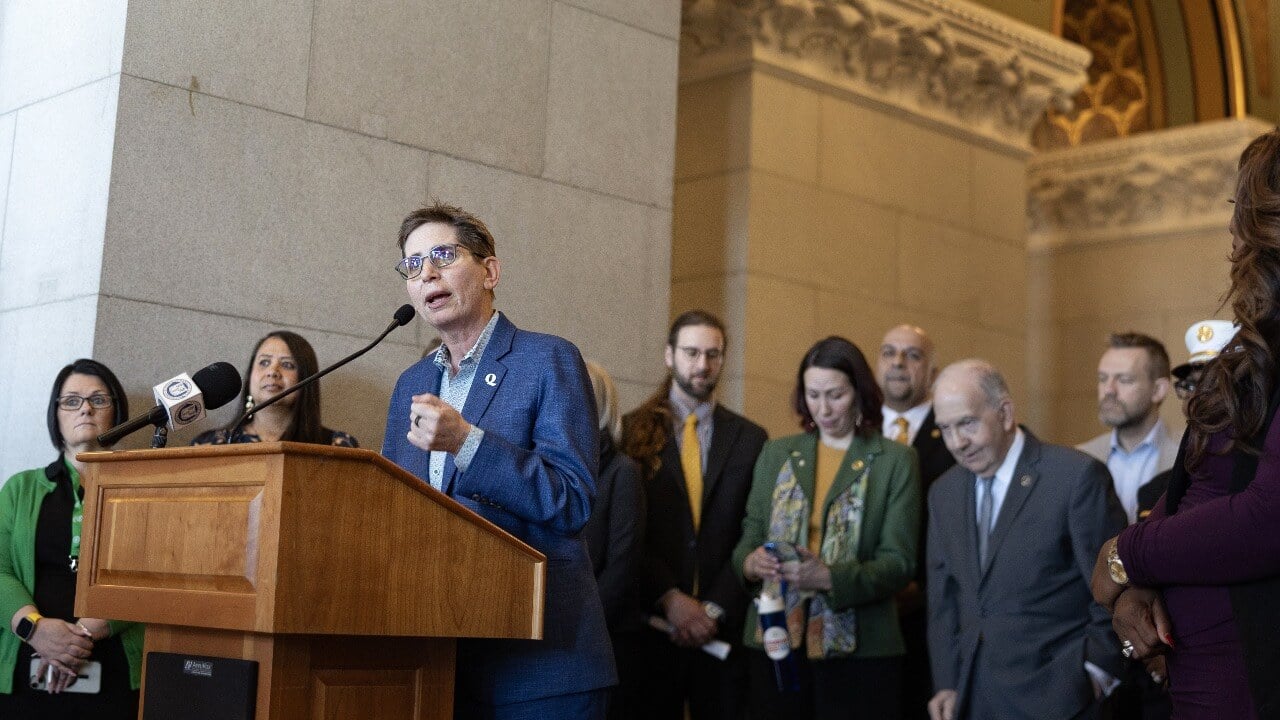
With support from state leadership, including targeted funding for AI engagement initiatives, and advocacy from state Sen. James Maroney, the organization partnered with Quinnipiac to bring the idea to life. The initiative is funded through a $100,000 legislative allocation secured by Sen. Maroney to support the Connecticut Alliance for Teen AI Engagement Programs.
“We have an incredible champion in James Maroney and the Connecticut legislature who have gone out of their way to really make sure that Boys & Girls Club and kids in general are getting the types of educational experiences that we want them to have,” said Dave Tomczyk, associate professor of entrepreneurship and strategy at Quinnipiac University.
Tomczyk played a central role in shaping the initiative’s curriculum to design an engaging, student-centered learning experience.
As the partnership took shape, both organizations were intentional about how the learning experience would be structured, not just introducing students to AI tools, but helping them understand the broader implications of how those tools are used. That approach reflects a shared belief that preparing young people for an AI-driven future requires both technical knowledge and ethical thinking.
“What are the problems with AI? What are the biases it brings? Students are delegating critical thinking to AI, and they don’t realize the cumulative effect of doing that,” Tomczyk said. “At Quinnipiac, our slogan is ambition unleashed. We want the students of tomorrow to be thinking bigger than what most people are trying to confine them to, asking, ‘What are all the possibilities?’ instead of focusing only on what might go wrong.”
For Matthew Broderick, business development specialist in Quinnipiac’s Department of Lifelong Learning, the collaboration also reflects the mission of the university’s lifelong learning programs, which are designed to provide flexible, skills-based training that addresses real-world workforce needs. By extending the model to younger learners, especially teens from underserved communities, through community partnerships, the initiative helps build early pathways to college, careers and credentialed learning opportunities.
“There are so many smart, bright, motivated kids who just lack access to opportunities. They don’t always achieve what they could, not because they lack talent, but because they lack access. This program is a really meaningful way to change that,” said Broderick. “We want participants to develop technical skills in AI but also understand how AI integrates with human elements. These are tools to be used, but we want the club members thinking about the decision-making process, the human touch points and the ethical use of AI.”
At the heart of the initiative is a hands-on, student-driven approach that connects AI learning to real-world impact. Throughout the experience, students will use AI tools to research local community challenges and design service projects to address issues in their own neighborhoods.
“The goal is to give students a chance to feel like they’re in control of what they’re learning in a way that’s engaging and hands-on,” said Tomczyk. “AI is great at coming up with ideas, but it’s very bad at executing. That’s where club members can add real value.”
In addition, one student from each of the 10 participating clubs will be selected to attend a one-week Quinnipiac pre-college, AI-related summer program, providing an immersive, on-campus experience that extends learning beyond the six-week initiative. Offerings include Innovate with AI: Digital Product Design or Innovate with AI: Visual Imagery and Design.
“Just getting a young person onto Quinnipiac’s campus can change their worldview and how they see their future,” said Broderick. “All of a sudden, they realize, ‘This is possible.’ That simple exposure can be transformative.”
Staff members of the Boys & Girls Club will also participate, gaining AI knowledge and earning their Quinnipiac micro-credentials alongside students while helping to reinforce learning within their clubs.
“Across the board, this model is a win-win. It’s a win for the state which wants to see real impact and workforce skills development, a win for the Boys & Girls Club that can elevate their program offering while building meaningful exposure to higher education, and a win for Quinnipiac as we build deeper community connections,” Broderick said. “But most importantly, it’s a win for participating club members. You never know what world an experience like this will unlock in their minds or for their futures.”
Learn more about all of our summer programs at qu.edu/summer.





















Quinnipiac Today is your source for what's happening throughout #BobcatNation. Sign up for our weekly email newsletter to be among the first to know about news, events and members of our Bobcat family who are making a positive difference in our world.
Sign Up Now