



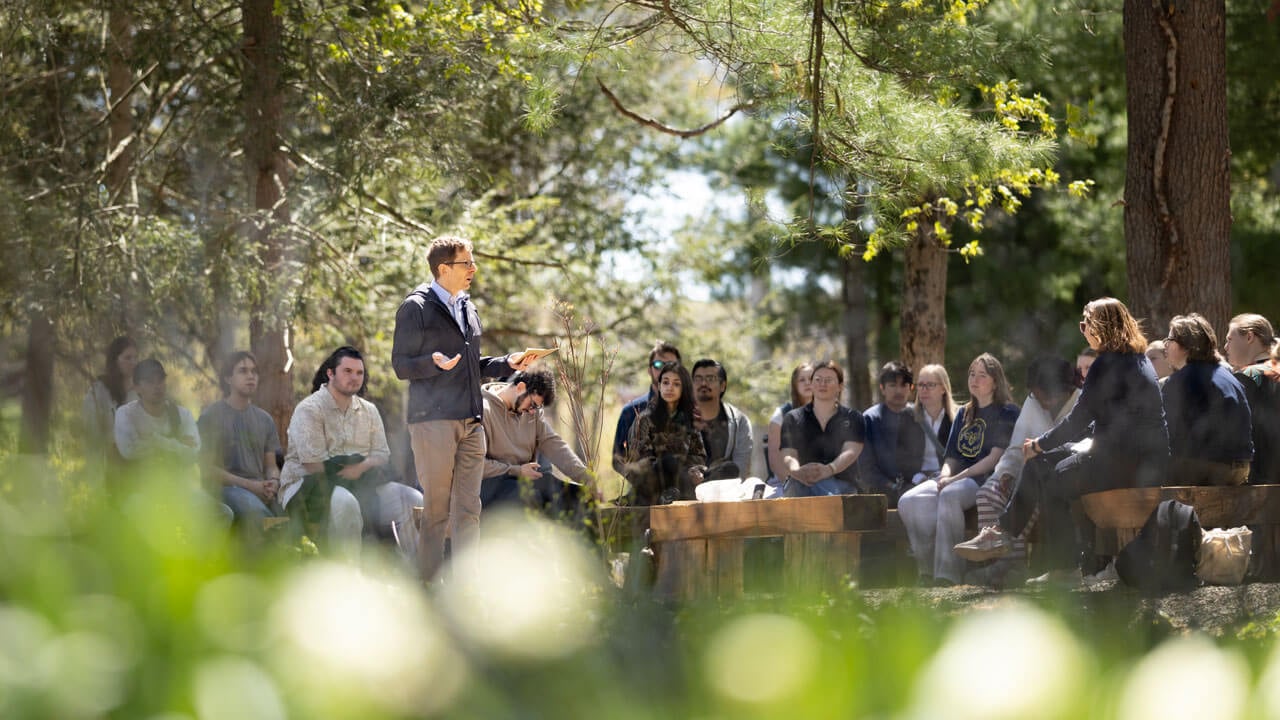
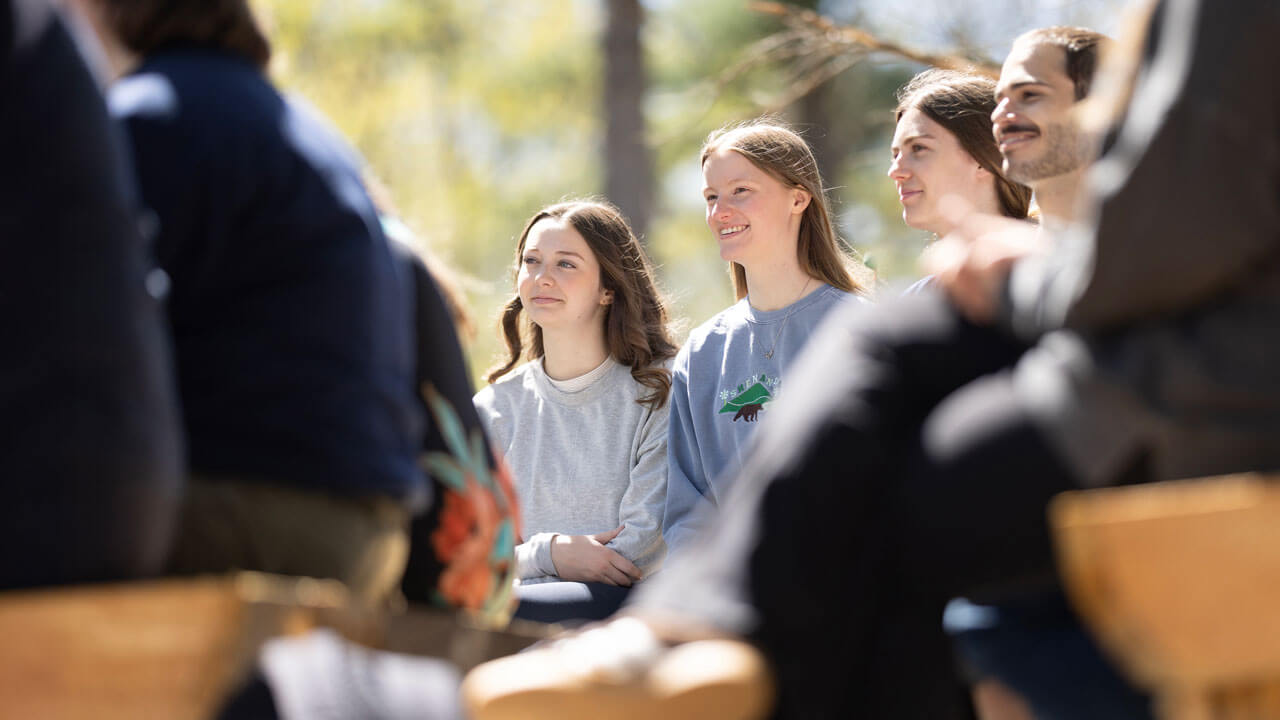
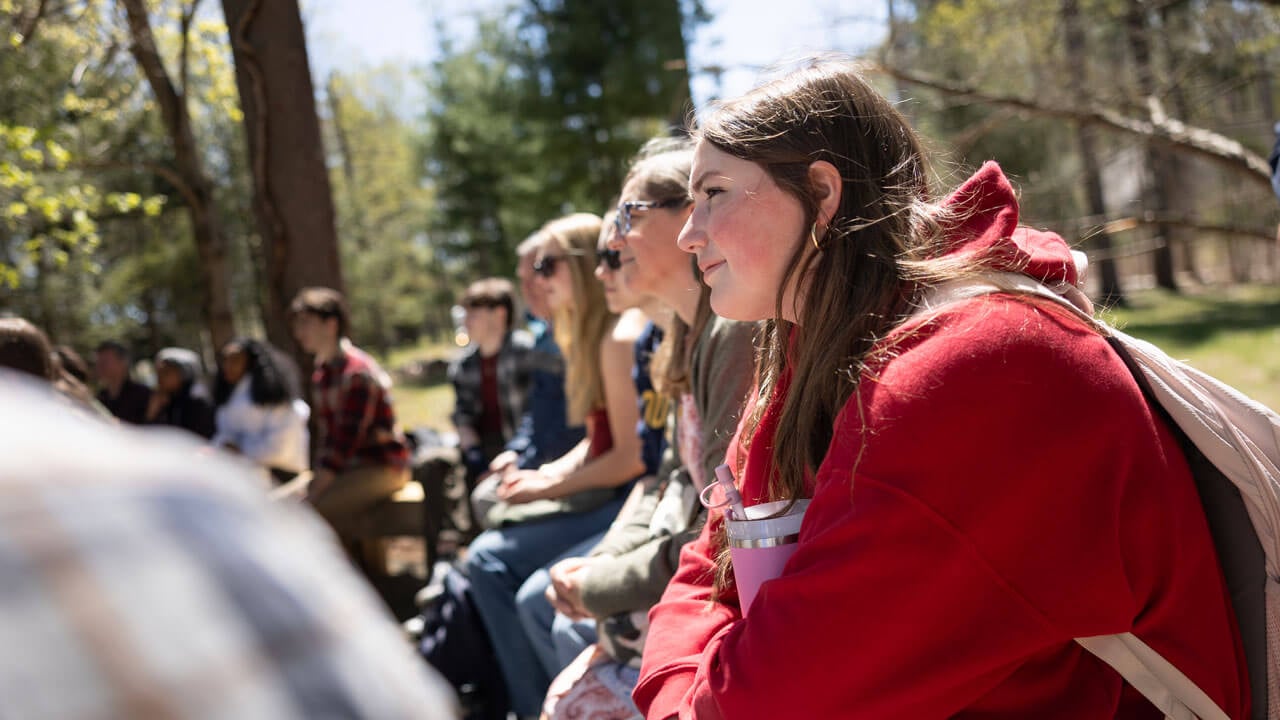
Located beside the growing pollinator garden at the university’s Albert Schweitzer Institute, the circular space fosters discussion and connection with the natural world, reflecting Quinnipiac’s expanding commitment to sustainability and experiential learning.
For Sarah Lawson, associate professor of biological sciences and program director of environmental science and studies, the classroom offers new opportunities for students to engage with the natural world firsthand.
“There are clear mental health benefits to being outdoors. This space connects students to nature while providing clean air and a unique environment for learning,” said Lawson. “It is circular, which helps create a more inclusive and engaging environment, and the different-sized rings make it easy to accommodate everything from small group work to full class discussions.”
The outdoor classroom is also a symbol of Quinnipiac’s broader sustainability initiatives. The benches themselves are constructed from repurposed pine trees harvested on campus, giving new life to reclaimed wood.
“You’re actually sitting on part of our history,” Lawson noted during the event. “All of the benches are made of the white pines from the former pine grove. They replanted one tree for every tree that came down, using native species that support a wider variety of pollinators and caterpillars than white pines alone, so we’re actually building a healthier ecosystem.”
For Thomas Roche, senior capital project manager, the project reflects both sustainability and craftsmanship.
“It was wonderful to see that we were able to recycle and reuse the logs that were salvaged from the South Quad project,” Roche said. “John Copela and his crew, mainly Nick Manciero and James Hudson, took pride in laying out and installing the benches to create this beautiful outdoor classroom.”
The process required careful coordination. Logs were cut into thick slabs and paired with cedar legs of varying sizes, with each piece matched and adjusted to ensure the benches sat at a consistent height and fit the circular layout.
“They truly enjoy doing special projects, and this one was unique to Quinnipiac,” Roche said. “You can see how they paid close attention to all the details to make it work."
The surrounding landscape reflects a shift toward biodiversity. As part of its designation by the Arbor Day Foundation as a Tree Campus, Quinnipiac has committed to planting at least 70% native species, though according to Lawson, that number is already exceeding expectations.
The creation of these benches and space was possible thanks to a gift from an anonymous donor.
The university is also recognized as a Bee Campus USA affiliate through the Xerces Society for Invertebrate Conservation, reinforcing its commitment to pollinator-friendly habitats.
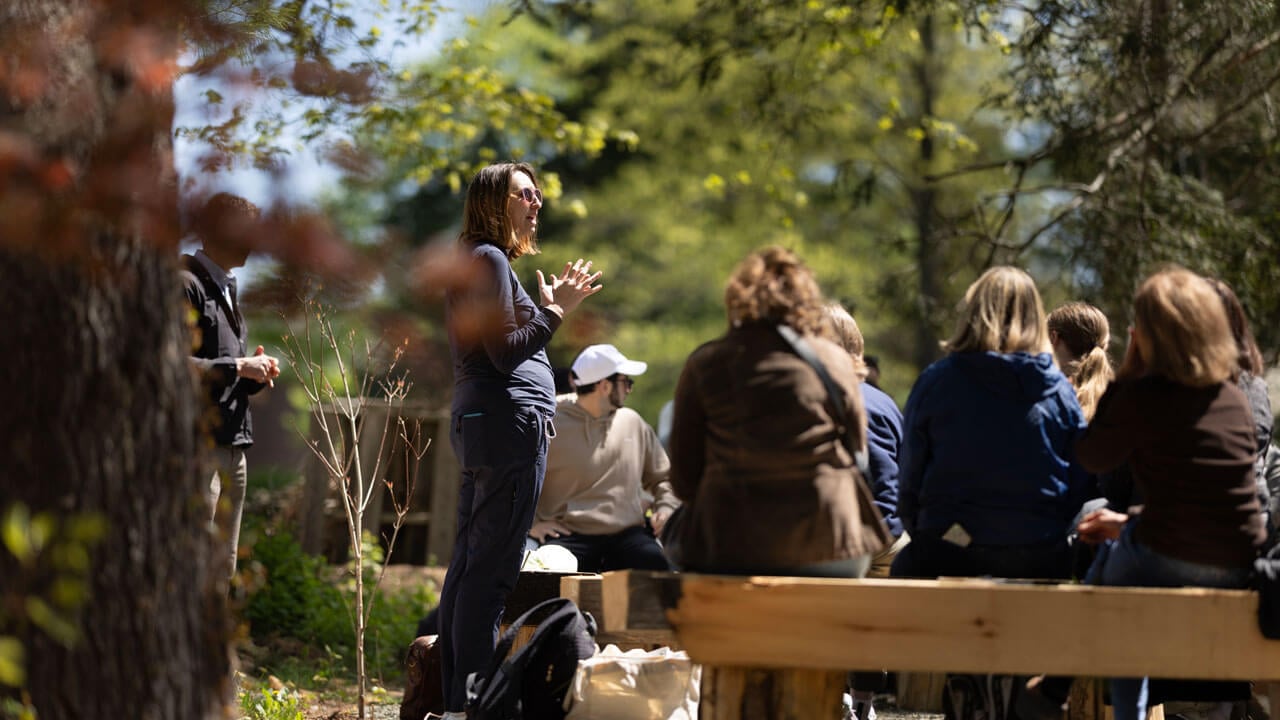
The Arbor Day celebration marking the opening of the outdoor classroom began with a lesson rooted in history. Jeff Lombardo, assistant professor of environmental science, led the first group of students to use the space through an exploration of New England’s forests, using the Eastern white pine as a focal point.
Lombardo explained that early European settlers encountered a landscape that was nearly 95% forested, but widespread logging, farming and industrial growth reduced that coverage to roughly 20% at its lowest point. The Eastern white pine, prized for its height and strength, became a critical resource for the British navy, so valuable that it led to royal restrictions and colonial resistance, including the Pine Tree Riots of 1772.
“Today, we actually have quite a bit more forest cover than we did 100 years ago, but that doesn’t mean we can take it for granted,” Lombardo said. “It’s all of our job to recognize the value of these forests, not just economically, but for the intrinsic value they provide.”
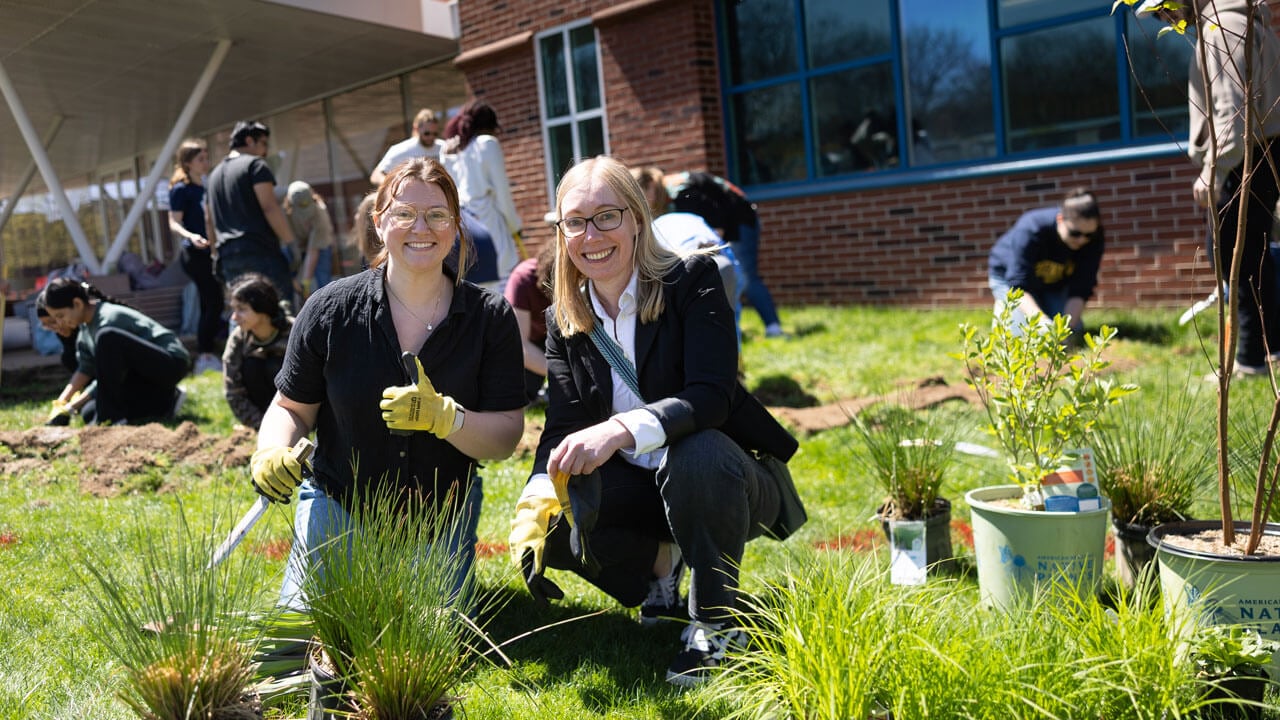
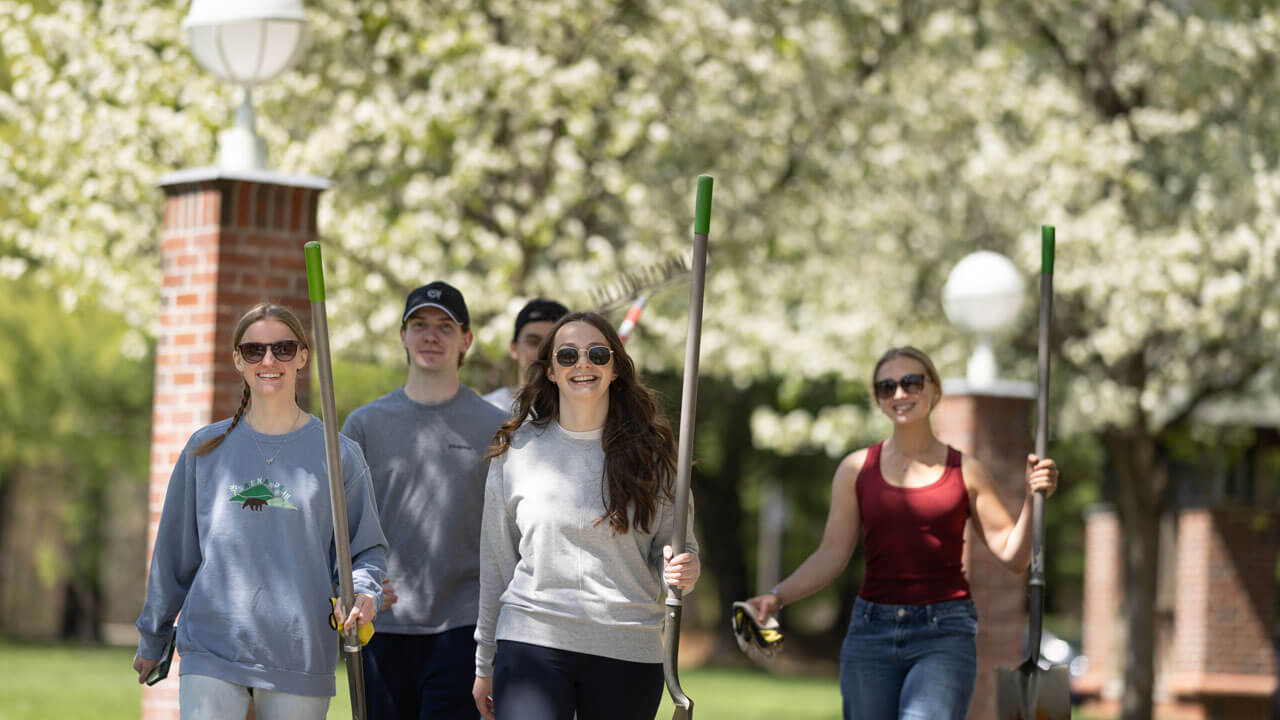
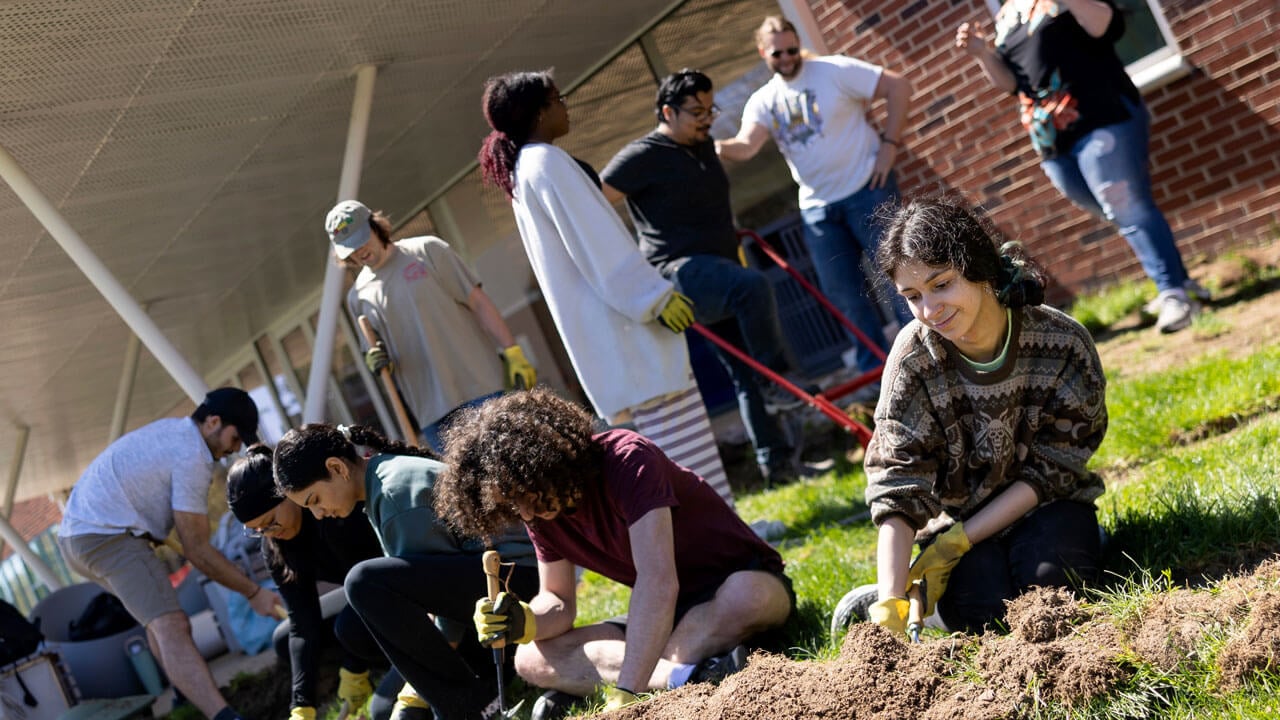
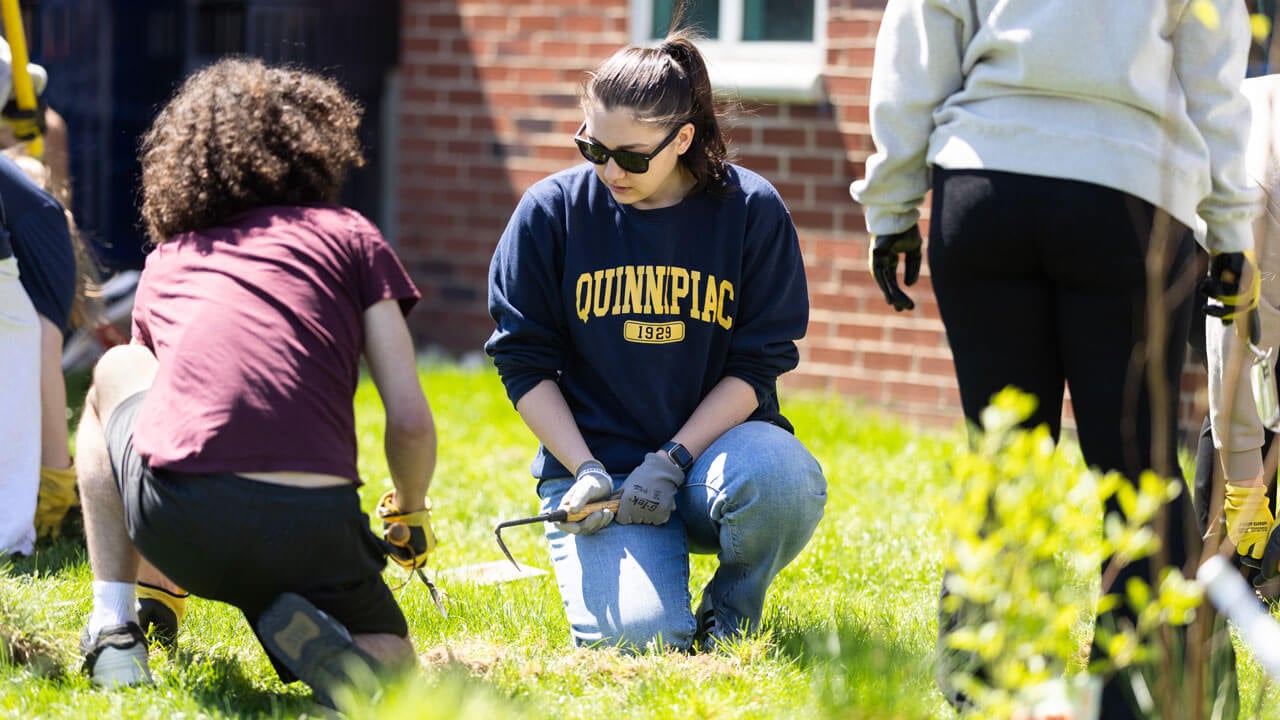
Following the talk, students helped install a new rain garden near the Echlin Center, transforming a turf area into a native planting that captures runoff and supports pollinators.
“A rain garden is where you create a shallow basin and plant species adapted to both wet and dry conditions,” said Lawson. “Instead of overwhelming the system, we’re capturing water and allowing it to recharge the groundwater beneath campus.”
Developed by environmental science students in collaboration with faculty, facilities and Natureworks Garden Center, the project reflects Quinnipiac’s emphasis on sustainability, with senior environmental science and chemistry major Ben Anasis leading the effort.
“A rain garden helps filter water runoff from buildings and lawns. It reduces flooding, recharges groundwater and acts as a natural filtration system,” said Anasis. “I think it’s really cool to have a student-led project like this that everyone can see and come back to years later and still be proud of.”
Senior Haley Matesa, an environmental science and biology major, emphasized the educational value of the new outdoor classroom.
“It’s an added benefit for hands-on learning,” Matesa said. “It creates a space where students can engage more directly with the environment."
First-year student Ray vonRoeschlaub said the visibility of these projects inspired involvement.
“Learning about projects like rain gardens made me want to get involved,” said vonRoeschlaub. “It shows that these efforts are real and that students can make a difference.”
Support for the project extended beyond campus as well, with Quinnipiac students Jackson Stone, Morgan Kolomer and Riley Scott serving as interns with the You Got This Kid Leadership Foundation, which played a key role in funding the initiative and supporting student-led sustainability efforts.
“They are a big supporter of our Arbor Day,” said Lawson. “They bought all of the native plants for us from nearby Natureworks. It’s very hard to buy local, native, organic plants, so they’re a really great resource for us.”
In addition to supporting study abroad opportunities for environmental majors, the foundation also funds sustainability initiatives across campus, encouraging students from any discipline to bring forward new ideas.
“If you have an idea to make Quinnipiac more sustainable, dream big,” Lawson added. “We’ve got the support and the students to make it happen."
The outdoor classroom, which can accommodate approximately 30 students, will be available to all academic programs through the campus reservation system.
In Focus
In this Article
- BA in Environmental Policy and Sustainability
- BA in Environmental Studies (Co-Major)
- BS in Environmental Science
- Albert Schweitzer Institute
- Nature Rx - Connect with Nature for Health and Wellness
- Pollinator Campus USA Affiliate
- Pollinator Gardens
- Sustainability
- Tree Campus Designation and Tree Walk
- Jeffrey Lombardo
- Sarah Page Lawson
- Tom John Roche
Read This Next

























Stay Connected
Get the latest news and events sent right to your email by subscribing to Quinnipiac Today.
Subscribe