



Faculty experts explore student questions on U.S.-Iran War during all-campus teach-in
April 06, 2026
April 06, 2026
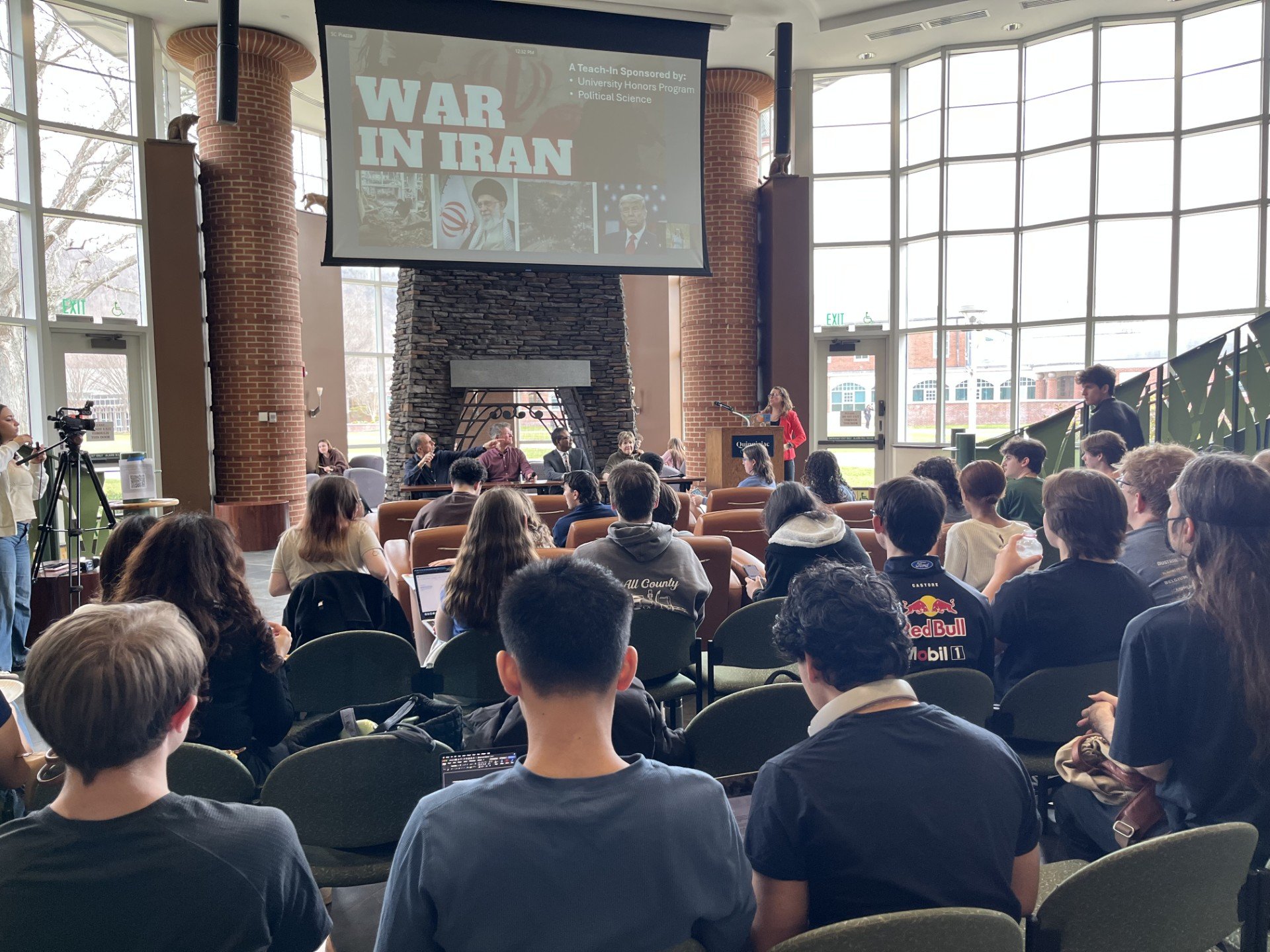
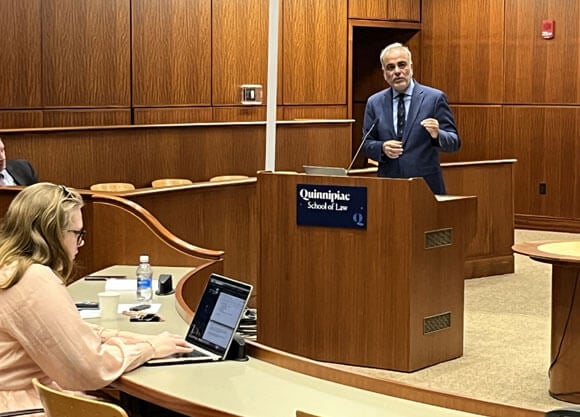
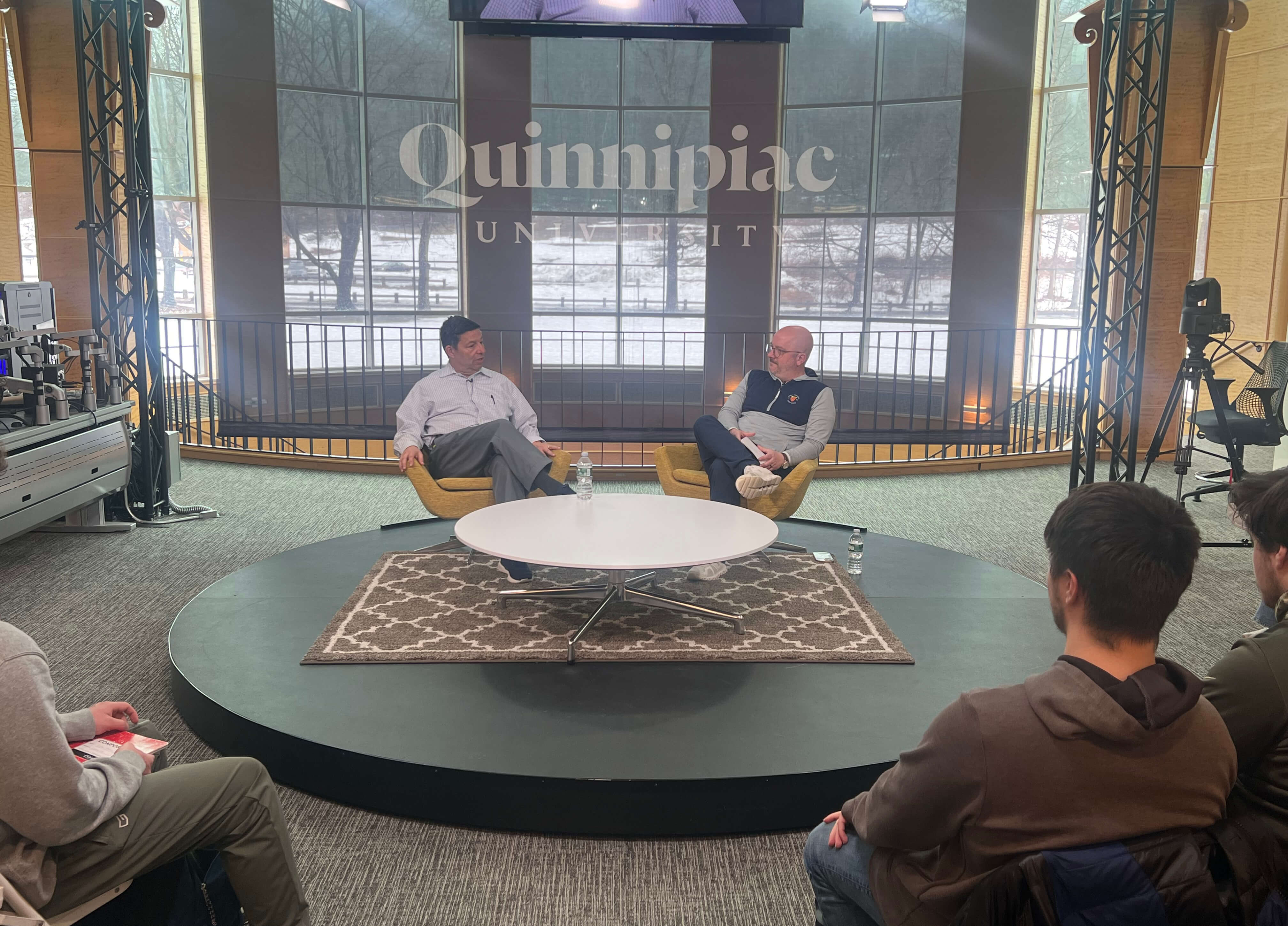
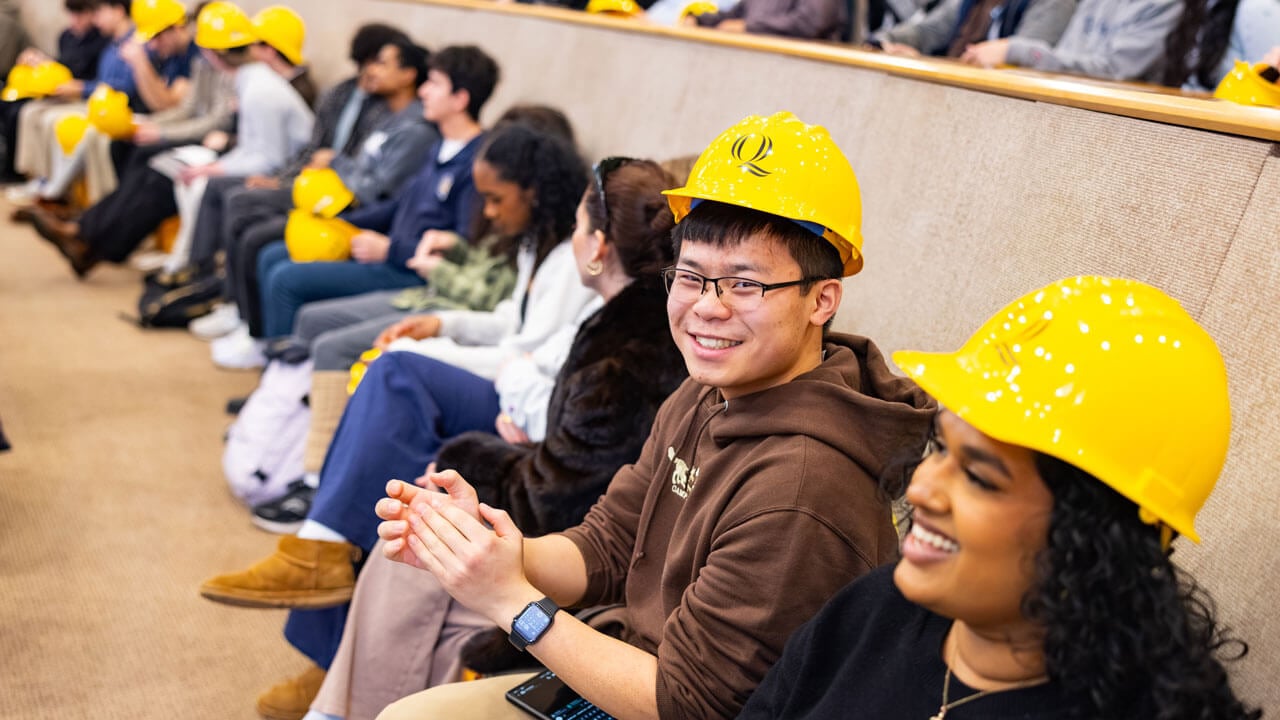
Sponsored by Political Science, the University Honors Program and the Office of Student Experience, the March 31 teach-in sought to address the developing situation in the Middle East and how the war will impact the Quinnipiac community economically, politically and morally.
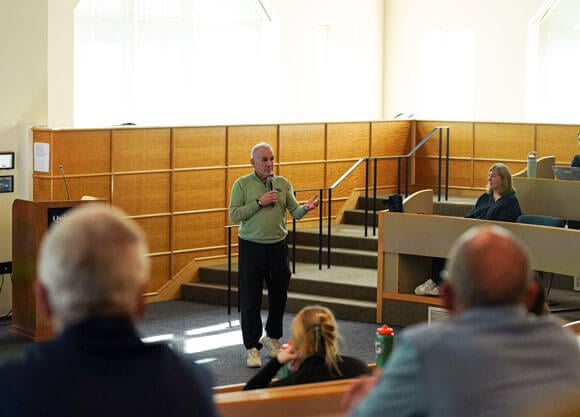
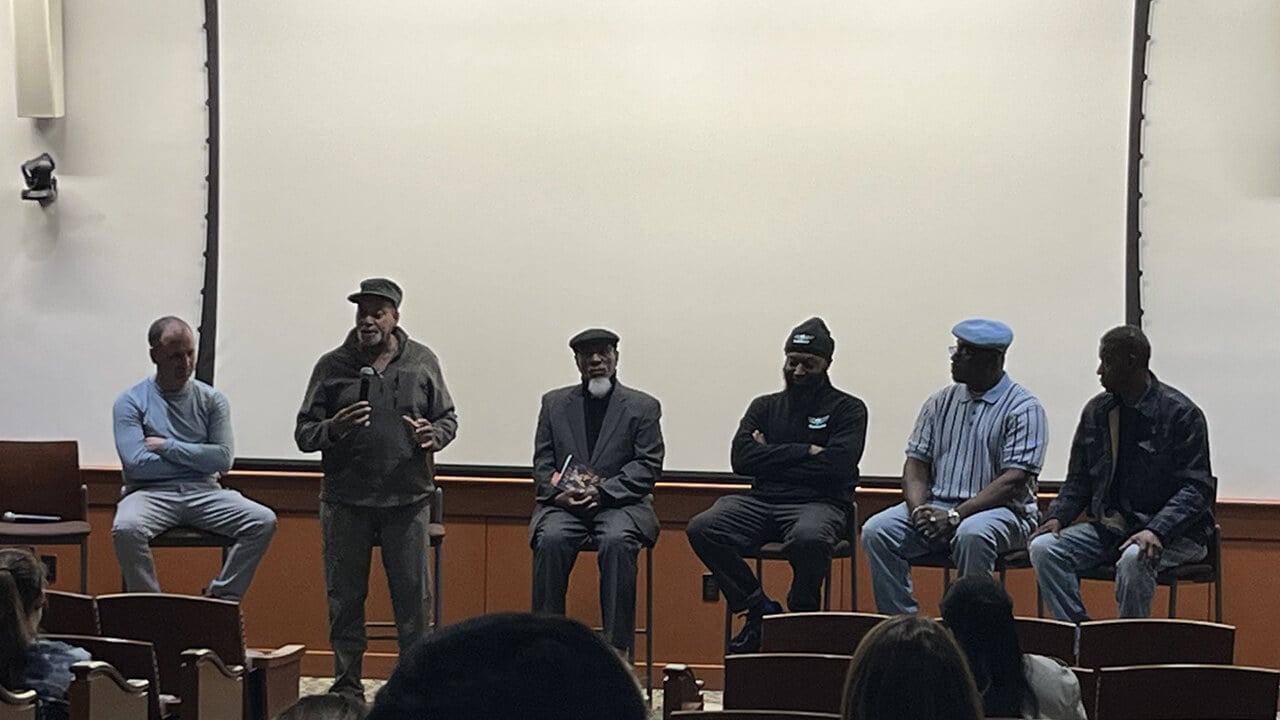
The event was facilitated by Scott McLean, faculty director of the University Honors Program and professor of political science. Panel members included Sean Duffy, executive director of the Albert Schweitzer Institute and political science professor; Anat Biletzki, Schweitzer Professor of Philosophy; Mohammad Elahee, professor of international business; and Mordechai Gordon, professor of education. Candice Travis, professor of political science, moderated.
The all-campus teach-in drew more than 60 students to the 45-minute event held in the Quinnipiac Piazza on the Mount Carmel Campus during Common Hour. Eighteen students in McLean’s University Honors Program classes developed 14 questions for the faculty panel.
“We tried to find a synthesis of tapping our faculty expertise and experience and ability to put things in perspective, with students driving the agenda,” said McLean. “We really wanted it to be student-centered.”
The student questions tipped off meaningful dialogue and provided opinions framed by each panel member’s expertise, experience and perspective.
“In a discussion like this, we all bring our opinion and how we interpret the truth; and our opinion is shaped by our own life experiences. My life experience is quite different from my colleagues,” said Elahee. “So you need to hear from people who are like Mordechai, who are like me, who are like Anat, who are like Sean. You hear from multiple people and then form your own opinion.”
Among their questions, Honors Program students asked the panel to address the challenge of filtering misinformation on social media— a primary lens through which many are cultivating their awareness of conflict.
“I think, in the United States in particular, we have a tendency to be very unaware of what’s happening in the rest of the world and very unaware of the way that the world operates. With AI and with social media, it tends to mine the base level of awareness in our society and our culture as a whole. It doesn’t necessarily pull from expert sources or knowledgeable sources,” Duffy replied.
Panelists encouraged students to look for multiple news sources where the authority behind the resource is identified. Duffy also maintained that if AI videos and social media posts have created an entry into awareness and understanding of conflict as an important issue, it is useful.
“I think you can use that as a barometer of where your generation, of where our culture and where our society as a whole is in thinking about this issue. But then I would hope that we, as educated people, would go the step further and actually look for knowledgeable sources to inform our own reactions,” said Duffy.
Biletzki added the caveat that even some “official media” may involve and incorporate ideological and government influences.
The teach-in closed with an audience Q&A session, including one student who asked what could be done in all university classroom spaces to engage students in discussions about the US-Iran war developing in the Middle East.
Just as the panel had provided responses through the lens of their expertise, Duffy proposed that a multidisciplinary approach to such discussions could strengthen and expand perspectives across the university.
“What do we know about this conflict if we’re taking a course in economics, or a course in sociology, or in psychology, or in communications?” Duffy said. “I would hope that my colleagues on the faculty are thinking about this, as well. For example, in a journalism class, how can we touch on the way this war is being reported, and which outlets are reporting it, and how are they reporting it?”
Students also had the option to scan a QR code posted at the teach-in and submit their questions online. The panel answered as many additional students questions as time allowed, McLean said.


Quinnipiac Today is your source for what's happening throughout #BobcatNation. Sign up for our weekly email newsletter to be among the first to know about news, events and members of our Bobcat family who are making a positive difference in our world.
Sign Up Now