



Students and faculty launch cognitive recovery app ‘ReMind’
May 26, 2026
May 26, 2026
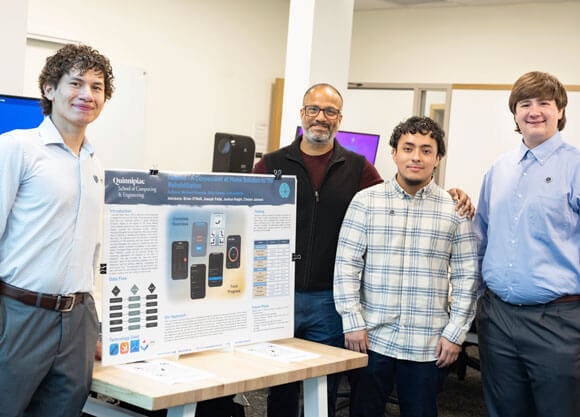
Developed by students Michael Alvarado '26, MS '27; Billy Godoy '26, MS '27; and Joshua Molin '26, alongside faculty members Joshua Haight, assistant professor of psychology; Joseph Fetta, assistant professor of nursing; Brian O’Neill, associate dean of the School of Computing & Engineering and associate professor of computer science; and Chetan Jaiswal, associate professor of computer science, ReMind brings together a suite of tools aimed at improving cognitive rehabilitation in a single, user-friendly platform.
Now available on the Apple App Store, ReMind integrates brain training exercises, symptom tracking, journaling and progress monitoring to help users actively engage in their recovery. The app is designed to encourage consistent cognitive practice while providing meaningful insights into individual progress over time.
“ReMind was created to make cognitive recovery more accessible and engaging,” Alvarado said. “We wanted to design a tool that not only supports users through structured exercises but also helps them better understand their own progress in a meaningful way.”
Godoy emphasized the importance of usability and consistency in recovery. “One of our main goals was to create something people would actually want to use every day,” he said. “By combining multiple features into one platform, we’re helping users stay consistent with their recovery without feeling overwhelmed.”
For Molin, the project represents the power of applying classroom learning to real-world challenges. “This app is a direct result of what we’ve learned at Quinnipiac and the mentorship we’ve received from our faculty,” he said. “Knowing that something we built can potentially help people navigate recovery is incredibly rewarding.”
Jaiswal added, “ReMind addresses a significant gap in accessible recovery tools for individuals experiencing concussions or mild traumatic brain injuries. By combining multiple rehabilitation strategies into one intuitive platform, users are empowered to take a more active role in their healing process.”
Beyond its benefits for individual users, ReMind also offers strong potential for clinical and research applications. With the ability to collect anonymized data, the platform may contribute to a deeper understanding of cognitive recovery patterns and help inform future treatment approaches.
The project reflects the growing strength of interdisciplinary collaboration at Quinnipiac. In addition to the School of Computing & Engineering, the initiative drew support and insight from QU Career Services, QU Information Services and academic programs in psychology, health and exercise science and nursing.
Projects like ReMind underscore the real-world impact of student-led, faculty-mentored innovation at Quinnipiac University. By translating classroom learning into practical solutions, students are not only advancing their own expertise but also contributing to meaningful societal outcomes.


























Quinnipiac Today is your source for what's happening throughout #BobcatNation. Sign up for our weekly email newsletter to be among the first to know about news, events and members of our Bobcat family who are making a positive difference in our world.
Sign Up Now