


QUIP-RS
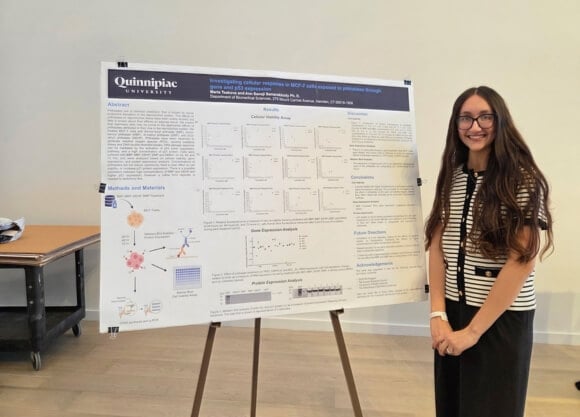
Investigating cellular response in MCF-7 cells exposed to phthalates through gene and p53 expression
QUIP-RS
Investigating cellular response in MCF-7 cells exposed to phthalates through gene and p53 expression
Maria Tsakova ’28 completed this research project as part Quinnipiac University's Interdisciplinary Program for Research and Scholarship under the mentorship of Sanoji Samarakkody, assistant professor of biomedical sciences.
Overview
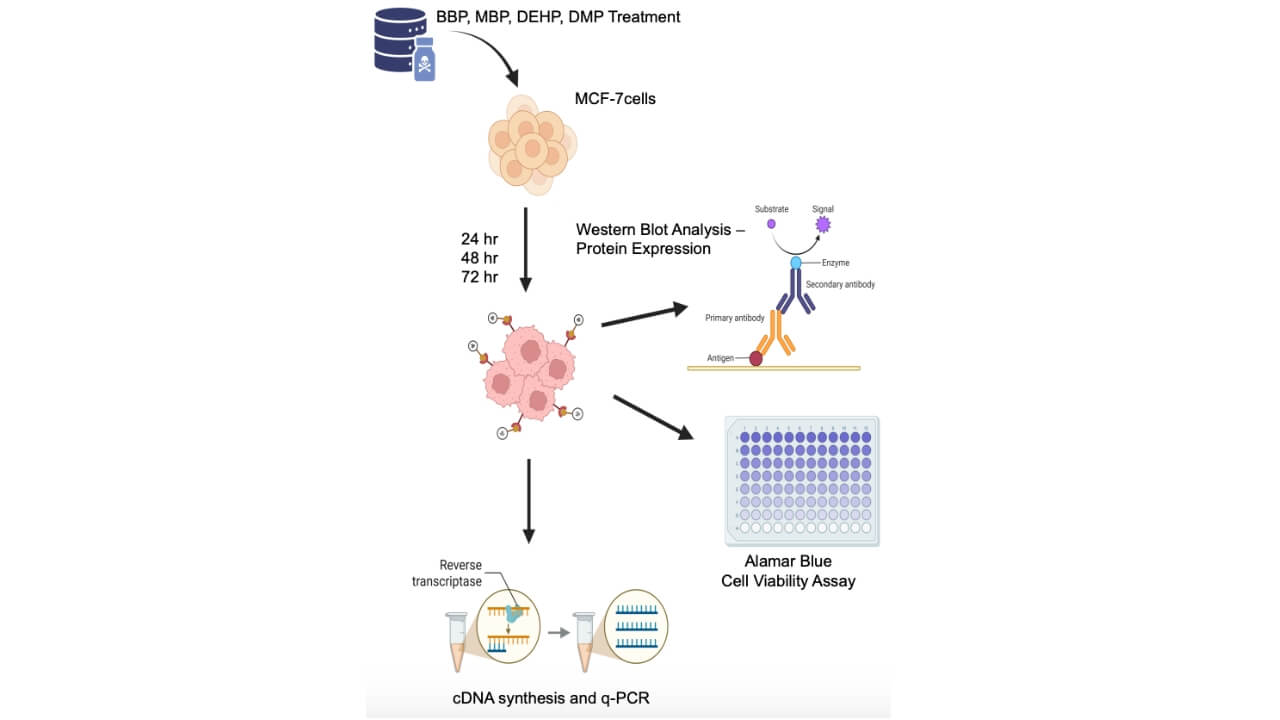
This project examines how phthalates, chemicals commonly used to make plastics more flexible, may affect breast cancer cells. MCF-7 breast cancer cells were treated with several types of phthalates and analyzed cell viability, gene expression, and protein expression to investigate potential DNA damage and cellular responses. While the phthalates did not appear to significantly affect cell viability or p21 protein expression, the findings suggest a possible relationship between higher concentrations of certain phthalates and increased p53 expression.
Student Researcher

Maria Tsakova ’28
Medical Microbiology and Immunology
School of Health Sciences
Investigating Cellular Response in MCF-7 Cells Exposed to Phthalates Through Gene and p53 Expression
Abstract
Phthalates are a common plasticizer that is known to cause endocrine disruption in the reproductive system. The effects of phthalates on reproductive tissue have been widely studied, but little is known about their effects on adipose tissue. We predict that mammary cells may be prone to the detrimental effects of phthalates attributed to their role in the reproductive system. We treated MCF-7 cells with Benzyl-butyl phthalate (BBP), monobenzyl phthalate (MBP), di-methyl phthalate (DMP), and di-(2-ethyl) phthalate (DEHP). Phthalates have been observed to generate reactive oxygen species (ROS), causing oxidative stress and DNA double-stranded breaks. DNA damage response can be mediated by the activation of p53 tumor suppressor pathway, and a high concentration of p21 protein. Cells were cultured with BBP, MBP, DEHP, DMP and DMSO, for 24, 48, and 72 hrs, and were analyzed based on cellular viability, gene expression, and protein expression analysis. Concentrations of phthalates did not induce cytotoxicity, have a clear effect on cell viability, or increase p21 protein expression. There is a possible correlation between high concentrations of MBP and DEHP and higher p53 expression, however a viable third replicate is needed to determine this.
Methods and Materials
Results
Cellular Viability Assay
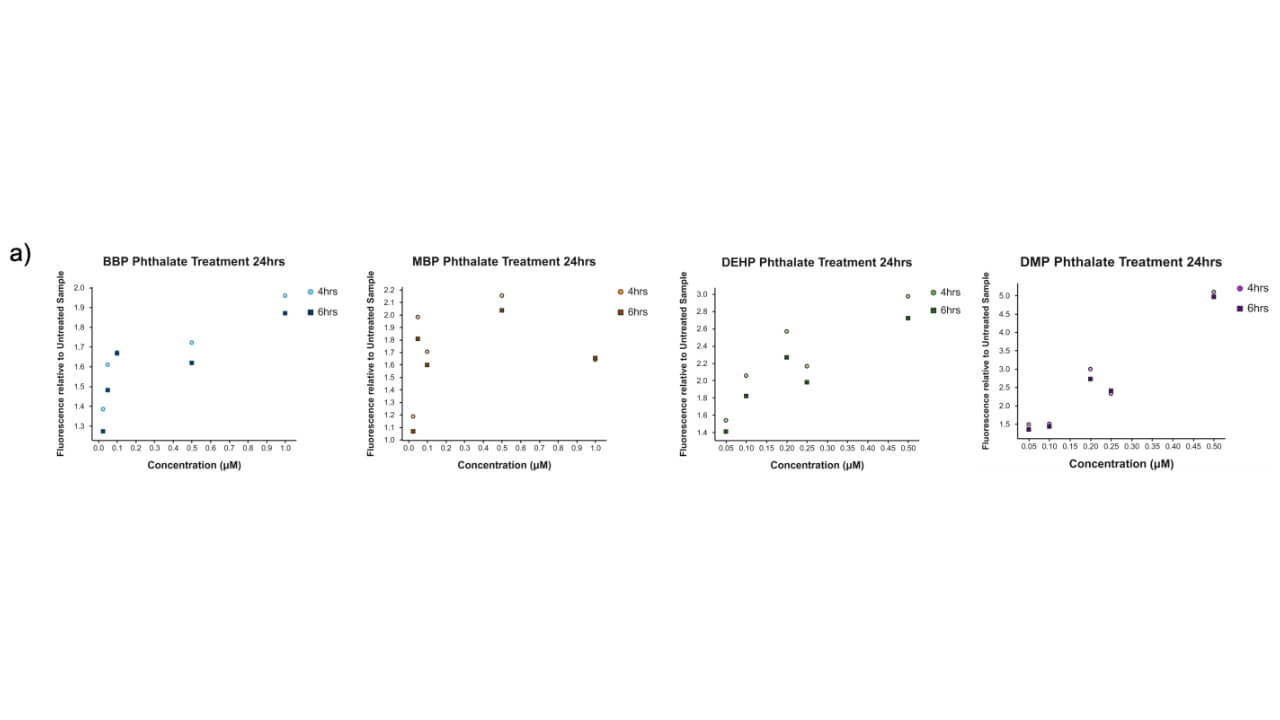
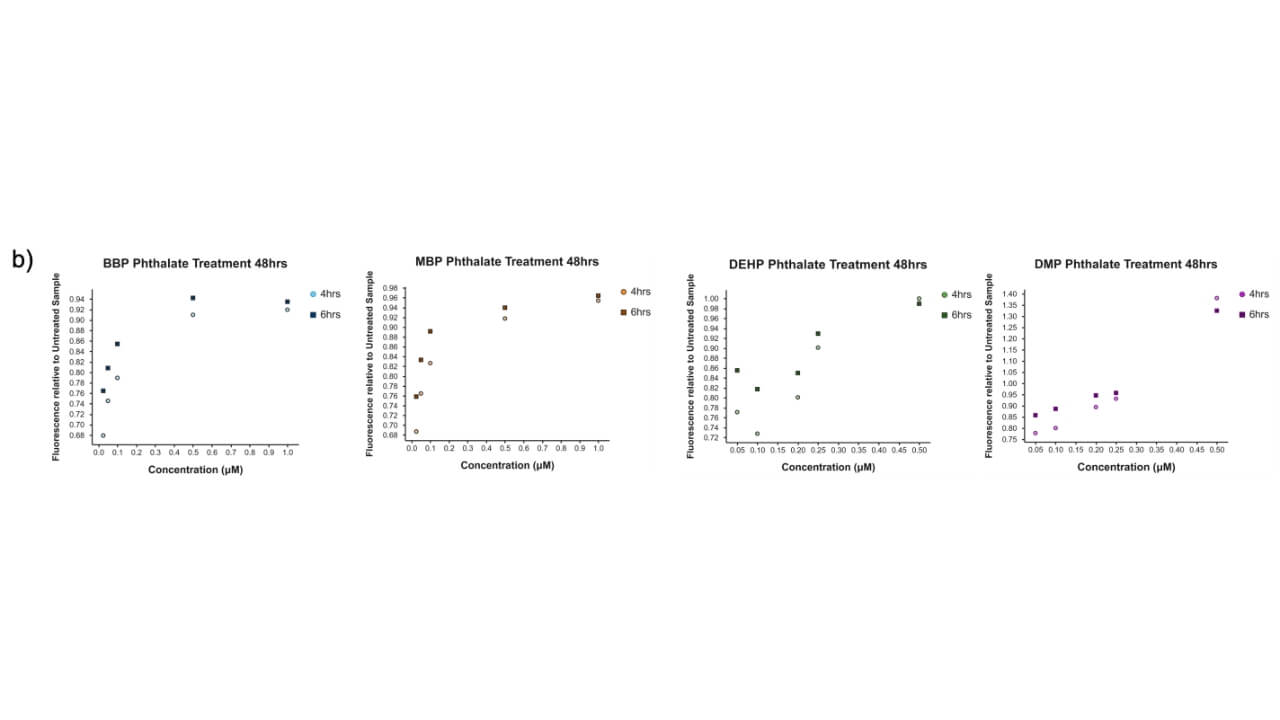
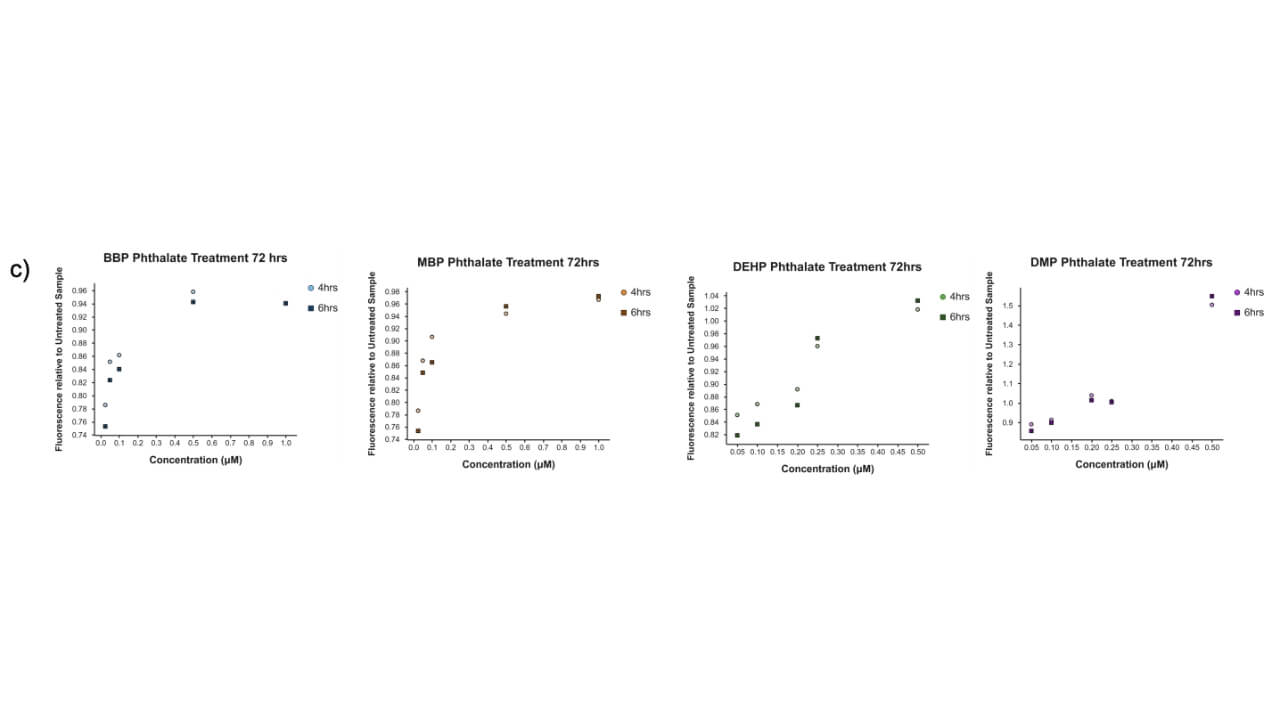
Figure 1. Relative fluorescence as a measure of cellular viability following treatment with BBP, MBP, DEHP, DMP, and DMSO at 24 hours (a), 48 hours (b), and 72 hours (c), with Alamar Blue fluorescence measured after 4 and 6 hours of incubation during each treatment period.
Gene Expression Analysis
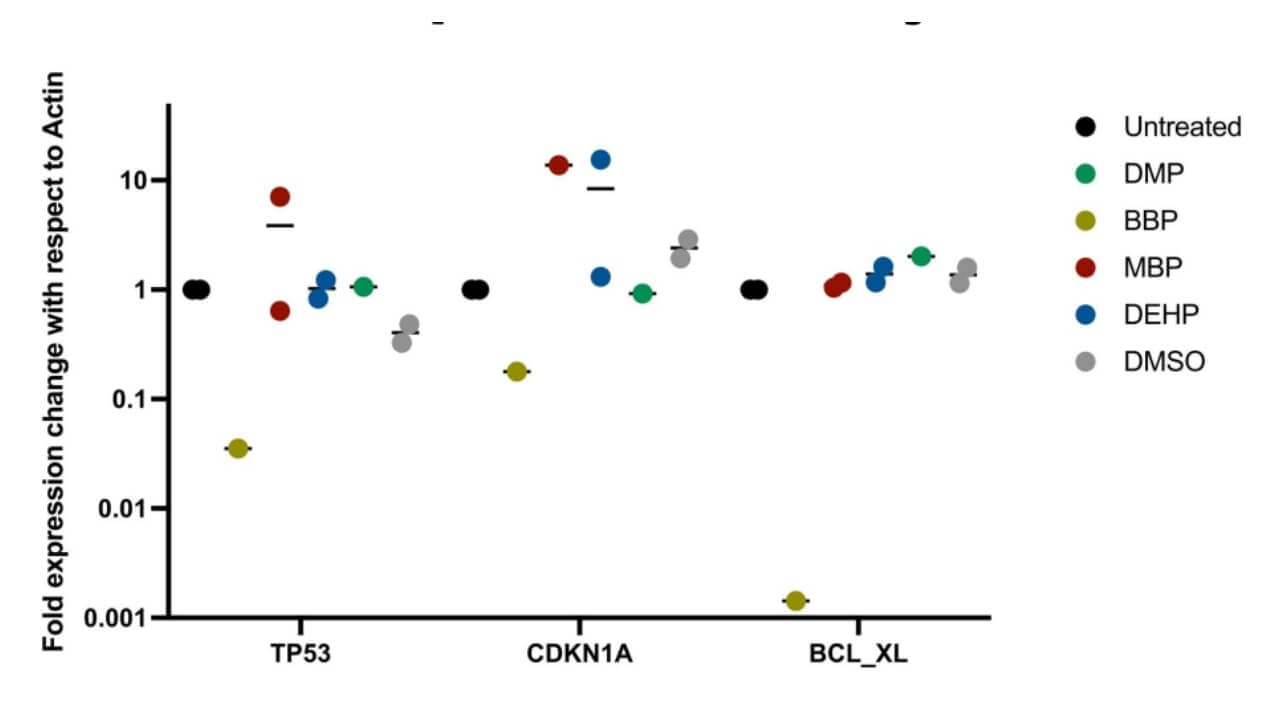
Figure 2. Effect of phthalate treatment on TP53, CDKN1A, and BCL_XL mRNA expression with fold expression change relative to Actin as a measure of RNA expression following treatment with BBP, MBP, DEHP, DMP, a vehicle control DMSO, and an untreated sample.
Protein Expression Analysis
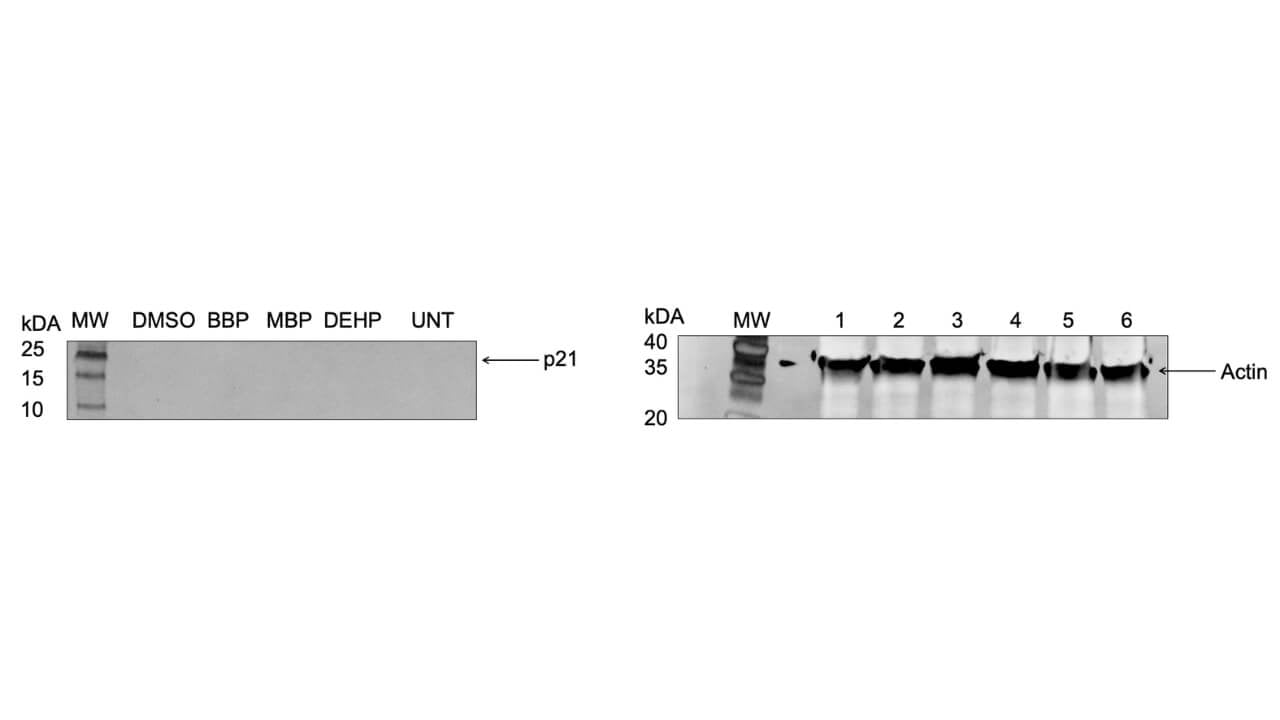
Figure 3. Western blot analysis of actin (b), and p21 protein (c) as a measure of protein expression following 24-hour treatment. The data that is shown is representative of 3 replicates.
Discussion
Cell Viability
- Figure 1. Comparison of relative fluorescence to phthalate concentration (1, 0.5, 0.1, 0.05, 0.025) and (10, 5, 1, 0.5, 0.25) volumes for BBP and MBP, concentrations (0.5, 0.25, 0.2, 0.1, 0.05) and (5, 2.5, 2, 1, 0.5) volumes for DEHP and DMP, and concentrations (1, 0.5) and (10, 5) volumes for DMSO at 4hrs and 6hrs, after 24hrs (a), 48hrs (b), and 72hrs (c) of treatment. Phthalate treatment is not observed to decrease cell proliferation during 24, 48 and 72 hour timepoints.
Gene Expression Analysis
- There is no observable change in gene expression after MCF-7 cells were treated, and current work is underway to study the long-term effects of phthalate treatment on TP53 and/or CDKN1A activity.
Western Blot Analysis
- The expression of target protein p21 is not detectable indicating that none of the phthalates are upregulating p21 protein levels at 24 hours.
Conclusions
Cell Viability
- Cultures treated with higher concentrations of phthalates exhibited higher fluorescence readings. This prompted an investigation into the effect of phthalates on the used cell viability reagent, Alamar Blue. When tested with phthalate alone produced a fluorescence readings.
Gene Expression Analysis
- MBP increased TP53 gene expression suggesting genotoxic stress.
Protein Expression
- p21 protein is not as clearly expressed and perhaps the cell cycle progression is not much affected upon treatment with Phthalates or that p21 takes longer to upregulated with exposure to phthalates.
Future Directions
- Completion of 3 full replicates, testing for the effects of negative control, on fluorescence. Analyzing the effects of higher concentrations to higher fluorescence readings.
- Repeat replicate 3 of our gene replication analysis, to ensure that our data is statistically significant.
- Continuing work in gene expression analysis, and furthering research into the effect that MBP and DMP has on upregulation of p53 gene.
Faculty Mentor
Professional Application
"I am forever grateful to have gotten the opportunity through the QUIP-RS program, to pursue this kind of research. This program awarded me the time, space, and resources to execute an entirely student planned and organized experiment, and tailor this experience to my prospective career in healthcare. I am hoping to continue this work in the coming years, and connect this research to a project that is being done in my RNA Extraction & Gene Expression Analysis course, hopefully furthering my results." - Maria Tsakova ’28
For Further Discussion
This serves as an overview of the project and does not include the complete work.
Program Overview
The Quinnipiac University Interdisciplinary Program for Research and Scholarship, is open to students of all majors and provides up to $5,000 in funding for undergraduate students to conduct research or complete creative projects alongside faculty mentors. This intensive 8-week program enables students to develop scholarly skills while encouraging discussion about successes and shortcomings with fellows and mentors.
Explore Our Areas of Interest
We've sorted each of our undergraduate, graduate and doctoral programs into unique Areas of Interest. Explore these categories to discover which programs and delivery methods best align with your educational and career goals.
Explore Health and Medical at Quinnipiac