

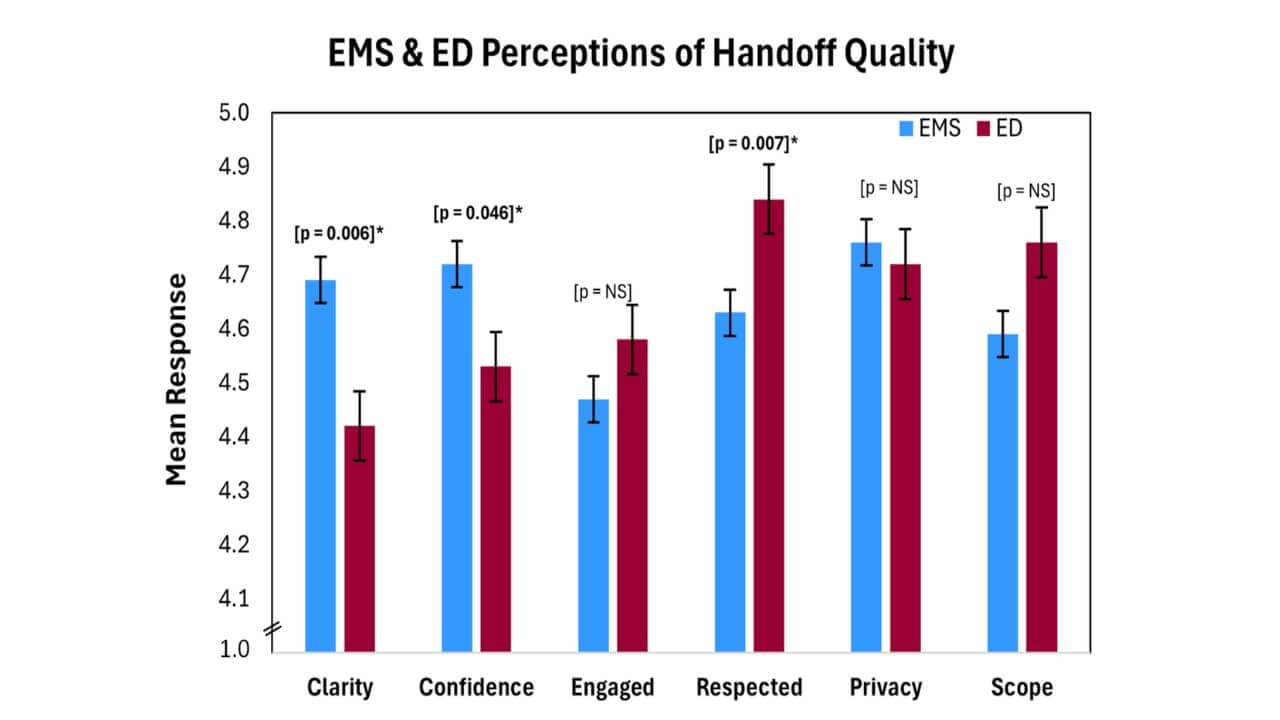
Graph 1: EMS & ED Perceptions of Handoff Quality

Medicine
Medicine
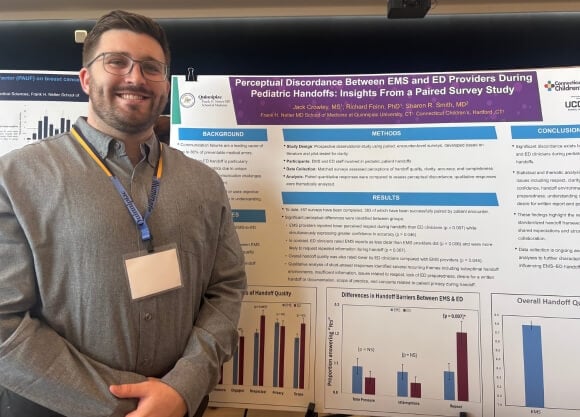
Jack Crowley, Class of 2028, completed this project as part of MED 813: Scholarly Reflection and Concentration Capstone under the mentorship of Dr. Richard Feinn, professor of medical sciences and Dr. Sharon R. Smith, professor of pediatrics.
This project evaluated the quality of communication during pediatric EMS-to-ED handoffs through paired surveys to EMS and ED clinicians. It aimed to identify discrepancies between EMS and ED provider perceptions of handoff clarity, accuracy and completeness, and determine commonly perceived barriers to communication.
MD Program
Frank H. Netter MD School of Medicine
Graph 1: EMS & ED Perceptions of Handoff Quality
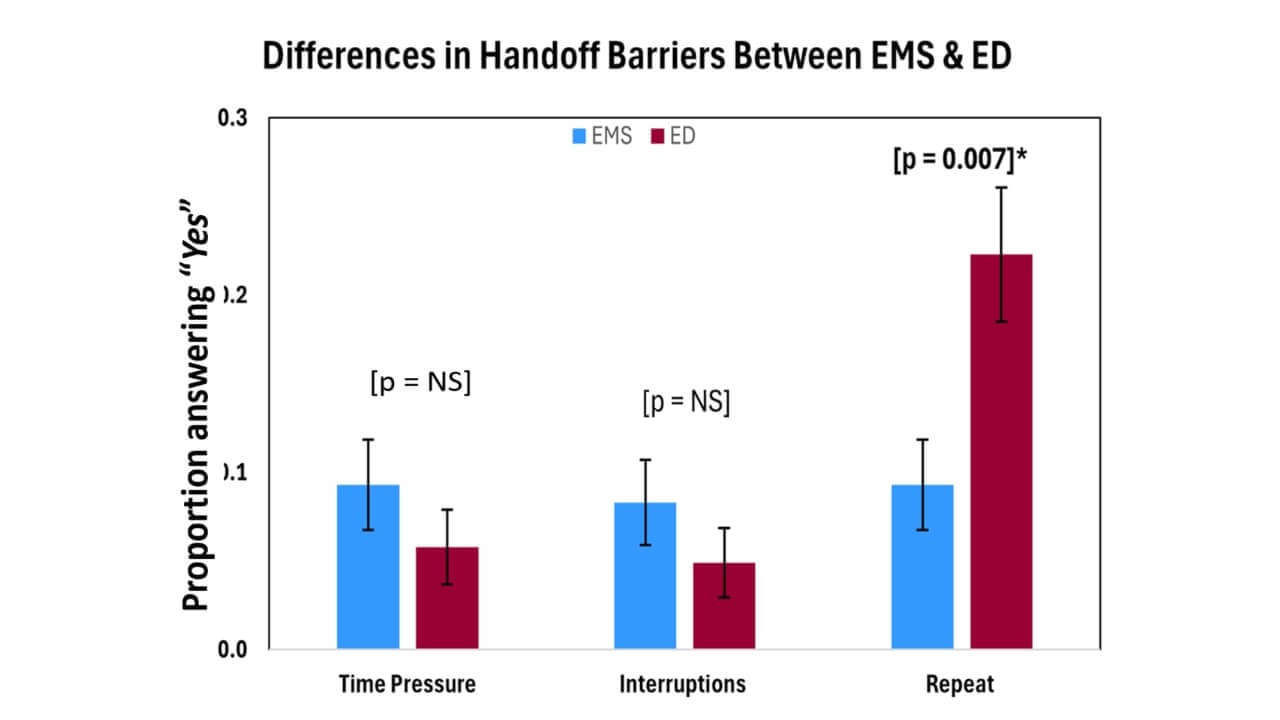
Graph 2: Differences in Handoff Barriers Between EMS & ED
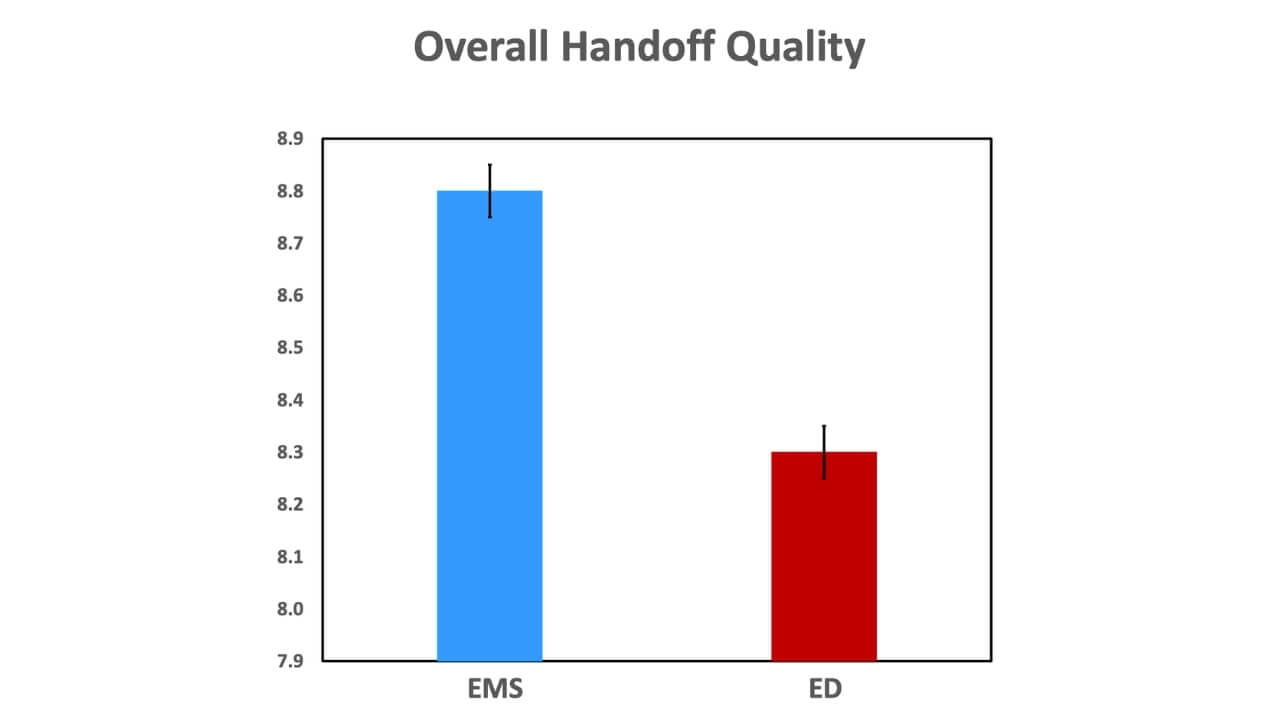
Graph 3: Overall Handoff Quality
"This project has significantly prepared me for a career in emergency medicine by strengthening both my clinical perspective and my ability to conduct meaningful, practice-changing research. Through studying EMS-to-ED handoffs, I developed a deeper understanding of the critical role communication plays in high-acuity, time-sensitive environments, reinforcing skills that are directly applicable to my future work in the emergency department. The project also provided hands-on experience in research design, multi-site coordination, IRB processes, and data management, all of which are essential for contributing to quality improvement and systems-based practice in medicine. Working with paired datasets and advanced statistical methods improved my ability to critically analyze clinical data and interpret findings in a way that can inform real-world practice. Additionally, presenting this work at regional and national conferences strengthened my ability to communicate complex ideas clearly and engage with interdisciplinary teams. Overall, this project has reinforced my interest in emergency medicine, particularly in improving prehospital and ED transitions of care, and has equipped me with the skills to continue pursuing research and leadership roles throughout my career." - Jack Crowley, Class of 2028
Connecticut Children's Hosptial
This serves as an overview of the project and does not include the complete work. To further discuss this project, please email Jack Crowley.
In MED 813: Scholarly Reflection & Concentration Capstone will personalize their curriculum and prepare for scholarly endeavors during residency and future practice. Students design and execute a capstone project in an area about which they are passionate. Learners use narrative medicine and their experience of being mentored to develop personally and professionally. They gain both conceptual understanding and practical skills in research methods, epidemiology, medical informatics, biostatistics, evaluating information sources, and critical appraisal of medical literature. Information presented in the SRCC course is integrated whenever possible with material in the Foundations of Medicine and the Clinical Arts and Sciences courses, to enable learners to apply biostatistics, epidemiology and medical informatics to community and public health, medical literature interpretation and clinical decision-making.
We've sorted each of our undergraduate, graduate and doctoral programs into unique Areas of Interest. Explore these categories to discover which programs and delivery methods best align with your educational and career goals.