Quinnipiac University

School of Communications The Amplify Awards

Welcome to the inaugural Amplify Awards, honoring the outstanding work of Connecticut high school students across all fields of communication, from newsrooms and broadcast studios to podcast booths, design labs and social feeds.

Celebrating the next generation of creators, influencers and storytellers

Logo for the Amplify Awards, Presented by the School of Communications

Today’s journalists and communicators tell stories across every medium: in print and online, on camera and on air, through photos, podcasts, social media and design. The Quinnipiac University School of Communications is excited to recognize students who have been building these skills in school newspapers, broadcast studios, clubs and class assignments.

Entrants can submit one piece per category and enter as many categories as they have work for. All work must have been published or shared with a public audience and created without generative AI. 

Communications is Everywhere, and we can’t wait to see what students create.

Award Categories

Print and Digital Journalism covers the craft of reporting and telling a story in words. Submissions for this category include a news, feature, sports, editorial or investigative piece that has been published in print, online or on a school news site. 

Requirements 

  • Entrant’s choice of one:

    • News (400–700 words)

    • Feature (600–1,000 words)

    • Sports Story (500–800 words)

    • Editorial/Opinion (400–600 words)

    • In-Depth/Investigative (800–1,500 words)

  • Must have been published in a school or community outlet, in print or online, within the eligibility window. 

  • PDF preferred (DOCX accepted), up to 10 MB, with byline and name removed. Outlet, publication date and link (if online) are entered on the form. 

  • Statement of 150–250 words

    • Describe where the piece ran and who it reached. Explain why the story matters to the community and to the entrant. Summarize how the story was reported and verified, including any challenge or ethical decision. 

Photography and Photojournalism covers the use of images to evoke a response or tell an honest story. Submissions for this category include 3–5 images unified by a theme, subject, concept or story. Entrants choose an artistic or photojournalistic portfolio and follow the guidelines for that type. 

Requirements 

  • Entrant’s choice of one:

    • Photojournalism Portfolio: 3–5 images that tell one news, feature, sports or event story. Edits are limited to minor color and exposure correction, with no compositing, in keeping with photojournalism ethics. A caption (cutline) is required for each image: one or two sentences covering who, what, where and when. 

    • Artistic Portfolio: 3–5 images unified by a theme, subject or concept. A story is not required. Creative editing is allowed, including compositing of the entrant’s own photographs. A title is required for each image. 

  • Images must be photographs taken by the entrant, with no stock images, no work by other photographers and no generative AI, including generative fill tools in editing software. 

  • Files must be JPG, at least 2,000 pixels on the long edge, up to 10 MB each. Finalists may be asked for unedited originals. 

  • Statement of 150–250 words

    • Photojournalism Portfolio: describe the story (who, what, where and when), how access was gained and what ethical choices were made.

    • Artistic Portfolio: describe the theme or concept, why the images belong together and how they were made and edited. 

Broadcast Journalism covers news storytelling built for video. Submissions for this category run 2–5 minutes and include a news, feature, sports or investigative story package or a sports play-by-play, produced in video format and shared with a public audience. 

Requirements 

  • Entrant’s choice of one:

    • News Story Package

    • Feature Story Package

    • Sports Story Package

    • Investigative/Multimedia Story Package

    • Sports Play-by-Play

  • All entries run 2–5 minutes. Sports Play-by-Play is live or simulated game commentary, and the entrant must be the primary announcer. 

  • Video only; audio-only submissions are not accepted. 

  • MP4 (H.264), 1080p minimum, up to 500 MB. 

  • Statement of 150–250 words

    • Describe the story, why it matters and where it aired. Explain the entrant’s role and each team member’s role. Describe how sources were found and facts verified, and name one editorial or technical challenge. For play-by-play, describe the game context and how preparation shaped the call. 

Documentary and Short Film covers narrative and non-fiction filmmaking beyond news reporting. Projects can be live action, animation or motion graphics, run 3–8 minutes and should follow a narrative arc or story structure. A script, outline or storyboard is submitted with the film. 

Requirements 

  • Entrant’s choice of one:

    • Documentary

    • Short Film

  • All entries run 3-8 minutes

  • Any production style is accepted, including live action, animation (2D, 3D or stop-motion) and motion graphics. 

  • MP4 (H.264), 1080p minimum, up to 1 GB (or an unlisted YouTube or Vimeo link). 

  • Production document submitted with the film as a PDF or DOCX: a script for a short film, an outline or narration and interview transcript for a documentary or a storyboard for animation and motion graphics. 

  • Documentary entries must confirm that all interview subjects consented to appear on camera. 

  • Statement of 150–250 words

    • Describe the story the film tells and why it was chosen. Explain the entrant’s role and each crew member’s role. Describe the process from idea to final cut and one creative challenge. For documentaries, explain how subjects were found and treated fairly. 

Short-Form and Social Video covers quick, attention-grabbing video made for social platforms. Submissions for this category run under 3 minutes and include a social video on any topic or a public service announcement (PSA) that informs, entertains or persuades an audience. 

Requirements 

  • Entrant’s choice of one:

    • Short-Form/Social Video

    • Public Service Announcement (PSA)

  • All entries run 30 seconds–3 minutes. Any topic is welcome for social video, including sports, brand, personal, social or civic content. A PSA must address a real social issue and include a call to action. 

  • MP4 (H.264), 1080p minimum, vertical or horizontal, up to 500 MB. 

  • Original audio or licensed/royalty-free music only. No unlicensed copyrighted tracks, and no sounds from social platform libraries. 

  • Statement of 150–250 words

    • Describe the intended audience, platform and goal. Explain the hook and how the video was made. For a PSA, name the issue, the source of the facts and the action viewers are asked to take. 

Audio Storytelling covers the craft of writing, recording and producing a podcast for listeners. Submissions for this category include one full podcast episode, on any subject, that has been shared with a public audience. 

Requirements 

  • One podcast episode, 5–15 minutes, submitted as audio-only MP3 (up to 50 MB). Video podcasts submit their audio export and are judged as audio. 

  • A transcript (PDF or DOCX) is required. 

  • Original music and sound or royalty-free/licensed tracks only. Interview subjects must have consented to be recorded. 

  • Statement of 150–250 words

    • Describe the topic, why it matters to the entrant and the intended audience. Explain how the episode was planned, recorded and edited and which interview or sound choices shaped it. State where the episode was published. 

Web and Interactive Design covers digital experiences people click, tap and navigate. Submissions for this category include a website, an app or clickable prototype or another interactive project that demonstrates design thinking and a strong user experience. 

Requirements 

  • Entrant’s choice of one:

    • Website: a live site for a school, club, publication, business, cause or portfolio, real or concept.

    • App or Prototype: a working app or a clickable prototype of a mobile or web app.

    • Interactive Project: another interactive web experience, such as an interactive infographic, data visualization, digital publication or interactive story, including animation or motion graphics used within the experience. 

  • A working link that opens in a standard browser (public, or with a password provided on the form). No downloads or installs. The link must stay live through May 31, 2027. Prototypes need a view-only link that anyone with the link can open. 

  • A screen-recorded walkthrough of 1–3 minutes (MP4, up to 200 MB) showing the main pages or screens and interactions, on desktop and mobile where applicable is required.

    • Optional: up to 5 screenshots (JPG or PNG, 5 MB each). 

  • Original design and code. Templates, themes and site builders (such as Google Sites, Wix or WordPress) may be a starting point but must be substantially customized. No generative AI, including AI site builders and code assistants. 

  • Statement of 150–250 words

    • Describe who the work is for and what those users need to do. Explain the layout, color, type, navigation and accessibility choices and why they were made. State what was built versus started from and what testing or feedback changed. 

Graphic Design, Branding and Marketing covers the strategic thinking and creative execution of a brand or marketing effort. Submissions for this category include a series of 3–5 connected posts, graphics, posters or ads for a real or concept brand, cause, team or school club. 

Requirements 

  • One PDF of 3–5 pages, one piece per page in presentation order, up to 25 MB. 

  • Static pieces only. Video and reels belong in Short-Form & Social Video. 

  • Pieces must share a consistent look and demonstrate knowledge of the principles of design and branding. 

  • Original design work. Templates may be a starting point but must be substantially customized. No generative AI. 

  • Statement of 150–250 words

    • Describe the audience and the goal of the campaign or brand. Explain the design choices (color, type and imagery) that carry the look across the pieces. Describe the impact the work is intended to have. 

Best of Show: The Amplify Award

The Amplify Award is the grand prize of the competition and the top honor across all eight categories. No separate submission is required. The judging panel selects it from among the eight first-place category winners. The Amplify Award recognizes the single submission that best embodies the spirit of the competition: bold, original storytelling that amplifies a voice, a story or an issue, in any medium.

How to Submit

  1. Check eligibility
    • Open to Connecticut high school students in grades 9–12. 
  2. Pick a category
    • One entry per category, and entrants can enter as many categories as they have work for. 
  3. Prepare your files
    • Follow the requirements for the category, including the 150–250 word statement. Remove names from file names, credits and statements where practical, since entries are judged blind. 
  4. Get teacher or adviser sign-off
    • The teacher or adviser confirms the work is the entrant’s own, that it follows the no-generative-AI policy and where it was published or shared. 
  5. Submit by April 9, 2027
    • Submissions open February 19, 2027
  6. Get notified by us
    • Finalists will be notified by May 10, 2027. All entrants are invited to Awards Day on May 20, 2027.

View all rules and eligibility requirements

View Frequently Asked Questions


Key Dates

January–February 2027: Teacher information sessions

February 19, 2027: Submissions open 

April 9, 2027: Submission deadline 

By May 10, 2027: Finalists notified 

May 20, 2027: Awards Day

Get notified when submissions open

Awards Day

May 20, 2027, 10:30 a.m.–1 p.m.


Schedule
  • 10:30 a.m.–noon: Awards ceremony 
  • 12–1 p.m.: Lunch, optional studio and school tours and student submission screenings 
 

Location and Directions

Mount Carmel Auditorium at Quinnipiac University
275 Mount Carmel Avenue, Hamden, CT 06518

Maps and directions to our Mount Carmel Campus


Support the Amplify Awards

Help us celebrate the next generation of storytellers. Sponsor a category, donate prizes or help students at schools with limited media resources take part. Contact amplifyawards@qu.edu to get involved. 

Additional Information

The Quinnipiac University School of Communications connects passionate storytellers to rewarding careers across communications fields. With seven majors and 3+1 and 4+1 pathways to graduate studies, our students graduate prepared to inform, influence and engage audiences. The Amplify Awards are one way we celebrate the next generation of storytellers while they are still in high school. 

For Teachers and Advisers

Teachers and advisers are the reason students find opportunities like this. Schedule a classroom visit or campus tour, get help with the sign-off form and submission process or ask about other available resources by contacting amplifyawards@qu.edu.

Summer Programs

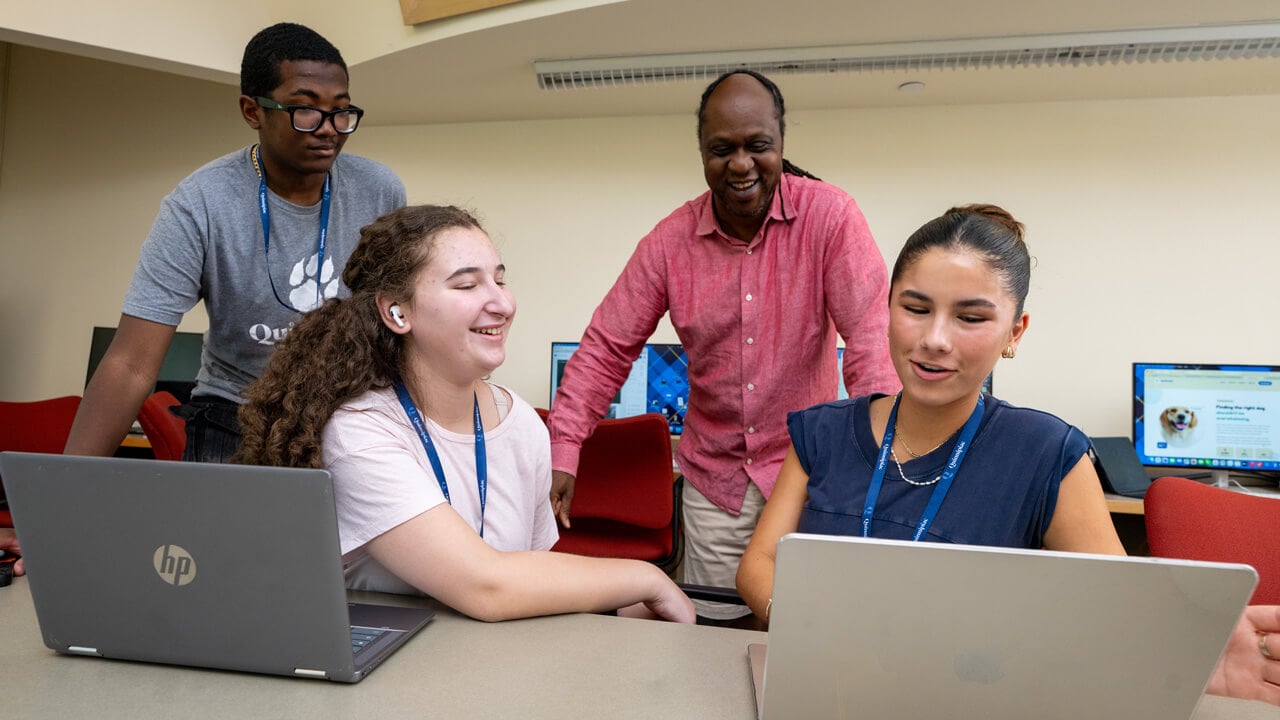
Keep creating this summer. Quinnipiac’s pre-college summer programs let high school students explore communications at the college level. Recent School of Communications offerings have included Movie Making and Sports Communications & the Fan Experience. Students work with faculty, build portfolio work and get a taste of college life.

Learn more

Questions?

Email us at amplifyawards@qu.edu.

Contact the School of Communications

We’re always here to help provide additional information and answer any questions you may have.

Keep up to date with the latest information about the School of Communications.

Quinnipiac Today Opens in a new tab or window. Events Calendar