Quinnipiac University

Inclusive Excellence Celebrations

Intertribal Powwow

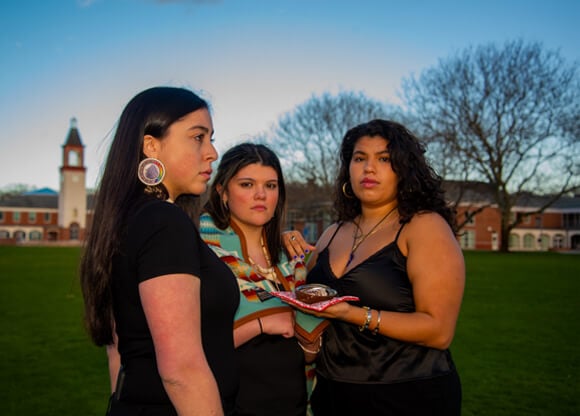
3 female students of QU's Indigenous Student Union holding Indigenous items

Inclusive Excellence Celebrations

Intertribal Powwow

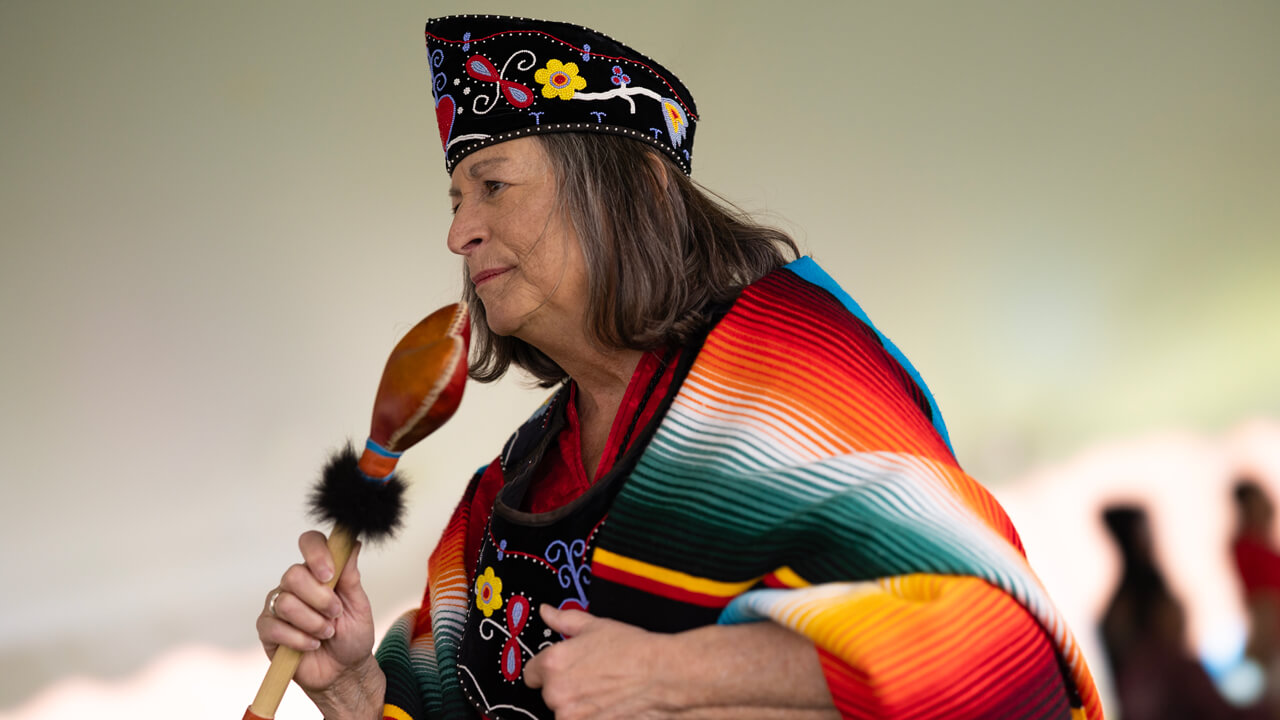
Hosted by our Indigenous Student Union and the Office of Inclusive Excellence, with support from the Office of the President, Dancing in the Shadow of Sleeping Giant, Quinnipiac University’s Intertribal Powwow, offers the Quinnipiac and local Hamden communities an opportunity to celebrate Indigenous culture and traditions.

All events are free and open to the public. These events are supported by funding through Sunrise Healing Community Inc., with additional support from the Office of the President.  

Second Annual “Dancing in the Shadow of Sleeping Giant” Powwow

Sunday, April 19, noon to 5 p.m. (Grand Entry at 1 p.m.), Mount Carmel Campus

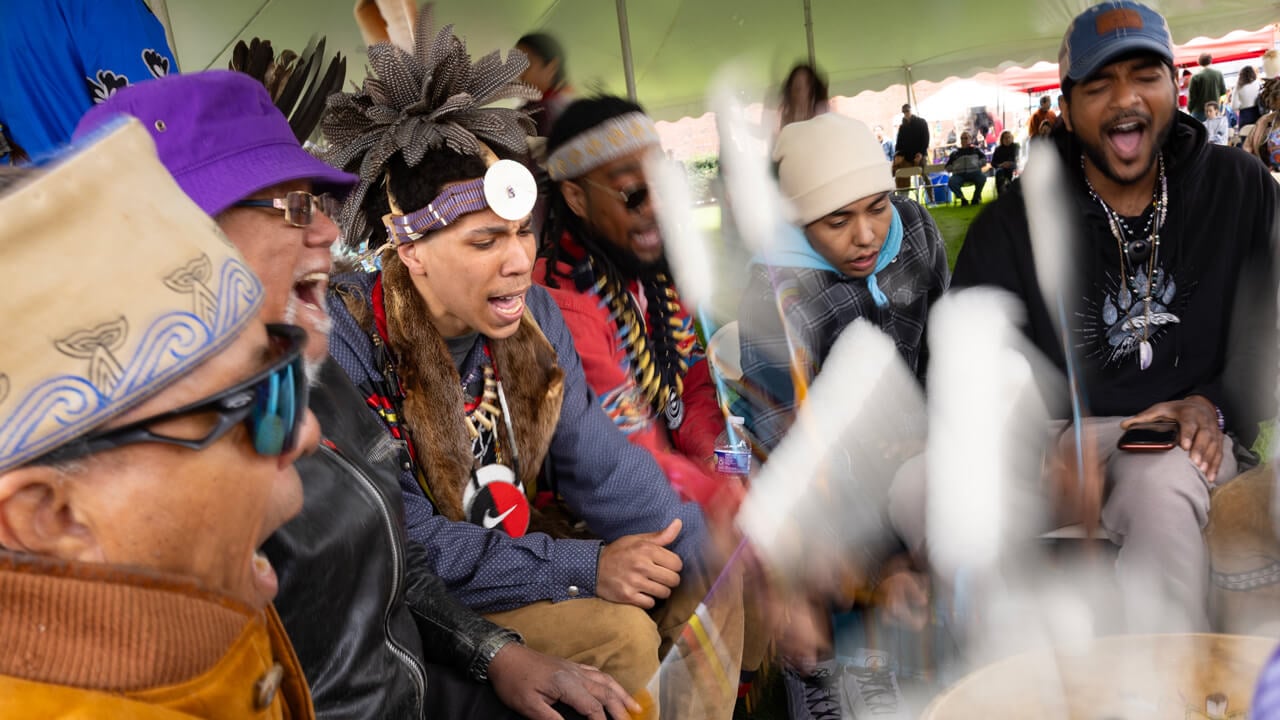
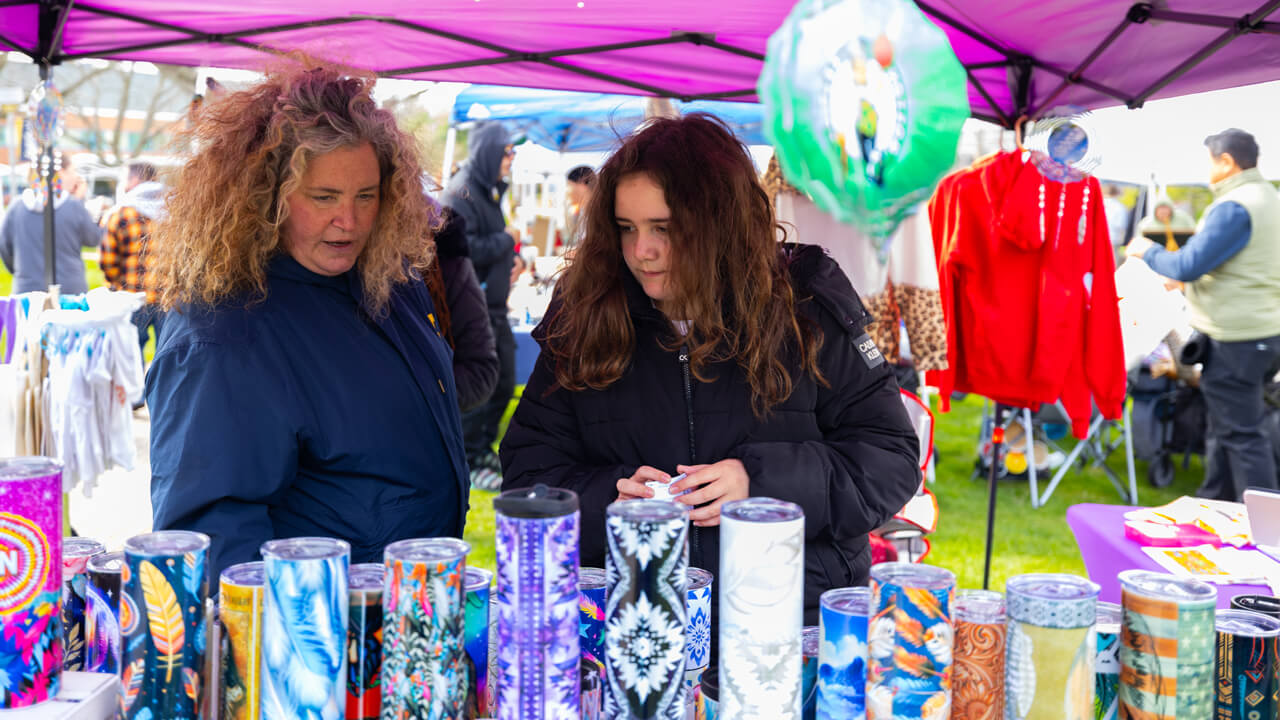
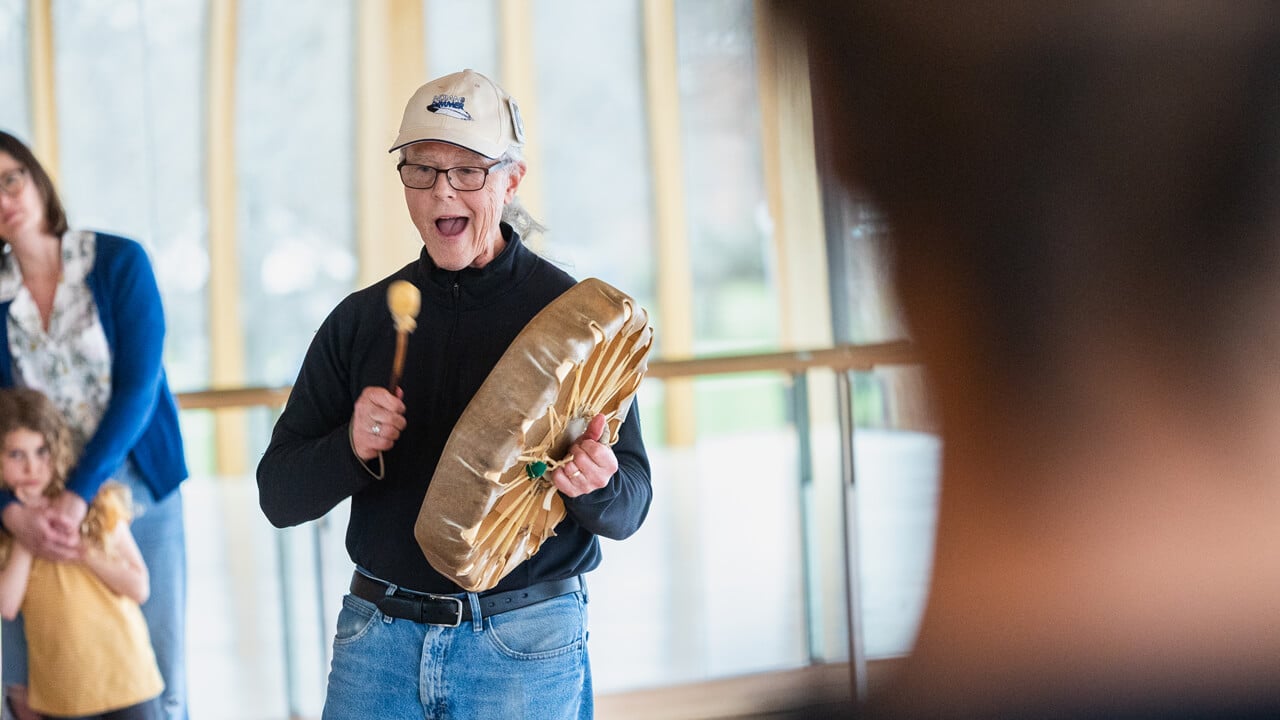
This free and open-to-the-public intertribal gathering celebrates Indigenous cultures and traditions through traditional dancing, singing and drumming, and features more than 15 Indigenous vendors offering arts, crafts and educational opportunities.

We welcome all guests to experience and enjoy the powwow. Please be mindful of the following guidelines to help honor traditions and ensure a respectful environment:

  • Follow all directions from the Arena Director(s) and Master of Ceremonies (MC), who will guide the event and share important context.

  • Stand during Grand Entry and Honor Songs, if you are able, and remove hats as a sign of respect. The MC will indicate when these begin and end.

  • Do not enter the dance circle once it has been blessed. Guests may only enter when invited (e.g., intertribal or social dances announced by the MC).

  • Photography and video are not permitted during Grand Entry, the Veterans Song, or any Honor Songs. At other times, always ask permission before photographing dancers, singers, or individuals.

  • Respect regalia — it is not a costume. Do not touch regalia without explicit permission from the dancer.

  • If a feather falls, do not pick it up. Feathers are sacred and must be handled according to tradition.

  • Seating areas marked for dancers or Elders are reserved. Do not sit in these areas or in seats held with blankets. Bringing your own chair is encouraged.

  • Powwows are drug- and alcohol-free events, and Quinnipiac University is a smoke-free campus.

  • Be respectful in language and behavior. Avoid stereotypes, jokes, or terms that may be offensive. Calling Native American men “Chief” would be considered very disrespectful, for instance.

  • Most importantly, be present, respectful, and enjoy the experience.

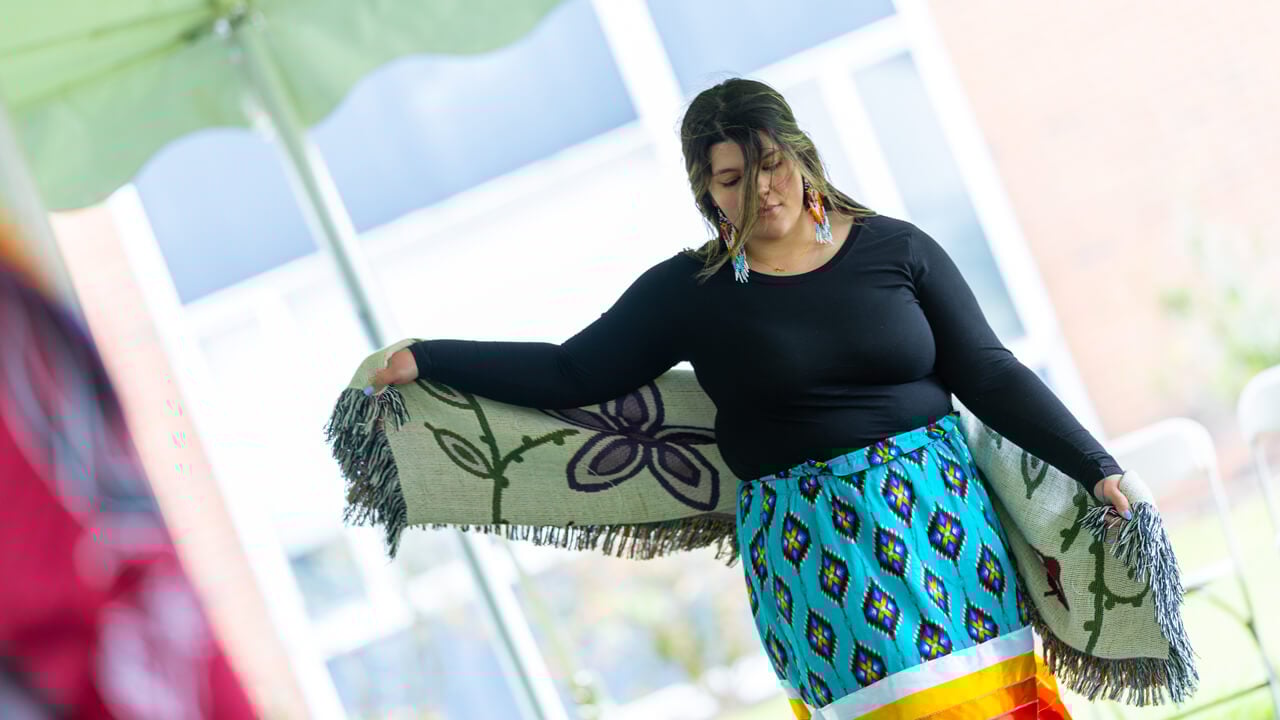
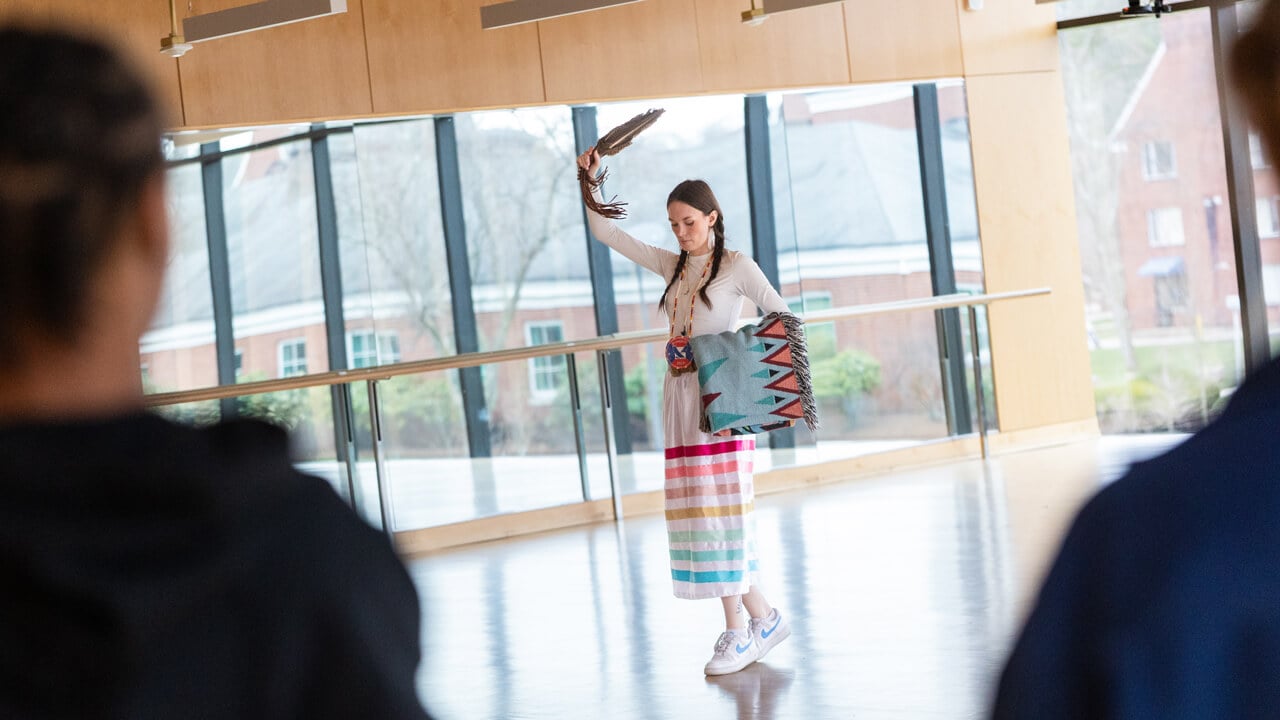
Women’s Eastern Blanket Dance

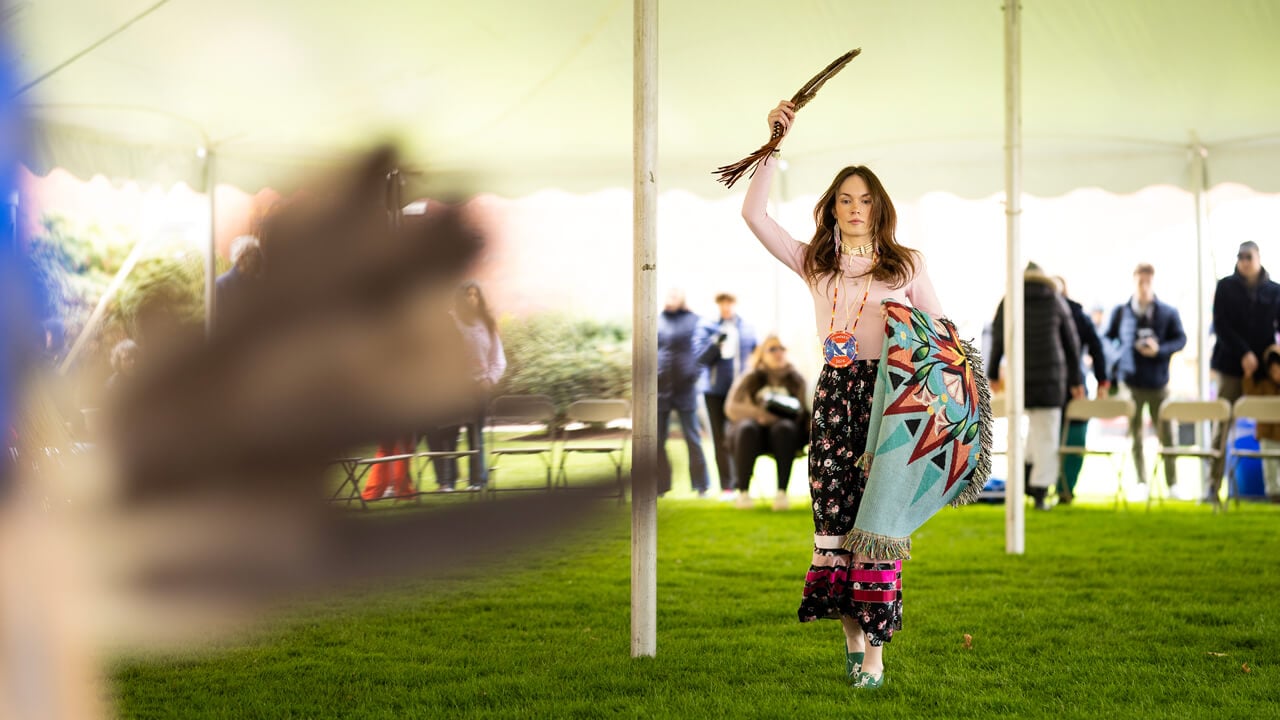
Rooted in Eastern Woodland traditions, this dance honors the important role of women and the cultural significance of blanket-making. As women came of age, creating a blanket was a valued skill, and this dance celebrates that artistry. Dancers begin with blankets covering their shoulders and faces, then reveal and display them through smooth, graceful movement. Unmarried dancers may place their blankets on the ground at the end as a traditional expression of skill and readiness.

  • Regalia: Buckskin or ribbon skirts/dresses, moccasins, and blankets, often adorned with beadwork, fringe, and wampum jewelry.


Women’s Northern Traditional

This style grew from a time when women danced along the edges of the arena and were not included in contest powwows. Following World War II and increased recognition of women’s roles, especially through military service, women gained greater participation, and this dance became a central powwow style.

  • Regalia: Full-length dresses or skirt sets made of buckskin or cloth, decorated with beadwork, ribbon work, shells, and accessories such as shawls or feather fans.


Women’s Fancy Shawl Dance

A relatively modern style that emerged in the early 20th century in the Northern Plains. It developed as a counterpart to the men’s Fancy Dance and is often associated with the Butterfly Dance, symbolizing transformation and coming of age. The fast footwork and spinning movements reflect the motion of butterfly wings.

  • Regalia: Bright, elaborately decorated shawls with fringe, worn with knee-length dresses, moccasins, and coordinated beadwork.


Women’s Jingle Dance

Originating among the Anishinaabe in the early 20th century, this dance is deeply connected to healing. Many origin stories describe a vision guiding the creation of the jingle dress to help heal a sick child. Today, the dance continues as a form of prayer for health and well-being within families and communities.

  • Regalia: Dresses adorned with rows of metal cones that create a rhythmic jingling sound, along with matching beadwork and accessories.


Men’s Eastern War Dance

A traditional dance of Southern New England tribes, this style tells the story of warriors preparing for and engaging in battle. Historically, dancers would conclude by touching a central pole to symbolize victory. While the format has evolved, the storytelling and spirit of the dance remain.

  • Regalia: Breechcloths, ribbon shirts, moccasins, and accessories such as war clubs, dance sticks, fans, and wampum jewelry.


Men’s Northern Traditional

One of the oldest powwow dance styles, rooted in 19th-century warrior and hunting traditions of the Northern Plains. Dancers reenact battles or hunts, sharing stories through movement that have been passed down through generations.

  • Regalia: Feather bustles, beadwork, and personal items representing family, clan, or warrior identity.


Men’s Fancy Dance

A more modern, high-energy style that gained popularity in the 20th century, with some roots in Wild West shows and post-war powwow evolution. Known for its speed and athleticism, it has become a centerpiece of many powwows.

  • Regalia: Bright, elaborate outfits with double bustles, colorful beadwork, feathers, and bells.


Men’s Grass Dance

Originating on the Northern Plains, this dance is often associated with warrior societies and the preparation of ceremonial grounds. Some traditions also connect it to healing and spiritual renewal, inspired by the movement of prairie grass.

  • Regalia: Long, flowing fringe, bells, beadwork, and porcupine roaches.

Public parking will be available in North Lot and Hogan Lot.

View parking maps

Registration is free and is on-site, opening at 11 a.m. on the day of the event.

The first 30 dancers registered in regalia will receive a $30 meal ticket and a free t-shirt.

There will be over 15 Indigenous vendors at this event, selling food, jewelry, artwork and more. These vendors include:

  • Happy Eating Grounds 

  • Taino Reworked

  • Taino Trinkets

  • Native Dezines

  • Jackson Creatives

  • Maki Arts

  • Kichwas Arts

  • Blue Sky Beads

  • JL Echoes

  • Mi’kmaq Style 

  • Kiara’s Ribbon Skirts

  • Richie Olivera Flutes

  • Kieth Rood

  • Aaron Athey

  • Mia Slim

  • Rosalba Reyes

  • Shoran Piper

Upcoming Regional Powwows

UMass Boston Powwow

May 2nd, 2026
Clark Athletic Center (100 William T Morrissey Blvd, Boston, MA)

54th Annual Dartmouth College Powwow
May 9th, 2026
Hanover, NH

6th Annual Odenong Powwow
May 23-24, 2026
Amherst- Pelham Regional High School
Amherst, MA 

105th Mashpee Wampanoag Powwow
July 3rd, 4th, and 5th, 2026
MWT Community & Government Ctr.
Mashpee, MA 

351st Annual August Meeting (Powwow)
August 8th-9th, 2026
Narragansett Indian Reservation 

Mohegan Wigwam Festival 2026
August 15-16, 2026
Fort Shantok, Uncasville, CT

Schemitzun
August 28-30, 2026
Mashantucket, CT 

Additional Intertribal Powwow Events 


We Ride for Her: A Documentary on the Epidemic of Missing and Murdered Indigenous People

Thursday, April 16, 12:30–1:45 p.m., SB 102 Collaborative Classroom

Join us for a screening of We Ride for Her, a documentary short film highlighting the ongoing crisis of Missing and Murdered Indigenous Women, Girls and Relatives (MMIWGR) in the United States. With more than 5,500 cases and murder as the third leading cause of death for Native women, this urgent issue remains largely underrecognized.


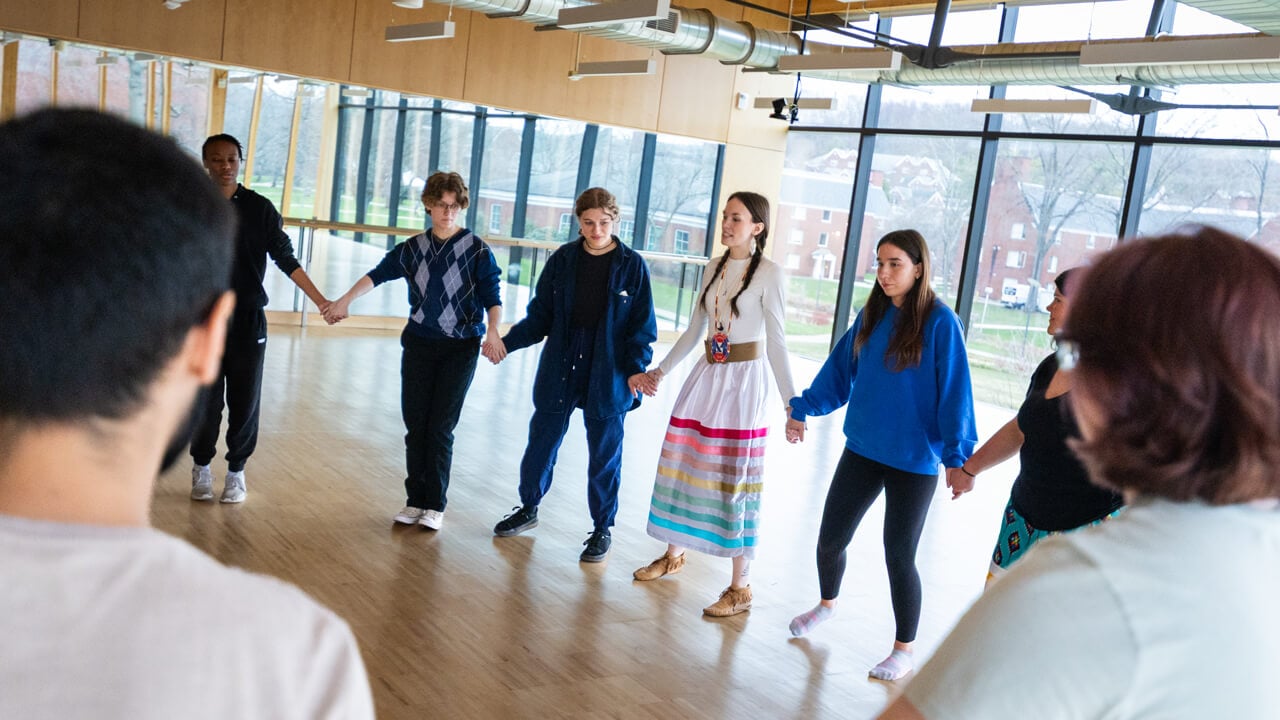
Powwow Dancing with Sunrise Healing Community Inc. 

Friday, April 17, 4:30–6 p.m., RWA 203

This interactive, educational workshop brings together the arts, cultural awareness and history of Powwow dancing. Snacks and giveaway prizes will also be available. This event is free and open to the public, and registration is not required.


Additional Inaugural Events


“Indigenous Aid to Ireland During the Great Hunger” Exhibit Opening and Symposium

The exhibition explores the remarkable generosity of the Choctaws and Cherokees, who themselves had endured forced displacement only years earlier, as well as the Anishinaabe, Haudenosaunee and Huron-Wendat Indigenous Peoples in Canada West, whose donations came at a time of increasing settler encroachment and broken treaties. This event offered a rare opportunity to reflect on a profound moment of historical solidarity and generosity between Indigenous communities and the Irish people, ensuring that these acts of kindness continue to be honored and remembered.

The exhibition includes:

  • Original government reports outlining treaty agreements from the 1830s

  • Historic maps of Ireland and the Trail of Tears

  • A sculpture honoring the Choctaw gift

  • Artwork by Philip Cote

  • A Wampum Belt, presented by the Haudenosaunee Nationals (formerly Iroquois Nationals) to Ireland Lacrosse in 2022, symbolizing the ongoing Circle of Giving


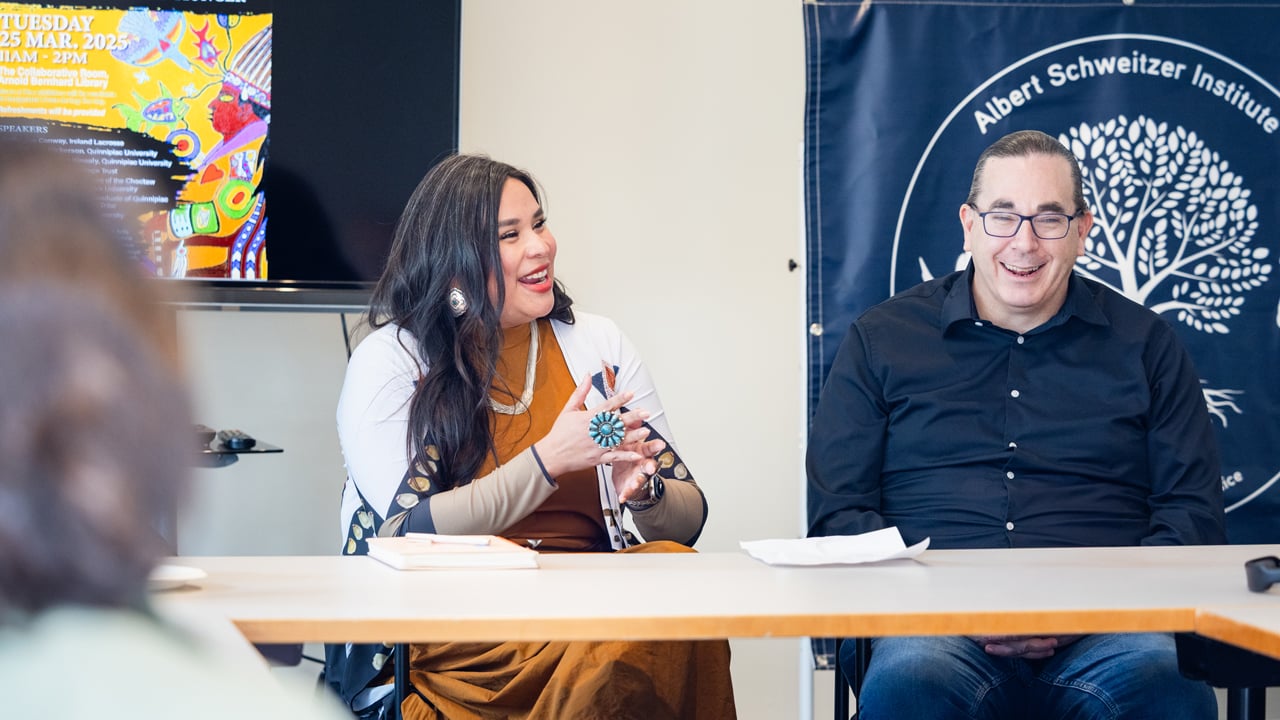
“Intertribal Powwow History and Dancing into the Future” Lunch and Learn

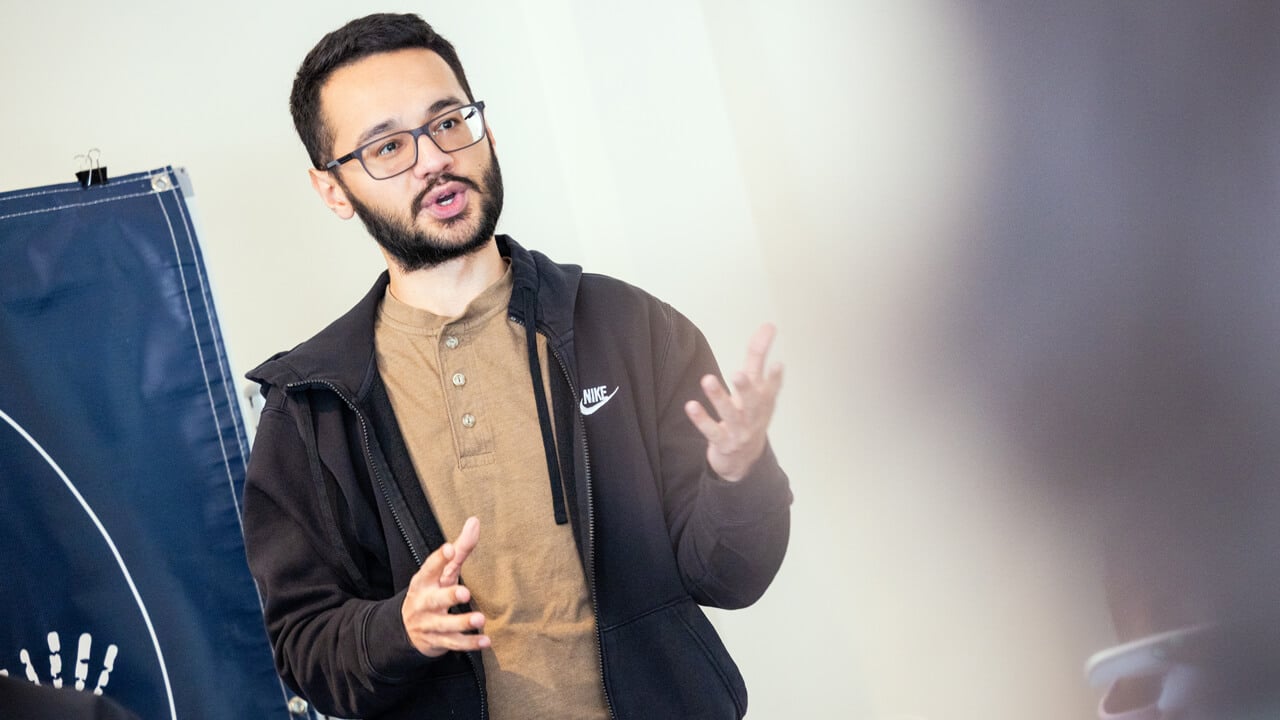
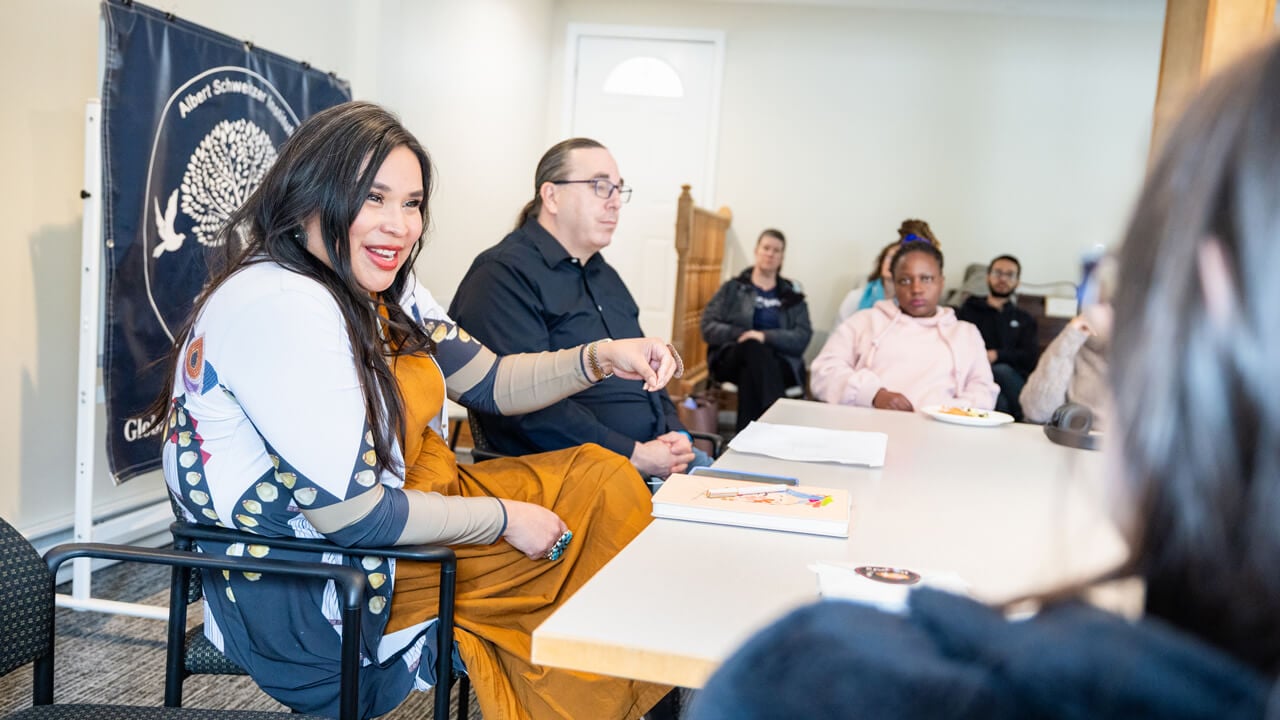
Participants learned about the history of the modern day intertribal powwow and how it showed up in the Northeast. Led by Chris Newell and endawnis Spears from the Akomawt Educational Initiative, this discussion also considered the role of the powwow in the context of the university and its connections to cultural reclamation and sovereignty. This event was free and open to the public.


Akomawt Blanket Exercise

Chris Newell and endawnis Spears from the Akomawt Educational Initiative led participants through the U.S. version of the KAIROS Blanket Exercise. The KAIROS Blanket Exercise program is a unique, interactive and participatory history lesson developed in collaboration with Indigenous Elders, knowledge keepers and educators. The Blanket Exercise covered more than 500 years in a 90-minute experiential workshop that aimed to foster understanding about our shared history as Indigenous and non-Indigenous peoples.


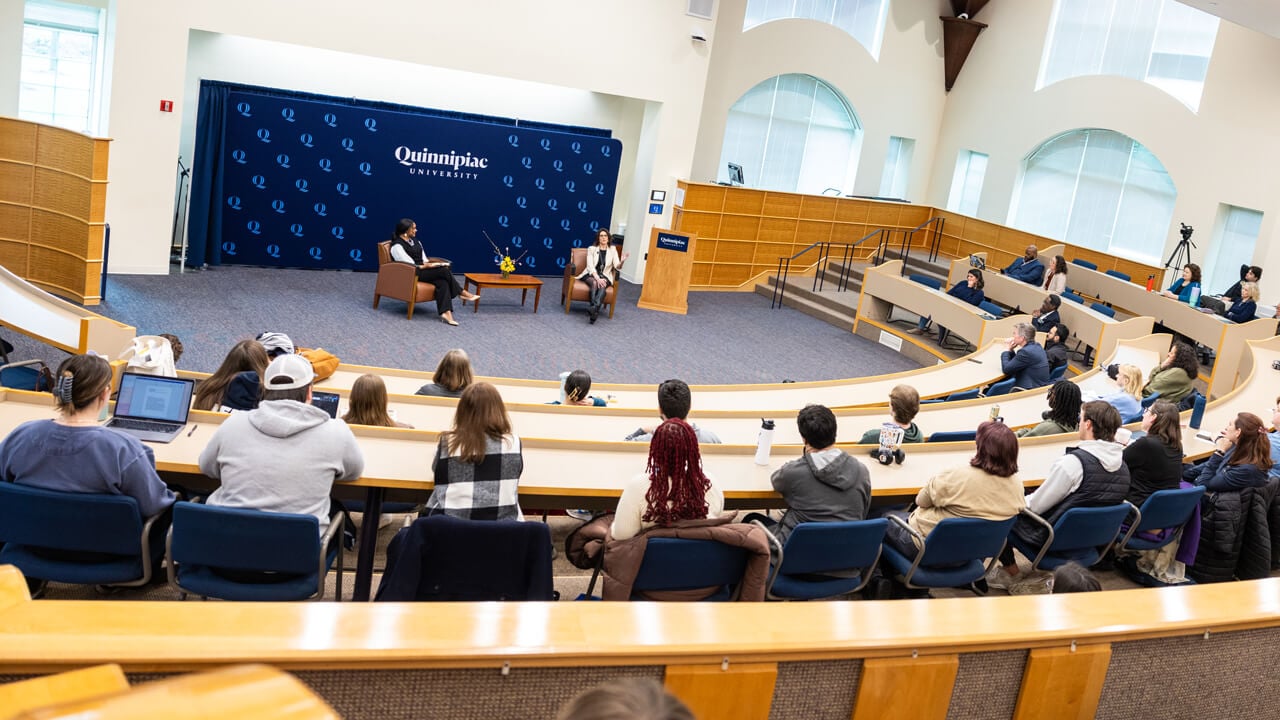
Critical Conversation: “We’re All Part of this Story” with Sarah E. Harris, Vice Chairwoman of the Mohegan Tribe

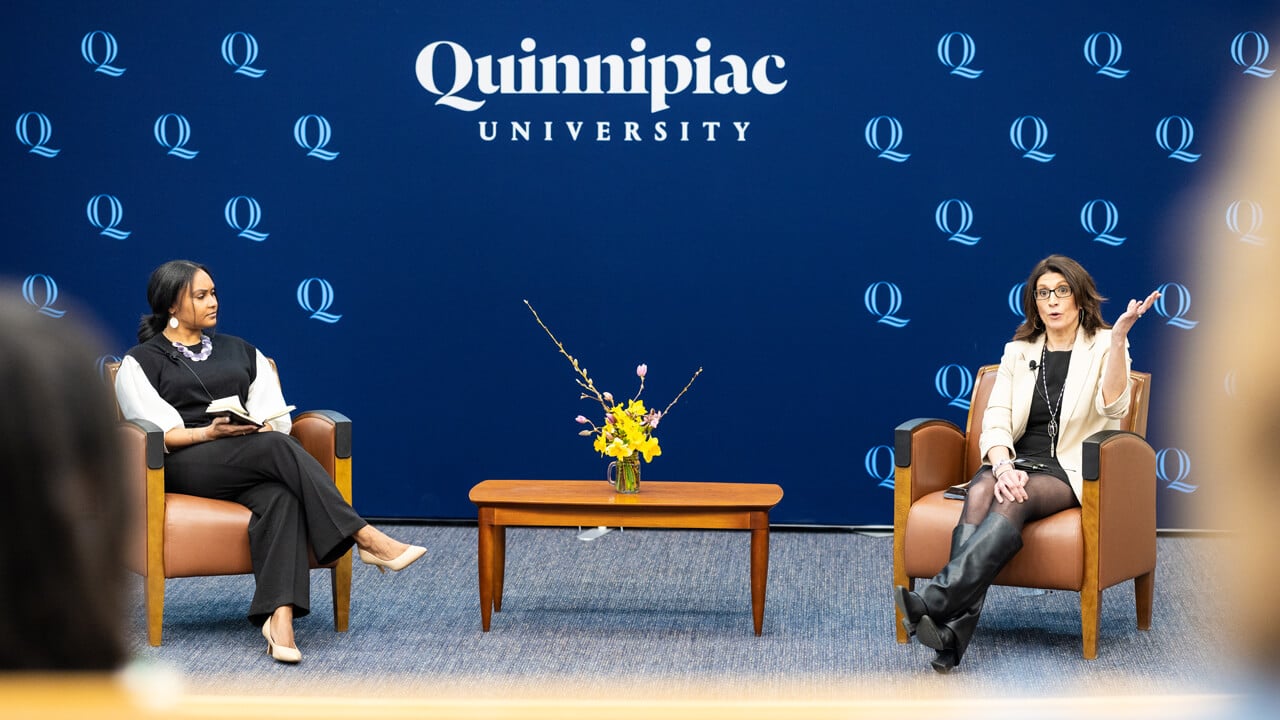
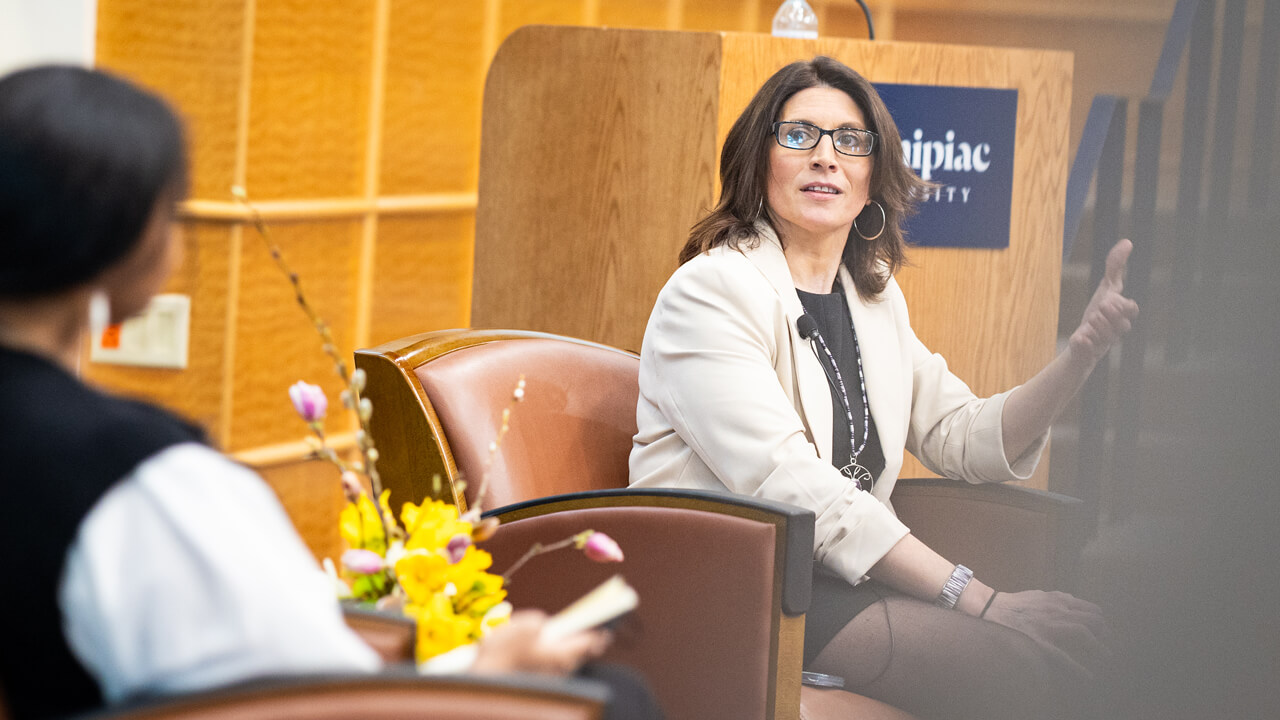
To help acknowledge and respect indigenous people and their land, Quinnipiac University welcomed Mohegan Tribe Vice Chairperson Sarah E. Harris to speak with the university community.

Harris’ talk, “We’re All Part of This Story,” was hosted by the Office of Inclusive Excellence for Quinnipiac’s ongoing Critical Conversation Speaker Series. Her discussion focused on indigenous communities, people’s rights and how the Mohegan Tribe works with external communities and institutions. Harris also shared a fireside chat with Jennifer Rawlings, JD ’15, tribal affairs director for the Center for Indigenous Peoples Rights, and answered questions from the audience.

Read the full event recap 


Powwow Dancing Workshop

An educational workshop led by Kiara Tanta-Quidgeon, an eastern blanket dancer, brought together the arts, cultural awareness and history of powwow dancing. Dinner was provided, and there was also an opportunity to win Indigenous-made jewelry and other prizes.


“Exploring Possibilities: Can Powwows Transform and Unsettle Higher Ed?” Lunch and Learn

Participants enjoyed a thoughtful dialogue and reflection on how the powwow fits within broader efforts to reimagine higher education through Indigenous epistemologies led by endawnis Spears from the Akomawt Educational Initiative

Explore More