


Master of Business Administration
Nature Connectedness in Sustainable Tourism Decisions
Master of Business Administration
Nature Connectedness in Sustainable Tourism Decisions
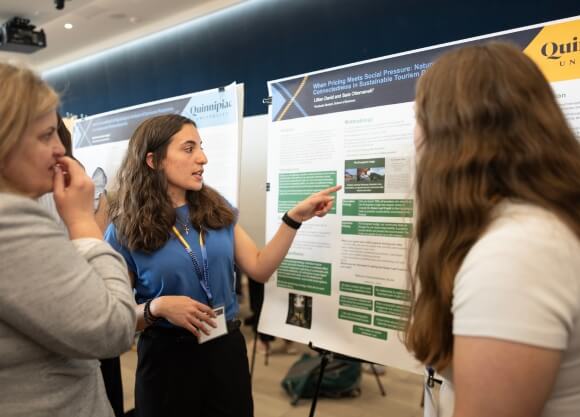
Lillian David ’25, MBA ’26 and Sara Ottomanelli ’25, MBA ’26 completed this research project as part of MK620: Applied Consumer Behavior Research.
Overview
Sustainable tourism is becoming more popular as people try to travel in ways that are better for the environment. This research project examines what motivates people to choose greener options, especially when they come with extra costs. The study focused on how social influence and a person’s personal connection to nature affect their willingness to pay for sustainable add-ons while traveling.
Researchers

Lillian David ’25, MBA ’26
Marketing, Applied Business, BS/MBA (3+1)
School of Business

Sara Ottomanelli ’25, MBA ’26
Marketing, BS/MBA (3+1)
School of Business
When Pricing Meets Social Pressure: Nature Connectedness in Sustainable Tourism Decisions
Abstract
Sustainable tourism is the new wave, with travelers attempting to limit their carbon footprints by exploring the world in a greener fashion. This study reports the findings from a study (N = 78) investigating the effect social norms have in mitigating the impact of odd priced sustainable add-on packages, effectively maintaining purchase intentions and willingness to pay. Previous research has explored the impact of personal and social norms on purchase intentions in sustainable tourism, but not the effect of odd pricing interacting to affect willingness to pay. Results from an online experiment demonstrate the interactive effects of pricing strategy and descriptive versus injunctive norms in the context of sustainable tourism.
Introduction
Imagine you are planning a vacation centered entirely around nature. One destination that stands out is a peaceful wilderness retreat, surrounded by dense forests, fresh air, and untouched landscapes. As you review the booking details, you notice an additional charge tied to preserving the land and protecting its natural resources.
How do you feel about paying a bit more to support the longevity and health of the environment you’re about to experience?
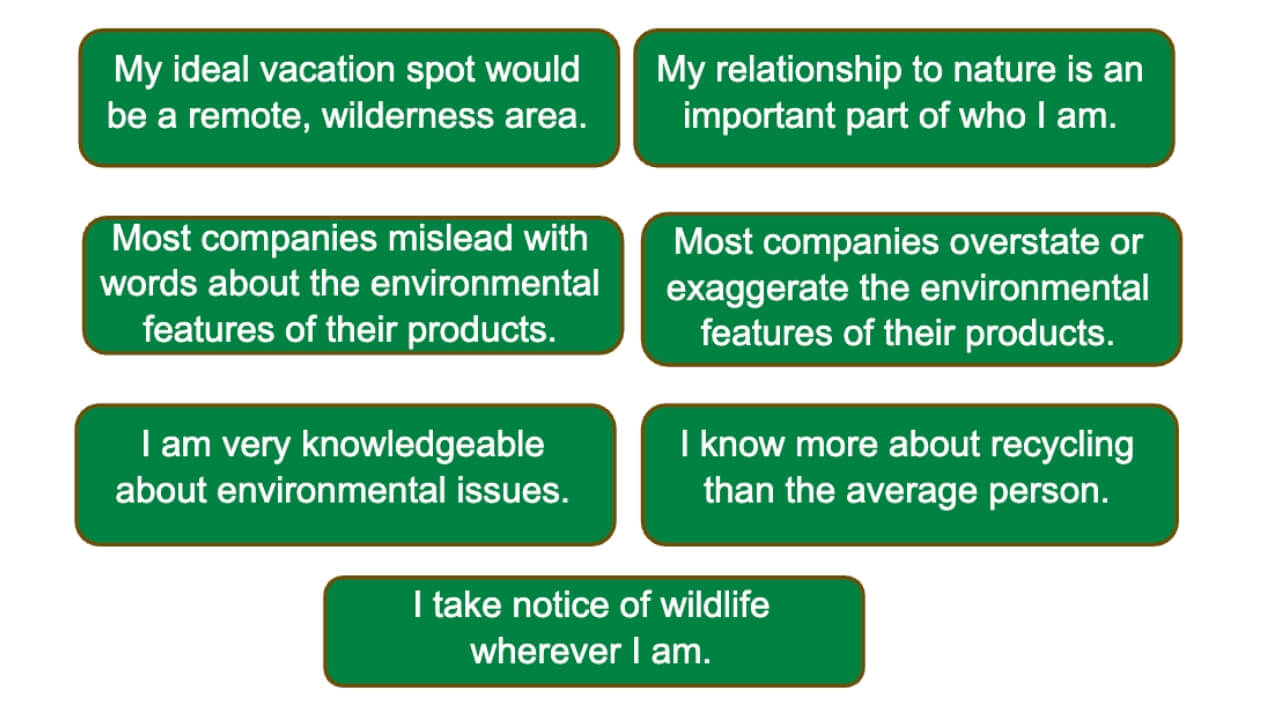
To measure individuals’ connection to nature, this study draws on an established psychological scale that captures how strongly people feel emotionally and cognitively connected to the natural environment (Nisbet et al., 2009).
Key Terms
Odd Pricing: pricing strategy that the rightmost digits fall just below a round number (Mattila & Gao, 2016).
Injunctive Priming: how one ought to act based on expectations of what other people would morally approve or disapprove of (Cialdini et al., 1990).
Descriptive Priming: provides information about what appears to be the most appropriate behavior based on the perception of what other people usually do (Cialdini et al., 1990).
Key Hypothesis
H1: For even-pricing strategy, individual nature connection and descriptive norm framing has a combined effect on consumer responses regarding (i) sustainable add-on purchase intentions, (ii) willingness to pay higher prices for green leaf credit, and (iii) likelihood of choosing environmentally responsible travel options.
H2: For the Odd-pricing strategy, there are no such interactive effects.
Methodology
Our study utilized a Qualtrics experiment that sampled 78 individuals from an online panel (Prolific) to test our hypotheses.
All the participants were 18 years or older.
Participants were given two graphics, showing the lodge and the booking summary. They were then randomly assigned one of the four priming combinations:
-
Odd vs Even Pricing (Manipulated)
-
Descriptive vs Injunctive Norm (Manipulated)
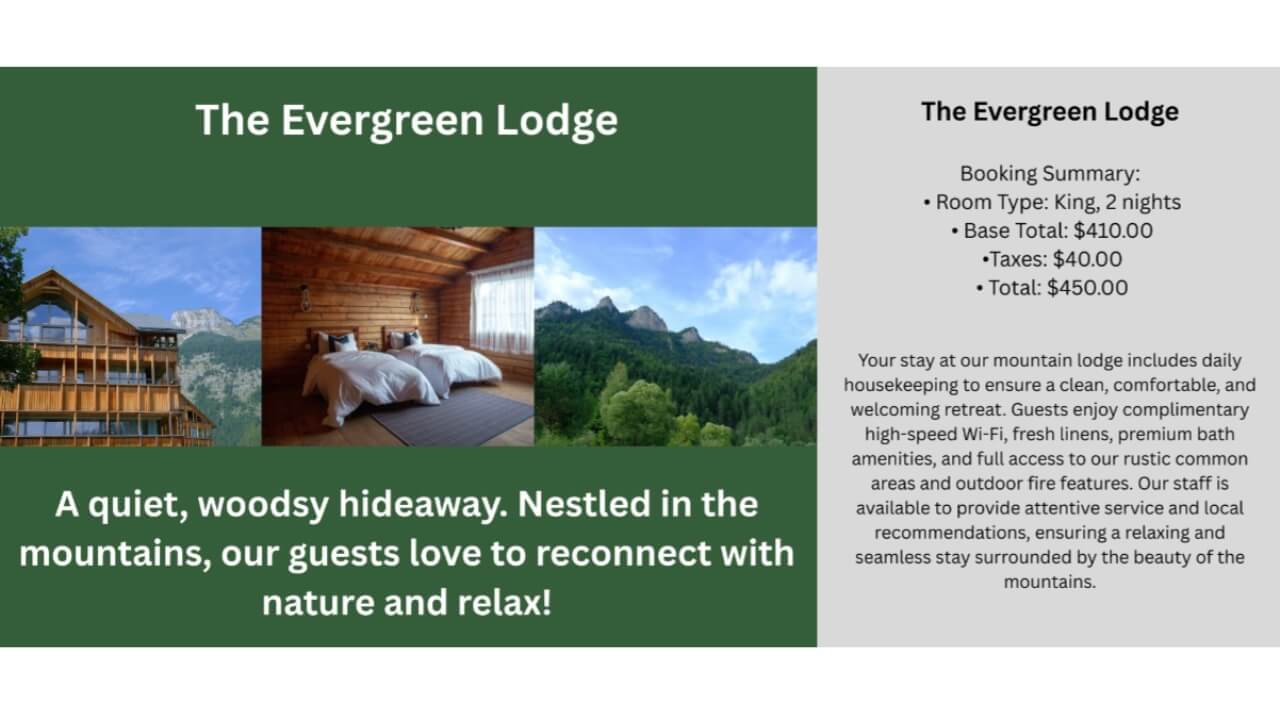
Descriptive Priming
Did you know? 79% of travelers who stayed at the Evergreen Lodge last season chose to include the Green Leaf Credit in their booking to help us practice sustainability and preserve our forests.
Injunctive Priming
At Evergreen Lodge, our community feels as though it’s our moral responsibility to practice sustainability and protect the local forests. We invite our guests to join us in this mission.
What your green leaf credit supports during your stay:
-
A forest-safe welcome kit: plastic-free ponchos and reusable water bottles placed in your room
-
Daily forest-friendly housekeeping practices: low-impact laundry and certified cleaning products
-
Direct proceeds to planting trees and maintaining our local forest
Would you be interested in adding the Green Leaf Credit to your stay?
Nature Connectedness Scale
Results
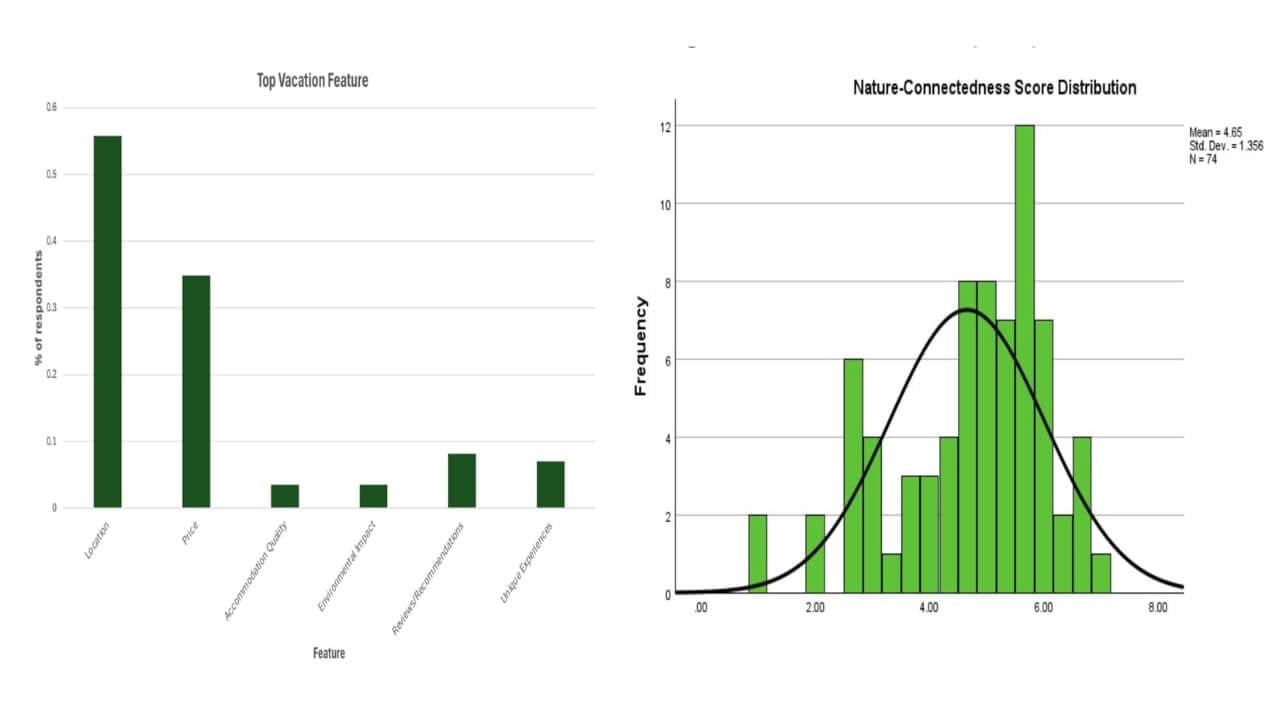
While only 3.5% of respondents ranked "Environmental Impact" as the most important factor for travel decisions, our results show social norms and nature connectedness can still drive purchases.
Respondents were 60.8% female, age varying between 18-79.
At even pricing ($25.00), nature connectedness and norm priming combined influenced purchase intentions (p < .05).
At odd pricing ($24.99), there was no significant interactive effects for norms and nature connectedness.
| TABLE 1 - Even Pricing | ||
| Relevant Effects | T value | Sig. level |
| Norm | 1.070 | 0.292 |
| Nature Connected Mean Center | 2.337 | 0.025 |
| Nature Connected Mean Center + Norm | -1.748 | 0.089 |
| TABLE 2 - Odd Pricing | ||
| Relevant Effects | T value | Sig. level |
| Norm | -1.356 | 0.185 |
| Nature Connected Mean Center | 0.855 | 0.399 |
| Nature Connected Mean Center + Norm | -0.423 | 0.675 |
When participants were told others chose the sustainable option (descriptive), nature connectedness was a significant driver of purchase intentions (p=.018).
When presented with social expectations (injunctive), nature connectedness became insignificant (p=.962). Participants likely viewed it as a moral duty, rather than personal preference.
| TABLE 3 - Norms and Nature Connectedness Even Pricing | ||
| Relevant Effects | T value | Sig. level |
| Descriptive Norm and Nature | 2.588 | 0.018 |
| Injunctive Norm and Nature | -0.49 | 0.962 |
Similarly, when looking at DVs like likelihood to pay a higher price for the green lead credit over regular price, nature connectedness was significant when only using descriptive norms (p=.027).
| TABLE 4 - Descriptive Norms and Nature Connectedness | ||
| Relevant Effects | T value | Sig. level |
| Nature Connected | 2.392 | .027 |
Conclusion
While few identified environmental impact as a top priority, social norms can still drive sustainable choices and impact purchase intentions.
Psychological factors (norms/values) only worked when pricing was seen as standard. Odd pricing may distract consumers from the social benefits of the sustainable packages.
For travelers with high connection to nature, descriptive norms ("others are doing it") is more effective. Injunctive norms ("you should do it") create a feeling of social pressure that overrides personal values, making people feel as though they have a moral duty to make the purchase regardless of their feelings toward nature. This is a strong tool to use with broad audiences as it will influence a greater number of people.
Implications
Professional Application
"This project has given us the unique opportunity to get hands-on experience in the field of marketing research. Being able to run an experiment from start to finish (brainstorming a concept, survey design, running the survey and collecting participants, and analyzing and reporting our findings) we have gotten a comprehensive view of all that goes into research projects. We also had the chance to hone our technical skills in Qualtrics and SPSS which are highly sought after in this field." - Lillian David ’25, MBA ’26 and Sara Ottomanelli ’25, MBA ’26
For Further Discussion
This serves as an overview of the project and does not include the complete work.
Course Overview
MK 620: Applied Consumer Behavior Research is a course that provides a basic understanding of the major concepts and theories in consumer decision-making and behavior and how these can be used as the basis for empirical research on the way consumers process information, form preferences and make buying choices. This is a course in which theories from psychology, sociology and economics are applied to the study of consumer behavior.
User Experience and Behavioral Insights Lab
As a part of the Innovation Hub, the mission of Quinnipiac’s User Experience and Behavioral Insights Lab is to foster a dynamic and collaborative research environment dedicated to advancing knowledge, innovation and societal impact.
Explore Our Areas of Interest
We've sorted each of our undergraduate, graduate and doctoral programs into unique Areas of Interest. Explore these categories to discover which programs and delivery methods best align with your educational and career goals.